
The AI boom is being driven by two languages: English and Mandarin Chinese. The leading AI developers—OpenAI, Anthropic, DeepSeek, Moonshot AI, Z.ai, and others—are almost all based in either the U.S. or mainland China, and so their models perform best in their native tongues.
That leaves countless other languages and dialects, even those spoken by tens of millions of people, by the wayside.
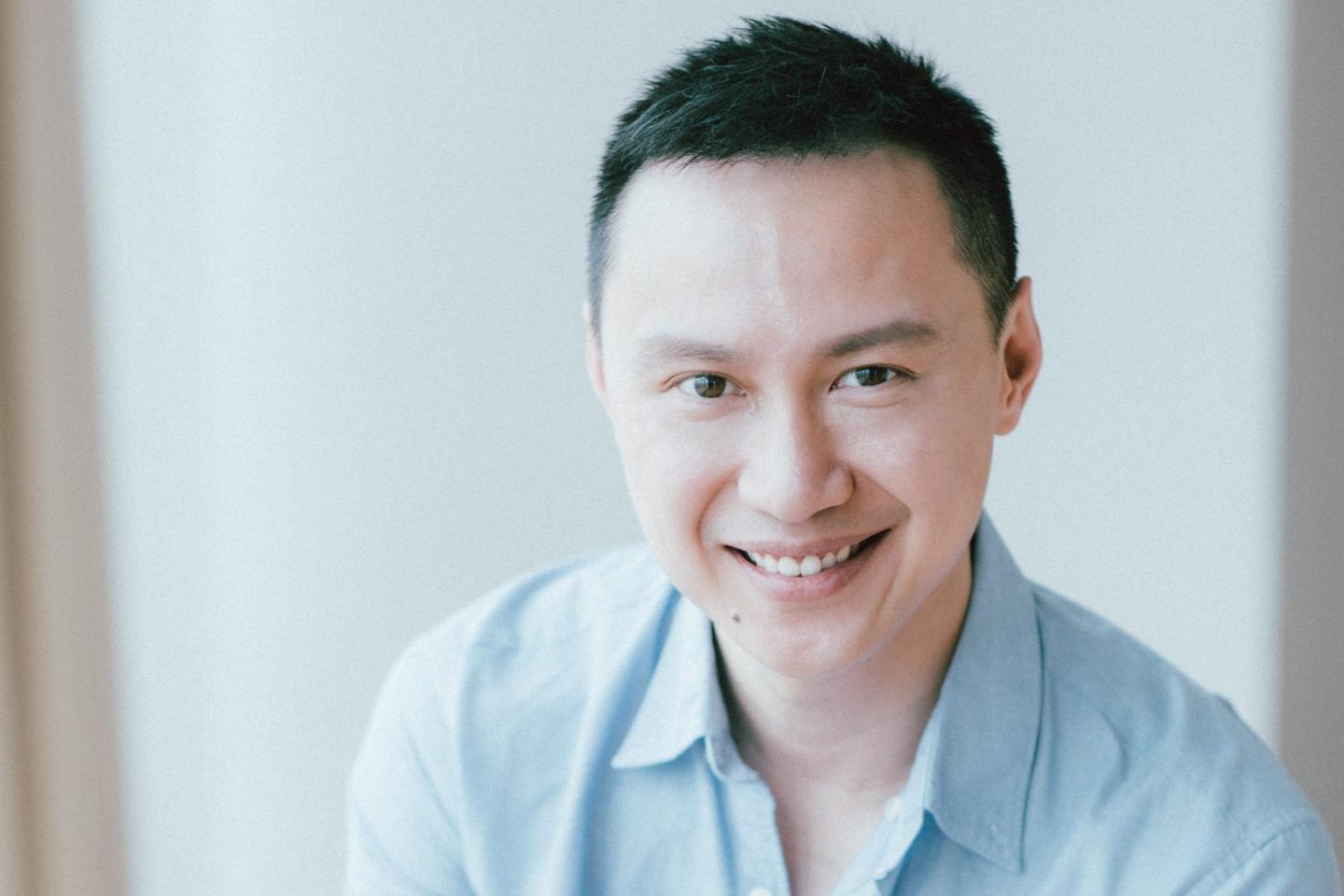
“The whole AI revolution is in English and Mandarin,” says Pak-Sun Ting, CEO of Votee AI, a Hong Kong-based startup that’s striving to build AI models for Cantonese and other neglected tongues. “There’s only a very small fraction that represents other languages.”
Votee is one of a growing number of companies that are trying to tackle AI’s neglect of other languages. It takes open-weight models from developers like Meta and Alibaba, retrains them on Cantonese data, and sells the result to banks, universities, and government departments.
“It’s more than just culture. Cantonese is used in education, healthcare, and police communications,” Ting says. “If those don’t get covered, then AI is essentially useless.”
How Cantonese is different
Cantonese is often referred to as a “dialect” of Chinese, but that moniker undersells just how different it is from Mandarin, the most commonly spoken version of the Chinese language. Cantonese uses different grammar than Mandarin, as well as different vocabulary, particularly in the city of Hong Kong, where speakers often switch between English and Cantonese words, sometimes in the same sentence.
Over 80 million people speak Cantonese, roughly equal to the number who speak Korean, and more than those who speak Italian or Thai. Yet its large speaker base has not led to a comparably deep pool of standardised written data, particularly for colloquial Cantonese.
Leading models aren’t completely useless at handling Cantonese. HKCanto-Eval—a set of benchmarks developed by researchers at Kyushu University, the Education University of Hong Kong and the local AI community hon9kon9ize, and sponsored by Votee—reports that while mainstream models can handle everyday Cantonese at a reasonable level, they routinely fail when it comes to cultural and local knowledge.
Training on the cheap
Ting says that building a Cantonese LLM is “essentially taking the same steps as if you were training a model from scratch,” taking an existing open-source model, like Meta’s Llama or Alibaba’s Qwen, and doing additional training with Cantonese data.
Votee gets its Cantonese data from online scraping, including content from Radio Television Hong Kong (RTHK), the city’s public broadcasting service. The startup also gets data from the community and universities, and taps content from its previous business as a big data company. Finally, Votee uses synthetic data, creating its own Cantonese data sets to train its model.
Together, these efforts grew the corpus of Cantonese data from 100 million tokens to more than 500 million.
Votee AI’s models are around 70 billion parameters in size,significantly smaller than the best models on the market.
Still, Ting says that their models are capable enough to understand and reason in Cantonese. More importantly, Votee’s training costs, while not trivial, are still significantly smaller than frontier labs. Ting estimates that the company uses between 500 million and 1 billion tokens to train its models, compared to the trillions used for English-language models, and at a cost of roughly $250,000.
Sovereign AI
Several companies are working to build models for what’s deemed “low resource languages,” or those that don’t have a massive corpus of published work behind them.
Indosat, Indonesia’s second-largest telecoms company, is building Sahabat AI, an open-source large language model that focuses on Indonesian languages like Bahasa. Singapore’s state-backed AI Singapore runs SEA-LION, covering 11 under-resourced Southeast Asian languages. South Korea has gone further, staging a state-sponsored elimination tournament, which local media has dubbed the “AI Squid Game”, to pick national champions for homegrown foundation models, backed by a 2026 AI budget of roughly $6.8 billion.
All of it sits under the banner of “sovereign AI,” or the idea that governments and companies will want to own their own data, models, and infrastructure, rather than renting it from overseas.
“AI has become such an essential need, and so you don’t want to be tethered to anybody else who can turn it off,” Ting says. He’s candid that the full version of the sovereign AI idea, where countries own every part of the AI supply chain, is “very difficult.” Instead, he suggests countries focus on owning the foundation models and the applications built on top of them.
Governments generally don’t need a model that’s as powerful as what’s on the frontier to automate a few tasks; Ting explains that a tiny model, even one with as few as 1 billion parameters, can suit those purposes. If governments need more advanced capability, they can route a powerful English- or Chinese-language model’s outputs through a smaller, local-language output.
Ting points out that the company works with MiniMax and SenseTime models, and can use Nvidia chips in its operations. “We can use Nvidia chips, we can use Moonshot or DeepSeek’s model,” he says. “We’re that person in high school who’s friends with everyone.”
For all Ting’s talk of preservation, Votee is a for-profit company. Governments and corporates are the first customers for an AI model in a language like Cantonese or Bahasa. He says Votee is profitable “in the sense that our revenues exceed our costs,” funded largely through client contracts. The startup now boasts Allan Zeman, the Hong Kong tycoon responsible for growing the city’s Lan Kwai Fong nightlife district, as an advisor.
Votee’s ambitions aren’t limited to just Hong Kong. Ting says that the startup is in “active discussions” with AI Singapore, the country’s AI research initiative, and then plans to expand further into Southeast Asia. Beyond that, Ting wants to explore using AI to protect endangered languages in regions like East Asia, North America, and Africa.
Ting calls what English-language AI is doing to other languages a “typewriter moment,” a productivity gain so large that people abandon their own language to get it. “People will adopt English just because the typewriter’s productivity is so strong versus their own language,” he says.
Whether a 70-billion-parameter Cantonese model changes that remains to be seen. But Ting is still motivated by a drive to give other languages a fighting chance in a world dominated by English- and Mandarin Chinese-AI.
“Every language that dies, you lose another way of seeing the world,” he says. “That could just be preserved in a museum where you can kind of see it. But we can also unlock a lot of new wisdom.”
Pak-Sun Ting will be speaking at the Fortune Leaders Forum, held in Macau on Sep. 8. Learn more here!
The Fortune Leaders Forum will convene Fortune 500 executives and founders of leading Asian companies to help define the future of leadership in an age of convergence and complexity. September 8 in Macau. Apply here.