OpenAI’s infrastructure ambitions are colliding with a less technical problem: public backlash.
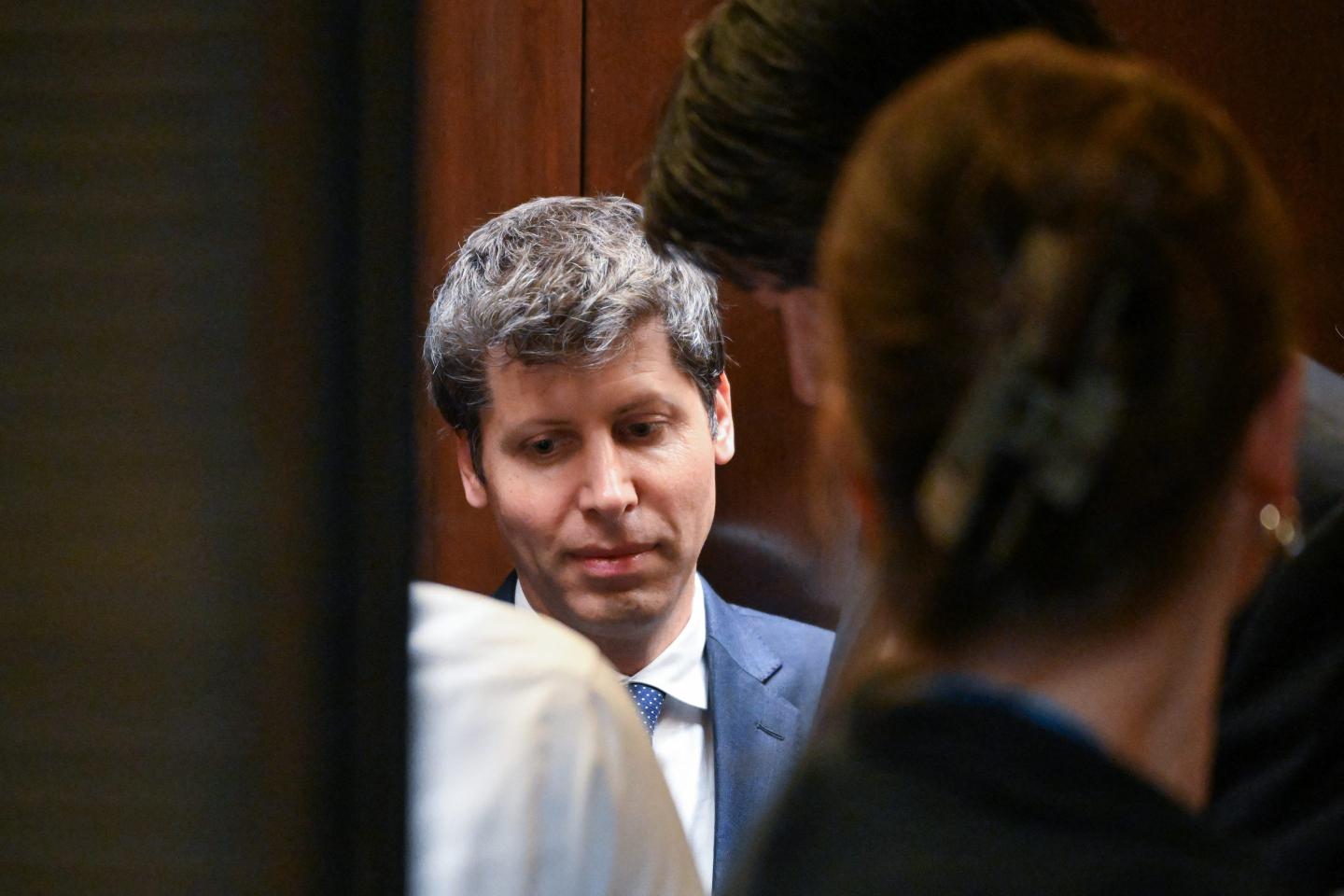
CEO Sam Altman is conceding that Americans are openly hostile to the facilities powering the AI boom, awkward timing for a company both planning to spend $50 billion this year on compute. “Clearly, people hate data centers—right now, at least,” Altman told Time in an interview. “People are pretty negative on AI.”
The week before Altman sat for Time, OpenAI’s head of data centers Chris Malone left the company, the Wall Street Journal reported, as confirmed by CNBC, which obtained a statement from OpenAI saying that he had “recently reorganized” the infrastructure team.
OpenAI spent the past year dramatically expanding Stargate, the infrastructure project it launched with SoftBank early last year with plans to invest as much as $500 billion in the U.S. AI infrastructure. By September 2025, OpenAI had announced six U.S. Stargate sites, and said those facilities—along with its Abilene flagship and ongoing CoreWeave projects—would bring Stargate to nearly 7 gigawatts of planned capacity. It has since added a more-than-1-GW Michigan campus, a Georgia project contracted for 3.2 GW of power, and, this month, an agreement to secure approximately 8 GW of IT capacity in southern Ohio.
OpenAI said it is already planning beyond Stargate’s original 10-gigawatt target, and claims it still does not have enough computing power.
“If anything, we should have bought a lot more,” Sachin Katti, the OpenAI executive overseeing its compute efforts, told Time.
Americans increasingly don’t want data centers next door
Altman’s assessment of the public mood isn’t far off.
Seven in 10 Americans oppose building data centers in their area, according to a Gallup poll released in May, including 48% who strongly oppose one. Data centers can consume enormous amounts of electricity, and residents in communities targeted for development worry about higher power bills, water usage, noise and the strain on local infrastructure. Some estimates peg the electricity cost of data centers to $23 billion.
The opposition is already having financial consequences for hyperscalers. At least 48 data center projects representing $156 billion in investment were blocked or stalled by local resistance. Even though only 8% of Americans who oppose data centers live near one, the outrage has gone national.
A Pew Research Center survey released earlier this year found Americans were much more likely to say data centers were bad than good for home energy costs, the environment and nearby quality of life. Among people who said they had heard a lot about data centers, 67% said they believed the facilities were mostly bad for household energy costs.
Those concerns are colliding with a surge in electricity demand. U.S. power consumption grew about 1.7% a year from 2020 through 2025 after barely growing over the previous 15 years, according to the Energy Information Administration. The agency said data centers are helping drive the increase.
The backlash is starting to shape policy–and the midterms
State governments are now responding to frustrated constituents with potential ramifications for OpenAI and other hyperscalers. Local officials proposed more than 120 moratoriums on data center development in 38 states as of July.
Texas Gov. Greg Abbott ordered regulators to scrutinize data centers seeking to connect to the state’s power grid before allowing projects to move forward earlier this month. ERCOT, which manages most of the Texas grid, was facing roughly 474 gigawatts of requests for new connections—more than five times the state’s record peak electricity demand. That matters for OpenAI because Texas is central to Stargate, with its flagship site in Abilene, and additional pending projects in the state.
Pennsylvania Gov. Josh Shapiro took his own steps on Aug. 18, signing an executive order that imposed new energy-affordability, environmental and community requirements on data centers and removed AI data centers from a fast-track permitting program.
Data center backlash is also uniting people from across the political spectrum ahead of the midterm elections. While President Donald Trump champions them, most registered voters oppose data centers, including 60% of Republicans and 53% of MAGA, according to a Fox News poll.