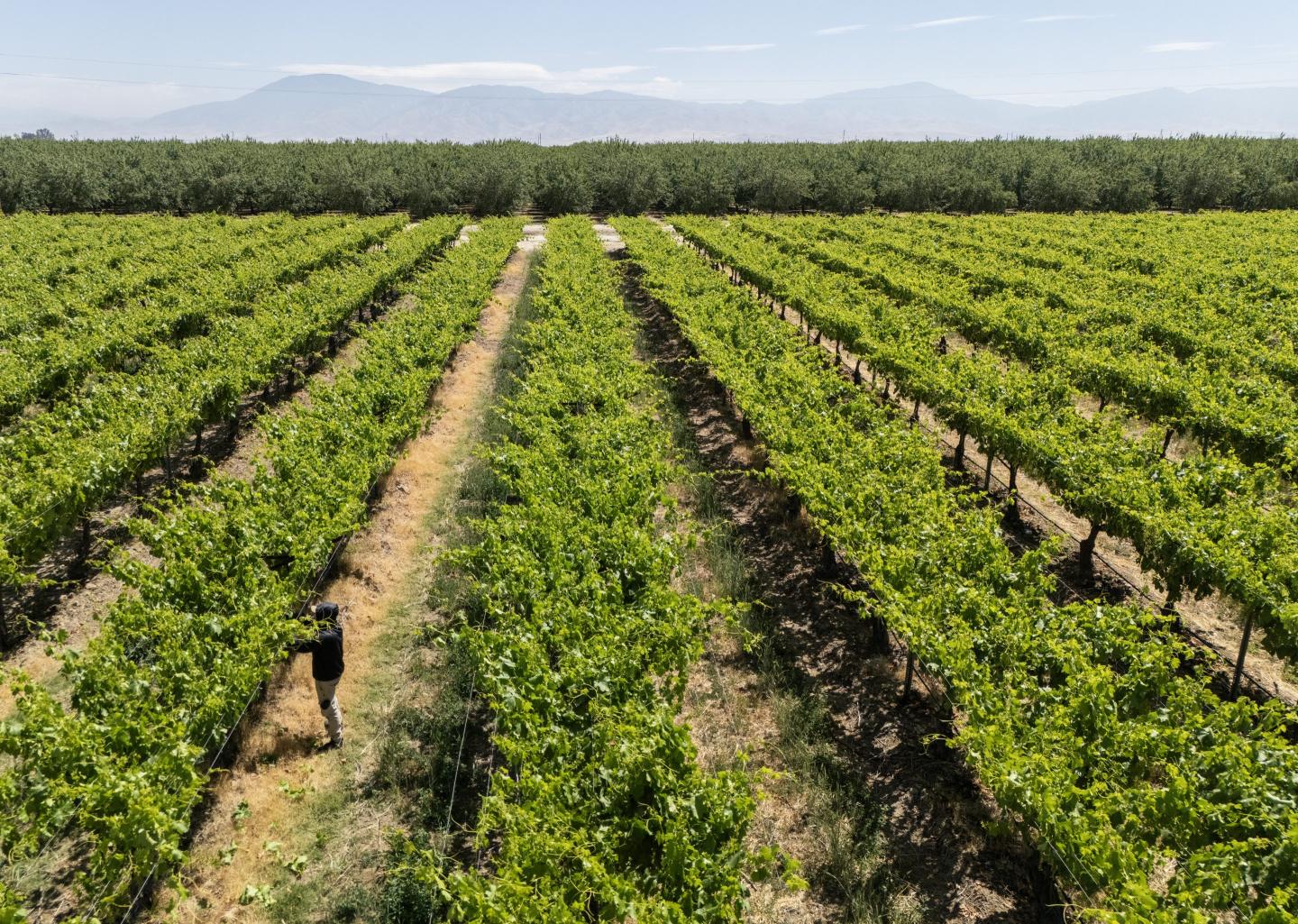
California farms and vineyards are facing a host of problems so far this year, including a drought caused mainly by unusually warm weather patterns in early spring, as reported by the state’s Department of Water Resources. This year’s snow levels in the Northern Sierra and Cascade mountains fell to 0% of their typical June average. These snow packs are needed each year to melt slowly throughout the summer and fall providing crucial water supply to the state.
In June, the national weather service warned millions in California to stay inside due to lethal temperatures around the state including parts of Oregon and Washington.
Almonds are California’s number one crop by acreage, number one agricultural export, second by value, and the number one specialty crop export in the country. Eighty percent of the world‘s almonds come from California with more than 7,000 almond farms across the state. Lately, water restrictions and higher costs are making it difficult for growers.
The story is the same for pistachios. California produces nearly all of the U.S. supply (about 99%) and accounts for over 60% of global pistachio production. 600,000 acres are planted across the Central Valley contributing more than $1.6 billion in annual value to the state’s economy. Fresno, Kern and Tulare counties reported a combined $800 million loss for pistachio production so far this year.
In May, officials in Kern County alone also reported a 42% loss in cherry production this year due to a hot stretch in March followed by April rain accounting for a total loss of more than $13 million for growers.
The University of California recently held workshops on how to grow grape and nut crops during extreme weather, heat, drought, pest issues and greater climate variability.
Normally, California boasts an agriculture industry with more than 350 commodities that account for over $100 billion in related economic activity.
In 2025, California passed Japan as the world’s fourth largest economy with farmers representing a large part of that milestone. In 2024 alone, 1.2 million agricultural related jobs were produced. California continues to rank as the most agriculturally productive state in the nation.
California also leads the country in Agriculture Technology innovation with 15 Agricultural Science universities and 11 Tier 1 research universities. In 2021, California Ag Tech startups received over $5 billion in venture capital funding which equals more than 18% of global Ag Tech investment.
Despite representing a relatively small share of the country’s total farmland, California leads the nation with specialty crops, fruits, vegetables, nuts, and dairy with its favorable growing conditions. California provides nearly 75% of the nation’s fruits and nuts and over one-third of all vegetables.
Extreme heat and persistent drought present serious, existential threats to California’s multi-billion dollar specialty crop industry. Fruits, vegetables, and tree nuts are highly sensitive to environmental impacts. Changing weather patterns also disrupt plant biology, deplete water infrastructure, and increase operating costs. To combat the current crisis the agriculture industry very much needs new technologies that can reduce water use and labor, grow crops faster, and increase crop yield. Traditional agricultural methods are no longer sufficient to handle the speed and intensity of these environmental changes.
Legacy farming practices depend on predictable weather patterns, but today’s extreme weather requires effective, real-time interventions to keep farms economically viable and ecologically sustainable.
State and local leaders can step up by highlighting more innovation than ever in this perilous time to support California’s vital role in global food production.
The opinions expressed in Fortune.com commentary pieces are solely the views of their authors and do not necessarily reflect the opinions and beliefs of Fortune.