
• Home
  • Latest
  • Fortune 500
  • Finance
  • Tech
  • Leadership
  • Lifestyle
  • Rankings
  • Multimedia

Trendingnow

1

Jamie Dimon and his wife, Judith, donate $12 million to 12 HBCUs—betting they're the 'springboard to success' for the next generation

2

Baby boomers are collecting 265% of what they paid into Social Security—and millennials are paying the price

3

Current price of oil as of August 26, 2026

1

Jamie Dimon and his wife, Judith, donate $12 million to 12 HBCUs—betting they're the 'springboard to success' for the next generation

2

Baby boomers are collecting 265% of what they paid into Social Security—and millennials are paying the price

3

Current price of oil as of August 26, 2026
EuropeLetter from London
Europe

The Apollo missions brought us rechargeable hearing-aid batteries and quakeproof buildings. The European defense industry is now looking for its own ‘NASA moment’

Kamal Ahmed
By
Kamal Ahmed
Kamal Ahmed
Executive Editorial Director of Europe
Down Arrow Button Icon
Kamal Ahmed
By
Kamal Ahmed
Kamal Ahmed
Executive Editorial Director of Europe
Down Arrow Button Icon
August 27, 2026, 9:26 AM ET
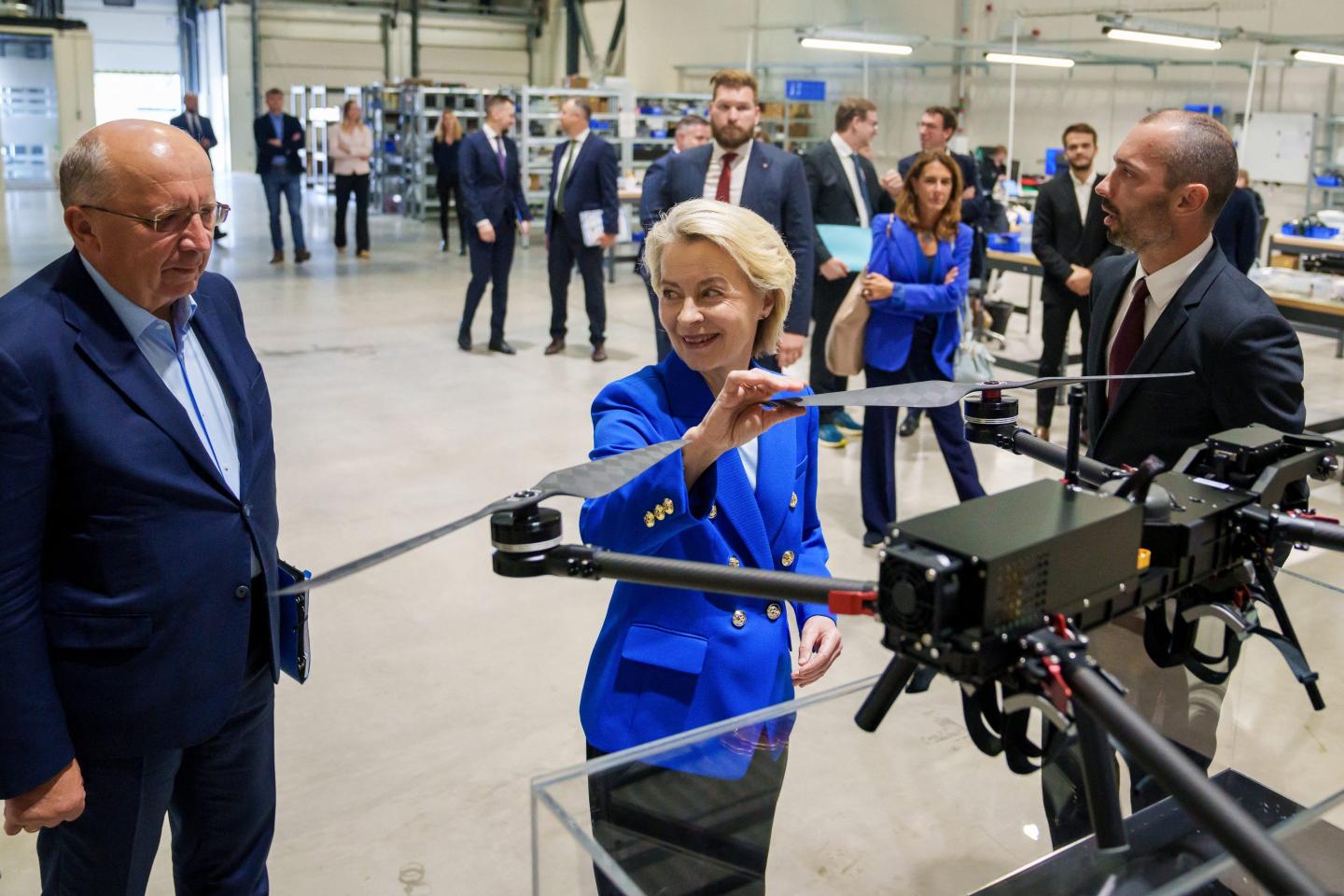
European Commission President Ursula von der Leyen (C) looks at a drone as she stands next to European Commissioner for Defence and Space Andrius Kubilius  (L) and Origin Robotics co-founder and Chief Technology Officer (CTO) Agris Kipurs (R).
European Commission President Ursula von der Leyen (C) looks at a drone as she stands next to European Commissioner for Defence and Space Andrius Kubilius (L) and Origin Robotics co-founder and Chief Technology Officer (CTO) Agris Kipurs (R).GINTS IVUSKANS/AFP via Getty Images
Add Fortune on Google for similar content.

Fly-by-wire technology, packaged food safety, the quakeproofing of buildings, and rechargeable hearing-aid batteries—the list of innovations linked to the Apollo missions is as long as it is eclectic. NASA is so proud of the civilian applications of the technologies first invented to help put a human being on the moon, it has published its own dedicated web entry, “tech-transfer-spinoffs.” 

Recommended Video

The European defense industry looks on in envy. For decades, engineering, technical, and industrial processes first explored as methods of keeping nations safe or attacking enemies have also found their way into the civilian world. Infrared cameras were developed by the British for anti-aircraft defense in the 1920s. Annoyingly for the sector—often the butt of protests from those who wave placards—it is poor at publicizing such advances. Or promoting greater understanding of how such defense to civilian transfers support wider economic growth. 

The reasons why are easy to fathom. Less than a century ago, Europe was a continent destroyed by conflict. Until the 1990s, the Cold War threatened nuclear destruction over a political fault line that split Europe in half. Defense spending—viewed by many as akin to Big Tobacco, only worse—is often controversial. 

The atmospherics are changing. With Russia’s ongoing war with Ukraine and America no longer an ever-willing ally, the European defense industry is gaining new fans and significant amounts of investment. Jobs are well paid, and often located in those areas most blighted by manufacturing decline. Productivity levels can be as much as 25% above the national average, a healthy fillip to otherwise anemic economic growth figures. 

In the U.K., defense turnover reached £36.5bn ($49.6bn) in 2026, a 42% increase since 2022, according to the defense industry publication Calibre Defence. In the EU, defense turnover is now running at €148bn ($172.3bn) annually, an increase of 60% since 2021. Politicians, from the right and, more surprisingly, the left are falling over themselves to reveal their “tough on security” credentials. 

This is more than a sophisticated arms race aimed at repelling threats and protecting borders. Defense spending is resurrecting an engineering and manufacturing base many believed had gone forever, replaced by finance, law, and people who make coffee. The U.K., France and Germany are home to world-leading defense companies.

A “NASA moment” would be useful–a direct way of telling the public that, whatever their views on making bombs and drones, the civilian world is well served by a flourishing defense sector beyond the simple fact of keeping nations safe. 

Read more: Glenn Fogel runs the world’s largest online travel business. He still personally reads customer complaints because ‘you gotta get that sh*t right’

Examples of how to achieve such a moment are abundant. Last year the U.K. launched the Technology and Growth (TAG) Alliance, bringing together the defense industry, investors, and civilian businesses. Spin-outs include BAE Systems’ Rho-C, an ultrasound technology originally built for submarines now being used to support the oil and gas sector and nuclear power plants. Stirling X, backed by Gallos Technologies, a defense fund, is developing drone technology that can map critical infrastructure such as national power grids.    

“The U.K. already produces world-class defense innovation. Our challenge is turning more of it into commercial success,” said Hetti Barkworth-Nanton, the chair of the TAG Alliance. Andy Haldane, the former chief economist of the Bank of England, said it was time to tackle the lag between defense breakthroughs and their spread to the wider economy. 

In France, the Agence Innovation Defense encourages the development of dual-use technologies. NATO’s DIANA (Defense Innovation Accelerator for the North Atlantic) does a similar job. 

Google was invented in part via funding from the U.S. defense sector. With economic growth struggling, Europe needs to become more confident in promoting the long-tail effects of a revitalized sector. 

About the Author
Kamal Ahmed
By Kamal AhmedExecutive Editorial Director of Europe

Kamal Ahmed is the executive editorial director of Europe. Kamal is the author of Letter from London, Fortune Europe's weekly take on global business as seen from London. Previously, he was director of audio at The Telegraph and presenter of The Daily T podcast.

See full bioRight Arrow Button Icon
Add Fortune on Google for similar content.

Latest in Europe


Most Popular

Fortune Secondary Logo
Rankings
  • 100 Best Companies
  • Fortune 500
  • Global 500
  • Fortune 500 Europe
  • Most Powerful Women
  • World's Most Admired Companies
  • See All Rankings
  • Lists Calendar
Sections
  • Finance
  • Fortune Crypto
  • Features
  • Leadership
  • Health
  • Commentary
  • Success
  • Retail
  • Mpw
  • Tech
  • Lifestyle
  • CEO Initiative
  • Asia
  • Politics
  • Conferences
  • Europe
  • Newsletters
  • Personal Finance
  • Environment
  • Magazine
  • Education
Customer Support
  • Frequently Asked Questions
  • Customer Service Portal
  • Privacy Policy
  • Terms Of Use
  • Single Issues For Purchase
  • International Print
Commercial Services
  • Advertising
  • Fortune Brand Studio
  • Fortune Analytics
  • Fortune Conferences
  • Business Development
  • Group Subscriptions
About Us
  • About Us
  • Press Center
  • Work At Fortune
  • Terms And Conditions
  • Site Map
  • About Us
  • Press Center
  • Work At Fortune
  • Terms And Conditions
  • Site Map
  • Facebook icon
  • Twitter icon
  • LinkedIn icon
  • Instagram icon
  • TikTok icon
  • YouTube icon

    Latest in Europe


    Most Popular

    © 2026 Fortune Media IP Limited. All Rights Reserved. Use of this site constitutes acceptance of our Terms of Use and Privacy Policy | CA Notice at Collection and Privacy Notice | Do Not Sell/Share My Personal Information
    FORTUNE is a trademark of Fortune Media IP Limited, registered in the U.S. and other countries. FORTUNE may receive compensation for some links to products and services on this website. Offers may be subject to change without notice.