
Good morning. The Big Apple has a new claim to fame. According to a recent report, New York City has overtaken Silicon Valley to become North America’s top market for tech jobs. The report, by commercial real estate firm CBRE, found that the New York metro area had 394,000 techies at the end of last year, while the San Francisco Bay area’s total dipped to roughly 375,000.
The reason: Wall Street’s voracious appetite for AI talent combined with a slow, but continual drip of layoffs at many of Silicon Valley’s Big Tech firms. But CBRE notes that the Bay Area still ranks No.1 for its overall “Tech Talent” ranking which includes things like wages and AI strength. And we still have better burritos in San Francisco!
Today’s tech news below. —Alexei Oreskovic
Want to send thoughts or suggestions to Fortune Tech? Drop a line here.
Apple layoffs on eve of new CEO
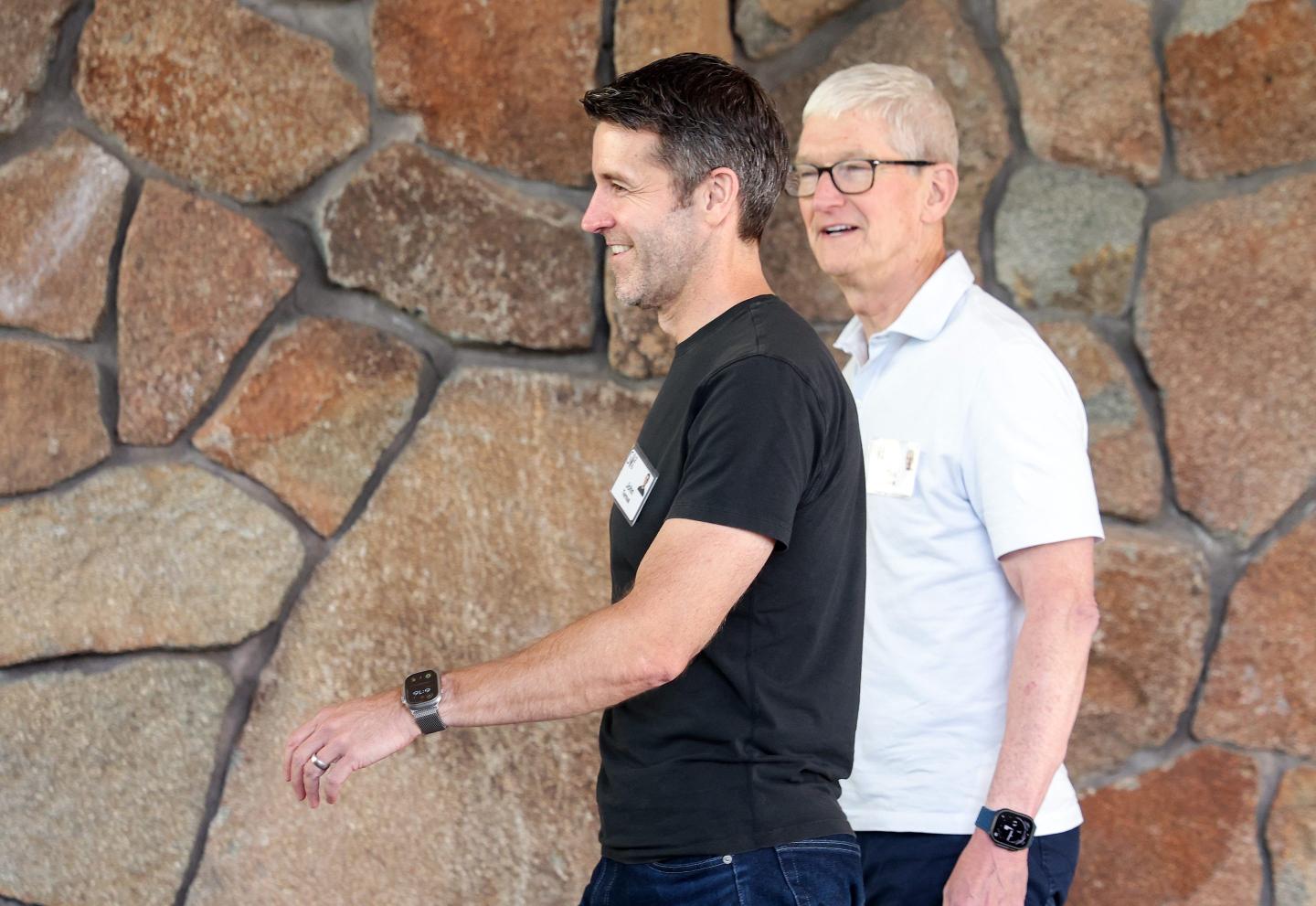
Apple is laying off roughly 200 employees in jobs related to Siri and VisionPro, two of the company's most troubled products. The cuts essentially shut down a team that worked on games for the poorly selling VisionPro headset and pares down a group making 3D videos, according to Bloomberg. Another big chunk of affected employees worked on features for the Siri digital assistant, which has struggled to match the capabilities of AI chatbots from the likes of OpenAI, Anthropic, and Google (Google is now partnering with Apple to revamp Siri).
Apple told Bloomberg that it was realigning some teams in order to "evolve" the business to provide the best experience for users. "While we will create new roles as part of this change, it will also impact a limited number of existing roles," Apple said.
The job cuts are tiny in relation to the overall company, which had 166,000 full time employees in September 2025 (the last time Apple disclosed its headcount). But as John Ternus prepares to take the CEO job just over one week from now, the timing seems designed to get some unpleasant work out of the way and let the new boss come in with clean hands. —AO
Amazon feels memory bite
Amazon has raised prices for several of its first-party devices, including its Echo smart speakers and Fire TV line, making it the latest big tech company to increase consumer costs as memory chip shortages pressure several industries.
The company raised prices across its hardware product line last week, according to a review by Fortune. This includes raising the cost of its base Echo Dot from $49.99 to $79.99 and its Echo Show 11 from $219.99 to $249.99. It also raised its 16-gigabyte Kindle from $109.99 to $149.99 and its 16-gigabyte Kindle Paperwhite from $159.99 to $199.99.
An Amazon spokeswoman, who confirmed the price increases, said in a statement that the consumer electronics industry is “facing significant increases in memory and storage component costs. After absorbing these increases for as long as we could, we recently adjusted pricing across our product lines.”—Sebastian Herrera
Powering the cloud from inside the Earth
For 60 years, Ormat Technologies strategically built geothermal power plants where nature allows—over underground reservoirs of high-pressure water or steam—including around the so-called Pacific “Ring of Fire” from Asia to the Americas. Doing so made Ormat the largest geothermal operator in the world.
Today, Ormat hopes to grow exponentially with the AI data center boom, aiming to build baseload, clean power plants throughout the Western United States, utilizing both new technologies and old. The goal is called EGS—enhanced geothermal systems—marrying the traditional geothermal business with the newest oil-drilling and fracking techniques. The idea is that EGS will allow for the construction of next-generation geothermal power almost anywhere the customer desires by tapping into deeper, higher-temperature underground reservoirs much more easily. Read the full story here. —Jordan Blum
More tech
—Hugging Face exploring a sale. Deal could be $13 billion or more.
—TikTok and DOJ settle children's privacy lawsuit. $400 million but no admission of wrongdoing.
—Schmidt vs Sergey: Google's ex-CEO and one of its cofounders reportedly at odds fighting California’s billionaire tax
—Nvidia considering investing in Perplexity, giving the AI firm a $30 billion valuation.
—The AI boom is lifting economies across Asia. But for Southeast Asia, it might be a blip.
—How Silicon Valley just might save America from the growing drone threat.