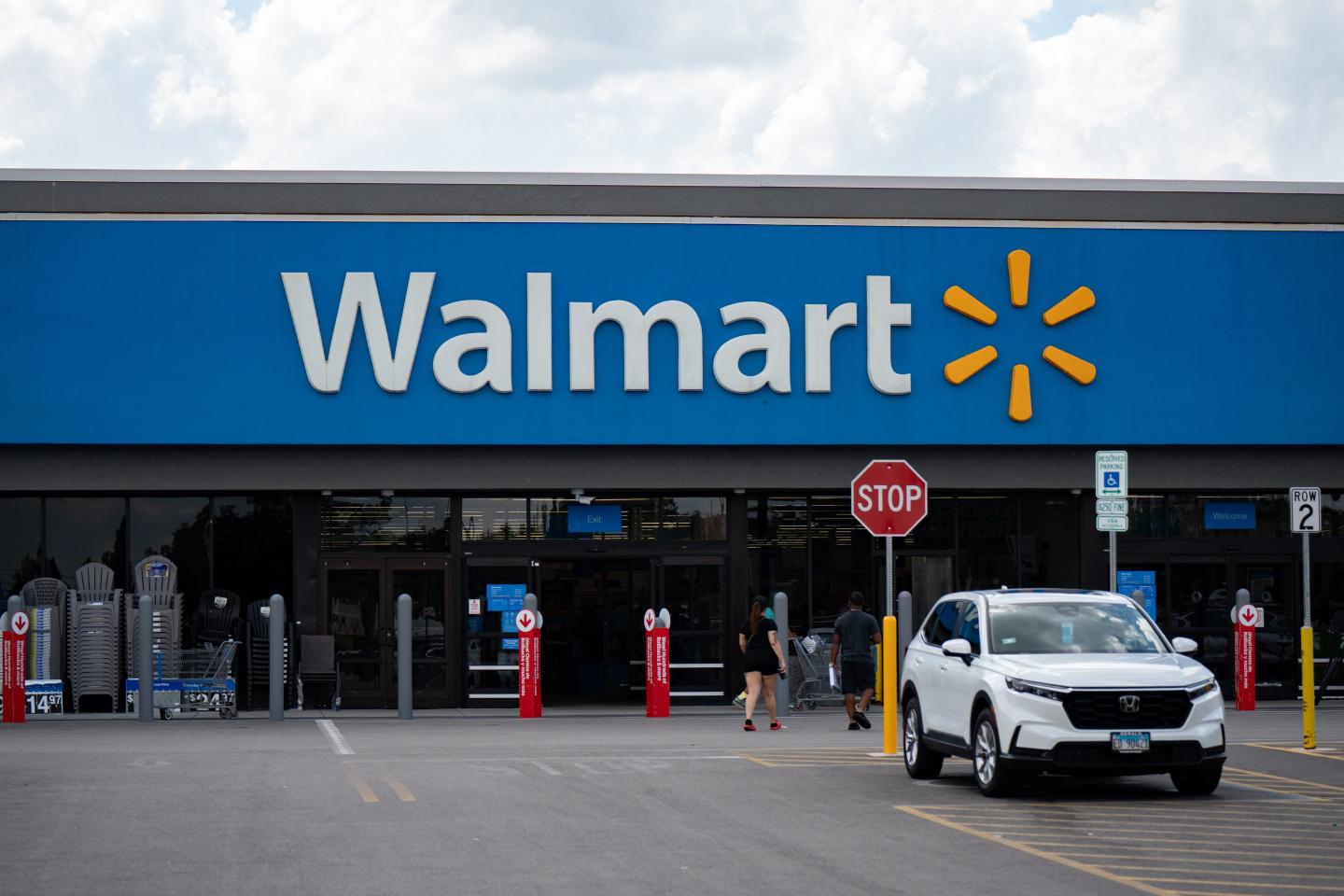
Walmart spent much of the past year warning that Trump’s now struck-down Liberation Day tariffs would raise prices on store shelves. Now, nearly $3 billion of that money is coming back to the retail giant, and it plans to use the windfall to lower prices as consumers feel the pain in their pockets.
Walmart was eligible for $2.9 billion in tariff refunds that the Supreme Court ruled were unlawfully imposed under President Donald Trump’s emergency powers—approximately half a percent of its annual U.S. sales. CFO John David Rainey said on Walmart’s earnings call Thursday that the company has now received “substantially all” of that money and will reinvest it into lowering prices “because customers need us to.” Walmart shares as much as 9% in Thursday trading after U.S. sales growth hit a 6-year-low.
“We’ve taken a disciplined approach to investing these funds back into customer experience and price leadership, prioritizing investment in grocery and general merchandise categories,” Rainey told analysts on the call.
The retailer now has more than 11,000 items on “rollback,” its term for temporary price reductions, up from roughly 7,200 at the end of the previous quarter. Walmart CEO John Furner said that was the highest number he could remember “at least in recent times.” The money has gone toward discounts, notably ground beef, where Furner said higher prices were hurting customers. Walmart previously passed on tariff-related costs to consumers, with prices for products like electronics and appliances rising more than 3%, up from 1.7% before the tariffs.
“Ultimately, we’re trying to reinforce the everyday low-price model and save customers money,” Furner said.
Shoppers also bore much of the tariffs’ cost on top of inflation, research indicates. Dallas Fed researchers estimated core inflation would have been 0.8 percentage points lower in March if tariffs weren’t imposed. Separate research from the Kiel Institute estimated that Americans paid for 96% of the costs of tariffs.
Gas prices squeezed Walmart customers as fewer people shopped
The push to lower prices comes as Walmart said its customers are feeling more strained because of gas prices, echoing warnings that executives have repeated since May.
Rainey told analysts the pressure became more noticeable in June as gas rose above $4 a gallon and shoppers began making more tradeoffs in what they bought. The company now expects more than $2 billion in additional fuel-related costs this year compared with what it anticipated when it issued its original forecast.
Fewer people also shopped at Walmart as the K-shaped economy kept high-income buyers and pushed out lower-income ones, with the biggest gains in market share for Walmart from households making over $100,000.
Walmart’s U.S. sales rose 2.6% in its latest quarter, below analysts’ expectations of 3.8%, the retailer’s first comparable-sales miss in more than five years. Customer traffic grew 1.5%, down from 3% the previous quarter, as higher fuel prices put more pressure on consumers. Rainey previously warned in May that shoppers filled their gas tanks with fewer than 10 gallons on average for the first time since 2022, calling it an “indicator of stress.”
Walmart said sales in its core categories outside health and wellness have remained in the 3% to 4% range, while global e-commerce sales rose 23%. The company also raised its full-year sales outlook to growth of 4% to 5%, from 3.5% to 4.5% previously, citing first-half performance and expectations that its price investments will drive stronger sales and market-share gains.