
Good morning. Tech Editor Alexei Oreskovic here today, stepping in for Andrew.
We may be entering a post-literate society, but lots of techies are still writing books. Among the latest authors flogging books are Zynga founder and entrepreneur Mark Pincus (“Life at the Speed of Play”) and LinkedIn CEO Ryan Roslansky (“Open to Work: How to Get Ahead in the Age of AI”).
But the book that got the most buzz this weekend is the forthcoming novel from MacKenzie Scott, the billionaire philanthropist who was formerly married to Amazon founder Jeff Bezos. Scott, who studied under novelist Toni Morrison at Princeton University and who has previously written two novels, teased her latest work on her personal substack on Saturday, the New York Times reported. Scott didn’t share much, but revealed that the book is 317 pages (not including the epilogue) and is titled “Last Days in Two Nations (A History in Eighteen Minds).”
Apparently Scott plans to publish the book serially—which means she may not have to sell it on Amazon!
Today’s news below.
Want to send thoughts or suggestions to Fortune Tech? Drop a line here.
How SpaceX’s most-feared trading day turned into a 6% rally
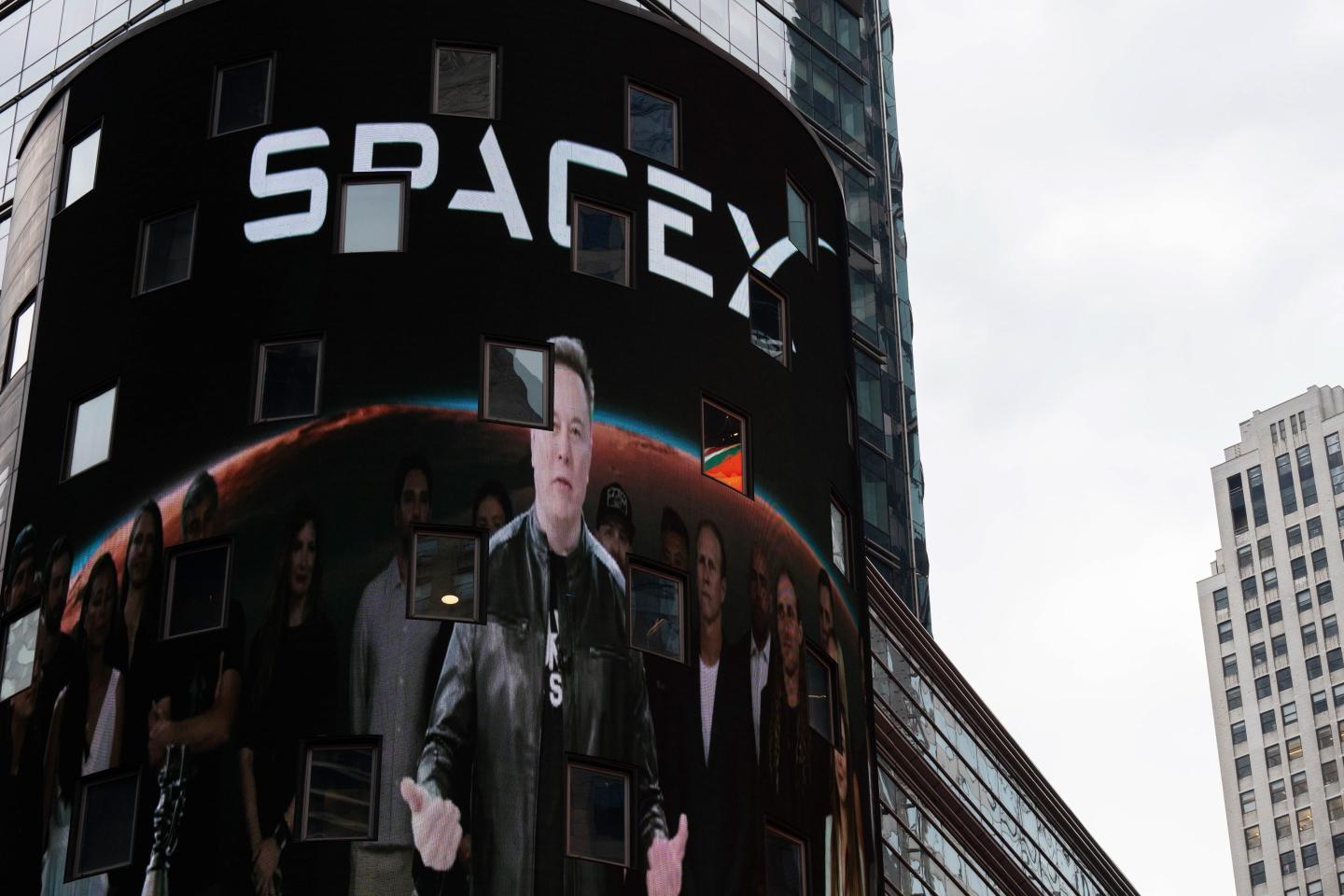
For weeks, SpaceX investors braced themselves for Thursday August 6, when nearly a billion insider and employee shares, about 20% of the company, became eligible to sell at once.
With the stock already trading at roughly half its brief post-IPO high, the flood of extra supply—effectively doubling the freely traded float overnight—would only further increase the downward pressure on the stock price, the thinking went.
Instead, after some slight weakness, the stock steadied, and then bounded up 6% higher. So, what gives?
As one former SpaceX worker told Fortune, it turns out that company employees didn’t need an IPO to get paid. After all, the company has run roughly semiannual buybacks for about a decade now. “These are not people waiting to get their first dollar back,” the former employee said.
Gil Luria, a D.A Davidson analyst, said that expiration of the lockup was also already priced in. “The stock’s been down almost every day for the last three or four weeks in anticipation of this,” said Luria. Read the full story here. —Eva Roytburg
Amazon's mega gas-burning power plant
As AI companies build massive data centers to train and run their latest AI models, many are including private, on-site energy facilities as part of the design. The idea is for the data centers to have a dedicated supply of electricity that's not reliant on the public grid—and that doesn't take energy away from everyone else who relies on the grid.
Amazon is taking the concept to the next level. The company is investing in a project to build a massive natural-gas burning power plant in West Texas, according to a report in The New York Times. According to the permits reviewed by the Times, the plant in Pecos County will be capable of generating 7.65 gigawatts of power through its 35 natural gas turbines. At full scale, the plant would be allowed to emit 33 million tons of carbon dioxide per year, making it the largest CO2 emitter of any power plant in the U.S., according to the report.
An Amazon spokesperson told the Times that the company remains committed to its goal of being carbon neutral by 2040—a goal Amazon has struggled to meet because of the AI boom—even with the new power plant, and noted that the company was exploring using solar energy and battery storage at the data center that would be fed by the natural gas power plant.
Amazon isn't the only tech company to face scrutiny over its data centers' energy supply. SpaceX recently entered into an agreement with the Mississippi Department of Environmental Quality to remove the 69 temporary mobile turbines in Southaven, Mississippi that are powering its Colossus data center.—AO
Google quietly discontinues its Earth AI feature
Google halted the rollout of an AI image generating feature within its Google Earth satellite imagery service less than one day after its launch.
The feature allowed users to overlay AI-generated scenes onto real satellite, aerial and 3D imagery. Google envisioned legitimate uses such as visualizing planning concepts or historical reconstructions, but users almost immediately began generating fabricated disasters, false military installations and conflict scenes tied to real-world locations.
Google had released the Nano Banana software integration with Google Earth with a few safeguards, but clearly, they were not sufficient. The company said it was rolling back the feature “while implementing stronger guardrails."
“We know that people uniquely trust Google Earth for a reliable view of the world,” a Google spokesperson told Fortune. “It’s important to note that generated images didn’t appear in the main Google Earth experience for others… and were watermarked as AI generated.” —Joshua Hong
More tech
—Samsung foldable phone pre-orders jump 30%. Good news for Apple?
—Hugging Face hack is now an OpenAI PR crisis that’s costing it millions.
—Routers are hot again. But we're talking about AI routers.
—Whatnot is now worth $20 billion, and the startup is focused on live commerce not AI.
—AI is changing work faster than the data can keep up.