The era of fossil fuel supremacy was supposed to be nearly over by now—or at least headed that way. Instead, as Olivier Le Peuch, the CEO of the energy services giant SLB, put it in a recent Fortune feature: “Exploration is back.”
Following the oil shocks of the war in Iran and the closures of the Strait of Hormuz, consumers around the world are paying more for products and at the pump, farmers are struggling to fertilize their crops, and people in poorer nations are going hungry. Meanwhile, countries are scrambling to construct new supply chains and stockpile a bigger buffer to protect against geopolitical uncertainty. All this adds up to a boom for Big Oil, and for the companies that do oil and gas exploration, including SLB.
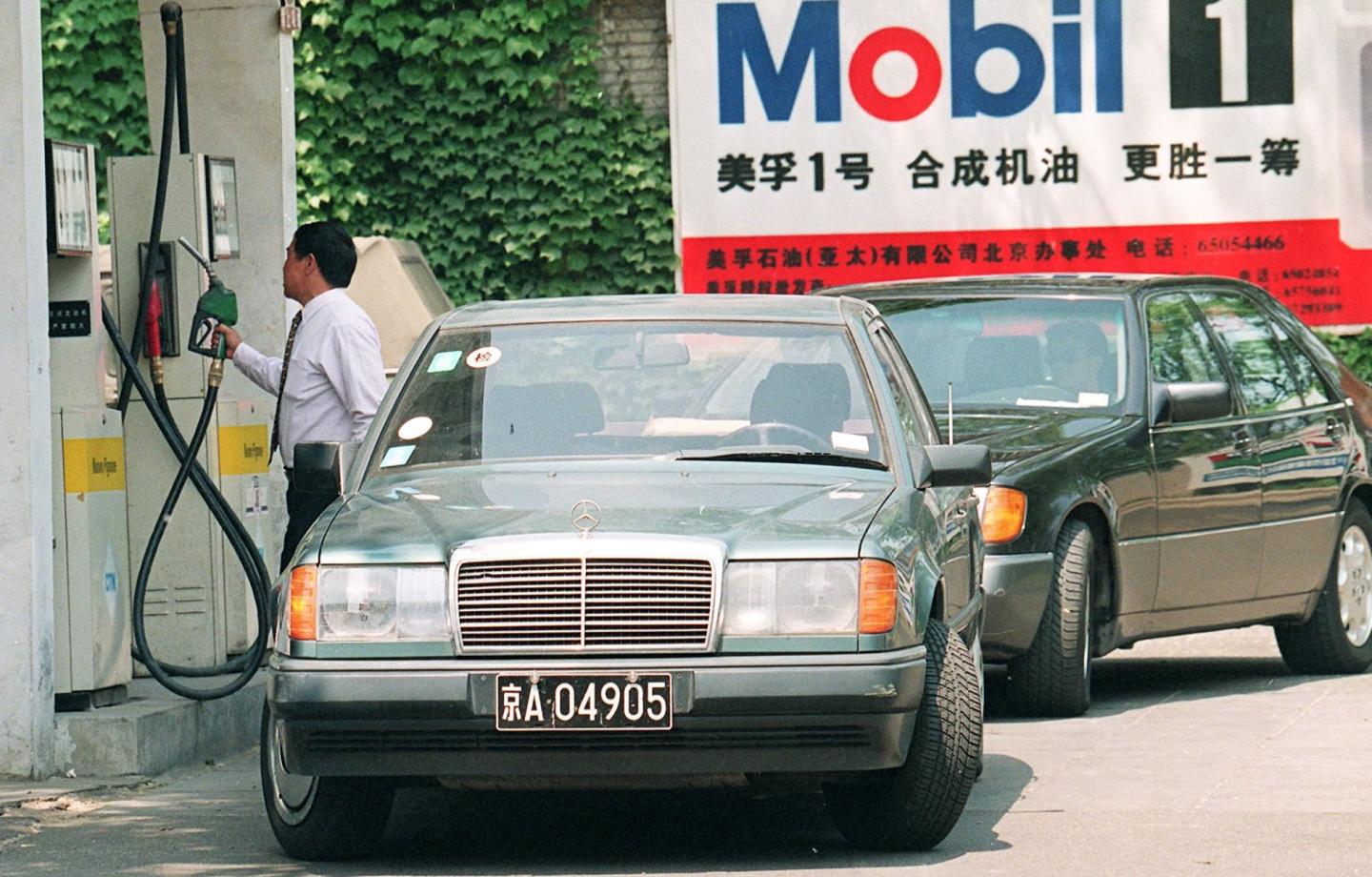
From this vantage point, a 1995 Fortune feature declaring that it was the moment for a “last big play in oil” is a fascinating read. In it, Richard Teitelbaum predicts a final hurrah for the old hydrocarbon order. His thesis: Rising demand from the developing world, especially China, would strain supply, push prices higher, and create one more major oil bonanza for wildcatters and other energy investors before the wells began to run dry. At the time, global demand hovered around 70 million barrels a day; Fortune’s chart imagined 95 million barrels a day by 2010 as a kind of upper bound before supply would begin to collapse.
We know how that turned out. World oil consumption blew past 95 million barrels a day in the 2010s and is now around 102 to 104 million barrels a day—despite efficiency gains, the rise of renewables, and a growing body of evidence of the role of fossil fuels in climate change.
That 1995 story caveats that “one relatively new scientific theory even holds that many underground reservoirs are replenishing themselves from previously unknown reserves below.” But what it couldn’t fully anticipate was the shale revolution: Beginning in the early 2000s, advances in horizontal drilling and hydraulic fracturing turned U.S. shale basins into growth engines and transformed the country into a leading producer of both crude oil and natural gas. Fracking went from niche technique to the dominant mode of production, accounting by the mid-2010s for more than half of U.S. crude output. By 2020, the U.S. had become a net exporter of petroleum for the first time in decades, and the world’s leading exporter of liquefied natural gas (LNG). The “last big play in oil” turned into three decades of bigger and bigger plays.
Teitelbaum’s piece flags the role of oilfield service outfits as the leverage point in any new boom. Founded in 1926, SLB—previously known as Schlumberger—had already been a major player for decades, and is now the largest oilfield services and energy technology company in the world. As Fortune’s energy editor Jordan Blum writes in his feature on the company, SLB has parlayed a century of subsurface expertise into a broader technology and infrastructure business, helping oil companies squeeze more out of oilfields while also partnering with tech hyperscalers building massive AI data centers.
The investors Teitelbaum profiled in 1995 were betting that a combination of rising demand, geopolitics, and technology would produce one more big oil windfall. Thirty years later, SLB and others are making a similar bet. This boom probably won’t be constrained by supply underground so much as by the climate overhead, making a world of “peak demand” more plausible than the old specter of “peak oil.”