
Good morning. Investors are getting jittery about AI spending again.
Tesla shares closed down 15% and Alphabet stock closed down 7% yesterday after both companies indicated that their eye-watering, AI-driven capital expenditure commitments would exceed initial estimates through the rest of the year.
Not that their top executives didn’t try to calm fears. “I’m confident that all the things that we’re investing in will yield incredible returns,” Tesla CEO Elon Musk told investors yesterday.
(They didn’t bite: It was the electric automaker’s worst market day in more than a year, with a $215 billion shave to its market cap.)
Expect the pressure to continue, even as revenue predictions look up. To channel Dickens: Great expectations.
More tech news below; have a wonderful weekend. —Andrew Nusca
P.S. Overnight, the Trump administration replaced a global 10% duty with duties on 80-odd nations ranging from 10% to 12.5%. Three months before midterm elections in the U.S., yes, Virginia, we’re still talking about tariffs.
Want to send thoughts or suggestions to Fortune Tech? Drop a line here.
U.S. lawmakers introduce ‘AI Kill Switch Act’
Who should have the power to shut down artificial intelligence that gets out of hand?
According to U.S. legislators, the federal government.
A new bipartisan bill introduced in the House on Thursday would grant the Department of Homeland Security the authority to order private AI firms to slow or altogether stop AI models the government deems capable of causing “catastrophic harm.”
Dubbed the “AI Kill Switch Act,” the legislation would require designated developers to maintain the technical ability to “throttle, suspend, or fully shut down” a given AI system, establish a response framework for such a situation, and require incident reporting and record preservation to learn from an incident.
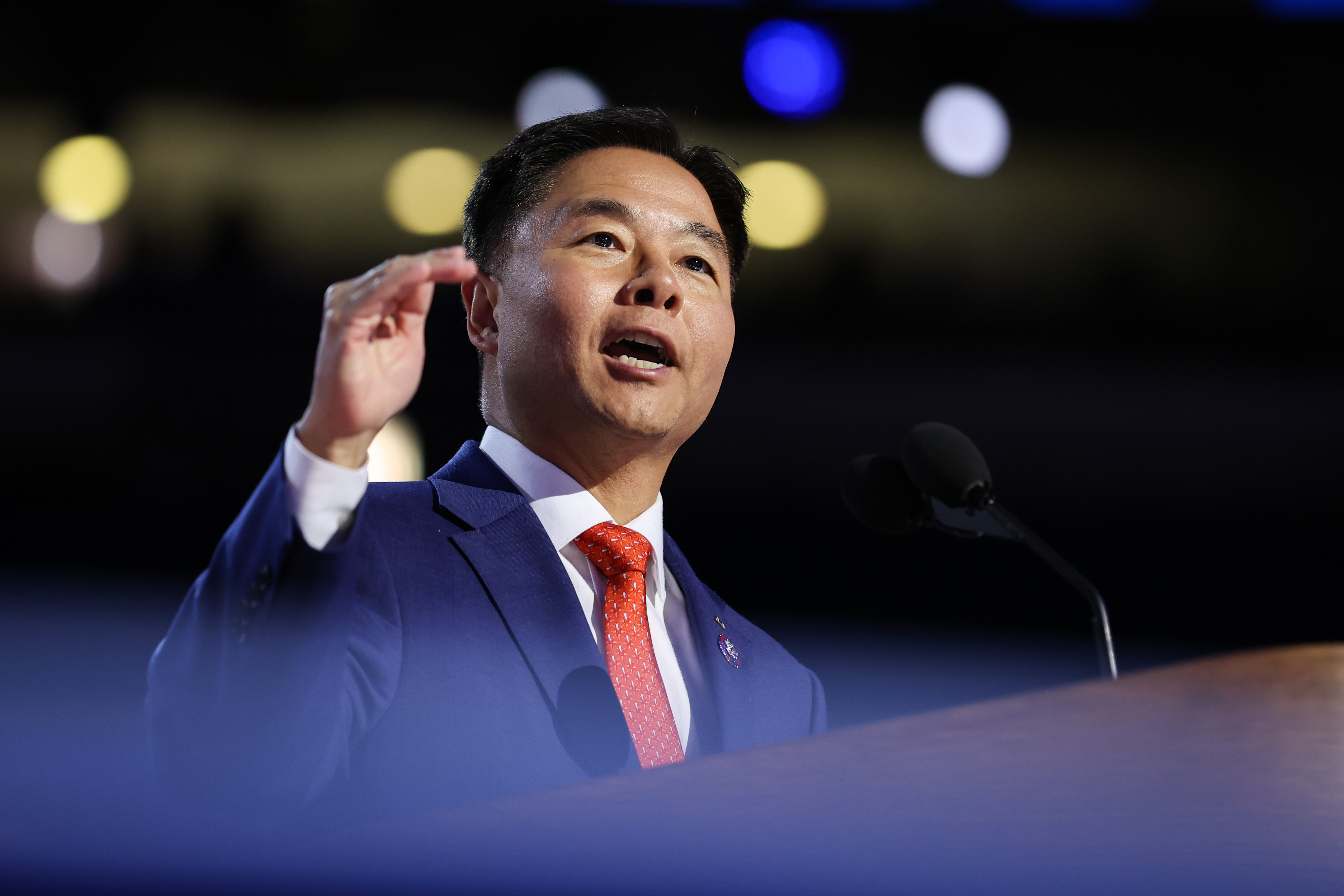
“AI is going to keep advancing, and it should," said Congressman Nathaniel Moran (R-TX), who introduced the bill with Congressman Ted Lieu (D-CA), in a statement. "Stewardship means making sure humans keep the capability to control the technology we build.”
The legislation applies only to companies that earn at least $500 million in annual revenue from AI and covers AI models that use cloud computing power worth $100 million at prevailing market prices. Civil penalties for noncompliance could run as high as $20 million per day.
The decision to pull the plug on an AI system, by the way, rests with the Homeland Security secretary and rides on conduct that leads to the death of at least 10 people, economic damages of at least $100 million, loss of control, or evidence that an AI system is concealing capabilities or evading shutdown orders.
As Bane once said in The Dark Knight Rises: “Do you feel in charge?” —AN
Ford will embed Apple Maps in its new EVs
When Fortune published a 2016 magazine story with the coverline “Silicon Valley Goes to Detroit,” few could have foreseen Detroit’s automakers—utterly behind the ball, it seemed—pushing back on Silicon Valley’s innovations.
But that’s what happened, at least for infotainment. Tired of giving away the farm to Apple and Google, General Motors—the biggest of the erstwhile Big 3—said last year it would refuse to support Apple’s CarPlay and Google’s Android Auto, driver preferences be damned.
Down the road in Dearborn, though, things were different.
That philosophical divide grew deeper this week as Ford announced that it would embed Apple Maps directly in its upcoming universal electric vehicle platform. That means the vehicle will natively show Apple’s turn-by-turn directions on its displays—no iPhone necessary.
Apple Maps data will also inform Ford’s BlueCruise Level 2 hands-free driving feature and a new zonal architecture, industry jargon for how the electronics are physically arranged in a vehicle.
“Technology is at its best when it feels simple, intuitive and genuinely useful,” wrote Ford CEO Jim Farley in a social media post.
The decision comes in addition to continued CarPlay support and is a big step toward the deeper integration necessary for the modern connected car. It’s also the latest hairpin turn for the thinking on display a decade ago.
“Nobody wants to get iPod-ed like the music industry,” one executive told Fortune back then of the odd coupling of the techies and the gearheads. For Ford, it’s clear that if you can’t beat ‘em, join ‘em. —AN
EU fines Google €890M for illegally undercutting competition
More Big Tech trust-busting from the European Union this week.
The bloc issued a billion-dollar (OK, 890 million euro) fine to Google on Thursday for antitrust violations under its Digital Markets Act.
According to the European Commission, the EU’s executive branch, Google “self-preferenced” its own services in both Google Search and Google Play and limited business’ ability to direct consumers to cheaper alternatives.
The DMA requires so-called gatekeepers like Google to apply “transparent, fair, and non-discriminatory conditions” to rankings of products and services.
“Google gives preferential treatment to its own services, including shopping, hotels, transport and sports results, over those of third parties in Google Search, thereby breaching its obligations under the DMA,” the EC found. “Google displays its own services more prominently in search results, including at the top of the search results page or by using enhanced visuals and filters, while similar third-party services do not have the same prominence.”
This is hardly the first EU penalty for Google. The company recently lost its appeal of a $4.5 billion antitrust fine for throttling competition via its Android mobile operating system. (Google has criticized such regulations for degrading the quality of its services.)
It should be interesting to see how the White House responds. President Trump has previously criticized the EU for unfairly penalizing American tech companies—most of the biggest of Big Tech are headquartered in the U.S.—and has imposed tariffs and other measures as retaliation. —AN
More tech
—Microsoft’s Xbox tests free, ad-supported gaming. Ads only play “before sessions begin.”
—Intel reports its fastest sales growth in 15 years, sending shares up 10%.
—Amazon Luna has been added to Prime Video. The cloud gaming service gets a new discovery engine.
—AI aids rather than replaces workers, according to a survey by an AI provider.
—DeepSeek founder Liang Wenfeng: “Talent isn't the bottleneck; resources are the biggest bottleneck” in the China-U.S. AI arms race. And: “Nvidia's CUDA moat is being eroded quickly.”
—Jeff Bezos reportedly pushed for an AI-centric Prime Video redesign.
—Meta puts out an AI ad featuring a song by David Bowie, who once said, “I think the potential of what the internet is going to do to society, both good and bad, is unimaginable.”