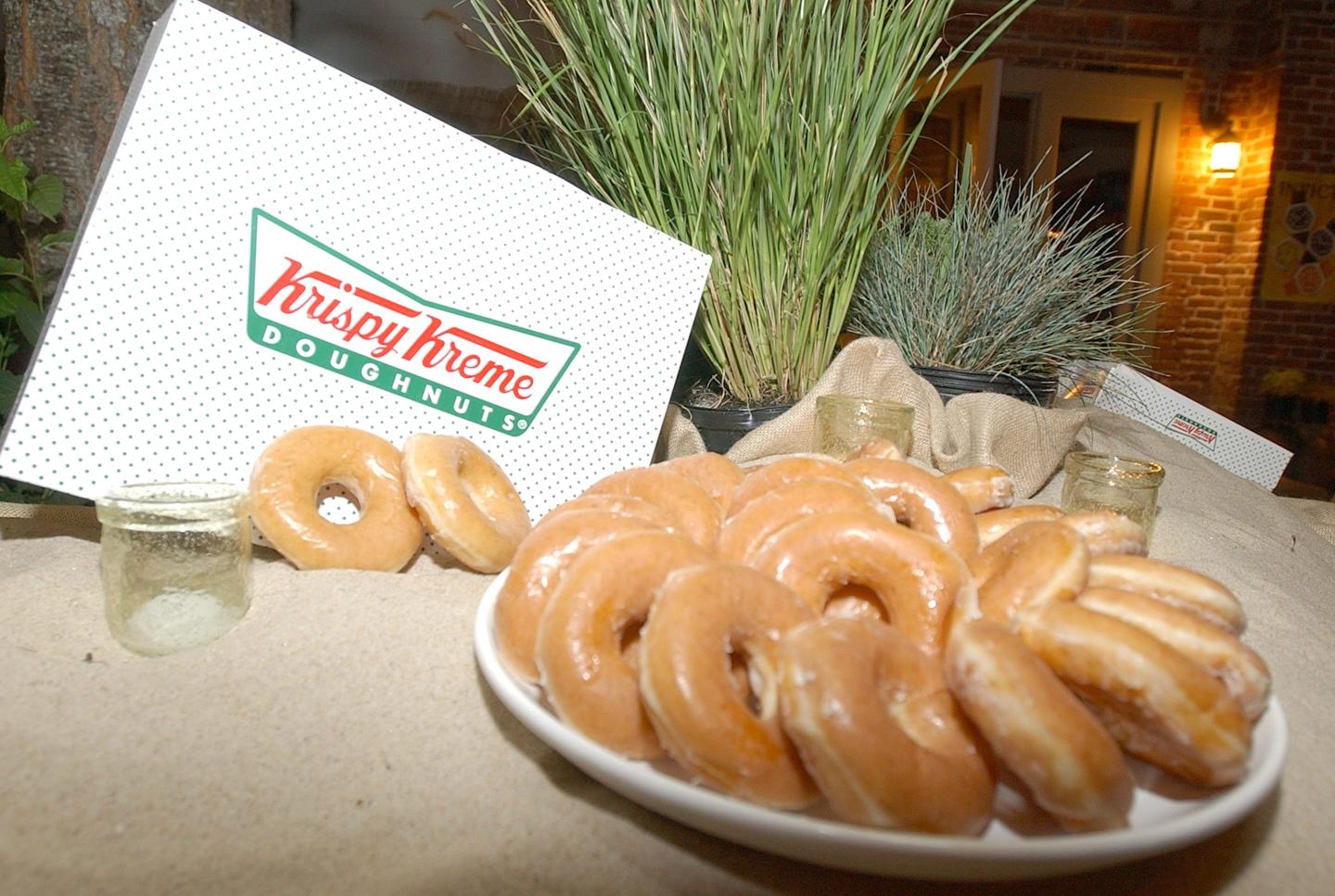
In 2003, in the wake of the dot-com bust, the hottest brand in America was no longer a tech company, Andy Serwer informed the world in a Fortune cover story. It was a donut shop.
Having IPOed three years earlier, Krispy Kreme’s stock had quadrupled while the overall market had fallen some 30% during the same period, Serwer noted. Earnings per share were growing faster than another juggernaut brand of the era: Starbucks.
And with good reason, Serwer explained: “If you’ve never sampled a Krispy Kreme, we should get one thing straight: These doughnuts—particularly the original glazed served hot—are amazingly good. (My older daughter says they taste like glazed fluffy clouds.)” The company had no advertising budget, he wrote, because “their wafting aroma is worth ten times more than any fancy Madison Avenue ad campaign.” And they seemed to be pretty much universally adored: “I say only three types of people claim they don’t like Krispy Kremes: nutritionists (your basic glazed has 200 calories and 12 grams of fat), Dunkin’ Donuts franchisees, and compulsive liars. Fortunately for the company, that’s not a large group.”
Serwer goes on to tell the yarn of how this Winston-Salem-based bakery became a nationally adored brand, promising the reader that it will be “part Southern gothic…and part sophisticated yet homey marketing.”
Krispy Kreme’s brand story begins with its founder, Vernon Rudolph, buying a guarded yeast-raised doughnut recipe from a New Orleans French chef. On July 13, 1937 (the 89th anniversary was last week!) Rudolf opened a wholesale donuts business in a small building in Winston-Salem, initially selling to local grocery stores. That “wafting aroma” soon drew passersby to the plant, and Rudolph cut a hole in the wall so he could sell hot doughnuts directly to people on the sidewalk, creating an early form of “doughnut theater” retail.
There were ups and downs, including a disastrous sale to a Chicago-based conglomerate and a scrappy group of franchisees buying the brand back to restore its soul. The donut shop’s expansion across the nation culminated in a New York City debut in 1996—marked by the brilliant stunt of sending boxes of fresh donuts to NBC’s Today show for Al Roker to eat on air, delivering the kind of earned media most marketers could only dream about. And Serwer’s delightful story is full of delicious tidbits, from bare-chested “donut men” wrestling at a company gathering to sublime descriptions of hot donuts plowing “through a glaze waterfall.”
Today, Krispy Kreme remains a beloved brand, with stores and retail partners across the U.S. and around the world. It’s also flailing somewhat, as a relatively small public company trying to regain momentum after recent financial hits, a halted McDonald’s partnership, and the headwinds of the GLP-1 era.
Read now, Serwer’s story feels like a time capsule from a moment where the tech world’s domination of the American economy didn’t feel like a foregone conclusion. Krispy Kreme donuts, he wrote, were not some “fly-by-night dot-com.” They were here to stay “unless the fat police run riot across this land” because they were “a product that people not only love but understand.”