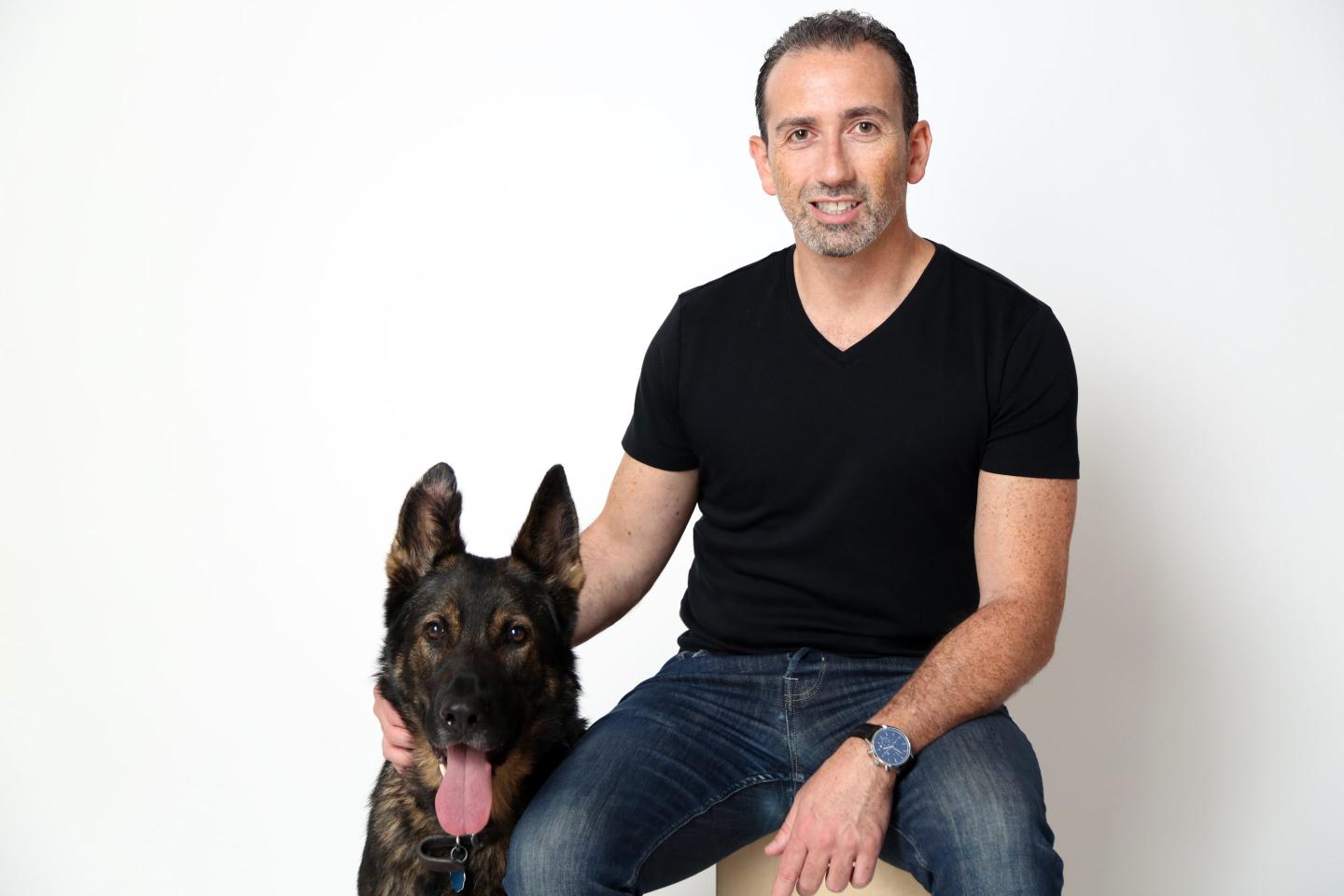
Jonathan Bensamoun has a 100-pound German Shepherd named Thor—and a story every dog owner knows.
A few years ago, while in the Hamptons, his perfectly-trained shepherd spotted a family of deer. “He looks at me, looks at the deer,” Bensamoun recalled. “And he just bolted.” For several minutes, Bensamoun was powerless. Luckily Thor returned on his own.
That moment is what Bensamoun built Fi—a smart collar company that tracks pets’ locations and monitors their health in real time—to solve. Now the startup is launching the Fi Ultra, the first dog collar to run on Starlink’s direct-to-cell satellite network, Fortune learned exclusively.
Every GPS pet tracker on the market—from Fi’s older models to rivals Tractive and Garmin—relies on ground-based LTE cell towers to relay a dog’s location to an owner’s phone. The moment a pet bolts past the last tower, the tracker goes dark. Fi’s partnership with Starlink’s direct-to-cell network is meant to sidestep that. SpaceX has launched more than 650 satellites that each function like a cell tower in orbit, communicating directly with LTE-enabled devices on the ground. No dish, no special hardware—just a clear view of the sky.
“The main limitation of all the tracking products out there is that they are using the LTE network,” Bensamoun told Fortune. “Starlink obviously offers satellite technology—kind of omniscient access, at least in the US for now.”
The Ultra costs $199 for hardware plus Fi’s existing $99-per-six-months membership. Existing subscribers only have to purchase the tech. The Ultra’s battery is managed by machine learning that conserves power when a dog is home or asleep, then activates everything the moment one goes missing.
The launch comes at a telling moment for the category. Tractive—Fi’s Austrian rival that crossed $100 million in ARR in 2024—acquired pet wearable company Whistle last August. It then immediately shut down the product line, locking thousands of devices overnight and handing displaced users nowhere obvious to go. Fi, which has raised $45 million total with its Series B led by Longview Asset Management, has spent the past year quietly expanding to 38 countries—and is now dropping its most differentiated product into the gap. The company expects to cross $100 million ARR this year.
The market Fi’s competing over is growing fast. Pet wearables are a $3.8 billion industry in 2026, projected to hit $11.4 billion by 2033, driven by Americans who are having kids later and spending accordingly on dogs first. For Bensamoun, who got Thor before starting a family and admits he’s bought his dog swimming lessons, that dynamic has always been the thesis.
“The compromise between freedom and safety is something I’m trying to erase with technology,” he said