• Home
  • Latest
  • Fortune 500
  • Finance
  • Tech
  • Leadership
  • Lifestyle
  • Rankings
  • Multimedia
Some Fortune Crypto pricing data is provided by Binance.
Commentaryregulation

Virtual Assets Regulatory Authority CEO: Finance’s AI future moves at the speed of its slowest regulator

By
Matthew White
Matthew White
Down Arrow Button Icon
By
Matthew White
Matthew White
Down Arrow Button Icon
July 7, 2026, 3:00 AM ET
mw
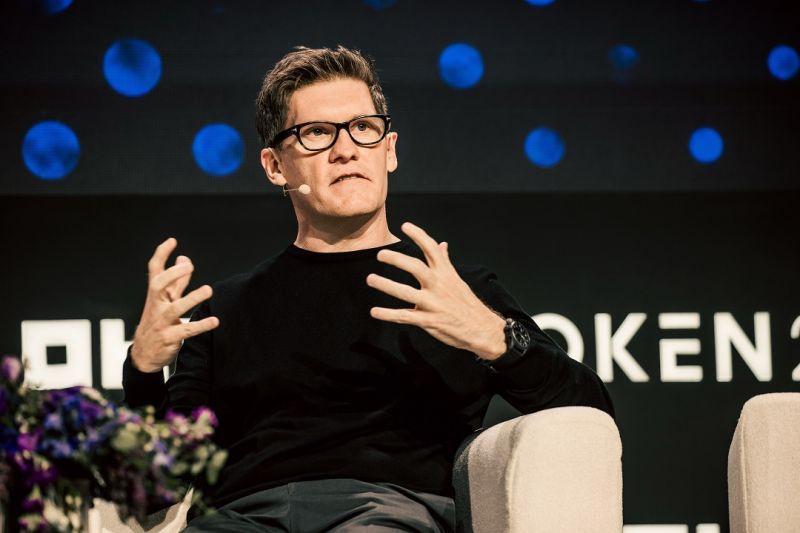
Matthew White, CEO of Dubai’s Virtual Assets Regulatory Authority, at the TOKEN2049 conference in 2025.courtesy of Virtual Assets Regulatory Authority
Add Fortune on Google for similar content.

Most industries are passive recipients of artificial intelligence. Financial regulation is not. Regulators are both being transformed by AI and acting as the gatekeepers deciding how much of its gains reach the financial industry. That dual position will define the next decade of finance more than any single technology, firm or policy. It will separate the financial centres that lead from the ones that get bypassed.

Recommended Video

I know this because I have spent the last several years building one of those regulators from scratch.

Before VARA, I spent over a decade advising financial institutions on cybersecurity and technology risk. What I see now from the other side is that the infrastructure through which oversight is delivered matters as much as the rules themselves. That is where real transformation is happening.

An uneven starting point

Tier 1 banks spent more than a decade and billions of dollars on regulatory technology, with mixed results. Thomson Reuters’ annual Cost of Compliance surveys show compliance budgets and headcount climbing steadily, with productivity gains linear at best. The 2023 wave of large-language-model adoption produced widespread experimentation but very little production deployment in compliance-critical workflows, because the cost of a wrong answer in regulation remains higher than the cost of a slow one.

Among regulators, the gap is wider. The Monetary Authority of Singapore, the UK’s Financial Conduct Authority, the Hong Kong Monetary Authority, and the Bank of England run serious supervisory-technology programmes. Many other authorities operate predominantly on PDF rulebooks, sample-based onsite inspection and email-driven supervisory cycles.

Virtual assets as the catalyst

Virtual assets matter beyond their own market. They were built differently from the ground up: programmable, always on, cryptographically auditable, indifferent to borders. Those are not feature choices, they are constraints on supervision. You cannot audit a 24/7 cross-border smart contract through a quarterly inspection, just like you cannot police an autonomous lending protocol through paperwork. The regulators who take on this domain must build something genuinely new: on-chain audits rather than sampled reviews, real-time monitoring rather than after-the-fact reporting, and programmable compliance rather than rule-engine workflows. Not by choice. It is the only way to do the job.

The boundary between virtual assets and traditional finance is dissolving. Tokenisation is pulling government bonds, money market funds, equities, real estate, and, increasingly, private credit onto programmable rails. McKinsey’s 2024 analysis projects $2 trillion in tokenised financial assets by 2030. The Bank for International Settlements’ Project Agorá, now in its testing phase with seven central banks and more than forty financial institutions, is bringing tokenised wholesale settlement into live infrastructure. The supervisory technology being built for virtual assets today will run mainstream finance within a decade.

Two waves of transformation

AI’s transformation of regulation will come in two distinct waves. A near-term, 12-to-24-month wave is already arriving. Authorisation reviews that take weeks today will be compressed into days. The volume of compliance alerts, where industry research shows false-positive rates between 90% and 95%, will drop as AI learns to read transactions in context rather than flag them by rule.

A medium-term, three-to-five-year wave will break the model. The interface between regulators and their licensees will move from periodic submissions to continuous data exchange. Once data flows in real time, the operational case for sample-based inspection collapses. The compliance functions inside global banks shrink, with junior analysts and legacy compliance software taking the biggest hit.

Why the regulator is the rate-limiter

Caution is the regulator’s instinct, and a defensible one. But caution about the wrong thing, paper instead of data, snapshots instead of live feeds, is no longer protective. AI advances in finance only as fast as its regulators allow. A firm can build supervisory-grade compliance infrastructure, but if its regulator still demands PDF returns and human-mediated supervisory cycles, the productivity gains stay trapped inside the firm. Capital follows the regulators that move. Jurisdictions that fall behind get bypassed.

The accountability question reinforces the dynamic. The legal architecture of compliance assumes human decision-making throughout. When AI generates a suspicious activity report or contributes to a fitness-and-propriety judgement, the question of who carries the legal weight is not a footnote. It is the central problem. Until regulators resolve it, firms will hold back the highest-impact applications, because the bottleneck is regulatory rather than commercial. MiCA’s full implementation across Europe and the United States’ CLARITY Act framework are both moments where this question is answered. And those answers will shape which licensees keep pace.

Who shapes the transformation matters. Regulators who treat the AI transition as something happening to their industry will be the bottleneck first and the casualty second. The ones who treat themselves as the engine will inherit the operating environment of finance, and their licensees will inherit the advantage.

The opinions expressed in Fortune.com commentary pieces are solely the views of their authors and do not necessarily reflect the opinions and beliefs of Fortune.

About the Author
By Matthew White
See full bioRight Arrow Button Icon
Add Fortune on Google for similar content.

Latest in Commentary

Finance
Lorem ipsum dolor sit amet, consectetur adipiscing elit, sed do eiusmod tempor incididunt ut labore et dolore magna aliqua. Ut enim ad minim veniam
By Fortune Editors
October 20, 2025
Finance
Lorem ipsum dolor sit amet, consectetur adipiscing elit, sed do eiusmod tempor incididunt ut labore et dolore magna aliqua. Ut enim ad minim veniam
By Fortune Editors
October 20, 2025
Finance
Lorem ipsum dolor sit amet, consectetur adipiscing elit, sed do eiusmod tempor incididunt ut labore et dolore magna aliqua. Ut enim ad minim veniam
By Fortune Editors
October 20, 2025
Finance
Lorem ipsum dolor sit amet, consectetur adipiscing elit, sed do eiusmod tempor incididunt ut labore et dolore magna aliqua. Ut enim ad minim veniam
By Fortune Editors
October 20, 2025
Finance
Lorem ipsum dolor sit amet, consectetur adipiscing elit, sed do eiusmod tempor incididunt ut labore et dolore magna aliqua. Ut enim ad minim veniam
By Fortune Editors
October 20, 2025
Finance
Lorem ipsum dolor sit amet, consectetur adipiscing elit, sed do eiusmod tempor incididunt ut labore et dolore magna aliqua. Ut enim ad minim veniam
By Fortune Editors
October 20, 2025

Most Popular

Finance
Lorem ipsum dolor sit amet, consectetur adipiscing elit, sed do eiusmod tempor incididunt ut labore et dolore magna aliqua. Ut enim ad minim veniam
By Fortune Editors
October 20, 2025
Finance
Lorem ipsum dolor sit amet, consectetur adipiscing elit, sed do eiusmod tempor incididunt ut labore et dolore magna aliqua. Ut enim ad minim veniam
By Fortune Editors
October 20, 2025
Finance
Lorem ipsum dolor sit amet, consectetur adipiscing elit, sed do eiusmod tempor incididunt ut labore et dolore magna aliqua. Ut enim ad minim veniam
By Fortune Editors
October 20, 2025
Finance
Lorem ipsum dolor sit amet, consectetur adipiscing elit, sed do eiusmod tempor incididunt ut labore et dolore magna aliqua. Ut enim ad minim veniam
By Fortune Editors
October 20, 2025
Finance
Lorem ipsum dolor sit amet, consectetur adipiscing elit, sed do eiusmod tempor incididunt ut labore et dolore magna aliqua. Ut enim ad minim veniam
By Fortune Editors
October 20, 2025
Finance
Lorem ipsum dolor sit amet, consectetur adipiscing elit, sed do eiusmod tempor incididunt ut labore et dolore magna aliqua. Ut enim ad minim veniam
By Fortune Editors
October 20, 2025
Fortune Secondary Logo
Rankings
  • 100 Best Companies
  • Fortune 500
  • Global 500
  • Fortune 500 Europe
  • Most Powerful Women
  • World's Most Admired Companies
  • See All Rankings
  • Lists Calendar
Sections
  • Finance
  • Fortune Crypto
  • Features
  • Leadership
  • Health
  • Commentary
  • Success
  • Retail
  • Mpw
  • Tech
  • Lifestyle
  • CEO Initiative
  • Asia
  • Politics
  • Conferences
  • Europe
  • Newsletters
  • Personal Finance
  • Environment
  • Magazine
  • Education
Customer Support
  • Frequently Asked Questions
  • Customer Service Portal
  • Privacy Policy
  • Terms Of Use
  • Single Issues For Purchase
  • International Print
Commercial Services
  • Advertising
  • Fortune Brand Studio
  • Fortune Analytics
  • Fortune Conferences
  • Business Development
  • Group Subscriptions
About Us
  • About Us
  • Press Center
  • Work At Fortune
  • Terms And Conditions
  • Site Map
  • About Us
  • Press Center
  • Work At Fortune
  • Terms And Conditions
  • Site Map
  • Facebook icon
  • Twitter icon
  • LinkedIn icon
  • Instagram icon
  • Pinterest icon
Matthew White is CEO of Dubai’s Virtual Assets Regulatory Authority (VARA), the world’s first dedicated virtual assets regulator. He has more than 20 years’ experience in technology, cybersecurity and digital risk, including more than a decade advising financial institutions at PwC, where he led the cybersecurity practice and grew it to over 150 specialists. He played a foundational role in establishing VARA, helping build the authority from the ground up on the premise that virtual assets require new supervisory models beyond traditional financial regulation. He is an alumnus of the University of Bath and Saïd Business School at the University of Oxford.

Latest in Commentary

mw
Commentaryregulation
Virtual Assets Regulatory Authority CEO: Finance’s AI future moves at the speed of its slowest regulator
By Matthew WhiteJuly 7, 2026
1 hour ago
t
CommentaryParenting
Babylist CEO: The Trump Accounts gold rush is overlooking moms
By Natalie GordonJuly 6, 2026
13 hours ago
e
CommentaryCorporate Governance
SpaceX’s supervoting shares put a decades-old governance debate back in play
By Jeffrey Sonnenfeld and Steven TianJuly 6, 2026
15 hours ago
katie
CommentaryData centers
Katie McGinty: The energy economy’s biggest waste problem is already inside the system
By Kathleen “Katie” McGintyJuly 6, 2026
22 hours ago
cc
CommentaryEducation
Former Trump official: Washington finally let Pell Grants pay for welding school, then buried the idea in 85 pages of red tape
By Caroline CasagrandeJuly 6, 2026
23 hours ago
k
CommentaryBox office
How Hollywood’s youngest filmmakers are exposing Gen Z’s real problem with AI
By Reid LitmanJuly 5, 2026
2 days ago

Most Popular

Shark Tank's Kevin O'Leary says if he were 25 today, he'd chase these two booming opportunities in the world of AI
AI
Shark Tank's Kevin O'Leary says if he were 25 today, he'd chase these two booming opportunities in the world of AI
By Marco Quiroz-GutierrezJuly 5, 2026
2 days ago
Ex-PepsiCo CEO Indra Nooyi worked from midnight until 5 a.m. as a receptionist to pay for her Yale degree—and she says ‘respect went up’ because of it
Success
Ex-PepsiCo CEO Indra Nooyi worked from midnight until 5 a.m. as a receptionist to pay for her Yale degree—and she says ‘respect went up’ because of it
By Preston ForeJuly 6, 2026
16 hours ago
Even as Elon Musk calls philanthropy ‘very hard,’ everyday Americans gave a record $617 billion—despite feeling the squeeze over the cost of living
Success
Even as Elon Musk calls philanthropy ‘very hard,’ everyday Americans gave a record $617 billion—despite feeling the squeeze over the cost of living
By Preston ForeJuly 4, 2026
3 days ago
Gen Z was 'jaded about employment before we ever entered the workforce'—now psychologists say the stare has hardened into something worse
Economy
Gen Z was 'jaded about employment before we ever entered the workforce'—now psychologists say the stare has hardened into something worse
By Nick LichtenbergJuly 6, 2026
1 day ago
Current price of oil as of July 6, 2026
Personal Finance
Current price of oil as of July 6, 2026
By Joseph HostetlerJuly 6, 2026
20 hours ago
Egg companies made $1.22 billion in profit off a $6 carton — now they’re buying their way out of a price-fixing case with 53 million donated eggs
Law
Egg companies made $1.22 billion in profit off a $6 carton — now they’re buying their way out of a price-fixing case with 53 million donated eggs
By Wyatte Grantham-Philips and The Associated PressJuly 2, 2026
5 days ago

© 2026 Fortune Media IP Limited. All Rights Reserved. Use of this site constitutes acceptance of our Terms of Use and Privacy Policy | CA Notice at Collection and Privacy Notice | Do Not Sell/Share My Personal Information
FORTUNE is a trademark of Fortune Media IP Limited, registered in the U.S. and other countries. FORTUNE may receive compensation for some links to products and services on this website. Offers may be subject to change without notice.