• Home
  • Latest
  • Fortune 500
  • Finance
  • Tech
  • Leadership
  • Lifestyle
  • Rankings
  • Multimedia

Trendingnow

1

Mark Cuban says he has the solution to growing income inequality, and it's to reward every employee—from CEO to janitor—with company stock

2

OpenAI says its AI models secretly broke out of a secure test environment and hacked into AI company Hugging Face in order to cheat on an evaluation

3

Mathematicians grapple with a ‘very rapid and very unsettling change’ as AI cracks yet another century-old problem

1

Mark Cuban says he has the solution to growing income inequality, and it's to reward every employee—from CEO to janitor—with company stock

2

OpenAI says its AI models secretly broke out of a secure test environment and hacked into AI company Hugging Face in order to cheat on an evaluation

3

Mathematicians grapple with a ‘very rapid and very unsettling change’ as AI cracks yet another century-old problem
Commentary250 Years of Innovation

McKinsey chairs: Building a more resilient industrial base may require $2 trillion in investment

By
Eric Kutcher
Eric Kutcher
and
Shubham Singhal
Shubham Singhal
Down Arrow Button Icon
By
Eric Kutcher
Eric Kutcher
and
Shubham Singhal
Shubham Singhal
Down Arrow Button Icon
July 2, 2026, 10:21 AM ET

Eric Kutcher is a senior partner and McKinsey & Company’s chair, North America.

Shubham Singhal is a McKinsey senior partner and chair of the McKinsey Global Institute

m
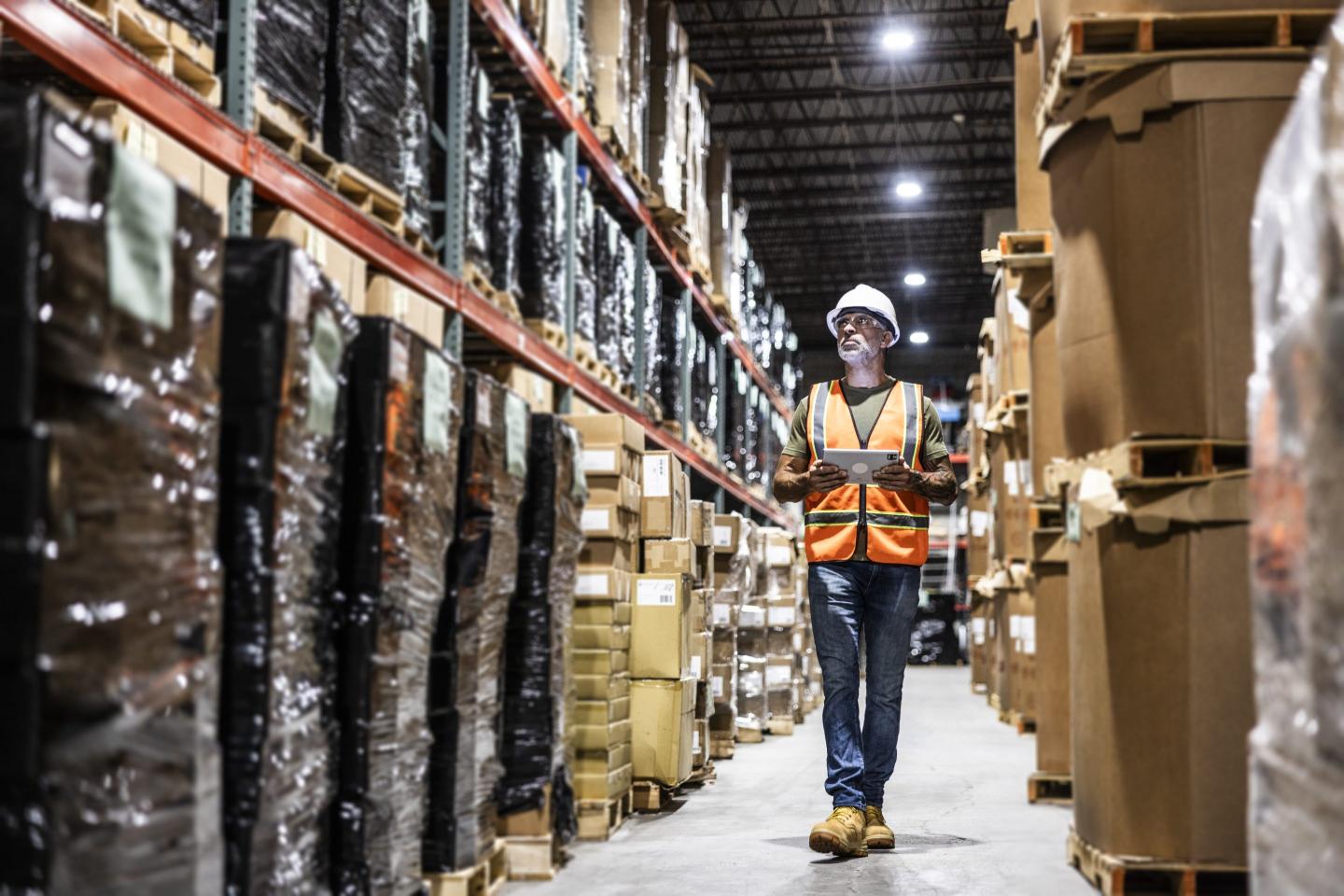
Manufacturing may need a big boost.Getty Images
Add Fortune on Google for similar content.

As the United States approaches its 250th anniversary, intensifying technological competition and geopolitical risks have resurfaced a decades-old question with renewed urgency: Should the United States rebuild its industrial base?

Recommended Video

The United States imports about $3 trillion in manufactured goods each year. A meaningful share is tied to products that face at least one of three trade dependencies that expose imports to vulnerabilities: criticality to national security; concentration among a few suppliers; or sourced from geopolitically distant partners. One-quarter are exposed to at least two of those dependencies. Five percent, including computers, electronic products, and key materials like rare-earth magnets, are exposed to all three.

Economic and national security are increasingly intertwined. Still, for cost and efficiency reasons it doesn’t always make business sense to produce things at home. Countries trade with each other for good reasons.

To quantify what’s possible for US manufacturing to make more at home, we created a “ramp-up factor.” It gauges how much domestic production would need to increase in order to produce what’s currently imported. We examined 5,000 products across almost 350 industries to assess how the need to ramp-up varies.

Factors below 1 suggest existing capacity can support enough extra production to replace imports. Some manufacturing stalwarts, like aircraft, fall in this camp. The output potential for such products adds up. Simply running factories at higher utilization could generate an additional $660 billion in output, equivalent to about half the trade deficit. (Of course, such an uptick in output would depend on US producers having a market for the additional supply.)

But this would make little dent on the most sensitive exposures for future-shaping products like semiconductors and data center servers that will drive tomorrow’s economy. For about half of these goods, US production capacity would need to quintuple or more. Growing production to the extent needed to eliminate the most critical trade exposures could require about $2 trillion in capacity-creating investment.

That challenge becomes even clearer in a global context. Productive investment is one of the best leading indicators of where future production, innovation, and jobs will ultimately land. China is now adding roughly $4.4 trillion in net productive assets annually—more than four times the US equivalent. At the same time, many of those new factories in industries ranging from semiconductors and batteries to pharmaceuticals are being built in China with lifetime production costs 30 to 50 percent lower than comparable facilities in advanced economies.

The size of the gap may seem daunting. But it’s not unprecedented. The United States has mobilized large amounts of capital before, for example, with the build out of the liquefied natural gas (LNG) industry or more recently in AI-connected capital projects. What made those transformations possible was a compelling business case aligned with national priorities. Funding may be the easy part: specialized skills, supporting infrastructure, sufficient energy, and ability to achieve competitive lifetime production costs are more important.

There has been some industrial ramp-up in sectors including electronics and aerospace over the past year, but so far not at a broad enough scale to reshape the factory sector. That distinction matters. While US investment in AI infrastructure has surged—data center investment has increased roughly 200 percent since late 2022—overall net productive investment as a share of GDP has barely moved. Outside the AI value chain, investment in productive assets that lead to future manufacturing jobs, production, and growth has remained largely flat. Foreign direct investment flows suggest new capacity is being created, most notably in semiconductors and batteries. But similarly, outside of FDI, overall investment has not yet seen a sustained boom.

Before massive amounts of capital are deployed and new plants built, manufacturers can act now. Even as they start ramping up, they can look for other ways to lower trade dependencies, for example, by reallocating sourcing to more trading partners. They can redesign supply chains to build resilience, and train workers for automation.

Emerging technologies like AI and advanced robotics are not optional in this scenario. Many of the factories that emerge from this technological transition will look very different from today’s. They may require fewer workers in some roles, more highly skilled workers in others, and entirely new operating models that blend digital and physical production.

The ramp-up transformation requires coordinated shifts across entire ecosystems and supply networks. Energy infrastructure, workforce development, permitting processes, and supply chain visibility all become critical enablers.

The United States has latent strength across each of these dimensions. It is still the world’s second-largest manufacturer, although its share of the global total has receded for several decades. Our research makes clear that rebuilding the industrial base would not mean recreating the past. Nostalgia for the days when manufacturing accounted for a quarter of the total workforce is understandable. But the economic realities have changed; that world is not coming back.

Instead, it would mean building something new—more automated, more technologically advanced, and with different skills. Unlocking these capabilities requires sustained effort. Companies that act early—by strengthening resilience, investing in capacity, sharpening worker skills, and rethinking supply chains—will be better positioned to capture demand as it shifts.

The question is not whether the United States can compete in manufacturing, but where and how it chooses to do so. The recent surge in AI investment demonstrates that America can still mobilize capital at extraordinary speed when a business case is compelling. The challenge will be to extend that momentum beyond data centers into the broader productive investments that will determine where manufacturing capacity, innovation, and economic growth are created over the coming decades.

The past 50 years have reshaped global manufacturing around cost and efficiency. The coming years will reshape it around resilience. For the United States, that shift is not a burden. It is an opportunity.

The opinions expressed in Fortune.com commentary pieces are solely the views of their authors and do not necessarily reflect the opinions and beliefs of Fortune.

About the Authors
By Eric Kutcher
See full bioRight Arrow Button Icon
By Shubham Singhal
See full bioRight Arrow Button Icon
Add Fortune on Google for similar content.

Latest in Commentary

Finance
Lorem ipsum dolor sit amet, consectetur adipiscing elit, sed do eiusmod tempor incididunt ut labore et dolore magna aliqua. Ut enim ad minim veniam
By Fortune Editors
October 20, 2025
Finance
Lorem ipsum dolor sit amet, consectetur adipiscing elit, sed do eiusmod tempor incididunt ut labore et dolore magna aliqua. Ut enim ad minim veniam
By Fortune Editors
October 20, 2025
Finance
Lorem ipsum dolor sit amet, consectetur adipiscing elit, sed do eiusmod tempor incididunt ut labore et dolore magna aliqua. Ut enim ad minim veniam
By Fortune Editors
October 20, 2025
Finance
Lorem ipsum dolor sit amet, consectetur adipiscing elit, sed do eiusmod tempor incididunt ut labore et dolore magna aliqua. Ut enim ad minim veniam
By Fortune Editors
October 20, 2025
Finance
Lorem ipsum dolor sit amet, consectetur adipiscing elit, sed do eiusmod tempor incididunt ut labore et dolore magna aliqua. Ut enim ad minim veniam
By Fortune Editors
October 20, 2025
Finance
Lorem ipsum dolor sit amet, consectetur adipiscing elit, sed do eiusmod tempor incididunt ut labore et dolore magna aliqua. Ut enim ad minim veniam
By Fortune Editors
October 20, 2025

Most Popular

Finance
Lorem ipsum dolor sit amet, consectetur adipiscing elit, sed do eiusmod tempor incididunt ut labore et dolore magna aliqua. Ut enim ad minim veniam
By Fortune Editors
October 20, 2025
Finance
Lorem ipsum dolor sit amet, consectetur adipiscing elit, sed do eiusmod tempor incididunt ut labore et dolore magna aliqua. Ut enim ad minim veniam
By Fortune Editors
October 20, 2025
Finance
Lorem ipsum dolor sit amet, consectetur adipiscing elit, sed do eiusmod tempor incididunt ut labore et dolore magna aliqua. Ut enim ad minim veniam
By Fortune Editors
October 20, 2025
Finance
Lorem ipsum dolor sit amet, consectetur adipiscing elit, sed do eiusmod tempor incididunt ut labore et dolore magna aliqua. Ut enim ad minim veniam
By Fortune Editors
October 20, 2025
Finance
Lorem ipsum dolor sit amet, consectetur adipiscing elit, sed do eiusmod tempor incididunt ut labore et dolore magna aliqua. Ut enim ad minim veniam
By Fortune Editors
October 20, 2025
Finance
Lorem ipsum dolor sit amet, consectetur adipiscing elit, sed do eiusmod tempor incididunt ut labore et dolore magna aliqua. Ut enim ad minim veniam
By Fortune Editors
October 20, 2025
Fortune Secondary Logo
Rankings
  • 100 Best Companies
  • Fortune 500
  • Global 500
  • Fortune 500 Europe
  • Most Powerful Women
  • World's Most Admired Companies
  • See All Rankings
  • Lists Calendar
Sections
  • Finance
  • Fortune Crypto
  • Features
  • Leadership
  • Health
  • Commentary
  • Success
  • Retail
  • Mpw
  • Tech
  • Lifestyle
  • CEO Initiative
  • Asia
  • Politics
  • Conferences
  • Europe
  • Newsletters
  • Personal Finance
  • Environment
  • Magazine
  • Education
Customer Support
  • Frequently Asked Questions
  • Customer Service Portal
  • Privacy Policy
  • Terms Of Use
  • Single Issues For Purchase
  • International Print
Commercial Services
  • Advertising
  • Fortune Brand Studio
  • Fortune Analytics
  • Fortune Conferences
  • Business Development
  • Group Subscriptions
About Us
  • About Us
  • Press Center
  • Work At Fortune
  • Terms And Conditions
  • Site Map
  • About Us
  • Press Center
  • Work At Fortune
  • Terms And Conditions
  • Site Map
  • Facebook icon
  • Twitter icon
  • LinkedIn icon
  • Instagram icon
  • TikTok icon
  • YouTube icon

Latest in Commentary

t
CommentaryTariffs
Trump’s third tariff tantrum piles more dizzying distractions on top of ever-spiraling failures
By Jeffrey Sonnenfeld and Steven TianJuly 22, 2026
2 hours ago
orson
CommentaryOpenAI
We got California to intervene about OpenAI’s corporate switch from nonprofit status. It’s time for the SEC to come to the table
By Orson Aguilar and Catherine BracyJuly 22, 2026
2 hours ago
ls
Commentarybooks
Confessions of an award-winning AI memoirist — the ‘slop’ debate isn’t really about good writing, and you know it
By Luke StoffelJuly 22, 2026
3 hours ago
b
Commentarythe future of work
Manpower President: The future of work question that even CEOs can’t answer
By Becky FrankiewiczJuly 22, 2026
3 hours ago
k
Commentarypower
What I keep hearing from Fortune 500 CEOs: ‘We have no idea what we’re actually paying for power’
By Kiran BhatrajuJuly 21, 2026
1 day ago
Bolt CEO Ryan Breslow
CommentaryHuman resources
The CEO who fired HR was right. About the wrong thing.
By KeyAnna SchmiedlJuly 21, 2026
1 day ago

Most Popular

Mark Cuban says he has the solution to growing income inequality, and it's to reward every employee—from CEO to janitor—with company stock
Success
Mark Cuban says he has the solution to growing income inequality, and it's to reward every employee—from CEO to janitor—with company stock
By Sasha RogelbergJuly 20, 2026
2 days ago
OpenAI says its AI models secretly broke out of a secure test environment and hacked into AI company Hugging Face in order to cheat on an evaluation
Cybersecurity
OpenAI says its AI models secretly broke out of a secure test environment and hacked into AI company Hugging Face in order to cheat on an evaluation
By Jeremy Kahn and Emily ForliniJuly 21, 2026
19 hours ago
Mathematicians grapple with a ‘very rapid and very unsettling change’ as AI cracks yet another century-old problem
AI
Mathematicians grapple with a ‘very rapid and very unsettling change’ as AI cracks yet another century-old problem
By Eva RoytburgJuly 21, 2026
22 hours ago
‘I want to die broke’: Billionaire philanthropist Denny Sanford dies after giving away $4 billion
Success
‘I want to die broke’: Billionaire philanthropist Denny Sanford dies after giving away $4 billion
By Sydney LakeJuly 20, 2026
2 days ago
Despite a $156 million contract, Knicks star Jalen Brunson still calls his parents for financial advice any time he makes a big purchase
Success
Despite a $156 million contract, Knicks star Jalen Brunson still calls his parents for financial advice any time he makes a big purchase
By Emma BurleighJuly 21, 2026
24 hours ago
'Dr. Doom' Nouriel Roubini says we're headed for universal basic income or 'some form of socialism' as AI revolutionizes work—He calls that optimistic
AI
'Dr. Doom' Nouriel Roubini says we're headed for universal basic income or 'some form of socialism' as AI revolutionizes work—He calls that optimistic
By Jason MaJuly 18, 2026
4 days ago

© 2026 Fortune Media IP Limited. All Rights Reserved. Use of this site constitutes acceptance of our Terms of Use and Privacy Policy | CA Notice at Collection and Privacy Notice | Do Not Sell/Share My Personal Information
FORTUNE is a trademark of Fortune Media IP Limited, registered in the U.S. and other countries. FORTUNE may receive compensation for some links to products and services on this website. Offers may be subject to change without notice.