• Home
  • Latest
  • Fortune 500
  • Finance
  • Tech
  • Leadership
  • Lifestyle
  • Rankings
  • Multimedia
Some Fortune Crypto pricing data is provided by Binance.
CommentaryCryptocurrency

Former Iran director at NSC: Crypto legislation is a ticket to sanctions evasion

By
Richard Nephew
Richard Nephew
Down Arrow Button Icon
By
Richard Nephew
Richard Nephew
Down Arrow Button Icon
July 2, 2026, 10:28 AM ET

Richard Nephew is a Senior Research Scholar at the Center on Global Energy Policy at Columbia University and Bernstein Adjunct Fellow at the Washington Institute for Near East Policy. He previously served as the inaugural Coordinator for Global Anticorruption at the U.S. State Department, Deputy Special Envoy for Iran and Director for Iran at the U.S. National Security Council.

rn
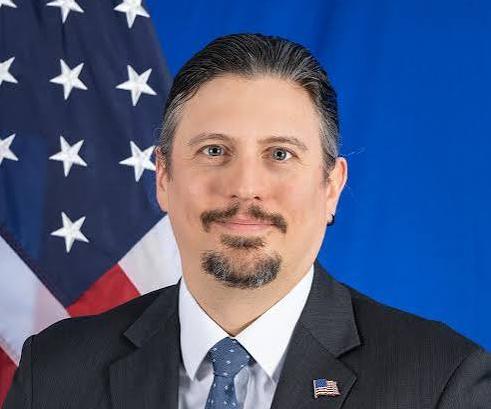
Columbia Senior Research Scholar Richard Nephew.State Department
Add Fortune on Google for similar content.

In May, the U.S. Treasury Department’s Financial Crimes Enforcement Network (FinCEN) issued a stark alert: Iran was using digital currencies to evade sanctions and support terrorist groups. Iran attempted to coerce ships trying to exit the Strait of Hormuz into paying tolls in cryptocurrency — something the U.S. Treasury Department has explicitly sought to sanction over the last three months. What if Congress passed legislation to help facilitate these types of corrupt payments?

Recommended Video

This is a key question the Senate should ask itself while considering the CLARITY Act – a piece of legislation that, as drafted, would solidify glaring, dangerous and shocking loopholes for the crypto industry. This bill would omit many of the standard responsibilities for financial institutions that were put in place to protect national security after the horrific attacks of 9/11. If enacted, it would limit the types of crypto-related firms that have to abide by anti-money laundering (AML) and counter-terrorism financing rules. 

After 9/11, the Bush Administration worked to ensure that banks and other financial service providers could deny access to bad actors endangering U.S. national security — including those helping terrorists build weapons, transnational criminal organizations, corrupt officials, human rights violators and others. Programs were enacted to identify threats and warn financial service providers, reminding them of their responsibility to the American people.

So why is cryptocurrency now getting a pass to work with American enemies?

The CLARITY Act would preserve significant loopholes for decentralized finance (DeFi), leaving many identifiable actors involved in these services outside clear Bank Secrecy Act obligations and weakening reforms enacted after 9/11 to combat terrorist financing. Although Section 201 expands AML requirements for some crypto intermediaries, it does not clearly require all businesses that operate, administer, profit from, or facilitate DeFi services to maintain AML programs, monitor for suspicious activity, or report it to law enforcement. As a result, the bill would leave parts of the crypto ecosystem vulnerable to exploitation by terrorists, sanctions evaders, fraudsters, and other illicit actors under the guise of technological neutrality.

In fact, the Fraternal Order of Police — the world’s largest organization of sworn law enforcement officers — has expressed concern with the provisions of the Clarity Act. In particular, they noted that carve-outs granted to crypto firms “would strip prosecutors and law enforcement of the statutes used to track and take down criminals using these digital assets to commit crimes.” 

Lawmakers’ 180 on crypto regulations is a stunning change from when the U.S. held the presidency of the international Financial Action Task Force (FATF) in 2018 and listed the risks of “virtual currency” as one of its top three priorities. This task force has been key to the bipartisan efforts to improve banking compliance with counter-terrorism and AML rules over the decades.

In its May alert, FinCEN warned that “uneven and often inadequate regulation and supervision of digital assets—including a lack of implementation of FATF standards—across jurisdictions also enables Iranian facilitators to access digital assets through international [digital asset service providers].” If enacted without stronger AML/CFT safeguards, the CLARITY Act would preserve the same kind of systemic vulnerability that the U.S. government’s own financial intelligence arm has warned about.

Iran is not the only adversary positioned to exploit this weakness. North Korea, Russia, and China could use cryptocurrency to move money, bypass controls, and expand malign influence. Corrupt officials, professional enablers, and other criminal actors should also be expected to abuse these gaps for their own advantage.

The message should be clear to Congress: We cannot pass legislation on financial technology that makes it harder for investigators to follow money related to terrorism, narcotics trafficking, weapons proliferation, corruption or organized crime. 

Supporters argue that the bill “ensures key digital asset intermediaries are subject to anti-money laundering and countering terrorist financing requirements.” But the CLARITY Act still leaves major gaps for decentralized finance and offshore activity. If AML rules apply when a traditional intermediary moves funds, but become unclear when software performs the same function or when identifiable actors profit from that software, Congress has not created a safeguard — it has created a loophole.

The bill also fails to clearly require offshore platforms serving U.S. customers to comply with U.S. AML rules, and it does not require the kind of ecosystem-wide monitoring needed to detect suspicious activity involving stablecoins. Crypto cannot be excused from the responsibilities that banks and other financial service providers must meet.

The solutions to these problems are straightforward: Congress must treat crypto as a financial service and ensure its providers adhere to the same common-sense requirements that banks and other financial institutions must abide by. Congress cannot create new carve-outs for decentralized financial institutions. Instead, lawmakers should ensure that existing U.S. sanctions regulations cover cryptocurrency in the same way as traditional finance. This must include requiring stablecoin issuers and other digital asset intermediaries to detect and report suspicious activity. 

The CLARITY Act would allow the crypto industry to operate with fewer onerous restrictions, exposing the United States to massive national security vulnerabilities and reopening the doors we started to close in 2001. Congress cannot create a new financial system with fewer tools for investigators than they have today, or the same problems we began to solve at the turn of the century will return.

The opinions expressed in Fortune.com commentary pieces are solely the views of their authors and do not necessarily reflect the opinions and beliefs of Fortune.

About the Author
By Richard Nephew
See full bioRight Arrow Button Icon
Add Fortune on Google for similar content.

Latest in Commentary

Finance
Lorem ipsum dolor sit amet, consectetur adipiscing elit, sed do eiusmod tempor incididunt ut labore et dolore magna aliqua. Ut enim ad minim veniam
By Fortune Editors
October 20, 2025
Finance
Lorem ipsum dolor sit amet, consectetur adipiscing elit, sed do eiusmod tempor incididunt ut labore et dolore magna aliqua. Ut enim ad minim veniam
By Fortune Editors
October 20, 2025
Finance
Lorem ipsum dolor sit amet, consectetur adipiscing elit, sed do eiusmod tempor incididunt ut labore et dolore magna aliqua. Ut enim ad minim veniam
By Fortune Editors
October 20, 2025
Finance
Lorem ipsum dolor sit amet, consectetur adipiscing elit, sed do eiusmod tempor incididunt ut labore et dolore magna aliqua. Ut enim ad minim veniam
By Fortune Editors
October 20, 2025
Finance
Lorem ipsum dolor sit amet, consectetur adipiscing elit, sed do eiusmod tempor incididunt ut labore et dolore magna aliqua. Ut enim ad minim veniam
By Fortune Editors
October 20, 2025
Finance
Lorem ipsum dolor sit amet, consectetur adipiscing elit, sed do eiusmod tempor incididunt ut labore et dolore magna aliqua. Ut enim ad minim veniam
By Fortune Editors
October 20, 2025

Most Popular

Finance
Lorem ipsum dolor sit amet, consectetur adipiscing elit, sed do eiusmod tempor incididunt ut labore et dolore magna aliqua. Ut enim ad minim veniam
By Fortune Editors
October 20, 2025
Finance
Lorem ipsum dolor sit amet, consectetur adipiscing elit, sed do eiusmod tempor incididunt ut labore et dolore magna aliqua. Ut enim ad minim veniam
By Fortune Editors
October 20, 2025
Finance
Lorem ipsum dolor sit amet, consectetur adipiscing elit, sed do eiusmod tempor incididunt ut labore et dolore magna aliqua. Ut enim ad minim veniam
By Fortune Editors
October 20, 2025
Finance
Lorem ipsum dolor sit amet, consectetur adipiscing elit, sed do eiusmod tempor incididunt ut labore et dolore magna aliqua. Ut enim ad minim veniam
By Fortune Editors
October 20, 2025
Finance
Lorem ipsum dolor sit amet, consectetur adipiscing elit, sed do eiusmod tempor incididunt ut labore et dolore magna aliqua. Ut enim ad minim veniam
By Fortune Editors
October 20, 2025
Finance
Lorem ipsum dolor sit amet, consectetur adipiscing elit, sed do eiusmod tempor incididunt ut labore et dolore magna aliqua. Ut enim ad minim veniam
By Fortune Editors
October 20, 2025
Fortune Secondary Logo
Rankings
  • 100 Best Companies
  • Fortune 500
  • Global 500
  • Fortune 500 Europe
  • Most Powerful Women
  • World's Most Admired Companies
  • See All Rankings
  • Lists Calendar
Sections
  • Finance
  • Fortune Crypto
  • Features
  • Leadership
  • Health
  • Commentary
  • Success
  • Retail
  • Mpw
  • Tech
  • Lifestyle
  • CEO Initiative
  • Asia
  • Politics
  • Conferences
  • Europe
  • Newsletters
  • Personal Finance
  • Environment
  • Magazine
  • Education
Customer Support
  • Frequently Asked Questions
  • Customer Service Portal
  • Privacy Policy
  • Terms Of Use
  • Single Issues For Purchase
  • International Print
Commercial Services
  • Advertising
  • Fortune Brand Studio
  • Fortune Analytics
  • Fortune Conferences
  • Business Development
  • Group Subscriptions
About Us
  • About Us
  • Press Center
  • Work At Fortune
  • Terms And Conditions
  • Site Map
  • About Us
  • Press Center
  • Work At Fortune
  • Terms And Conditions
  • Site Map
  • Facebook icon
  • Twitter icon
  • LinkedIn icon
  • Instagram icon
  • TikTok icon
  • YouTube icon

Latest in Commentary

t
CommentaryTariffs
Trump’s third tariff tantrum piles more dizzying distractions on top of ever-spiraling failures
By Jeffrey Sonnenfeld and Steven TianJuly 22, 2026
8 hours ago
orson
CommentaryOpenAI
We got California to intervene about OpenAI’s corporate switch from nonprofit status. It’s time for the SEC to come to the table
By Orson Aguilar and Catherine BracyJuly 22, 2026
8 hours ago
ls
Commentarybooks
Confessions of an award-winning AI memoirist — the ‘slop’ debate isn’t really about good writing, and you know it
By Luke StoffelJuly 22, 2026
9 hours ago
b
Commentarythe future of work
Manpower President: The future of work question that even CEOs can’t answer
By Becky FrankiewiczJuly 22, 2026
9 hours ago
k
Commentarypower
What I keep hearing from Fortune 500 CEOs: ‘We have no idea what we’re actually paying for power’
By Kiran BhatrajuJuly 21, 2026
1 day ago
Bolt CEO Ryan Breslow
CommentaryHuman resources
The CEO who fired HR was right. About the wrong thing.
By KeyAnna SchmiedlJuly 21, 2026
1 day ago

Most Popular

OpenAI says its AI models secretly broke out of a secure test environment and hacked into AI company Hugging Face in order to cheat on an evaluation
Cybersecurity
OpenAI says its AI models secretly broke out of a secure test environment and hacked into AI company Hugging Face in order to cheat on an evaluation
By Jeremy Kahn and Emily ForliniJuly 21, 2026
1 day ago
Mark Cuban says he has the solution to growing income inequality, and it's to reward every employee—from CEO to janitor—with company stock
Success
Mark Cuban says he has the solution to growing income inequality, and it's to reward every employee—from CEO to janitor—with company stock
By Sasha RogelbergJuly 20, 2026
2 days ago
Mathematicians grapple with a ‘very rapid and very unsettling change’ as AI cracks yet another century-old problem
AI
Mathematicians grapple with a ‘very rapid and very unsettling change’ as AI cracks yet another century-old problem
By Eva RoytburgJuly 21, 2026
1 day ago
Despite a $156 million contract, Knicks star Jalen Brunson still calls his parents for financial advice any time he makes a big purchase
Success
Despite a $156 million contract, Knicks star Jalen Brunson still calls his parents for financial advice any time he makes a big purchase
By Emma BurleighJuly 21, 2026
1 day ago
‘I want to die broke’: Billionaire philanthropist Denny Sanford dies after giving away $4 billion
Success
‘I want to die broke’: Billionaire philanthropist Denny Sanford dies after giving away $4 billion
By Sydney LakeJuly 20, 2026
2 days ago
'The audience is telling the industry something': even IMAX is stunned by Christopher Nolan's runaway 'Odyssey'
Arts & Entertainment
'The audience is telling the industry something': even IMAX is stunned by Christopher Nolan's runaway 'Odyssey'
By Tatiana SatauaJuly 21, 2026
1 day ago

© 2026 Fortune Media IP Limited. All Rights Reserved. Use of this site constitutes acceptance of our Terms of Use and Privacy Policy | CA Notice at Collection and Privacy Notice | Do Not Sell/Share My Personal Information
FORTUNE is a trademark of Fortune Media IP Limited, registered in the U.S. and other countries. FORTUNE may receive compensation for some links to products and services on this website. Offers may be subject to change without notice.