• Home
  • Latest
  • Fortune 500
  • Finance
  • Tech
  • Leadership
  • Lifestyle
  • Rankings
  • Multimedia

Trendingnow

1

Mark Cuban says he has the solution to growing income inequality, and it's to reward every employee—from CEO to janitor—with company stock

2

OpenAI says its AI models secretly broke out of a secure test environment and hacked into AI company Hugging Face in order to cheat on an evaluation

3

Mathematicians grapple with a ‘very rapid and very unsettling change’ as AI cracks yet another century-old problem

1

Mark Cuban says he has the solution to growing income inequality, and it's to reward every employee—from CEO to janitor—with company stock

2

OpenAI says its AI models secretly broke out of a secure test environment and hacked into AI company Hugging Face in order to cheat on an evaluation

3

Mathematicians grapple with a ‘very rapid and very unsettling change’ as AI cracks yet another century-old problem
CommentaryChina
Asia

China has 400 private space companies. The West is barely paying attention

By
Rainer Zitelmann
Rainer Zitelmann
Down Arrow Button Icon
By
Rainer Zitelmann
Rainer Zitelmann
Down Arrow Button Icon
July 2, 2026, 5:00 AM ET
elon
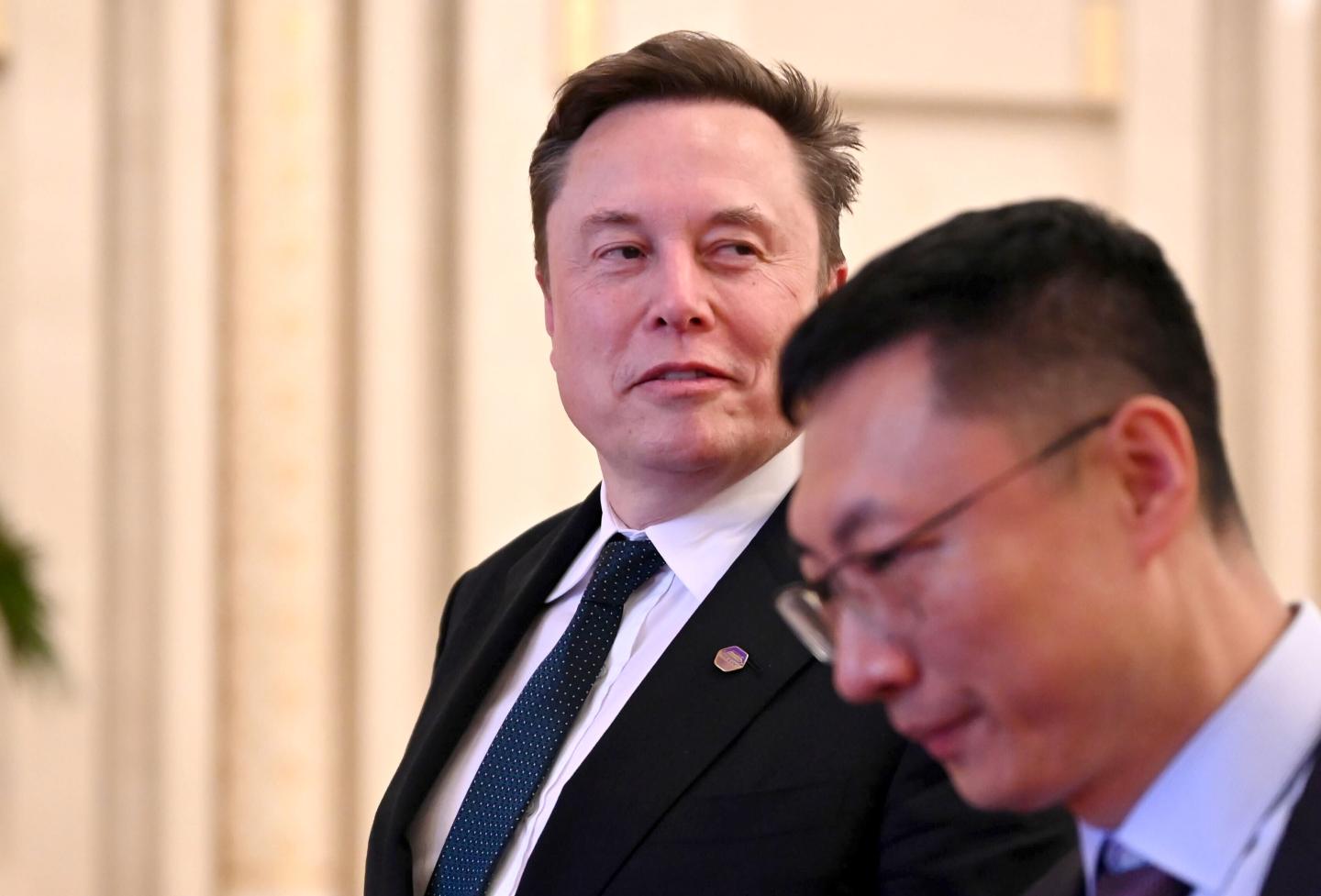
Tech billionaire and Tesla founder Elon Musk walks through the Great Hall of the People, 14 May 2026, China, Peking.Johannes Neudecker/picture alliance via Getty Images
Add Fortune on Google for similar content.

China’s private space industry barely existed a decade ago. Today, more than 400 commercial space companies are operating in the country, developing reusable rockets, satellite constellations, space-tourism ventures, and even asteroid-mining projects. While most Western attention remains focused on SpaceX and Elon Musk, a new generation of Chinese entrepreneurs is quietly transforming China’s role in the global space economy.

Recommended Video

This development is often overlooked because many Western observers continue to see China’s space program as a purely state-run enterprise. That perception is increasingly outdated. While state-owned organizations remain powerful, private companies have become an important driver of innovation and competition.

Until 2014, virtually all space activity in China was conducted by government organizations and state-owned enterprises. Then a series of reforms opened the door to private investment. One of the most important catalysts for this change was the rise of SpaceX.

Initially, Chinese policymakers did not take Elon Musk’s company particularly seriously. But as Falcon 9 dramatically lowered launch costs through reusability and SpaceX began dominating global launch markets, attitudes changed. Chinese leaders recognized that they could not rely solely on large state-owned organizations if they hoped to remain competitive in one of the world’s most strategically important industries.

As a result, hundreds of commercial space companies emerged. Many were founded by engineers who previously worked for state-owned aerospace organizations but became frustrated with bureaucracy and slow decision-making. By 2022, China had approximately 430 private space companies. By 2024, the combined value of the country’s 100 largest space firms was estimated at roughly $100 billion.

The influence of SpaceX on China’s commercial space industry is difficult to overstate. According to China space analyst Blaine Curcio, virtually every Starship launch, every Starlink deployment, and almost every public statement by Elon Musk receives close attention in China. Chinese companies have studied SpaceX’s achievements in extraordinary detail, and many of their strategic priorities reflect lessons learned from the American company.

This should not be surprising. China has a long history of learning from successful international examples. Throughout its economic modernization, the country has repeatedly demonstrated an ability to absorb foreign innovations, improve upon them, and eventually become a global competitor.

Several Chinese space startups have already achieved noteworthy milestones.

LandSpace, founded in 2015, became the first company in the world to successfully place a methane-powered rocket into orbit when its Zhuque-2 rocket succeeded in 2023. Notably, SpaceX’s Starship and Relativity Space’s Terran 1 both failed in their attempts that same year. Methane is widely regarded as one of the most promising fuels for reusable rockets and future interplanetary missions.

i-Space became the first Chinese private firm to launch a rocket into orbit in 2019. Galactic Energy has emerged as one of China’s most successful launch providers and is developing reusable rockets while exploring future opportunities in asteroid mining. CAS Space is developing launch vehicles and preparing commercial space-tourism missions. Deep Blue Aerospace plans to offer suborbital tourist flights beginning in 2027, using a business model similar to that of Jeff Bezos’ Blue Origin. China is also making progress in rocket reusability, the technological breakthrough that transformed launch economics in the United States.

The growth of China’s private space sector extends beyond launch services. Increasing numbers of companies are developing satellites, satellite communications systems, Earth-observation technologies, navigation services, and components for the broader space economy.

One particularly interesting example is Geely, China’s largest privately owned automobile manufacturer. In 2018, Geely founded a subsidiary called Geespace to develop a low-Earth-orbit satellite constellation. By late 2025, Geespace had already deployed 64 satellites and plans to expand that number to 240. The company’s goal is to integrate satellite communications, navigation, and Earth-observation capabilities into future generations of autonomous vehicles. Geespace has already established partnerships with telecommunications operators in more than twenty countries.

The relationship between China’s private space companies and the government remains complicated. Unlike their American counterparts, Chinese firms often benefit from subsidies, tax incentives, access to launch facilities, and investments from provincial governments. Yet these advantages come with costs. Dependence on government support can limit operational flexibility and expose companies to changing political priorities.

This highlights one of the key differences between China and the United States. The Chinese government is unlikely to tolerate a figure as independent and influential as Elon Musk. The experience of Jack Ma illustrates the limits imposed on entrepreneurs who become too powerful or politically outspoken. After publicly criticizing Chinese financial regulators in 2020, Ma saw the record-breaking IPO of Ant Group canceled and subsequently lost much of his influence over his business empire.

This constraint could prove important. Space exploration is an industry that rewards extraordinary risk-taking. Companies such as SpaceX succeeded partly because entrepreneurs like Musk were willing to risk billions of dollars on projects that many experts considered unrealistic. Whether Chinese investors and entrepreneurs will demonstrate a similar willingness remains an open question.

That uncertainty acknowledged, it would be a mistake to underestimate China’s private space sector. Contrary to the broader trend under Xi Jinping toward a larger role for the state in the economy, private space companies have emerged and continued to grow during his leadership.

The United States still enjoys a significant advantage. Measured against SpaceX alone, the gap remains substantial. But that comparison can be misleading. China has built remarkable depth across the entire industry. In launch services, satellites, communications technologies, and space manufacturing, dozens of Chinese companies are now competing simultaneously.

The history of Chinese industry reveals a familiar pattern: first imitation, then improvement — and finally innovation. This evolution has already occurred in sectors such as automobiles, batteries, telecommunications, and consumer electronics. There is little reason to assume that space will be different.

The opinions expressed in Fortune.com commentary pieces are solely the views of their authors and do not necessarily reflect the opinions and beliefs of Fortune.

About the Author
By Rainer Zitelmann
See full bioRight Arrow Button Icon
Add Fortune on Google for similar content.

Latest in Commentary

Finance
Lorem ipsum dolor sit amet, consectetur adipiscing elit, sed do eiusmod tempor incididunt ut labore et dolore magna aliqua. Ut enim ad minim veniam
By Fortune Editors
October 20, 2025
Finance
Lorem ipsum dolor sit amet, consectetur adipiscing elit, sed do eiusmod tempor incididunt ut labore et dolore magna aliqua. Ut enim ad minim veniam
By Fortune Editors
October 20, 2025
Finance
Lorem ipsum dolor sit amet, consectetur adipiscing elit, sed do eiusmod tempor incididunt ut labore et dolore magna aliqua. Ut enim ad minim veniam
By Fortune Editors
October 20, 2025
Finance
Lorem ipsum dolor sit amet, consectetur adipiscing elit, sed do eiusmod tempor incididunt ut labore et dolore magna aliqua. Ut enim ad minim veniam
By Fortune Editors
October 20, 2025
Finance
Lorem ipsum dolor sit amet, consectetur adipiscing elit, sed do eiusmod tempor incididunt ut labore et dolore magna aliqua. Ut enim ad minim veniam
By Fortune Editors
October 20, 2025
Finance
Lorem ipsum dolor sit amet, consectetur adipiscing elit, sed do eiusmod tempor incididunt ut labore et dolore magna aliqua. Ut enim ad minim veniam
By Fortune Editors
October 20, 2025

Most Popular

Finance
Lorem ipsum dolor sit amet, consectetur adipiscing elit, sed do eiusmod tempor incididunt ut labore et dolore magna aliqua. Ut enim ad minim veniam
By Fortune Editors
October 20, 2025
Finance
Lorem ipsum dolor sit amet, consectetur adipiscing elit, sed do eiusmod tempor incididunt ut labore et dolore magna aliqua. Ut enim ad minim veniam
By Fortune Editors
October 20, 2025
Finance
Lorem ipsum dolor sit amet, consectetur adipiscing elit, sed do eiusmod tempor incididunt ut labore et dolore magna aliqua. Ut enim ad minim veniam
By Fortune Editors
October 20, 2025
Finance
Lorem ipsum dolor sit amet, consectetur adipiscing elit, sed do eiusmod tempor incididunt ut labore et dolore magna aliqua. Ut enim ad minim veniam
By Fortune Editors
October 20, 2025
Finance
Lorem ipsum dolor sit amet, consectetur adipiscing elit, sed do eiusmod tempor incididunt ut labore et dolore magna aliqua. Ut enim ad minim veniam
By Fortune Editors
October 20, 2025
Finance
Lorem ipsum dolor sit amet, consectetur adipiscing elit, sed do eiusmod tempor incididunt ut labore et dolore magna aliqua. Ut enim ad minim veniam
By Fortune Editors
October 20, 2025
Fortune Secondary Logo
Rankings
  • 100 Best Companies
  • Fortune 500
  • Global 500
  • Fortune 500 Europe
  • Most Powerful Women
  • World's Most Admired Companies
  • See All Rankings
  • Lists Calendar
Sections
  • Finance
  • Fortune Crypto
  • Features
  • Leadership
  • Health
  • Commentary
  • Success
  • Retail
  • Mpw
  • Tech
  • Lifestyle
  • CEO Initiative
  • Asia
  • Politics
  • Conferences
  • Europe
  • Newsletters
  • Personal Finance
  • Environment
  • Magazine
  • Education
Customer Support
  • Frequently Asked Questions
  • Customer Service Portal
  • Privacy Policy
  • Terms Of Use
  • Single Issues For Purchase
  • International Print
Commercial Services
  • Advertising
  • Fortune Brand Studio
  • Fortune Analytics
  • Fortune Conferences
  • Business Development
  • Group Subscriptions
About Us
  • About Us
  • Press Center
  • Work At Fortune
  • Terms And Conditions
  • Site Map
  • About Us
  • Press Center
  • Work At Fortune
  • Terms And Conditions
  • Site Map
  • Facebook icon
  • Twitter icon
  • LinkedIn icon
  • Instagram icon
  • TikTok icon
  • YouTube icon

Latest in Commentary

t
CommentaryTariffs
Trump’s third tariff tantrum piles more dizzying distractions on top of ever-spiraling failures
By Jeffrey Sonnenfeld and Steven TianJuly 22, 2026
7 hours ago
orson
CommentaryOpenAI
We got California to intervene about OpenAI’s corporate switch from nonprofit status. It’s time for the SEC to come to the table
By Orson Aguilar and Catherine BracyJuly 22, 2026
7 hours ago
ls
Commentarybooks
Confessions of an award-winning AI memoirist — the ‘slop’ debate isn’t really about good writing, and you know it
By Luke StoffelJuly 22, 2026
8 hours ago
b
Commentarythe future of work
Manpower President: The future of work question that even CEOs can’t answer
By Becky FrankiewiczJuly 22, 2026
8 hours ago
k
Commentarypower
What I keep hearing from Fortune 500 CEOs: ‘We have no idea what we’re actually paying for power’
By Kiran BhatrajuJuly 21, 2026
1 day ago
Bolt CEO Ryan Breslow
CommentaryHuman resources
The CEO who fired HR was right. About the wrong thing.
By KeyAnna SchmiedlJuly 21, 2026
1 day ago

Most Popular

Mark Cuban says he has the solution to growing income inequality, and it's to reward every employee—from CEO to janitor—with company stock
Success
Mark Cuban says he has the solution to growing income inequality, and it's to reward every employee—from CEO to janitor—with company stock
By Sasha RogelbergJuly 20, 2026
2 days ago
OpenAI says its AI models secretly broke out of a secure test environment and hacked into AI company Hugging Face in order to cheat on an evaluation
Cybersecurity
OpenAI says its AI models secretly broke out of a secure test environment and hacked into AI company Hugging Face in order to cheat on an evaluation
By Jeremy Kahn and Emily ForliniJuly 21, 2026
24 hours ago
Mathematicians grapple with a ‘very rapid and very unsettling change’ as AI cracks yet another century-old problem
AI
Mathematicians grapple with a ‘very rapid and very unsettling change’ as AI cracks yet another century-old problem
By Eva RoytburgJuly 21, 2026
1 day ago
Despite a $156 million contract, Knicks star Jalen Brunson still calls his parents for financial advice any time he makes a big purchase
Success
Despite a $156 million contract, Knicks star Jalen Brunson still calls his parents for financial advice any time he makes a big purchase
By Emma BurleighJuly 21, 2026
1 day ago
‘I want to die broke’: Billionaire philanthropist Denny Sanford dies after giving away $4 billion
Success
‘I want to die broke’: Billionaire philanthropist Denny Sanford dies after giving away $4 billion
By Sydney LakeJuly 20, 2026
2 days ago
'Dr. Doom' Nouriel Roubini says we're headed for universal basic income or 'some form of socialism' as AI revolutionizes work—He calls that optimistic
AI
'Dr. Doom' Nouriel Roubini says we're headed for universal basic income or 'some form of socialism' as AI revolutionizes work—He calls that optimistic
By Jason MaJuly 18, 2026
4 days ago

© 2026 Fortune Media IP Limited. All Rights Reserved. Use of this site constitutes acceptance of our Terms of Use and Privacy Policy | CA Notice at Collection and Privacy Notice | Do Not Sell/Share My Personal Information
FORTUNE is a trademark of Fortune Media IP Limited, registered in the U.S. and other countries. FORTUNE may receive compensation for some links to products and services on this website. Offers may be subject to change without notice.