
• Home
  • Latest
  • Fortune 500
  • Finance
  • Tech
  • Leadership
  • Lifestyle
  • Rankings
  • Multimedia

Trendingnow

1

'Dr. Doom' Nouriel Roubini says we're headed for universal basic income or 'some form of socialism' as AI revolutionizes work—He calls that optimistic

2

Power companies are using eminent domain to seize land for data centers as 70% of Americans say not in my backyard

3

Indeed chief economist: Aging Baby Boomers are America's real labor problem, not AI

1

'Dr. Doom' Nouriel Roubini says we're headed for universal basic income or 'some form of socialism' as AI revolutionizes work—He calls that optimistic

2

Power companies are using eminent domain to seize land for data centers as 70% of Americans say not in my backyard

3

Indeed chief economist: Aging Baby Boomers are America's real labor problem, not AI
HealthBrainstorm Tech

‘Cop on your wrist’: Wearables offer tons of data, but people are still going to sleep to Netflix and TikTok

Amanda Gerut
By
Amanda Gerut
Amanda Gerut
News Editor, West Coast
Down Arrow Button Icon
Amanda Gerut
By
Amanda Gerut
Amanda Gerut
News Editor, West Coast
Down Arrow Button Icon
June 29, 2026, 12:49 PM ET
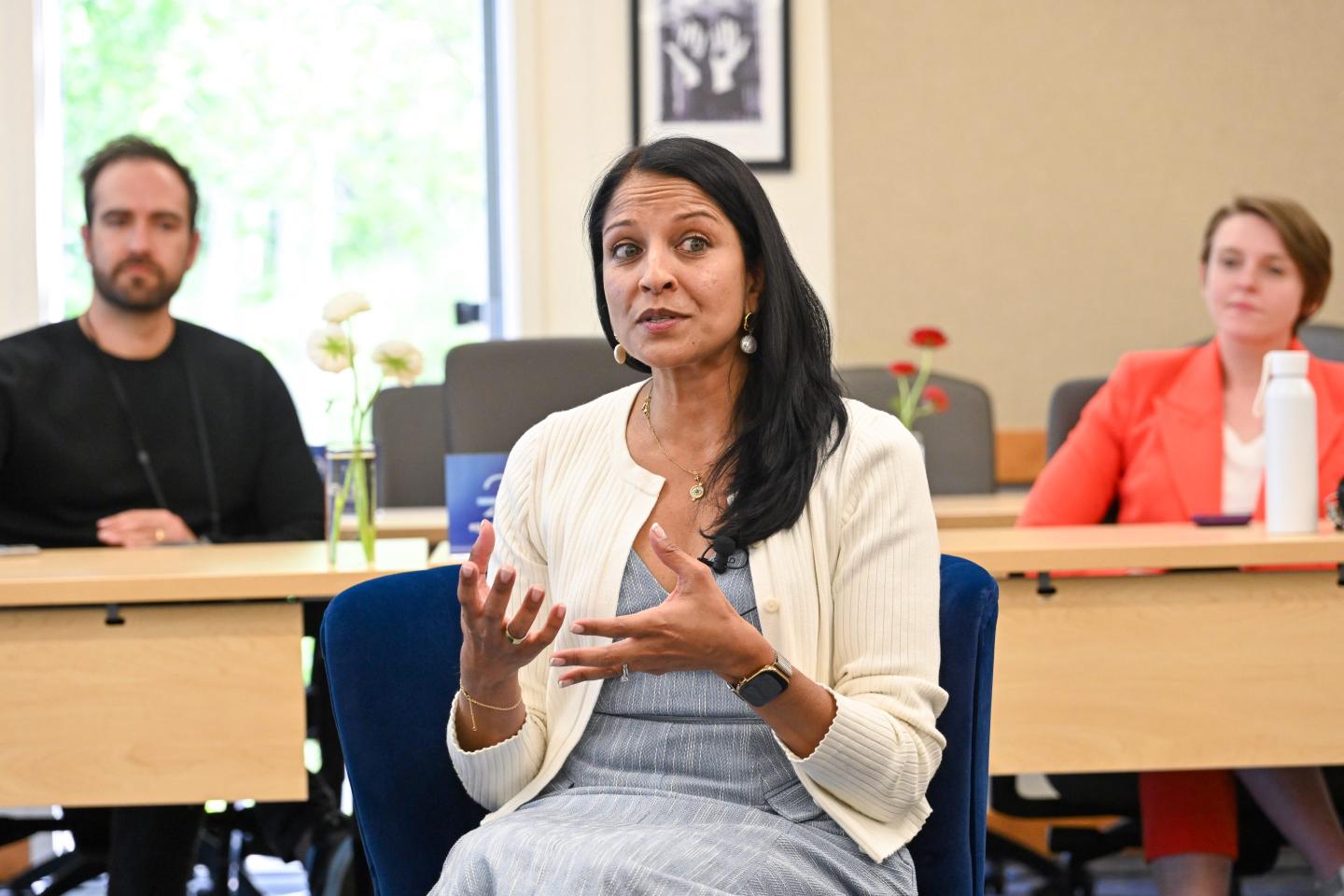
Lisa Shah, executive vice president and chief medical officer, Twin Health.
Lisa Shah, executive vice president and chief medical officer, Twin Health.Photograph by Stuart Isett/Fortune
Add Fortune on Google for similar content.

Lots of people know they could be eating more greens, sleeping better, and getting in more cardio. 

Recommended Video

The problem is what to do with all that data now that people have real information about themselves, courtesy of wearable medical and health devices. And, moreover, identifying the exact behavior we need to change—and then actually altering it. 

Patrick Sheehan, vice president of value-based care at intelligent health devices company Withings, said wearables that measure the user’s health data have become “the cop on your wrist.”

“It’s an accountability driver,” said Sheehan, who spoke at the Fortune Brainstorm Tech conference in Aspen this month. “It doesn’t solve problems for you, but it tells you your problems.”

The whole market, added Sheehan, is stuck at this surface-level issue, naming problems instead of resolving them. The solution isn’t another sensor attached to a different device. 

“The wearable paired with the action or an intervention is solving a problem,” said Sheehan.

Ann Crady Weiss, CEO and cofounder of Hatch, which builds bedside consumer devices for adults and babies to improve sleep, has observed the same issue up close. 

“Data, in and of itself, is interesting, but making it actionable is really, really important,” she said. Getting someone to act, Crady Weiss argued, is just as much a problem of habit as much as it is technical. 

She said Hatch’s rivals for a bedtime audience aren’t other sleep apps, but rather “Netflix and TikTok.” In her view, the way to resolve the issue is to get “someone interested and looking forward to taking care of themselves.”

Nele Jessel, chief medical officer at health care records data firm Athenahealth, said the gap between data and what to do with it has to be the first step in a path to more empowered decision-making about health. 

“Turning data and information into knowledge is the first step,” Jessel said, because on its own, “data and information is just that, it’s random facts.” The harder leap, Jessel said, is the one from knowing something to doing something about it, which is often where most consumer health tools stall.

But knowing hardly ever equates to doing, which raises a further issue. If a device has already flagged a problem, whose job is it to fix the behavior underlying it? 

Lisa Shah, chief medical officer of chronic conditions company Twin Health, argued the industry has been blaming the wrong party. The assumption that people don’t care about their health, she said, is a bias her work has almost thoroughly debunked.

“The biggest bias that’s been busted for me is that the patients don’t care about their health. That’s garbage,” said Shah. “What they don’t have is how.”

That “how,” she said, has to be tailored to a person’s actual life. A sleep target that assumes a 9 p.m. bedtime isn’t useful to shift workers, she noted. 

“What is a nurse going to do if I tell you to go to bed at 9:00 and that’s when you start your shift?” she questioned. 

The fix, in her view, is to make the guidance specific, available at “the average sixth-grade reading level,” and small enough to actually stick. 

“It’s micro changes, guys,” said Shah. The goal isn’t a total reinvention of someone’s habits, but a single realistic adjustment they’ll keep.

According to Sheehan, however, the real change doesn’t need to come from patients.

“Patients are not going to inherently change their behaviors,” said Sheehan. “I think it’s physician behavior change.” 

Getting doctors and clinicians to act on the readings to screen for conditions and warning signs earlier, diagnose issues sooner, and adjust treatment based on data is key—rather than letting the data pile up unused. 

Jessel noted that doctors are often the bottleneck for a functional reason.  Providers are often “leery of being presented with data that they can do nothing about,” she said.

For Othman Laraki, cofounder of virtual cancer clinic Color Health, the answer is a reward. Continuous glucose monitors work, he said, by “giving people a reward system for good behavior.” That might be a quiet nudge to sleep earlier or skip a salty or sweet snack because the readout will expose it either way. Laraki said he learned that information the hard way about his own food choices. 

“I was very sad to see that pho was one of them,” he said, referring to foods that spiked his glucose level.

Beyond wearables and health gadgets, inconsistencies and lack of access to getting medical care persist for large swaths of the population. 

Jen Shepherd, who runs Uber Health, argued that the focus with tailored data misses where most people actually get hampered.

“Insights, and more insights, are wonderful, and we have more health insights now than we have ever,” she said, “but honestly, the gap to access to care is so large.” 

The barriers that derail people from being more informed about their health are rooted in issues such as affordability, transportation, and food. 

Those reasons are why “one in five patients delay or miss appointments,” she added. “Me handing out wearables is not going to solve most of that problem,” Shepherd said.

For some patients, the data deficit is more fundamental. Heidi Davis, founder of perimenopause health company Peri, said the entire system was “designed by men for men,” leaving women with far less relevant health research and less-informed answers. 

When women do seek help, she said, “70% of women that go and ask for help get no help and get sent home.” For them, the value of data is that it’s a bargaining chip. 

“Here’s the data, now you can go in, you can advocate for yourself.”

The Fortune 500 Innovation Forum will convene Fortune 500 executives, U.S. policy officials, top founders, and thought leaders to help define what’s next for the American economy, Nov. 16-17 in Detroit. Apply here.
About the Author
Amanda Gerut
By Amanda GerutNews Editor, West Coast

Amanda Gerut is the west coast editor at Fortune, overseeing publicly traded businesses, executive compensation, Securities and Exchange Commission regulations, and investigations.

See full bioRight Arrow Button Icon
Add Fortune on Google for similar content.

Latest in Health

Finance
Lorem ipsum dolor sit amet, consectetur adipiscing elit, sed do eiusmod tempor incididunt ut labore et dolore magna aliqua. Ut enim ad minim veniam
By Fortune Editors
October 20, 2025
Finance
Lorem ipsum dolor sit amet, consectetur adipiscing elit, sed do eiusmod tempor incididunt ut labore et dolore magna aliqua. Ut enim ad minim veniam
By Fortune Editors
October 20, 2025
Finance
Lorem ipsum dolor sit amet, consectetur adipiscing elit, sed do eiusmod tempor incididunt ut labore et dolore magna aliqua. Ut enim ad minim veniam
By Fortune Editors
October 20, 2025
Finance
Lorem ipsum dolor sit amet, consectetur adipiscing elit, sed do eiusmod tempor incididunt ut labore et dolore magna aliqua. Ut enim ad minim veniam
By Fortune Editors
October 20, 2025
Finance
Lorem ipsum dolor sit amet, consectetur adipiscing elit, sed do eiusmod tempor incididunt ut labore et dolore magna aliqua. Ut enim ad minim veniam
By Fortune Editors
October 20, 2025
Finance
Lorem ipsum dolor sit amet, consectetur adipiscing elit, sed do eiusmod tempor incididunt ut labore et dolore magna aliqua. Ut enim ad minim veniam
By Fortune Editors
October 20, 2025

Most Popular

Finance
Lorem ipsum dolor sit amet, consectetur adipiscing elit, sed do eiusmod tempor incididunt ut labore et dolore magna aliqua. Ut enim ad minim veniam
By Fortune Editors
October 20, 2025
Finance
Lorem ipsum dolor sit amet, consectetur adipiscing elit, sed do eiusmod tempor incididunt ut labore et dolore magna aliqua. Ut enim ad minim veniam
By Fortune Editors
October 20, 2025
Finance
Lorem ipsum dolor sit amet, consectetur adipiscing elit, sed do eiusmod tempor incididunt ut labore et dolore magna aliqua. Ut enim ad minim veniam
By Fortune Editors
October 20, 2025
Finance
Lorem ipsum dolor sit amet, consectetur adipiscing elit, sed do eiusmod tempor incididunt ut labore et dolore magna aliqua. Ut enim ad minim veniam
By Fortune Editors
October 20, 2025
Finance
Lorem ipsum dolor sit amet, consectetur adipiscing elit, sed do eiusmod tempor incididunt ut labore et dolore magna aliqua. Ut enim ad minim veniam
By Fortune Editors
October 20, 2025
Finance
Lorem ipsum dolor sit amet, consectetur adipiscing elit, sed do eiusmod tempor incididunt ut labore et dolore magna aliqua. Ut enim ad minim veniam
By Fortune Editors
October 20, 2025
Fortune Secondary Logo
Rankings
  • 100 Best Companies
  • Fortune 500
  • Global 500
  • Fortune 500 Europe
  • Most Powerful Women
  • World's Most Admired Companies
  • See All Rankings
  • Lists Calendar
Sections
  • Finance
  • Fortune Crypto
  • Features
  • Leadership
  • Health
  • Commentary
  • Success
  • Retail
  • Mpw
  • Tech
  • Lifestyle
  • CEO Initiative
  • Asia
  • Politics
  • Conferences
  • Europe
  • Newsletters
  • Personal Finance
  • Environment
  • Magazine
  • Education
Customer Support
  • Frequently Asked Questions
  • Customer Service Portal
  • Privacy Policy
  • Terms Of Use
  • Single Issues For Purchase
  • International Print
Commercial Services
  • Advertising
  • Fortune Brand Studio
  • Fortune Analytics
  • Fortune Conferences
  • Business Development
  • Group Subscriptions
About Us
  • About Us
  • Press Center
  • Work At Fortune
  • Terms And Conditions
  • Site Map
  • About Us
  • Press Center
  • Work At Fortune
  • Terms And Conditions
  • Site Map
  • Facebook icon
  • Twitter icon
  • LinkedIn icon
  • Instagram icon
  • Pinterest icon

Latest in Health

A decade after the ‘Godfather of AI’ said radiologists were obsolete, their salaries are up to $571K and demand is growing fast
AIthe future of work
A decade after the ‘Godfather of AI’ said radiologists were obsolete, their salaries are up to $571K and demand is growing fast
By Marco Quiroz-GutierrezJuly 19, 2026
15 hours ago
How United’s ‘premiumization’ strategy got passengers to swallow higher airfares without a fight
HealthAirline industry
How United’s ‘premiumization’ strategy got passengers to swallow higher airfares without a fight
By Phil WahbaJuly 19, 2026
21 hours ago
Diarrhea-causing lettuce may have spread as wide as 27 states, Taylor Farms recall suggests
HealthFood and drink
Diarrhea-causing lettuce may have spread as wide as 27 states, Taylor Farms recall suggests
By Savannah Peters and The Associated PressJuly 18, 2026
1 day ago
Walmart removes four Taylor Farms salads as recalls spread
RetailFood and drink
Walmart removes four Taylor Farms salads as recalls spread
By Jaewon Kang, Jessica Nix, Fabiola Zerpa and BloombergJuly 18, 2026
1 day ago
Backstabbing is the new office norm: Gen Z and millennials are blame-shifting, snitching, and setting others up to fail—but so are managers
Successreturn to office
Backstabbing is the new office norm: Gen Z and millennials are blame-shifting, snitching, and setting others up to fail—but so are managers
By Orianna Rosa RoyleJuly 18, 2026
2 days ago
The Best Vitamins for Kids (2026): Support Their Immunity, Growth, and More
HealthDietary Supplements
The Best Vitamins for Kids (2026): Support Their Immunity, Growth, and More
By Emily PharesJuly 17, 2026
2 days ago

Most Popular

'Dr. Doom' Nouriel Roubini says we're headed for universal basic income or 'some form of socialism' as AI revolutionizes work—He calls that optimistic
AI
'Dr. Doom' Nouriel Roubini says we're headed for universal basic income or 'some form of socialism' as AI revolutionizes work—He calls that optimistic
By Jason MaJuly 18, 2026
1 day ago
Power companies are using eminent domain to seize land for data centers as 70% of Americans say not in my backyard
AI
Power companies are using eminent domain to seize land for data centers as 70% of Americans say not in my backyard
By Aaron Walayat and The ConversationJuly 19, 2026
19 hours ago
Indeed chief economist: Aging Baby Boomers are America's real labor problem, not AI
Commentary
Indeed chief economist: Aging Baby Boomers are America's real labor problem, not AI
By Svenja GudellJuly 18, 2026
2 days ago
Iran just crossed Trump's red line for resuming all-out war as fighting continues to escalate with no end in sight
Middle East
Iran just crossed Trump's red line for resuming all-out war as fighting continues to escalate with no end in sight
By Jason MaJuly 18, 2026
1 day ago
Red Lobster’s 37-year-old CEO waited tables before joining the C-suite—he says it was a crash course in managing ‘difficult people and situations’
Success
Red Lobster’s 37-year-old CEO waited tables before joining the C-suite—he says it was a crash course in managing ‘difficult people and situations’
By Preston ForeJuly 19, 2026
21 hours ago
U.S. companies have finally gotten $71 billion in tariff refunds, but they’re using it to offset inflation caused by the Iran war
Economy
U.S. companies have finally gotten $71 billion in tariff refunds, but they’re using it to offset inflation caused by the Iran war
By Sasha RogelbergJuly 17, 2026
3 days ago

© 2026 Fortune Media IP Limited. All Rights Reserved. Use of this site constitutes acceptance of our Terms of Use and Privacy Policy | CA Notice at Collection and Privacy Notice | Do Not Sell/Share My Personal Information
FORTUNE is a trademark of Fortune Media IP Limited, registered in the U.S. and other countries. FORTUNE may receive compensation for some links to products and services on this website. Offers may be subject to change without notice.