
Good morning. The Allbirds pivot has finally happened.
Once the footwear company of choice for fleece vest types in the late 2010s, Allbirds is now an AI infrastructure company, naturally. The firm on Wednesday renamed itself Smartbird and appointed former AWS exec Nadia Carlsten as chief executive.
BIRD shares popped 39% on the news, albeit from a low (sub $4) baseline, valuing the revamped company at about $48 million, or about one-thousandth the amount OpenAI plans to spend on capital expenditures this year. Ahem.
Oh, by the way: We’re off on Friday for the Juneteenth holiday in the U.S. (How should corporate leaders celebrate it? The great Ellen McGirt has you covered.)
More news below. Have a wonderful weekend. —Andrew Nusca
Want to send thoughts or suggestions to Fortune Tech? Drop a line here.
Amodei, Altman, Hassabis call for collaboration on AI rules at the G7 summit
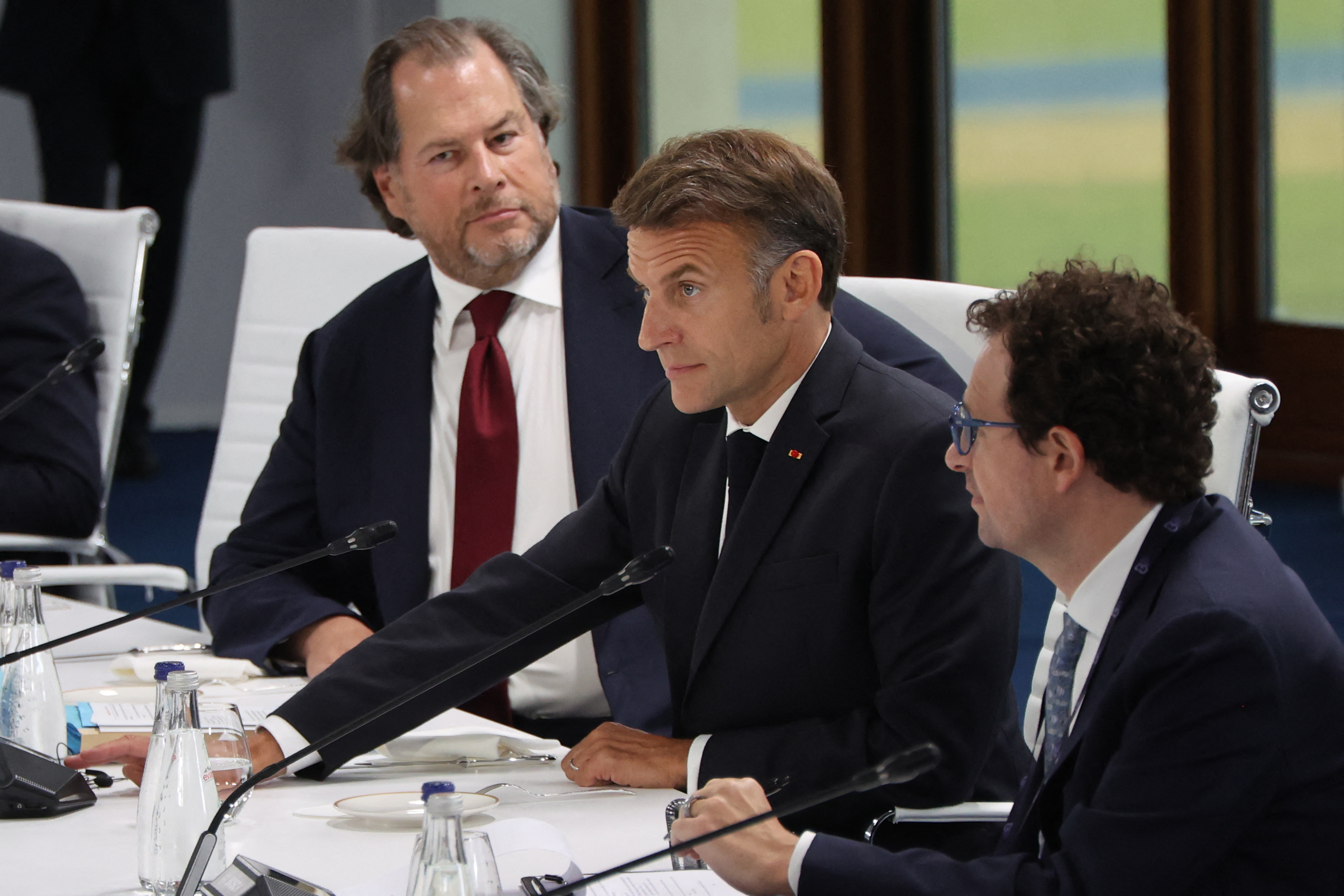
At the G7 summit in Évian-les-Bains, France on Wednesday, Anthropic CEO Dario Amodei warned (he’s always warning, isn’t he?) heads of state to “resist the temptation to splinter” in their approaches to AI regulation.
Amodei told attendees—which included archrival Sam Altman of OpenAI and Google DeepMind chief Demis Hassabis—that democratic countries should work together to prevent threat actors from gaining access to the most advanced tools, according to a Financial Times report.
His counsel, of course, comes as Donald Trump’s White House continues its abrupt export controls on Anthropic’s new Fable and Mythos AI models on national security concerns.
Despite their competitive tensions, Altman and Hassabis agreed. Altman said G7 nations should have access to AI-powered cybersecurity tools and Hassabis also called for collaboration. (Both were seated to each side of Trump; Amodei joined Salesforce CEO Marc Benioff next to Macron.)
There’s little doubt that incentives are aligned. All three companies, two of which are headed toward blockbuster IPOs, are more than happy to find stability while selling their wares to the governments of the G7.
Never one to pull a punch, host and French president Emmanuel Macron was critical of Trump’s move against Anthropic. The decision, he said, “clarified the stakes” for having consistent AI regulations because one government could simply choose to “turn off the switch,” harming everyone. —AN
Tokens are getting cheaper, leading companies to spend even more on AI
The ghost of a 19th century English economist may be haunting yet another part of the AI boom.
In 1865, William Stanley Jevons observed that when the Watt steam engine made coal use more efficient—decreasing the amount required for a task—coal consumption actually skyrocketed.
More than 150 years later, one economist is citing this phenomenon, dubbed Jevons paradox, to explain why the cost of AI will continue to creep up.
Despite the price of a single token dropping more than 90% since 2023, spending on large language models has doubled since late last year, according to the Silicon Data Token Expenditure Index.
Apollo chief economist Torsten Slok said it’s yet another example of the Jevons paradox in action. “As tokens get cheaper, companies don’t spend less but instead run more AI agents, automate more workflows and generate more code, pushing aggregate expenditure higher even as the unit cost of intelligence collapses,” Slok wrote in a recent blog post.
The cost of tokens has become a major concern for companies racing to leverage AI. The trend of “tokenmaxxing,” in which employees blitz to increase their AI use, has emerged as companies like Meta and Amazon incentivize the technology’s use.
But the tactic is proving unsustainable. Uber president and COO Andrew Macdonald recently said the rideshare company burned through its entire AI budget in the first four months of the year, leading it to cap monthly AI spending at $1,500 per employee.
In a brief last week, Bain and Co. analysts found that while token costs were halved from December 2024 to December 2025, the tokens consumed grew by 450% in the same period.
Companies feel compelled to upgrade their AI models to take advantage of the upgraded technology, they wrote, rather than stick with their current models and pocket the savings.
“The models get cheaper. The usage gets heavier,” they wrote. “The bill stays stubbornly high.” —Sasha Rogelberg
Roelof Botha joins SpaceX board
Roelof Botha, longtime investor and former steward at Sequoia Capital, has joined the board of SpaceX, a filing revealed.
The news comes less than a week after SpaceX’s historic IPO and about seven months after Botha stepped down as the steward of the legendary venture firm Sequoia Capital.
His tenure coincided with a notably difficult time in the VC firm’s history. Botha, as an investor, backed winners like YouTube, Instagram, Block, and MongoDB, among others. But his leadership style was not roundly embraced, he missed key opportunities in artificial intelligence, and the firm took a reputational hit—prompting an apology to investors—after it lost its entire $150 million investment in Sam Bankman-Fried’s FTX.
Botha, who was featured on the cover of Fortune magazine and spoke at Fortune Brainstorm Tech in 2024, has a longstanding relationship with Elon Musk—SpaceX founder, Tesla CEO, and world’s richest man by a mile.
The two (both originally from South Africa) first worked together in the dotcom era when Botha served as CFO at PayPal, where Musk was a cofounder. Botha and Musk reportedly bumped heads back then, over culture and software, but have continued to work together through the decades. For example, Sequoia is among SpaceX’s key venture backers.
“I’ve known Elon for over 25 years,” Botha told Fortune last year, amid fury over Musk’s DOGE. “He was the first person to offer me a job in America. He believed in me when I was an unknown student at Stanford. I have a lot of appreciation and understanding that he’s not perfect. None of us are. He deeply cares about doing the right thing.” —Allie Garfinkle
More tech
—U.S. mulls how to structure gov’t equity stakes in AI firms. Commerce Secretary Lutnick’s solution? A sovereign wealth fund.
—Beware “Fortibleed,” a new hack exposing Fortinet and FortiGate VPN credentials.
—Epic’s Unreal Engine 6, expected next year, will unify UE5 and Unreal Editor for Fortnite as well as integrate with Anthropic’s Claude and Google’s Gemini.
—Snap shares closed down 8% after the company’s $2,200 Specs AR glasses fail to impress.
—The $99 Google Home Speaker begins shipping June 29, nine months after its debut.
—Jeff Bezos on the intelligence age: “AI is going to create a labor shortage.”
—R.I.P. Joshua Baer, founder and CEO of Texan startup accelerator Capital Factory, who died in a plane crash Tuesday night.