SpaceX, the freshly-IPO’d company that barely has been on the public markets for three days, has already surpassed 31-year-old Amazon in market cap. Not only that, it briefly overtook Microsoft too on Tuesday morning.
This is a major pull for a company that earned less than a quarter of what Amazon raked in. Last year, SpaceX took in $18.7 billion in revenue and lost $4.9 billion, while Amazon took in $717 billion and earned $77.7 billion—more profit than SpaceX has made in sales.
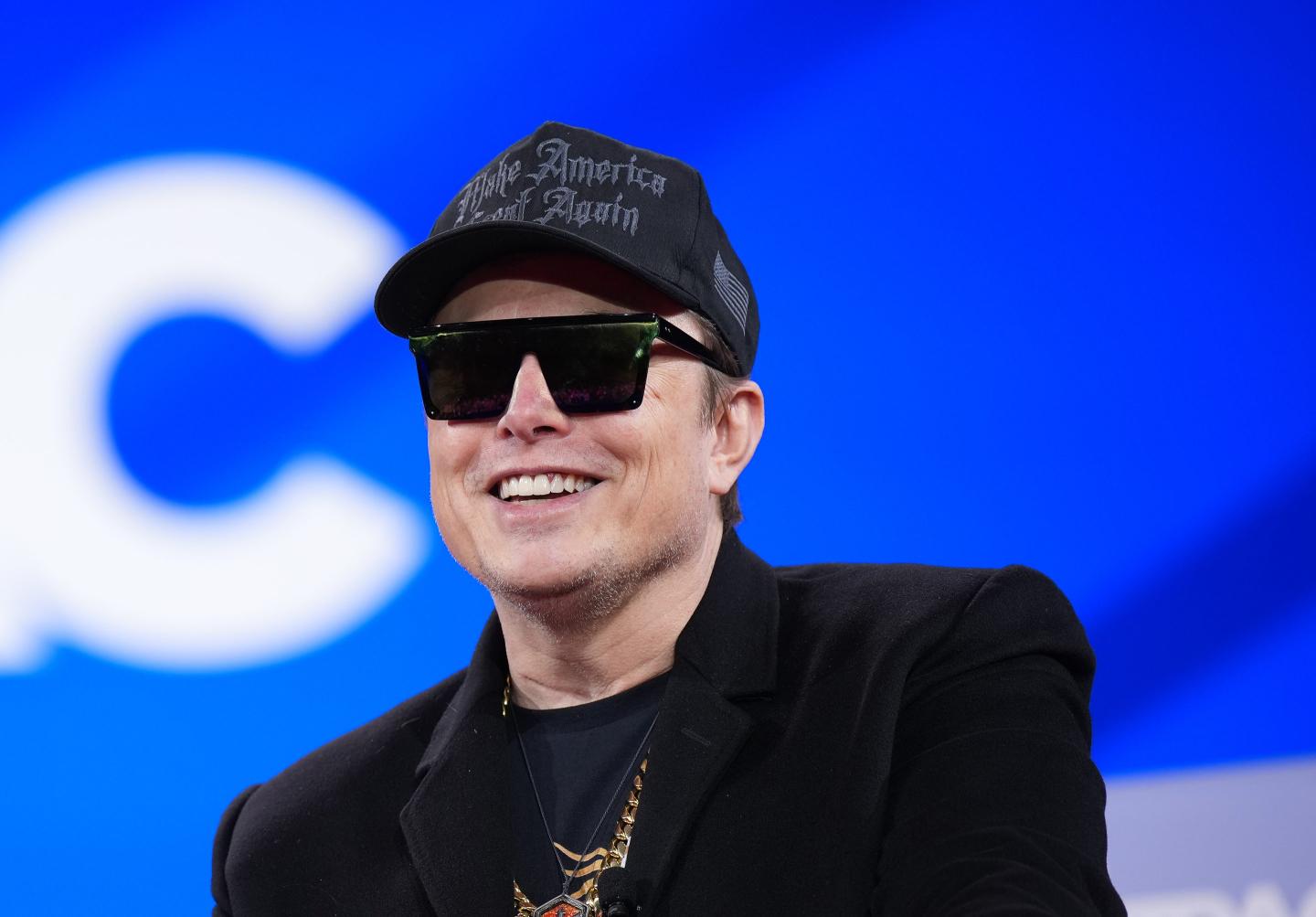
With the euphoria, Elon Musk is now worth $1.27 trillion; more than triple the wealth of Larry Page, at $314 billion, who sits in second place on the world’s richest people list. He’s made more money on Tuesday—about $165 billion—than Warren Buffett has made in his entire career.
Tuesday’s jump is partly due to SpaceX’s acquisition of Cursor, of vibe-coding fame, for more money than it has spent on rockets in the company’s lifetime, according to Eric Berger, a leading expert on SpaceX and a Senior Space Editor at publication Ars Technica
If you bought the SpaceX IPO at its starting price at $135 a share, you would have a higher return in three days than in the three years of the AI rally.
So the question remains: is SpaceX truly worth more than the summed ingenuity of the entire AI race? Or is this its apogee—the highest point of the arc, just before gravity takes back over?
SpaceX: to Mars or off a cliff?
First, who’s buying. Retail investors have poured $225 million into SpaceX on a net basis in its first two days, a startling amount: that’s about 75% of all the net single-stock buying in the entire market over that stretch, per Vanda Research.
Now all that salivating demand for SpaceX for retail is chasing a small amount of shares— about 4% of SpaceX. The rest is locked up for about another week, until there will be mechanistically more demand. Under early index-inclusion rules, passive funds have to buy approximately $22 billion to $27 billion SPCX to hit its new weight, except there’s almost nothing to sell them.
For a clue on the scale of the demand, look at options, which started trading on Tuesday; and about 600,000 contracts moved in the first hour. Traders are spending millions on $250 calls, according to Bloomberg data, betting that a stock already up 62% in three days climbs another 20%. And those bets only force MORE buying; in order to hedge the calls they’ve sold, dealers have to continue to buy SPCX as it rises, with the order book almost empty.
It’s a familiar mechanism to the days of the 2021 Gamestop rises, which is probably why Jim Cramer, who says he likes the stocks, called it a “memestock” and said it made him uncomfortable watching it. Cramer also played the skeptic during the 2021 GameStop frenzy, warning retail traders they’d be the ones holding the bag, and the stocks’ collapse proved him right.
SpaceX, like Gamestop, is more than its nominal purpose: being a rocket company. Musk merged xAI into SpaceX in February, after folding X into xAI the year before. Now, Tuesday’s Cursor deal bolts on an AI coding tool making $3 billion in revenue, of vibecoding fame. So one entity now holds reusable rockets, Starlink, a frontier AI lab, a social network, and a vibecoding startup. Musk says it “might be able to reach approximately” $1 trillion in revenue by 2030. It did $18.7 billion in 2025; it lost $4.9 billion doing it, and another $4.28 billion in the first quarter alone.
The bulls don’t care to stall on those numbers. “It’s about this fourth industrial revolution,” Wedbush’s Dan Ives, a leading sell-side tech analyst, told CNBC.
The bears point at the quarter. CFRA opened with a sell and a $115 target— a 29% haircut from where the thing closed day one. And even the believers are on a clock: Steve Westly, a former Tesla board member, told CNBC that SpaceX’s own investors “will get pretty grumpy after three or four quarters” if Musk misses the S-1 projections.