
• Home
  • Latest
  • Fortune 500
  • Finance
  • Tech
  • Leadership
  • Lifestyle
  • Rankings
  • Multimedia

Trendingnow

1

The U.S. campaigned to host the World Cup. Now soccer fans will trade their countries' train system for the U.S.'s 'D' rated infrastructure

2

The pig in the python: Baby Boomers are strangling the economy they built by refusing to move or retire

3

Jeff Bezos wants the bottom half of earners to pay zero income tax—he says nurses making just $75K should save $12K a year

1

The U.S. campaigned to host the World Cup. Now soccer fans will trade their countries' train system for the U.S.'s 'D' rated infrastructure

2

The pig in the python: Baby Boomers are strangling the economy they built by refusing to move or retire

3

Jeff Bezos wants the bottom half of earners to pay zero income tax—he says nurses making just $75K should save $12K a year
InnovationRare Earth Metal

America’s manufacturing Achilles’ heel: McKinsey’s warning on rare earths grows louder

Nick Lichtenberg
By
Nick Lichtenberg
Nick Lichtenberg
Business Editor
Down Arrow Button Icon
Nick Lichtenberg
By
Nick Lichtenberg
Nick Lichtenberg
Business Editor
Down Arrow Button Icon
May 26, 2026, 3:26 PM ET
tt
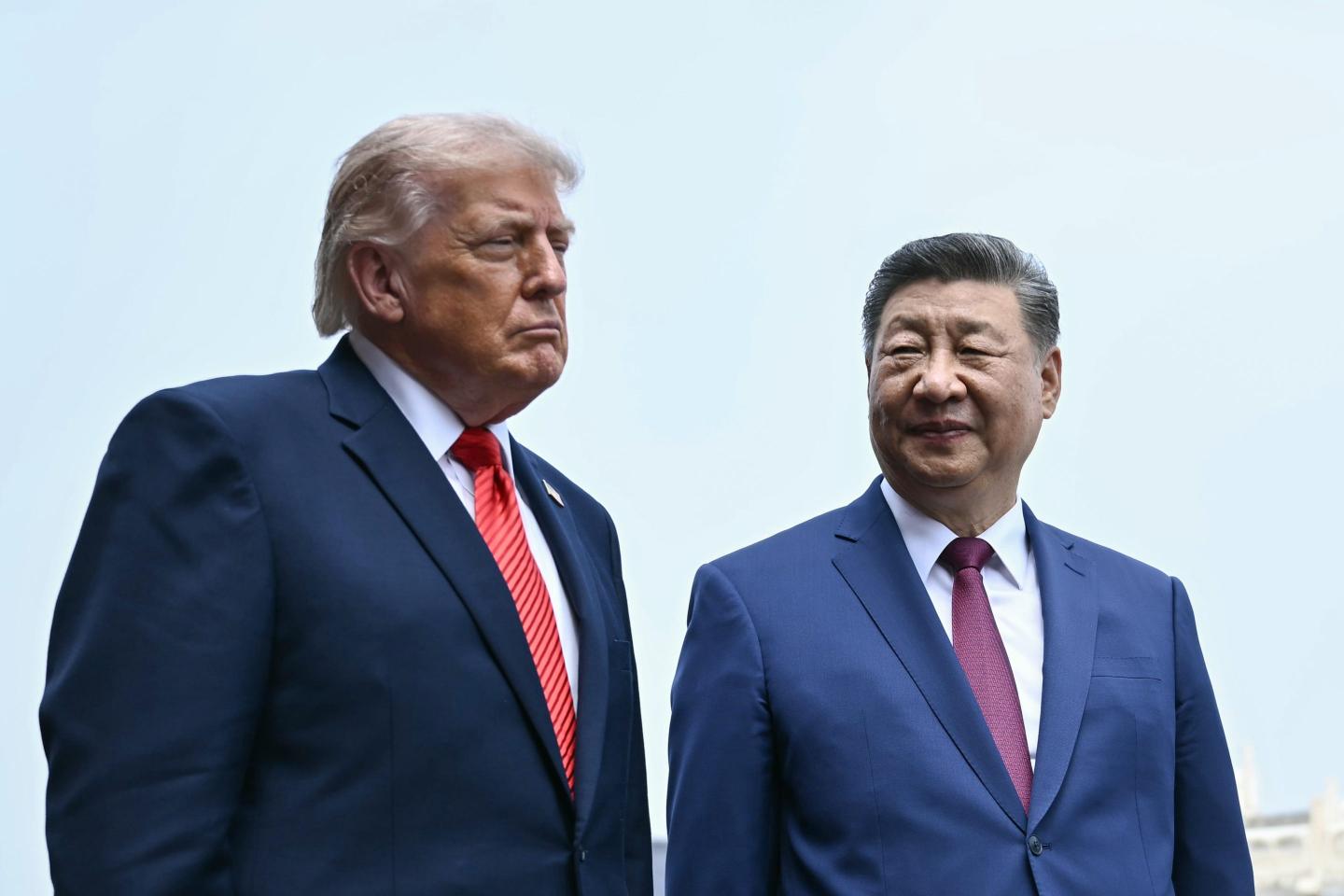
China's President Xi Jinping (R) and US President Donald Trump visit the Temple of Heaven on May 14, 2026 in Beijing, China. Xi warned Trump that the issue of Taiwan could push their two countries into "conflict" if mishandled, a stark opening salvo as a superpower summit set to tackle numerous thorny issues began in Beijing on May 14.Brendan Smialowski - Pool/Getty Images

The story of Achilles doesn’t begin with an arrow. It begins with a mother who thought she could engineer invulnerability.

Recommended Video

Thetis dipped her infant son in the River Styx to make him immortal, holding him by the heel — the one place the water never touched. Achilles grew up to be the greatest warrior of his age, his armor impenetrable, his enemies routed. Nobody worried about the heel. Why would they? Everything else worked so well.

America’s industrial story follows the same arc. Decades of semiconductor leadership, unmatched aerospace manufacturing, the most sophisticated defense supply chain in history — and, running beneath all of it, a single exposed tendon. Rare earths: the 17 chemically similar elements that make electric motors spin efficiently, that keep missile guidance fins stable at supersonic speeds, that sit inside every F-35, every EV drivetrain, every wind turbine nacelle. For years, nobody worried much about them. Everything else worked so well.

McKinsey & Company analysts have spent the past several years tracing the outline of the wound. The firm projects a shortfall of up to 30% in magnetic rare earth supply globally by 2035 — unless China dramatically expands output or the rest of the world sharply accelerates production. For dysprosium and terbium, the heavy rare earths that prevent magnets from demagnetizing inside electric motors and missile guidance fins, the numbers are worse: producers outside China are projected to meet less than 20% of global demand for those two elements by 2035. Similar estimates come from CRU Group and Benchmark Mineral Intelligence.

The river Thetis used wasn’t magic. It was strategy.

How China came to dominate

Rare earths aren’t particularly scarce in the earth’s crust — the name is a misnomer. What makes them irreplaceable is that they are nearly impossible to separate cleanly from one another and from surrounding rock. The chemistry required is toxic, expensive, and technically demanding. China didn’t win the rare earths race by having more of the dirt. It won by mastering the refining — and by deciding, decades ago, that it wanted to.

That decision had a name. President Xi Jinping’s “dual circulation” doctrine — make the world dependent on China while insulating China from dependence on anyone else — found its proof of concept in rare earths and permanent magnets long before it became official policy. “They didn’t just fall into that,” economist Soumaya Keynes told Fortune earlier this month. “They learned about those supply chains. They had a strategy to become the world’s leader.”

Keynes and her co-author Chad Bown, a senior fellow at the Peterson Institute for International Economics, make this case in How to Win a Trade War, their new book published this spring. While America was fortifying everything else, China was studying the heel.

Achilles went to battle anyway. So did American industry.

For a generation, Washington ran a version of Achilles’ logic: the armor was good enough. The U.S. poured billions into the CHIPS Act to boost domestic semiconductor production but never mandated that anyone actually buy the chips. “They didn’t force anyone else to actually buy the chips that Intel was going to make,” Keynes said. “And that was a problem.” The rare earths story is a rerun of that structural failure, at higher strategic stakes: supply funded, demand assumed, the full chain never closed.

“Meaningful diversification will take longer than many anticipate,” Michel Van Hoey, the McKinsey senior partner who leads the firm’s metals and mining practice, told Bloomberg earlier this month.

Any nascent U.S. rare earth industry is small enough that Beijing could simply flood the market with cheap material and wait for the small player to give up. That tactic ended Molycorp — once the great hope of American rare earth independence — whose Mountain Pass mine filed for bankruptcy in 2015 before the Pentagon had fully registered what it had lost. China’s rare earth producers, many of them state-owned enterprises, aren’t maximizing quarterly returns. They are achieving national objectives.

“These companies are not just maximizing profits,” Bown told Fortune. “They’re achieving other objectives on behalf of the Chinese government.” Achilles had enemies who studied him. America has a rival that studied the supply chain.

Washington finally moves

Then came the arrow.

China controls roughly 70% of global rare earth mining and close to 90% of refining and processing capacity — the chokepoint that actually matters. When Beijing slapped export controls on samarium, dysprosium and terbium in retaliation for President Trump’s tariffs last year, U.S. automakers warned they were weeks away from halting production lines. A November truce loosened the spigot, but only partly. Fresh restrictions targeting Japan in early 2026, after Japanese Prime Minister Sanae Takaichi’s remarks on Taiwan, sent another tremor through magnet supply chains that feed everything from F-35s to Ford F-150 Lightnings. The arrow, when it finally came, went exactly where everyone had been told not to worry about.

Mining veteran Mick McMullen put it plainly to Fortune from a critical-minerals forum in Singapore in March: “Clearly, China is the leader, and the U.S. is far behind. It’s a bit unbelievable that it’s taken so long for everyone to realize that maybe we should have some of these things in house.”

Achilles, at the end, tried to keep fighting.

Washington has begun to move — aggressively, by its own standards. The Defense Department is now the largest shareholder in MP Materials, operator of the lone active U.S. rare earth mine at Mountain Pass — the same California site Molycorp abandoned. The administration inked an $8.5 billion rare-earths pact with Australia in October, struck deals with Malaysia and Thailand, and is reportedly weighing the redirection of $2 billion in CHIPS Act funds toward minerals. Trump expanded CHIPS Act tax credits from 25% to 35% and took equity stakes in private companies including Intel — a patchwork industrial strategy that Keynes and Bown describe as real, but late.

The catch is what it always was: time. Mining the ore is the easy part. The supply chain runs mine to crusher to leaching tanks to solvent extraction columns to metal reduction furnaces to sintering presses — each a separate facility, a separate specialized workforce, a separate capital cycle. The U.S. is, at best, two or three steps in. “We don’t live in a perfect world,” Keynes said. Countries have to use “imperfect tools” to protect their interests and manage the consequences as best they can. The question is whether Washington will deploy them fast enough — or whether, as Keynes said, “we’re going to be in this for a long, long time.”

McMullen told Fortune he doubts the gap can be closed inside a single administration.
The myth, of course, ends on the battlefield. Achilles doesn’t die because the arrow is powerful. He dies because the heel was always there, and eventually, someone with enough patience aimed at it.

Beijing has been patient.

For this story, Fortune journalists used generative AI as a research tool. An editor verified the accuracy of the information before publishing.

The Fortune 500 Innovation Forum will convene Fortune 500 executives, U.S. policy officials, top founders, and thought leaders to help define what’s next for the American economy, Nov. 16-17 in Detroit. Apply here.
About the Author
Nick Lichtenberg
By Nick LichtenbergBusiness Editor
LinkedIn icon

Nick Lichtenberg is business editor and was formerly Fortune's executive editor of global news.

See full bioRight Arrow Button Icon

Latest in Innovation

Finance
Lorem ipsum dolor sit amet, consectetur adipiscing elit, sed do eiusmod tempor incididunt ut labore et dolore magna aliqua. Ut enim ad minim veniam
By Fortune Editors
October 20, 2025
Finance
Lorem ipsum dolor sit amet, consectetur adipiscing elit, sed do eiusmod tempor incididunt ut labore et dolore magna aliqua. Ut enim ad minim veniam
By Fortune Editors
October 20, 2025
Finance
Lorem ipsum dolor sit amet, consectetur adipiscing elit, sed do eiusmod tempor incididunt ut labore et dolore magna aliqua. Ut enim ad minim veniam
By Fortune Editors
October 20, 2025
Finance
Lorem ipsum dolor sit amet, consectetur adipiscing elit, sed do eiusmod tempor incididunt ut labore et dolore magna aliqua. Ut enim ad minim veniam
By Fortune Editors
October 20, 2025
Finance
Lorem ipsum dolor sit amet, consectetur adipiscing elit, sed do eiusmod tempor incididunt ut labore et dolore magna aliqua. Ut enim ad minim veniam
By Fortune Editors
October 20, 2025
Finance
Lorem ipsum dolor sit amet, consectetur adipiscing elit, sed do eiusmod tempor incididunt ut labore et dolore magna aliqua. Ut enim ad minim veniam
By Fortune Editors
October 20, 2025

Most Popular

Finance
Lorem ipsum dolor sit amet, consectetur adipiscing elit, sed do eiusmod tempor incididunt ut labore et dolore magna aliqua. Ut enim ad minim veniam
By Fortune Editors
October 20, 2025
Finance
Lorem ipsum dolor sit amet, consectetur adipiscing elit, sed do eiusmod tempor incididunt ut labore et dolore magna aliqua. Ut enim ad minim veniam
By Fortune Editors
October 20, 2025
Finance
Lorem ipsum dolor sit amet, consectetur adipiscing elit, sed do eiusmod tempor incididunt ut labore et dolore magna aliqua. Ut enim ad minim veniam
By Fortune Editors
October 20, 2025
Finance
Lorem ipsum dolor sit amet, consectetur adipiscing elit, sed do eiusmod tempor incididunt ut labore et dolore magna aliqua. Ut enim ad minim veniam
By Fortune Editors
October 20, 2025
Finance
Lorem ipsum dolor sit amet, consectetur adipiscing elit, sed do eiusmod tempor incididunt ut labore et dolore magna aliqua. Ut enim ad minim veniam
By Fortune Editors
October 20, 2025
Finance
Lorem ipsum dolor sit amet, consectetur adipiscing elit, sed do eiusmod tempor incididunt ut labore et dolore magna aliqua. Ut enim ad minim veniam
By Fortune Editors
October 20, 2025
Fortune Secondary Logo
Rankings
  • 100 Best Companies
  • Fortune 500
  • Global 500
  • Fortune 500 Europe
  • Most Powerful Women
  • World's Most Admired Companies
  • See All Rankings
  • Lists Calendar
Sections
  • Finance
  • Fortune Crypto
  • Features
  • Leadership
  • Health
  • Commentary
  • Success
  • Retail
  • Mpw
  • Tech
  • Lifestyle
  • CEO Initiative
  • Asia
  • Politics
  • Conferences
  • Europe
  • Newsletters
  • Personal Finance
  • Environment
  • Magazine
  • Education
Customer Support
  • Frequently Asked Questions
  • Customer Service Portal
  • Privacy Policy
  • Terms Of Use
  • Single Issues For Purchase
  • International Print
Commercial Services
  • Advertising
  • Fortune Brand Studio
  • Fortune Analytics
  • Fortune Conferences
  • Business Development
  • Group Subscriptions
About Us
  • About Us
  • Press Center
  • Work At Fortune
  • Terms And Conditions
  • Site Map
  • About Us
  • Press Center
  • Work At Fortune
  • Terms And Conditions
  • Site Map
  • Facebook icon
  • Twitter icon
  • LinkedIn icon
  • Instagram icon
  • Pinterest icon

Latest in Innovation

tt
InnovationRare Earth Metal
America’s manufacturing Achilles’ heel: McKinsey’s warning on rare earths grows louder
By Nick LichtenbergMay 26, 2026
52 minutes ago
Perceptic cofounders Tilman Flock (left), Zaki Trache (center), and Martin Copes.
AIPharmaceutical Industry
Exclusive: Perceptic, a startup automating drug discovery end-to-end for Big Pharma, emerges from stealth with $12 million in seed funding
By Jeremy KahnMay 26, 2026
7 hours ago
rr
CommentaryBook Excerpt
I wrote the playbook that built Big Tech. I misjudged what would happen next
By Eric RiesMay 26, 2026
8 hours ago
Ex-Google engineer turned $7.2 billion AI CEO gets thousands of job applications a day but still can’t find candidates with a strong work ethic
SuccessCareers
Ex-Google engineer turned $7.2 billion AI CEO gets thousands of job applications a day but still can’t find candidates with a strong work ethic
By Orianna Rosa RoyleMay 26, 2026
13 hours ago
le
AIReligion
Pope Leo called AI an ‘instrument of domination, exclusion and death.’ Anthropic was in the room
By Nicole Winfield, Kaitlyn Huamani, Paolo Santalucia and The Associated PressMay 25, 2026
1 day ago
g
EnvironmentLaw
You can’t repair your tractor because Hollywood was terrified of the VCR
By Oana Godeanu-Kenworthy and The ConversationMay 25, 2026
1 day ago

Most Popular

The U.S. campaigned to host the World Cup. Now soccer fans will trade their countries' train system for the U.S.'s 'D' rated infrastructure
Travel & Leisure
The U.S. campaigned to host the World Cup. Now soccer fans will trade their countries' train system for the U.S.'s 'D' rated infrastructure
By Catherina GioinoMay 25, 2026
1 day ago
The pig in the python: Baby Boomers are strangling the economy they built by refusing to move or retire
Economy
The pig in the python: Baby Boomers are strangling the economy they built by refusing to move or retire
By Nick LichtenbergMay 25, 2026
2 days ago
Jeff Bezos wants the bottom half of earners to pay zero income tax—he says nurses making just $75K should save $12K a year
Success
Jeff Bezos wants the bottom half of earners to pay zero income tax—he says nurses making just $75K should save $12K a year
By Preston ForeMay 21, 2026
5 days ago
A billionaire and an A-list actor found refuge in a 37-home Florida neighborhood with armed guards—proof that privacy is now the ultimate luxury
Real Estate
A billionaire and an A-list actor found refuge in a 37-home Florida neighborhood with armed guards—proof that privacy is now the ultimate luxury
By Marco Quiroz-GutierrezMay 25, 2026
1 day ago
The Supreme Court handed Trump a Golden Chariot on tariffs — now he just has to take it
Commentary
The Supreme Court handed Trump a Golden Chariot on tariffs — now he just has to take it
By Jeffrey Sonnenfeld and Steven TianMay 26, 2026
10 hours ago
Elon Musk's best friend could make more than $100 billion from SpaceX's IPO. His firm is also owed billions by SpaceX
Investing
Elon Musk's best friend could make more than $100 billion from SpaceX's IPO. His firm is also owed billions by SpaceX
By Eva RoytburgMay 25, 2026
1 day ago

© 2026 Fortune Media IP Limited. All Rights Reserved. Use of this site constitutes acceptance of our Terms of Use and Privacy Policy | CA Notice at Collection and Privacy Notice | Do Not Sell/Share My Personal Information
FORTUNE is a trademark of Fortune Media IP Limited, registered in the U.S. and other countries. FORTUNE may receive compensation for some links to products and services on this website. Offers may be subject to change without notice.