• Home
  • Latest
  • Fortune 500
  • Finance
  • Tech
  • Leadership
  • Lifestyle
  • Rankings
  • Multimedia
Commentaryoil and gas
Asia

Dollar doomsayers can relax: Iran’s ‘petroyuan’ gambit won’t topple the greenback

By
Paul Blustein
Paul Blustein
Down Arrow Button Icon
By
Paul Blustein
Paul Blustein
Down Arrow Button Icon
March 30, 2026, 5:00 PM ET

Paul Blustein is a senior associate (non-resident) with the Economics Program and Scholl Chair in International Business at the Center for Strategic and International Studies (CSIS). He is also the author of "King Dollar: The Past and Future of the World's Dominant Currency."

The Iran war’s consequences will doubtless be serious—but not for the dollar.
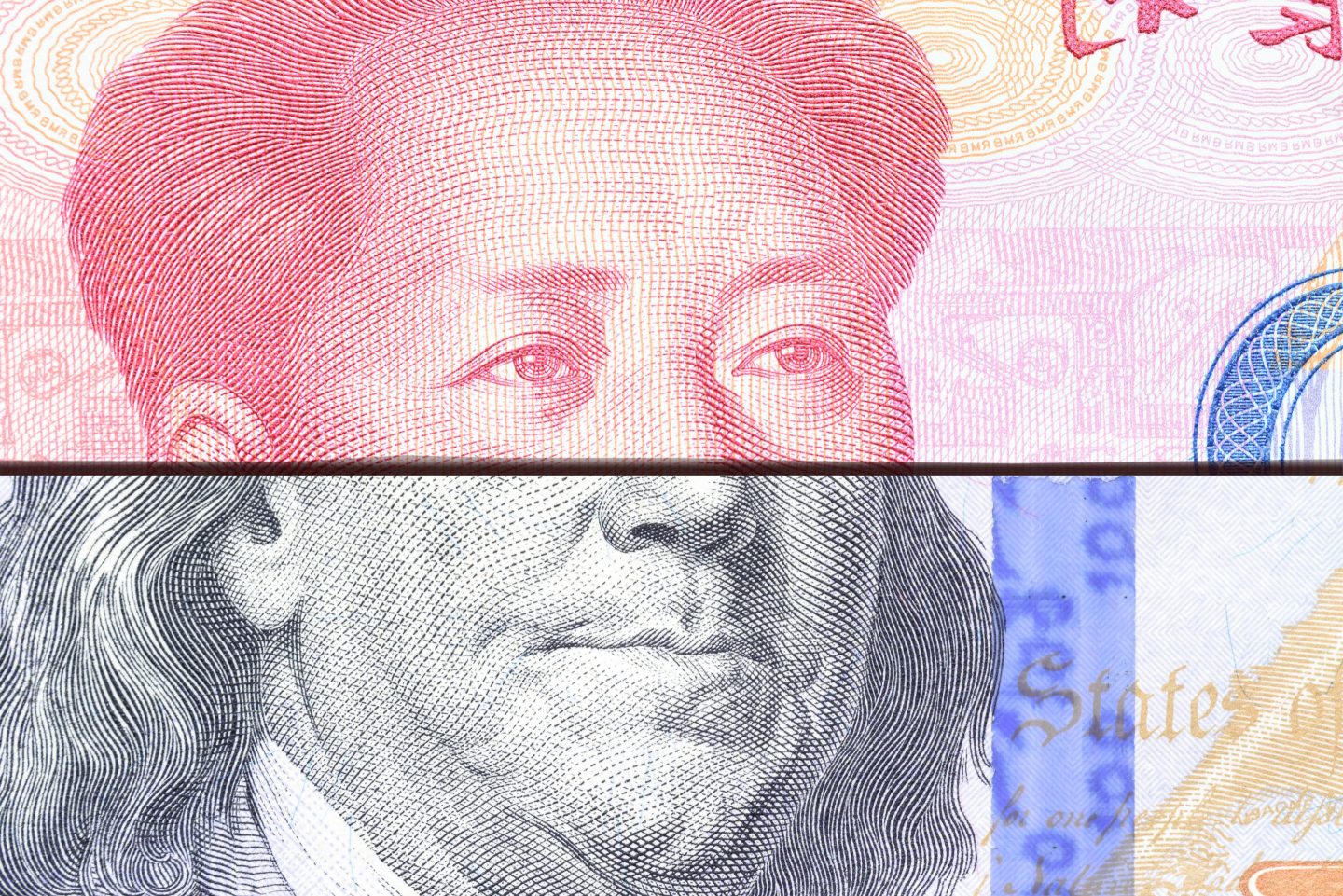
The Iran war’s consequences will doubtless be serious—but not for the dollar. Getty Images

Even amid the torrent of disquieting news from the Middle East in recent weeks, an Iranian suggestion that it might start offering safe passage to oil tankers that paid in Chinese yuan, instead of the U.S. dollar, raised eyebrows.

Sourced to an anonymous Iranian official, the threat sparked a spate of warnings that Tehran might use its control of the Strait of Hormuz not to just threaten the world’s access to petroleum, but also upend the dollar-based international monetary system. By striking a blow against the petrodollar, Iran could initiate the unraveling of the dollar’s dominance, itself a linchpin of U.S. power—or so the argument goes. Those citing such ominous scenarios envisioned other possible dangers, including the debilitation of America’s security guarantees to Saudi Arabia and other Gulf oil exporters.

“The conflict could be remembered as a key catalyst for erosion in petrodollar dominance, and the beginnings of the petroyuan,” with potentially “significant downstream effects to…the dollar’s role as the world’s reserve currency,” Deutsche Bank analysts warned in a report last week.

The war’s consequences will doubtless be serious—but not for the dollar. The U.S. currency’s success rests on robust foundations, and Iran’s petroyuan gambit looks to be just the latest of many episodes in which alarmism over the dollar’s primacy has proven misplaced. Even if the petrodollar system weakens, it would matter little: As massive as world oil markets are, the reasons for dollar dominance lie elsewhere.

The greenback’s status stems from two features that no other currency can match. First is the depth, breadth, and liquidity of U.S. financial markets, in particular the market for Treasury bills and bonds, which can be bought and sold in enormous volumes without causing significant movements in price. This attribute is crucial in a financial crunch, when firms are scrambling to ensure that they can obtain the cash needed to meet obligations coming due.

The second feature is America’s open capital account—that is, the freedom to move money across U.S. borders virtually unimpeded. Many countries have open capital accounts but, importantly, China doesn’t. And no country, even open ones, has the U.S. market’s depth and breadth.

Having defied obituary writers on numerous occasions, the dollar continues to play a role in international transactions far out of proportion to the U.S. economy’s size. It accounts for well over half of foreign currency reserves held by central banks, and a similar share of export invoices for cross-border trade, as well as international bank loans and bond issuance. Network effects entrench its status; everybody has an incentive to use the dollar because so many others do.

Nowhere is the extent of the dollar’s entrenchment more evident than in the working of the little-known but gigantic market for foreign exchange swaps. In this market, global firms—multinational corporations, banks, insurance companies, securities dealers, and pension funds—shield themselves against currency fluctuations. According to the Bank for International Settlements (BIS), the amount of outstanding swaps currently stands above $100 trillion, with some 90% involving the dollar. (Far lower percentages involve the euro, Japanese yen, and other currencies.) This reflects the myriad ways in which the greenback is used for lending, borrowing, and investing.

So why are so many people obsessed with the petrodollar? It mostly comes down to a narrative that is only loosely grounded in facts. As the story goes, in the mid-1970s, the U.S. struck a bargain with Saudi Arabia, offering military aid and protection to the ruling House of Saud, in exchange for a Saudi promise to only accept dollars for oil and invest the proceeds in U.S. Treasuries. That set a precedent for other oil exporters to follow.

Those on the ground at the time remember things differently. One of the few foreigners allowed to live in the desert kingdom then was David Mulford, a young investment banker hired in 1975 by the Saudi Arabian Monetary Agency (SAMA), the nation’s central bank, as an adviser. In his 2014 memoir, he recalled how a team of six professionals struggled in SAMA’s dilapidated headquarters to manage “a portfolio growing at $5 and later $10 billion every thirty days,” relying on a single, sluggish telex machine for communicating with the outside world.

It turns out that oil was already predominantly priced in dollars and, as Mulford explained, Saudi Arabia had little choice but to plow its revenue into dollar-denominated assets. According to Mulford, who later became a U.S. Treasury undersecretary and ambassador to India, “In most markets outside the U.S. in those days a currency trade of just $10 million was enough to move markets, so there were practical limitations on the amount of currency diversification that we could achieve.” Furthermore, “purchases of German [bonds], or Japanese yen bonds, or Dutch guilder bonds, or Swiss franc notes were just not possible in the sizes common in the U.S. market.”

In other words, it was the American market’s unique depth, breadth, and liquidity—and not some secret deal—that led the Saudis to choose the dollar.

Petrodollars were a major reason why the greenback internationalized in the 1970s and the decades thereafter, as much of the income received by oil exporters was deposited in dollar accounts at banks around the world, primarily in Europe. But they are a much less significant factor in the global dollar market today.

While 44% of earnings from oil sales were deposited in offshore dollar bank accounts during the 1970s, that figure shrank to 27% by the early 2000s, noted Jess Hoversen, chief economist at Column, a San Francisco financial services firm, citing research from the IMF. The percentage is now in single digits, she estimates, as oil exporters’ earnings today are directed toward domestic development and sovereign wealth funds, which in turn are invested heavily in international stock markets and startups.

But the dollar market has surged even as the petrodollar took a step back. Hoversen pointed out that the offshore dollar credit market stood at $2.5 trillion in 2000, and hit $14.2 trillion by last year. “This tells us that the dollar is very structurally resilient,” she writes.

The debate about dollar dominance will continue to rage, as the Trump administration shakes investor confidence with actions like attacking the independence of the Federal Reserve. But barring much more serious self-inflicted wounds, the dollar will keep its place at the top of the currency league table for the foreseeable future—even if Iran demands oil payments in yuan.

The opinions expressed in Fortune.com commentary pieces are solely the views of their authors and do not necessarily reflect the opinions and beliefs of Fortune.
Join us at the Fortune Workplace Innovation Summit May 19–20, 2026, in Atlanta. The next era of workplace innovation is here—and the old playbook is being rewritten. At this exclusive, high-energy event, the world’s most innovative leaders will convene to explore how AI, humanity, and strategy converge to redefine, again, the future of work. Register now.
About the Author
By Paul Blustein
See full bioRight Arrow Button Icon

Latest in Commentary

Finance
Lorem ipsum dolor sit amet, consectetur adipiscing elit, sed do eiusmod tempor incididunt ut labore et dolore magna aliqua. Ut enim ad minim veniam
By Fortune Editors
October 20, 2025
Finance
Lorem ipsum dolor sit amet, consectetur adipiscing elit, sed do eiusmod tempor incididunt ut labore et dolore magna aliqua. Ut enim ad minim veniam
By Fortune Editors
October 20, 2025
Finance
Lorem ipsum dolor sit amet, consectetur adipiscing elit, sed do eiusmod tempor incididunt ut labore et dolore magna aliqua. Ut enim ad minim veniam
By Fortune Editors
October 20, 2025
Finance
Lorem ipsum dolor sit amet, consectetur adipiscing elit, sed do eiusmod tempor incididunt ut labore et dolore magna aliqua. Ut enim ad minim veniam
By Fortune Editors
October 20, 2025
Finance
Lorem ipsum dolor sit amet, consectetur adipiscing elit, sed do eiusmod tempor incididunt ut labore et dolore magna aliqua. Ut enim ad minim veniam
By Fortune Editors
October 20, 2025
Finance
Lorem ipsum dolor sit amet, consectetur adipiscing elit, sed do eiusmod tempor incididunt ut labore et dolore magna aliqua. Ut enim ad minim veniam
By Fortune Editors
October 20, 2025

Most Popular

Finance
Lorem ipsum dolor sit amet, consectetur adipiscing elit, sed do eiusmod tempor incididunt ut labore et dolore magna aliqua. Ut enim ad minim veniam
By Fortune Editors
October 20, 2025
Finance
Lorem ipsum dolor sit amet, consectetur adipiscing elit, sed do eiusmod tempor incididunt ut labore et dolore magna aliqua. Ut enim ad minim veniam
By Fortune Editors
October 20, 2025
Finance
Lorem ipsum dolor sit amet, consectetur adipiscing elit, sed do eiusmod tempor incididunt ut labore et dolore magna aliqua. Ut enim ad minim veniam
By Fortune Editors
October 20, 2025
Finance
Lorem ipsum dolor sit amet, consectetur adipiscing elit, sed do eiusmod tempor incididunt ut labore et dolore magna aliqua. Ut enim ad minim veniam
By Fortune Editors
October 20, 2025
Finance
Lorem ipsum dolor sit amet, consectetur adipiscing elit, sed do eiusmod tempor incididunt ut labore et dolore magna aliqua. Ut enim ad minim veniam
By Fortune Editors
October 20, 2025
Finance
Lorem ipsum dolor sit amet, consectetur adipiscing elit, sed do eiusmod tempor incididunt ut labore et dolore magna aliqua. Ut enim ad minim veniam
By Fortune Editors
October 20, 2025
Fortune Secondary Logo
Rankings
  • 100 Best Companies
  • Fortune 500
  • Global 500
  • Fortune 500 Europe
  • Most Powerful Women
  • Future 50
  • World’s Most Admired Companies
  • See All Rankings
Sections
  • Finance
  • Fortune Crypto
  • Features
  • Leadership
  • Health
  • Commentary
  • Success
  • Retail
  • Mpw
  • Tech
  • Lifestyle
  • CEO Initiative
  • Asia
  • Politics
  • Conferences
  • Europe
  • Newsletters
  • Personal Finance
  • Environment
  • Magazine
  • Education
Customer Support
  • Frequently Asked Questions
  • Customer Service Portal
  • Privacy Policy
  • Terms Of Use
  • Single Issues For Purchase
  • International Print
Commercial Services
  • Advertising
  • Fortune Brand Studio
  • Fortune Analytics
  • Fortune Conferences
  • Business Development
  • Group Subscriptions
About Us
  • About Us
  • Editorial Calendar
  • Press Center
  • Work At Fortune
  • Diversity And Inclusion
  • Terms And Conditions
  • Site Map
  • About Us
  • Editorial Calendar
  • Press Center
  • Work At Fortune
  • Diversity And Inclusion
  • Terms And Conditions
  • Site Map
  • Facebook icon
  • Twitter icon
  • LinkedIn icon
  • Instagram icon
  • Pinterest icon

Latest in Commentary

Commentaryoil and gas
Dollar doomsayers can relax: Iran’s ‘petroyuan’ gambit won’t topple the greenback
By Paul BlusteinMarch 30, 2026
2 hours ago
leagh
CommentarySoftware
I’m a CEO who oversees $9.5 trillion in spend data. AI’s winners are already decided
By Leagh TurnerMarch 30, 2026
9 hours ago
Commentaryregulation
I helped build Facebook and saw it go wrong. AI is headed the same way
By Justin RosensteinMarch 29, 2026
1 day ago
shamny
CommentaryAI agents
AI agents are already driving 10% of revenue for some brands. Is yours invisible to them?
By Aviv ShamnyMarch 29, 2026
1 day ago
haile
CommentaryJobs
America has a workforce crisis. The solution is already here — and it’s being wasted
By Gregory HaileMarch 29, 2026
1 day ago
peter
CommentaryPatents and Trademarks
Former Trump official: the U.S. can win the AI race — if it gets patent policy right
By Laura PeterMarch 29, 2026
2 days ago

Most Popular

Europe
413,793 KitKat bars stolen: 'Whilst we appreciate the criminals’ exceptional taste, the fact remains that cargo theft is an escalating issue'
By Fortune EditorsMarch 28, 2026
2 days ago
Energy
Elon Musk warns the U.S. could soon be producing more chips than we can turn on. And China doesn’t have the same issue
By Fortune EditorsMarch 29, 2026
1 day ago
Personal Finance
Some cried. Others were speechless. How frontline workers walked away with checks averaging $240,000, nearly equal Wall Street bonuses, when KKR sold their company
By Fortune EditorsMarch 29, 2026
1 day ago
Energy
Russia was expecting a windfall from soaring oil prices, but relentless Ukrainian drone attacks are devastating nearly half its export capacity
By Fortune EditorsMarch 29, 2026
1 day ago
Energy
Saudi pipeline to bypass Hormuz hits 7 million barrel goal
By Fortune EditorsMarch 28, 2026
2 days ago
Success
She left a Silicon Valley VC to solve a problem left untouched for 88 years. Now her bra brand is the fastest growing at Nordstrom
By Fortune EditorsMarch 29, 2026
2 days ago

© 2026 Fortune Media IP Limited. All Rights Reserved. Use of this site constitutes acceptance of our Terms of Use and Privacy Policy | CA Notice at Collection and Privacy Notice | Do Not Sell/Share My Personal Information
FORTUNE is a trademark of Fortune Media IP Limited, registered in the U.S. and other countries. FORTUNE may receive compensation for some links to products and services on this website. Offers may be subject to change without notice.