
• Home
  • Latest
  • Fortune 500
  • Finance
  • Tech
  • Leadership
  • Lifestyle
  • Rankings
  • Multimedia
EnergyIran

An uneasy mix of celebration and anxiety dominates the ‘Davos of energy’ as the month-long Iran war further disrupts the global economy

Jordan Blum
By
Jordan Blum
Jordan Blum
Editor, Energy
Down Arrow Button Icon
Jordan Blum
By
Jordan Blum
Jordan Blum
Editor, Energy
Down Arrow Button Icon
March 28, 2026, 3:07 AM ET
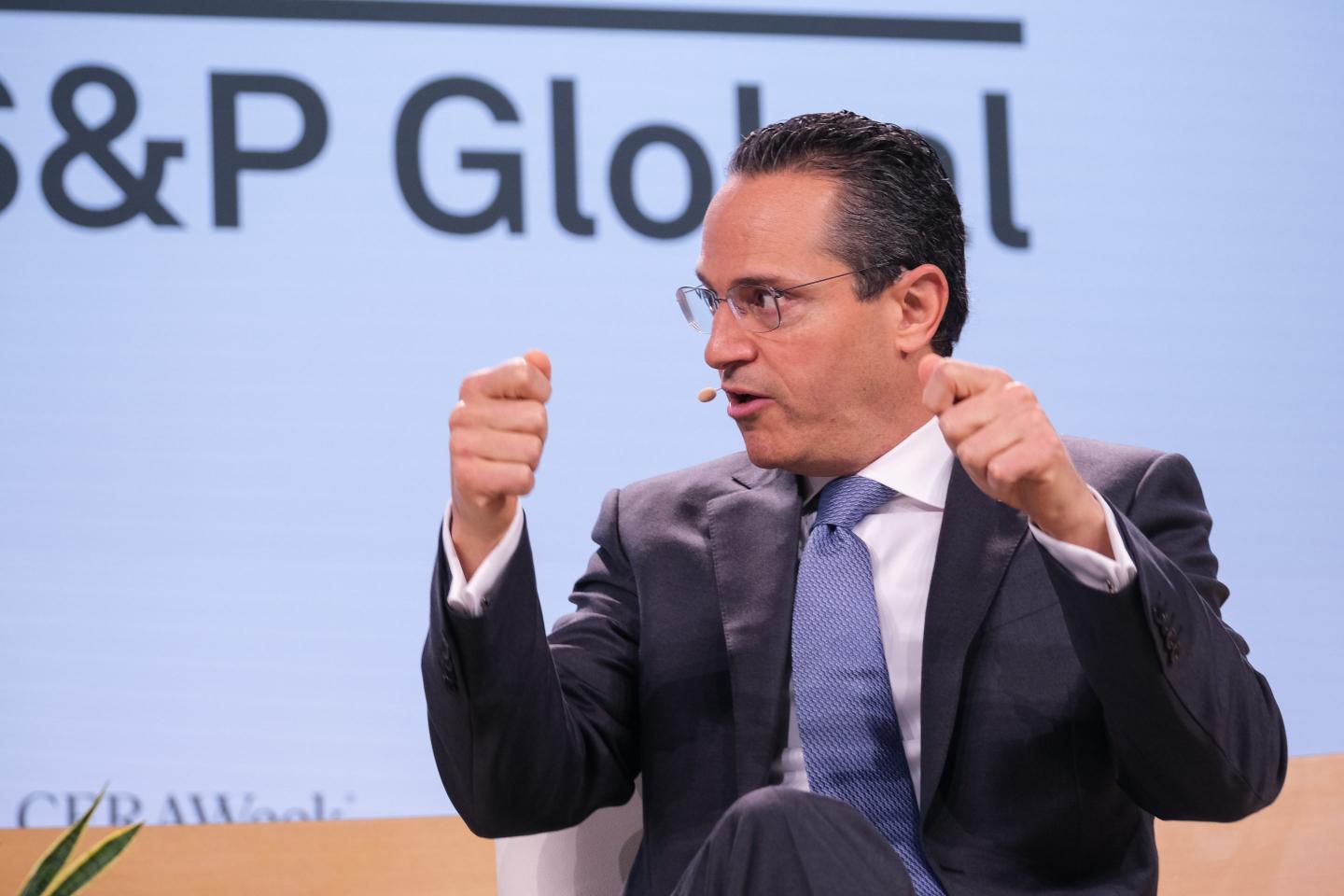
Wael Sawan, chief executive officer of Shell Plc, at the CERAWeek by S&P Global conference in Houston, Texas, US, on Tuesday, March 24, 2026. The event convenes more than 11,000 participants from over 2,350 companies across 90 countries for dialogue on the agenda ahead as the world enters a new era of energy transition. Photographer: F. Carter Smith/Bloomberg via Getty Images
Wael Sawan, CEO of Shell, in March 2026. F. Carter Smith—Bloomberg/Getty Images

Festive music from the band Sweet Crude blared at a party minutes after President Donald Trump’s former defense secretary warned that ending the war now would cede ownership of the narrow Strait of Hormuz—the world’s most critical choke point—to Iran.

Recommended Video

“We’re in a tough spot, ladies and gentlemen,” said retired Gen. Jim Mattis at the CERAWeek by S&P Global conference in Houston. “I can’t identify a lot of options.”

The dichotomy of the celebratory, yet nerve-wracking vibes dominated the unofficial “Davos of energy” event this week that still attracted a record of over 11,000 attendees from 90 countries—a veritable who’s who of the energy sector around the world—not counting the fossil fuel protestors outside.

The mood was meant to be triumphant. There’s ongoing crude oil and gas growth, but most prominent is the unprecedented wave of electricity demand from AI, triggering an infrastructure boom for pipelines, export hubs, and power, including gas-fired generation, renewables, nuclear, and more—truly an all-of-the-above energy renaissance that could still suffer from geopolitical turmoil.

So, the extension of the unexpected Iran war overshadows everything. The industry still cannot come to grips with the previously unfathomable scenario of the strait staying shuttered for a prolonged period of time. The Strait of Hormuz is the narrow, precarious waterway between Iran and the Musandam Peninsula through which flows roughly 20% of the world’s oil and natural gas, fertilizer for agriculture, helium for semiconductors, and petrochemicals that go into almost everything. Much of the world, especially in developing Asia, is already suffering the consequences and the ripple effects will continue to spread the longer the war draws out.

“There’s a lot of somber talk,” said Arjun Murti, energy macro and policy partner at the Veriten research and investment firm. “The strait does need to open in some fashion pretty soon. It’s not good for anybody.”

Even if American oil, gas, and chemicals producers rake in higher profit margins for now, they’ll suffer from the volatility and longer-term demand destruction later, especially if a global recession—or worse—takes hold.

Iran dominated the news so much that Venezuela seems like old news. The in-person appearance at CERAWeek of Venezuelan opposition leader and Nobel Peace Prize winner María Corina Machado was almost an afterthought. The four-hour-long security lines at Houston’s airports were a much more prominent topic of conversation.

With oil prices trading above $100 per barrel—up about 75% since the beginning of the year—Chevron CEO Mike Wirth warned the real impacts are only starting to take hold and that commodities remain underpriced. “There are very real physical manifestations of the closure of the Strait of Hormuz that are working their way around the world through the system that I don’t think are fully priced in,” he said, adding that markets are trading off “scant information.”

Shell CEO Wael Sawan said energy supply shortfalls could hit Europe very soon. Releases of emergency oil supplies only fill part of the gap. “South Asia was first to get that brunt. That’s moved to Southeast Asia, Northeast Asia, and then more so into Europe as we get into April.”

The Dow chemical CEO said the inflationary effects will extend at least through the end of this year. “The die is being cast for the rest of the year for what’s going to happen in the markets,” said CEO Jim Fitterling. “It’s like the unwind we saw on supply chains during COVID.”

Jack Fusco, CEO of Cheniere Energy—now the leading liquefied natural gas exporter in the world as a result of Qatar’s supplies being severely damaged and offline—said the final waterborne shipments from before the war from Qatar just made landfall, so the physical shortfalls are only beginning. “I don’t think you’ve seen a real impact just as of yet,” Fusco said, adding that he’s literally taking phone calls of “Help!” from Asia.
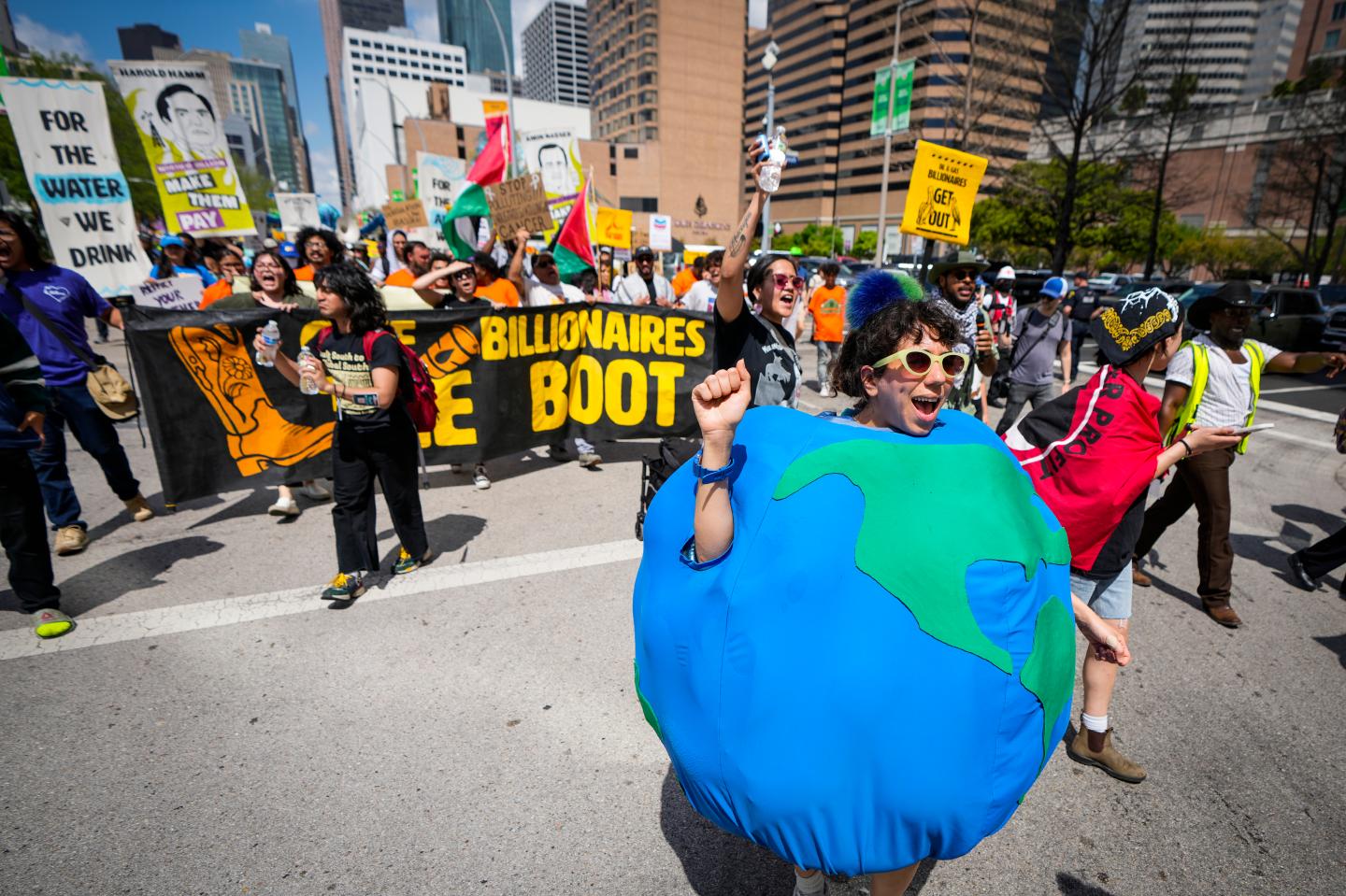
Getty Images

Political massaging

Key members of the Trump administration trekked to Houston, including Energy Secretary Chris Wright and Interior Secretary Doug Burgum, attempting to assuage the concerns of industry leaders and encourage them to produce more oil and gas.

This occurred as President Trump declared the war won—while sending more troops to the Persian Gulf for a potential escalation—and said oil prices would quickly fall again, which doesn’t exactly motivate more oil production.

“Markets do what markets do,” said Wright, a former oil and gas CEO, arguing that “prices have not risen enough yet to drive meaningful demand destruction.”

“It’s short-term disruption right now, but to end a multi-decadal problem and lead to a world that’s much more peaceful, can be much more prosperous, and much more securely energized,” Wright told the CERAWeek audience.

The next day, Wright, who remained in Houston most of the week, said investors are wrong when they pigeonhole energy as a single sector.

“Energy is not one sector. Energy is the enabler of absolutely everything we do,” Wright said. “Energy is life.”

That sentiment is exactly what makes everyone so nervous about the continuation of the Iran war—one started by the U.S. and Israel—and the greatest energy supply shock in history.

There’s a sense of a freeze across the energy industry, stifling long-term planning—except for examining many potential scenarios—and allowing for only short-term operational adjustments. Many top CEOs avoided interviews outside of the main stage for fear of speculating on the war and politics. Houston-based Exxon Mobil CEO Darren Woods didn’t come at all. And top Middle Eastern leaders, such as the CEO of Saudi Aramco, canceled their travel plans.

Some sent recorded video messages instead. Sultan Ahmed Al Jaber, the CEO of the Abu Dhabi National Oil Company (ADNOC), accused Iran of “choking the throat” of the “global economy.”

“Weaponizing the Strait of Hormuz is not an act of aggression against one nation. It’s economic terrorism against every nation,” Al Jaber said. “And no country should be allowed to hold Hormuz hostage. Not now, not ever.”

Kuwait Petroleum CEO Sheikh Nawaf al-Sabah said he is “outraged” by Iran’s unprovoked counterattacks against its Gulf neighbors. Kuwait and Iraq have already shut off most of their oil production, while Saudi Arabia and the United Arab Emirates have implemented major cutbacks as well.

“It’s a domino effect,” al-Sabah said. “The costs of this war don’t stay within geographical lines in this region. They extend all the way through the supply chain.”

The unknowns are really what’s scariest, said Veriten founder and CEO Maynard Holt.

“You have this confluence of factors—an administration keeping a very tight circle to maintain the element of surprise, the Europeans taking a limited role, energy players and various other Middle East actors deciding not to speculate in public, all with a backdrop of a potentially calamitous extended blockage of Hormuz,” Holt told Fortune.

“That whole stew just raises the overall anxiety while also limiting the public discussion.”

Subscribe to Fortune Gulf Brief. Every Tuesday, this new newsletter will deliver clear-eyed, authoritative intelligence on the deals, decisions, policies, and power shifts shaping one of the world’s most consequential regions, written for the people who need to act on it. Sign up here.
About the Author
Jordan Blum
By Jordan BlumEditor, Energy

Jordan Blum is the Energy editor at Fortune, overseeing coverage of a growing global energy sector for oil and gas, transition businesses, renewables, and critical minerals.

See full bioRight Arrow Button Icon

Latest in Energy

Finance
Lorem ipsum dolor sit amet, consectetur adipiscing elit, sed do eiusmod tempor incididunt ut labore et dolore magna aliqua. Ut enim ad minim veniam
By Fortune Editors
October 20, 2025
Finance
Lorem ipsum dolor sit amet, consectetur adipiscing elit, sed do eiusmod tempor incididunt ut labore et dolore magna aliqua. Ut enim ad minim veniam
By Fortune Editors
October 20, 2025
Finance
Lorem ipsum dolor sit amet, consectetur adipiscing elit, sed do eiusmod tempor incididunt ut labore et dolore magna aliqua. Ut enim ad minim veniam
By Fortune Editors
October 20, 2025
Finance
Lorem ipsum dolor sit amet, consectetur adipiscing elit, sed do eiusmod tempor incididunt ut labore et dolore magna aliqua. Ut enim ad minim veniam
By Fortune Editors
October 20, 2025
Finance
Lorem ipsum dolor sit amet, consectetur adipiscing elit, sed do eiusmod tempor incididunt ut labore et dolore magna aliqua. Ut enim ad minim veniam
By Fortune Editors
October 20, 2025
Finance
Lorem ipsum dolor sit amet, consectetur adipiscing elit, sed do eiusmod tempor incididunt ut labore et dolore magna aliqua. Ut enim ad minim veniam
By Fortune Editors
October 20, 2025

Most Popular

Finance
Lorem ipsum dolor sit amet, consectetur adipiscing elit, sed do eiusmod tempor incididunt ut labore et dolore magna aliqua. Ut enim ad minim veniam
By Fortune Editors
October 20, 2025
Finance
Lorem ipsum dolor sit amet, consectetur adipiscing elit, sed do eiusmod tempor incididunt ut labore et dolore magna aliqua. Ut enim ad minim veniam
By Fortune Editors
October 20, 2025
Finance
Lorem ipsum dolor sit amet, consectetur adipiscing elit, sed do eiusmod tempor incididunt ut labore et dolore magna aliqua. Ut enim ad minim veniam
By Fortune Editors
October 20, 2025
Finance
Lorem ipsum dolor sit amet, consectetur adipiscing elit, sed do eiusmod tempor incididunt ut labore et dolore magna aliqua. Ut enim ad minim veniam
By Fortune Editors
October 20, 2025
Finance
Lorem ipsum dolor sit amet, consectetur adipiscing elit, sed do eiusmod tempor incididunt ut labore et dolore magna aliqua. Ut enim ad minim veniam
By Fortune Editors
October 20, 2025
Finance
Lorem ipsum dolor sit amet, consectetur adipiscing elit, sed do eiusmod tempor incididunt ut labore et dolore magna aliqua. Ut enim ad minim veniam
By Fortune Editors
October 20, 2025
Fortune Secondary Logo
Rankings
  • 100 Best Companies
  • Fortune 500
  • Global 500
  • Fortune 500 Europe
  • Most Powerful Women
  • World's Most Admired Companies
  • See All Rankings
  • Lists Calendar
Sections
  • Finance
  • Fortune Crypto
  • Features
  • Leadership
  • Health
  • Commentary
  • Success
  • Retail
  • Mpw
  • Tech
  • Lifestyle
  • CEO Initiative
  • Asia
  • Politics
  • Conferences
  • Europe
  • Newsletters
  • Personal Finance
  • Environment
  • Magazine
  • Education
Customer Support
  • Frequently Asked Questions
  • Customer Service Portal
  • Privacy Policy
  • Terms Of Use
  • Single Issues For Purchase
  • International Print
Commercial Services
  • Advertising
  • Fortune Brand Studio
  • Fortune Analytics
  • Fortune Conferences
  • Business Development
  • Group Subscriptions
About Us
  • About Us
  • Press Center
  • Work At Fortune
  • Terms And Conditions
  • Site Map
  • About Us
  • Press Center
  • Work At Fortune
  • Terms And Conditions
  • Site Map
  • Facebook icon
  • Twitter icon
  • LinkedIn icon
  • Instagram icon
  • Pinterest icon

Latest in Energy

Man driving and looking shocked.
Economygas prices
Driving less, canceling vacations, and tightening budgets: All the ways Americans are coping with soaring gas prices
By Tristan BoveMay 8, 2026
6 hours ago
Iran may have a higher tolerance for economic pain—but the pain is excruciating as regime reveals 100% inflation in just days on some items
EconomyIran
Iran may have a higher tolerance for economic pain—but the pain is excruciating as regime reveals 100% inflation in just days on some items
By Jason MaMay 8, 2026
7 hours ago
Vincent Clerc speaks in front of a picture of a port.
EnergyShipping
The CEO of Maersk, which ships 14% of everything you buy, said the Iran war is adding $500 million in monthly costs it’s trying not to pass down
By Sasha RogelbergMay 8, 2026
8 hours ago
Airfare is up 15%, gas is past $4, and SAP Concur data shows business travel is quietly breaking
Travel & Leisuregas prices
Airfare is up 15%, gas is past $4, and SAP Concur data shows business travel is quietly breaking
By Catherina GioinoMay 8, 2026
8 hours ago
trump
EconomyU.S. jobs report
U.S. economy surprises with 115,000 new jobs created in April
By Paul Wiseman and The Associated PressMay 8, 2026
12 hours ago
Current price of oil as of May 8, 2026
Personal FinanceOil
Current price of oil as of May 8, 2026
By Joseph HostetlerMay 8, 2026
12 hours ago

Most Popular

California farmers must destroy 420,000 peach trees after Del Monte closes its canneries and cancels more than $550 million in long-term contracts
North America
California farmers must destroy 420,000 peach trees after Del Monte closes its canneries and cancels more than $550 million in long-term contracts
By Sasha RogelbergMay 7, 2026
1 day ago
'Blue dot fever' plagues musicians like Post Malone, Meghan Trainor, and Zayn as a growing list of artists cancel tours due to lagging ticket sales
Arts & Entertainment
'Blue dot fever' plagues musicians like Post Malone, Meghan Trainor, and Zayn as a growing list of artists cancel tours due to lagging ticket sales
By Dave Lozo and Morning BrewMay 7, 2026
1 day ago
A Michigan farm town voted down plans for a giant OpenAI-Oracle data center. Weeks later, construction began
Magazine
A Michigan farm town voted down plans for a giant OpenAI-Oracle data center. Weeks later, construction began
By Sharon GoldmanMay 6, 2026
3 days ago
U.S. Treasury will have to borrow $2 trillion this year just to continue functioning—more than $166 billion every month
Economy
U.S. Treasury will have to borrow $2 trillion this year just to continue functioning—more than $166 billion every month
By Eleanor PringleMay 7, 2026
2 days ago
Airbnb CEO Brian Chesky warns two types of people won’t survive the AI era: ‘pure people managers’ and workers who resist change
Success
Airbnb CEO Brian Chesky warns two types of people won’t survive the AI era: ‘pure people managers’ and workers who resist change
By Emma BurleighMay 7, 2026
1 day ago
Current price of oil as of May 7, 2026
Personal Finance
Current price of oil as of May 7, 2026
By Joseph HostetlerMay 7, 2026
1 day ago

© 2026 Fortune Media IP Limited. All Rights Reserved. Use of this site constitutes acceptance of our Terms of Use and Privacy Policy | CA Notice at Collection and Privacy Notice | Do Not Sell/Share My Personal Information
FORTUNE is a trademark of Fortune Media IP Limited, registered in the U.S. and other countries. FORTUNE may receive compensation for some links to products and services on this website. Offers may be subject to change without notice.