“Scenario planning” has become boardroom shorthand for preparation to deal with the unknowable. It’s a practice that is never more vital than in wartime, when a sea mine, cyberattack, or sanction can reroute supply chains overnight and send energy prices soaring.
Instead of betting on one forecast about how events will unfold, the most resilient CEOs are now rehearsing several plausible futures at once and deciding—before the missiles start dropping, the virus becomes a pandemic, or the markets seize up—what they will do in each.
It’s an approach that was pioneered by Shell precursor Royal Dutch Shell. In the 1970s the energy company began developing a set of vivid alternative futures involving potential oil-supply disruptions. Shell did not invent the idea of developing such scenarios, which had earlier roots in military and Cold War strategy, but it was the first major company to embed systematic scenario planning at the center of corporate decision-making, largely through the work of economist and planner Pierre Wack. His London-based scenarios team had Shell’s top managers rehearse what they would do if various crises arose.
The doomsday prep paid off. In the early 1970s, Shell’s leaders wondered what would happen if events in Saudi Arabia raised the price of oil. By the time the Arab oil embargo shook the world soon thereafter, sending prices rocketing, Shell knew what to do. It had already slowed refinery expansion and adapted its refineries to handle many types of crude—while competitors vacillated. The common view in the industry is that Shell came through the oil shock far better than any other major producer. The success of those exercises turned Shell into a case study for scenario planning, and the company still regularly publishes its “Shell Scenarios.”
With a war underway, corporate planning is clearly not the only urgent matter. Since the U.S. and Israeli bombardment of Iran beginning in February, thousands have been killed and millions displaced across the region. Vital shipments have been disrupted, and prices have risen worldwide. But along with the human tragedy, the war—and particularly its effect on oil supply and prices—has affected nearly every business around the world.
“This isn’t a world war explicitly,” says Rebecca Patterson, a senior fellow at the Council on Foreign Relations, “but it is a war that is affecting the globe.”
That war was still raging when this article went to press—and the conflict has underscored the importance of insights that will help guide CEOs long after the war is over.
The company war room has become a permanent fixture
“Almost every client I talk to has a war room,” KPMG’s Mary Rollman told Fortune in April 2025, just days after President Trump announced his list of “reciprocal” tariffs on some 180 countries. Back then the war room was a new unit in most companies. “They get a team spun up, and the members have completely dropped their day job,” Rollman reported.
Those war rooms have found no reason to disband. The tariff situation is still “changing almost on a weekly if not daily basis,” says Abe Eshkenazi, CEO of the Association for Supply Chain Management, and the Iran war “is a continuation of the uncertainty.” The only difference is that the term “war room” is no longer a metaphor.
Perhaps every generation thinks its own era is the most perplexing and unpredictable of all time. But evidence shows that what businesspeople have had to deal with in recent times is truly off the charts. Uncertainty indexes going back monthly to 1985, compiled by researchers at Stanford University and the University of Wisconsin, show that instability and jitters about U.S. economic policy rose to record levels starting in 2018—and have never dialed down. (To create the indexes, the researchers measure disagreement among economic forecasters; federal tax code provisions set to expire; and articles on policy in major newspapers.) The indexes hit a new high after Trump revealed his 2025 tariffs. (The index covering the time of the Iran war hadn’t been published when we went to press.)
Don’t expect uncertainty to decline significantly anytime soon, says Ian Bremmer, founder and president of Eurasia Group. International institutions—the United Nations Security Council, the World Trade Organization, the Group of Seven (G7)—clearly aren’t as effective as they once were at maintaining international order, he explains: “We are now living in a G-Zero world, one in which no single country or bloc of countries has the political and economic leverage—or the will—to drive a truly international agenda.”
Companies caught in the commercial chaos must now fend for themselves. In a tumultuous global order, “supply-chain officers are looking for inventory buffers, alternative vendors, redundancy in their supply chains,” says Eshkenazi. “That’s not compatible with long-term strategies.”
In other words: Companies’ war rooms won’t be closing up shop anytime soon.
Playing out a range of scenarios is more essential—and more difficult—than ever
“Scenario testing or stress testing: If you’re not already doing it, you need to start yesterday,” says Patterson of the Council on Foreign Relations. In addition to companies stress testing their costs and supply chains, she recommends they also test their resistance to cyberattacks. “Iran is a strong actor in the cyber world,” she says. Its successful March attack on the Stryker medical-device maker, in which its goal was apparently not to receive ransom but to destroy data, was only a recent example. Many of Iran’s previous cyberattacks have targeted crucial economic infrastructure, including hospitals, ports, power plants, and railroads.
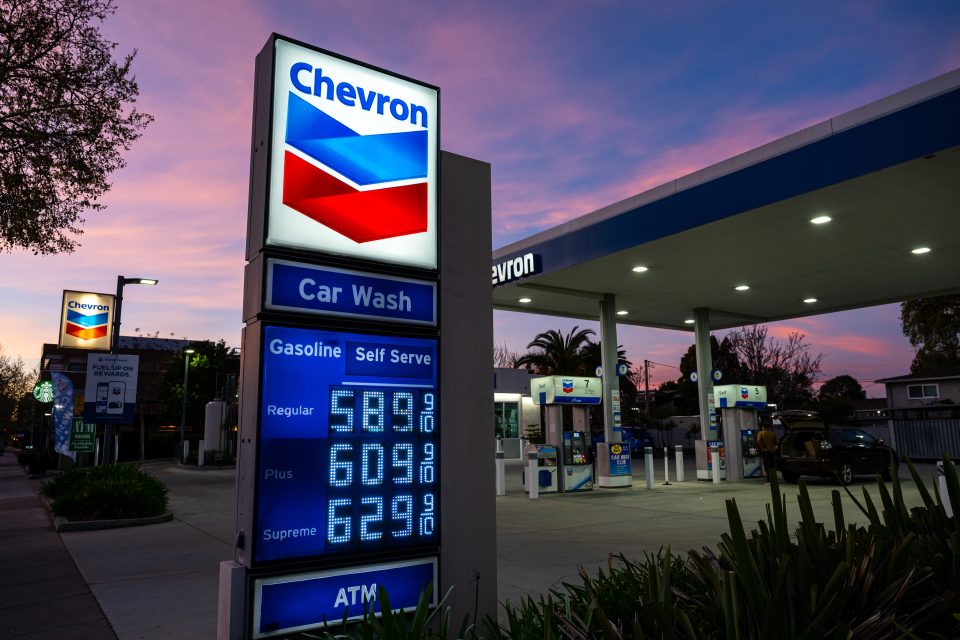
Some of the most useful scenarios are based on second- or third-order effects of an event. With the Iran war, Patterson says, “the big one is stagflationary risk,” a second-order effect that creates slow economic growth, high unemployment, and high inflation. With gasoline prices and shipping costs already rising, “expect to see this feed into inflation expectations and possibly actual inflation,” she says. Third-order effects might include rising interest rates and borrowing costs, and a strengthening of the dollar, making it easier to buy imports and harder to sell exports.
The Iran war will likely continue to have effects long after it ends. Patterson cites an old line about gasoline prices: “They go up like a rocket and come down like a feather.”
Leaders should remember the pandemic
That’s not to say that the Iran war will be a disaster on COVID’s scale. But no one knows how it will turn out, just as no one in the pandemic’s early days knew what would happen next.
Employees, shareholders, customers, suppliers—all were frightened and looking for answers that not even CEOs had. The pandemic changed leadership in ways that still linger, and today’s executives and managers would do well to remember that transformation.
“Scenario testing or stress testing: If you’re not already doing it, you need to start yesterday.”
Rebecca Patterson, Council on Foreign Relations
The overarching theme from those days was the end of the classic CEO persona—informed, prepared, firmly in charge, and invulnerable. That changed quickly. “CEOs went from being godlike to being more human,” said Jim Citrin of the Spencer Stuart executive search firm. A CEO told Fortune at the time, “I found the magic in an organization is about being super down-to-earth, letting people see you for who you are, with all the vulnerabilities that you face.”
Now, as the fog of war drifts even into corner offices, CEOs again face questions they can’t answer: How long will the war last? Will it escalate? How high will oil prices go?
It’s a good time to remember a lesson from the pandemic: Executives who confess they’re mere mortals and don’t pretend to know everything can actually become more trustworthy and more effective as leaders.
This article appears in the April/May 2026 issue of Fortune with the headline “For CEOs, it’s time for a wartime mindset.”