• Home
  • Latest
  • Fortune 500
  • Finance
  • Tech
  • Leadership
  • Lifestyle
  • Rankings
  • Multimedia

Trendingnow

1

Elon Musk on MacKenzie Scott giving away $26 billion of her fortune: 'Sadly,' it makes the world a worse place

2

MacKenzie Scott alone accounted for one-third of America's $19.2 billion in megagifts last year

3

Philanthropy leader at Warren Buffett and Bill Gates’ Giving Pledge says children of billionaires are pushing them to give their wealth away faster

1

Elon Musk on MacKenzie Scott giving away $26 billion of her fortune: 'Sadly,' it makes the world a worse place

2

MacKenzie Scott alone accounted for one-third of America's $19.2 billion in megagifts last year

3

Philanthropy leader at Warren Buffett and Bill Gates’ Giving Pledge says children of billionaires are pushing them to give their wealth away faster
CommentaryChina

China doesn’t need a trade deal to win. Here’s what CEOs are missing

By
Ram Charan
Ram Charan
Down Arrow Button Icon
By
Ram Charan
Ram Charan
Down Arrow Button Icon
March 19, 2026, 10:38 AM ET
china
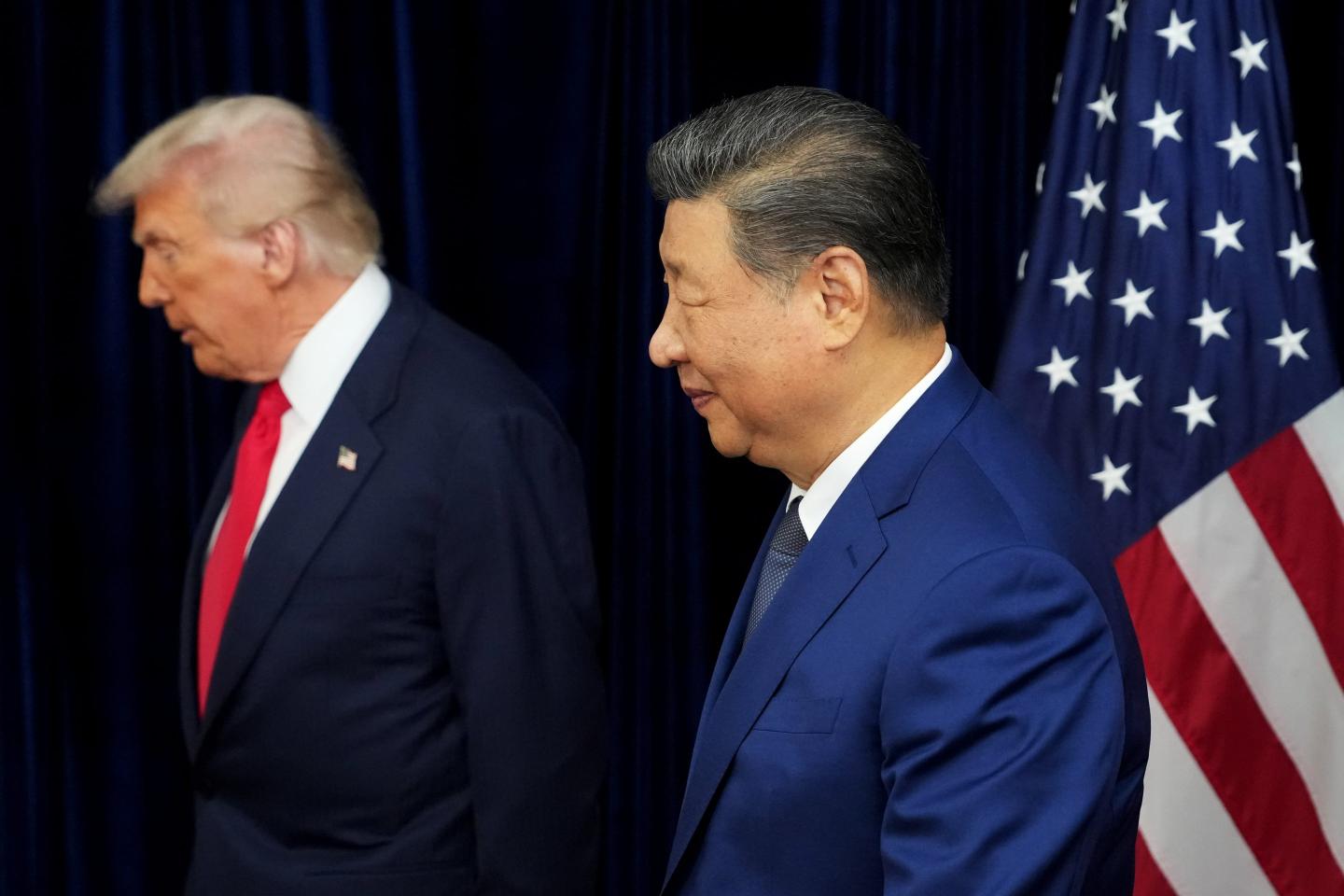
U.S. President Donald Trump and Chinese President Xi Jinping walk to a room for a bilateral meeting at Gimhae Air Base on October 30, 2025 in Busan, South Korea.Andrew Harnik/Getty Images
Add Fortune on Google for similar content.

The wrong question about the Paris trade talks isn’t whether they succeeded. It’s why anyone expected them to. China’s negotiating position was set long before anyone sat down at OECD headquarters — and it does not depend on what happens in any meeting room.

Recommended Video

After 60 years advising CEOs and boards across the United States, Europe, and Asia — including decades working with Chinese companies and serving on Chinese boards — what came out of Paris only confirmed what I have told business leaders for months: China is not negotiating from uncertainty. It is negotiating from structural advantage.

Both sides called the talks “constructive.” Both described the atmosphere as “remarkably stable.” Both agreed to continue consultations. That is diplomatic language for something more fundamental: no resolution is possible because each side wants what the other cannot give.

China’s position does not depend on what happens in any meeting room. Its exports are still expected to grow 10% to 15% in 2026. Across most industrial categories, there is still no alternative supply chain that can match China on both quality and price. Business leaders I speak with daily are increasing imports from China—not because they want to, but because they have no viable substitute.

That reality is the foundation of Xi Jinping’s confidence. China ran a $1.2 trillion trade surplus in 2025 and is on track to generate at least $1.25 trillion in export earnings this year. No negotiation will quickly change that. Xi is not bargaining from weakness; he is bargaining from a position built over three decades.

That is why the concessions China offered in Paris were predictable. Increased openness to U.S. agricultural imports. A reaffirmation of soybean purchases. Limited discussions around energy and critical minerals. These are real concessions, but they are tactical. They create the appearance of reciprocity while preserving what matters most.

What China ultimately wants is not agricultural trade. It is technology—first semiconductors, then, over time, aerospace.

In recent conversations with senior executives at one of the world’s major aircraft engine manufacturers, a consistent assessment emerged: Chinese firms may already have many of the necessary jet engine designs. The constraint is not design. It is industrialization. Turning those designs into engines that can be produced reliably at scale remains a capability concentrated in the United States, the United Kingdom, and France. As one executive put it to me, “They may have the drawings, but they cannot yet build them at scale.”

This is the gap Beijing is quietly probing in every round of negotiations. It rarely makes headlines, but it is central to China’s long-term strategy.

Much attention is likely to focus on potential reductions in Chinese subsidies. These will be framed as significant concessions. But they are unlikely to change pricing dynamics in any meaningful way. China’s industries operate with massive excess capacity. When survival depends on volume, companies price aggressively with or without government support. The system is already self-sustaining.

This is why tariffs have limited effect. Tariffs operate on margins. China’s advantage is structural: scale, infrastructure, workforce capability, and coordinated state support built over decades. Those advantages cannot be offset in a few years through tariff policy.

Against this backdrop, the delay of the Beijing summit should not be misunderstood. It is not a cost to Xi. It is a benefit.

China has built substantial energy insulation, including large crude stockpiles and a decade-long investment in solar, batteries, and electric vehicles. As global energy markets tighten, China is better positioned than most major economies. At the same time, prolonged geopolitical tension—whether in the Middle East or elsewhere—diverts U.S. focus and increases strategic complexity for Washington.

Time favors the more patient player. And China has made patience a core element of its strategy.

Any eventual agreements will also be reversible. Both sides will retain the ability to pause commitments. Xi is not giving away structural advantages permanently. He never does.

For CEOs, the implications are immediate. The Paris talks did not change the trajectory, and the Beijing summit is unlikely to do so no matter when it happens.

The question is no longer what governments will decide. It is what business leaders will do.

Companies need a clear, unvarnished view of their dependencies: which inputs are irreplaceable, where alternative sourcing is possible, and how operations would respond to disruptions in rare earths, semiconductors, or key industrial components. The most critical risk is not gradual change but sudden interruption—the possibility that China could restrict supply of essential inputs with little warning.

Some CEOs have already mapped these scenarios and built contingency plans. Others are still waiting for policy clarity that may never come.

The reality is this: The United States is buying time to rebuild. China is using time to consolidate. Neither side is stepping back.

The leaders who recognize that dynamic—and act on it now—will shape the next decade. Those waiting for a breakthrough from a summit will find that, quietly, their options have narrowed.

The wake-up call has already sounded. The only question is who is ready to respond.

About the Author
By Ram Charan
See full bioRight Arrow Button Icon
Add Fortune on Google for similar content.

Latest in Commentary

Finance
Lorem ipsum dolor sit amet, consectetur adipiscing elit, sed do eiusmod tempor incididunt ut labore et dolore magna aliqua. Ut enim ad minim veniam
By Fortune Editors
October 20, 2025
Finance
Lorem ipsum dolor sit amet, consectetur adipiscing elit, sed do eiusmod tempor incididunt ut labore et dolore magna aliqua. Ut enim ad minim veniam
By Fortune Editors
October 20, 2025
Finance
Lorem ipsum dolor sit amet, consectetur adipiscing elit, sed do eiusmod tempor incididunt ut labore et dolore magna aliqua. Ut enim ad minim veniam
By Fortune Editors
October 20, 2025
Finance
Lorem ipsum dolor sit amet, consectetur adipiscing elit, sed do eiusmod tempor incididunt ut labore et dolore magna aliqua. Ut enim ad minim veniam
By Fortune Editors
October 20, 2025
Finance
Lorem ipsum dolor sit amet, consectetur adipiscing elit, sed do eiusmod tempor incididunt ut labore et dolore magna aliqua. Ut enim ad minim veniam
By Fortune Editors
October 20, 2025
Finance
Lorem ipsum dolor sit amet, consectetur adipiscing elit, sed do eiusmod tempor incididunt ut labore et dolore magna aliqua. Ut enim ad minim veniam
By Fortune Editors
October 20, 2025

Most Popular

Finance
Lorem ipsum dolor sit amet, consectetur adipiscing elit, sed do eiusmod tempor incididunt ut labore et dolore magna aliqua. Ut enim ad minim veniam
By Fortune Editors
October 20, 2025
Finance
Lorem ipsum dolor sit amet, consectetur adipiscing elit, sed do eiusmod tempor incididunt ut labore et dolore magna aliqua. Ut enim ad minim veniam
By Fortune Editors
October 20, 2025
Finance
Lorem ipsum dolor sit amet, consectetur adipiscing elit, sed do eiusmod tempor incididunt ut labore et dolore magna aliqua. Ut enim ad minim veniam
By Fortune Editors
October 20, 2025
Finance
Lorem ipsum dolor sit amet, consectetur adipiscing elit, sed do eiusmod tempor incididunt ut labore et dolore magna aliqua. Ut enim ad minim veniam
By Fortune Editors
October 20, 2025
Finance
Lorem ipsum dolor sit amet, consectetur adipiscing elit, sed do eiusmod tempor incididunt ut labore et dolore magna aliqua. Ut enim ad minim veniam
By Fortune Editors
October 20, 2025
Finance
Lorem ipsum dolor sit amet, consectetur adipiscing elit, sed do eiusmod tempor incididunt ut labore et dolore magna aliqua. Ut enim ad minim veniam
By Fortune Editors
October 20, 2025
Fortune Secondary Logo
Rankings
  • 100 Best Companies
  • Fortune 500
  • Global 500
  • Fortune 500 Europe
  • Most Powerful Women
  • World's Most Admired Companies
  • See All Rankings
  • Lists Calendar
Sections
  • Finance
  • Fortune Crypto
  • Features
  • Leadership
  • Health
  • Commentary
  • Success
  • Retail
  • Mpw
  • Tech
  • Lifestyle
  • CEO Initiative
  • Asia
  • Politics
  • Conferences
  • Europe
  • Newsletters
  • Personal Finance
  • Environment
  • Magazine
  • Education
Customer Support
  • Frequently Asked Questions
  • Customer Service Portal
  • Privacy Policy
  • Terms Of Use
  • Single Issues For Purchase
  • International Print
Commercial Services
  • Advertising
  • Fortune Brand Studio
  • Fortune Analytics
  • Fortune Conferences
  • Business Development
  • Group Subscriptions
About Us
  • About Us
  • Press Center
  • Work At Fortune
  • Terms And Conditions
  • Site Map
  • About Us
  • Press Center
  • Work At Fortune
  • Terms And Conditions
  • Site Map
  • Facebook icon
  • Twitter icon
  • LinkedIn icon
  • Instagram icon
  • Pinterest icon
Ram Charan is the author of China’s 90% Model: China Has America by the Throat—Here’s How to Fight Back and Win (March 2026). He has advised Fortune 500 CEOs for more than six decades and has served on corporate boards across the United States, China, India, and Europe.

Latest in Commentary

surman
CommentaryMozilla
Mozilla President: meet the open source ‘rebel alliance’ that could break Big Tech’s grip on AI
By Mark SurmanJune 29, 2026
17 hours ago
wendy
Commentary250 Years of Innovation
Wendy Schmidt: Three centuries of science is something to celebrate
By Wendy SchmidtJune 29, 2026
18 hours ago
a
Commentary250 Years of Innovation
Atomic Industries CEO: America spent 60 years retreating from manufacturing. The next 100 are about building it back
By Aaron SlodovJune 29, 2026
18 hours ago
Sofia
CommentaryLeadership
This CEO became 3x more productive with AI. Then she read what her daughter wrote about it at Dartmouth
By Maria Colacurcio and Sofia FreiJune 28, 2026
2 days ago
Anthony Scaramucci
Commentary250 Years of Innovation
Anthony Scaramucci on America 250: where have you gone, Joe DiMaggio?
By Anthony ScaramucciJune 28, 2026
2 days ago
family
CommentaryColleges and Universities
More than 3 million college students are raising kids. Most won’t graduate
By Enyi OkebugwuJune 28, 2026
2 days ago

Most Popular

Elon Musk on MacKenzie Scott giving away $26 billion of her fortune: 'Sadly,' it makes the world a worse place
Success
Elon Musk on MacKenzie Scott giving away $26 billion of her fortune: 'Sadly,' it makes the world a worse place
By Sydney LakeJune 29, 2026
13 hours ago
MacKenzie Scott alone accounted for one-third of America's $19.2 billion in megagifts last year
Success
MacKenzie Scott alone accounted for one-third of America's $19.2 billion in megagifts last year
By Sydney LakeJune 25, 2026
5 days ago
Philanthropy leader at Warren Buffett and Bill Gates’ Giving Pledge says children of billionaires are pushing them to give their wealth away faster
Success
Philanthropy leader at Warren Buffett and Bill Gates’ Giving Pledge says children of billionaires are pushing them to give their wealth away faster
By Preston ForeJune 27, 2026
3 days ago
The retired college professor fighting a $313 trespassing ticket in Wisconsin thinks he's part of a national struggle
Environment
The retired college professor fighting a $313 trespassing ticket in Wisconsin thinks he's part of a national struggle
By Catherina GioinoJune 28, 2026
2 days ago
Ex-Google engineer says Larry Page, Sergey Brin and Sundar Pichai share the same trait—it's the lesson he swears by as a $7.2 billion AI CEO
Success
Ex-Google engineer says Larry Page, Sergey Brin and Sundar Pichai share the same trait—it's the lesson he swears by as a $7.2 billion AI CEO
By Orianna Rosa RoyleJune 28, 2026
2 days ago
Cristiano Ronaldo is soccer's first-ever billionaire: He went from begging for burgers outside McDonald's to landing a $400 million contract
Success
Cristiano Ronaldo is soccer's first-ever billionaire: He went from begging for burgers outside McDonald's to landing a $400 million contract
By Preston ForeJune 28, 2026
2 days ago

© 2026 Fortune Media IP Limited. All Rights Reserved. Use of this site constitutes acceptance of our Terms of Use and Privacy Policy | CA Notice at Collection and Privacy Notice | Do Not Sell/Share My Personal Information
FORTUNE is a trademark of Fortune Media IP Limited, registered in the U.S. and other countries. FORTUNE may receive compensation for some links to products and services on this website. Offers may be subject to change without notice.