For much of the last three decades, Europe has played a back-footed role in the digital economy: influential in regulation, strong in research, but rarely the place where globally dominant technology companies are built. The internet era created extraordinary wealth elsewhere. The same holds true for the recent AI wave, mainly driven by online chatbots created by the data-rich Big Tech giants which have grown up in the internet era. Europe, despite its talent and financial strength, became the least competitive of the major digital economies—and the resulting gap in value creation has grown into the trillions.
That story is well known. What is less appreciated is that a second innovation wave in the emerging AI era may offer Europe something rather rare in technology development: a historic second chance.
Artificial intelligence today is largely about bigger foundation models mainly trained on internet data; larger data centers; and ever more capital-intensive computational scale. This is where the vast majority of investment capital currently goes. Nobody can know today if these huge bets, often framed as a race to “artificial general intelligence,” or AGI, will in the end pay off for the latecomers to the Nvidia, OpenAI, and Anthropic gamble.
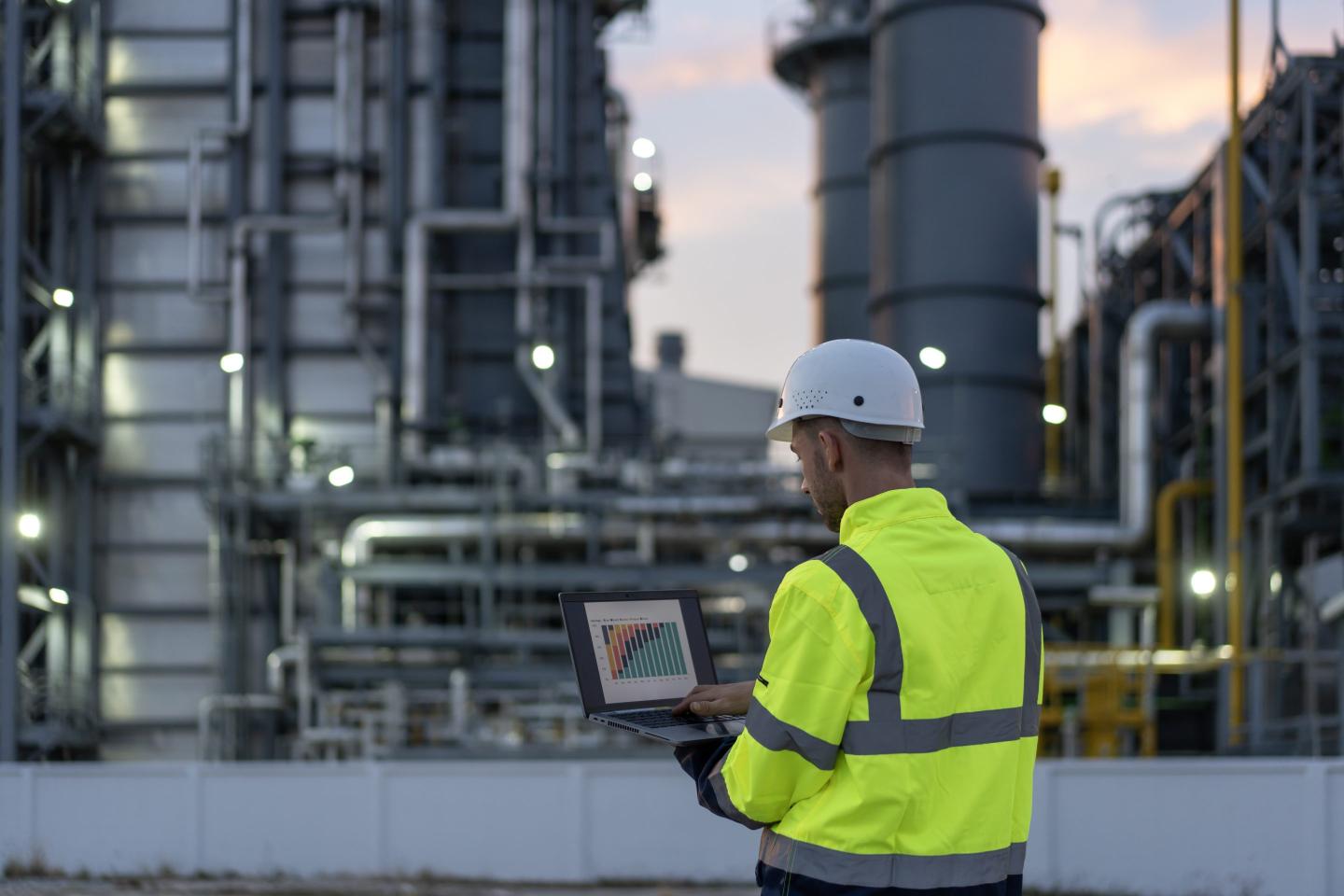
But one thing is now becoming clear: The next round of AI innovation will not be won solely in chat windows. It will be won where intelligence meets matter: in robotics and manufacturing, in chemistry and materials, in bio-pharma and healthcare, in energy systems, logistics networks, and industrial operations. In other words: in the physical and scientific domains.
And this is precisely where Europe’s underlying advantages are hiding in plain sight. Three key factors may prove more critical going forward than they did in the previous internet-dominated AI era: (1) scientific talent; (2) industrial strength and know-how; and (3) ecosystems across multiple sectors. Interestingly these are all areas where Europe’s strengths lie. AI innovation and adoption going forward will arguably be defined by the availability of industry-specific data, know-how, and ecosystems, as well as scientific talent spanning both AI and domain expertise, more than from pure computation and internet dominance.
A look at the fundamentals may be quite surprising for European as well as American investors. The EU accounts 22% of global AI research citations, vs 17% for U.S. researchers. And 2.2 million STEM graduates get their diplomas from European universities each year, compared to 1.4 million from U.S. ones. Europe employs 2.15 million researchers in full-time employment, and spent €403 billion on R&D in 2024. And unlike the U.S. corporate community, which is strong mainly in software, Europe’s industrial base is enormous and automation-ready: EU manufacturing generates €2.5 trillion in value added and operates at 219 industrial robots per 10,000 employees—exactly the substrate where AI’s next productivity wave will land.
Finally, Europe’s underestimated advantage is that it already runs EU-funded, cross-border ecosystems that stitch together universities, industry, startups, and the public sector—not as a slogan, but as infrastructure. On its own, the EU funding program Horizon Europe puts €93.5–€95.5 billion (2021–2027) into collaborative research and innovation across fields from health and energy to mobility and manufacturing.
Washington has clearly identified these European strengths as key in the coming AI wave: It is no coincidence that the U.S. has also recently launched the Genesis Project, aimed at strengthening the country in exactly these industrial, manufacturing, and scientific areas. China, meanwhile, is accelerating on a parallel track. Rather than simply emulating American foundation models, Beijing is investing across the full stack—from chips to software to cyber-physical deployment. In robotics, autonomous systems, and AI-enhanced manufacturing, China is building impressive capabilities rooted in scale and speed. Supersmart factories and data-rich production ecosystems are turning industrial output into a strategic data advantage.
The result is a rapidly emerging Chinese model of AI—less centered on chatbots and more on embedding intelligence directly into the machinery of the real economy. In this sense, China might be an even bigger competitor for a European AI innovation trajectory towards infusing AI into the physical world. Hence, the old continent is better placed to accept the challenge from far-east and west as one might think.
Scientific talent, industrial strength, and sectorial breadth
The old continent remains one of the world’s strongest regions in science, engineering, and industrial depth. Its universities and research institutions consistently produce frontier knowledge. For example, the European Union now accounts for 21% of global generative AI research publications, placing it firmly in the world’s top tier of AI science.
Europe also sits on one of the most valuable and underused resources of the AI age: industrial know-how, ecosystems, and data at scale. Companies like Siemens and Bosch, Airbus and Dassault Systèmes, Stellantis and Scania, BASF and Bayer, ASML and SAP, and Roche and Novo Nordisk operate some of the world’s most advanced industrial systems—factories, supply chains, energy grids, laboratories, and engineering workflows that generate vast streams of high-quality real-world data.
Yet Europe has barely begun to turn this resource into AI-native industrial platforms and new global champions. In the 19th century, the Industrial Revolution was powered by harnessing physical machinery. The coming technological wave—AI-driven science and industry—will be powered by harnessing industrial intelligence. Europe has the machines, the knowledge, the ecosystems, and the data.
The depth as well as breadth of Europe’s industrial sectors provide not only data and know-how, but also the necessary market conditions for innovation to thrive. Every startup needs above all customers. Investors’ money is good, but customers’ is better. And every investor, as well as every founder, needs exit paths.
And here lies another key European advantage, which is often overlooked. For years, the success of tech entrepreneurs and investors has been defined either as an IPO or as an acquisition by one of the handful of Big Tech companies. This is about to change fundamentally, in the era of physical AI, to the benefit of founders and their investors.
The next-generation AI entrepreneurs will not have to hope for a lucky punch with the deep-pocketed “Magnificent 7” Big Tech overseas, but will instead be able to charter new exit paths with hundreds of industrial players. With European industrial Goliaths as potential acquirers as well as customers of innovative AI Davids, Europe can create a win-win environment at scale: Entrepreneurs and investors have plenty more reasons to start and fund a company, while current industrial players have access to the latest innovations from the labs.
Of course, some of today’s industrial Goliaths may be disrupted by the AI newcomers, while others will only strengthen through innovations. In both cases, value will be created and captured either by a cohort of new players—the latter being the future AI-native global industry leaders—or the incumbents infused with startup AI.
Financing the commercialization of innovations
With all its scientific strengths, Europe’s central challenge is not invention but company-building at scale. In 2024, U.S. startups captured roughly 74% of global venture funding of today’s AI, while Europe accounted for about 12%—a telling measure of where ventures of today’s AI wave most often grow into world-class champions.
Europe’s AI ecosystem is frequently undervalued because the region is perceived as weak in the digital space. The new physical AI-driven market presents a huge opportunity for a comeback. Given the region’s position of strength for the new AI wave, the next wave of European AI companies have the renewed opportunity to capture over 25% of the global next-generation AI market, in line with its research and industrial contributions—if the region manages a step-change in turning breakthroughs into venture-scale businesses.
The bottleneck is neither talent nor ecosystems. It is the commercialization capacity of new ideas at speed and scale: connecting labs across borders, building stronger pathways from discovery to company formation, and linking European deep-tech founders to global capital, customers, talent, and distribution networks.
The U.S. fosters about four times as many AI unicorns as Europe. And one main reason has been widely discussed: The funding gap is measurable and massive. In 2023, AI venture investment reached roughly $68 billion in the United States, compared with only $8 billion in the European Union. Analysts estimate the broader EU–U.S. investment shortfall in ICT and cloud computing at $1.36 trillion, underscoring how much industrial digital infrastructure Europe still needs to build.
Encouragingly, policymakers are beginning to respond with historic ambition. Earlier this year, the European Commission launched its €200 billion InvestAI initiative, including €20 billion earmarked for AI gigafactories.For the first time, Europe is signaling that it intends to match scientific excellence with industrial-scale capital.
The timing matters. AI adoption is accelerating rapidly across the real economy. OECD data show that the share of firms using AI has risen sharply—from 8.7% in 2023 to over 20% in 2025. The AI transformation is no longer confined to Silicon Valley labs. It is spreading across factories, hospitals, laboratories, logistics networks, and energy systems—precisely the sectors where Europe retains deep structural strengths.
For venture capital, private equity, and institutional investors alike, this second AI chance is also one of the most compelling investment opportunities of the coming decade. Backing the next generation of research-driven AI companies is not only about building the future industries of the physical world—it can generate outsized returns as the continent converts its talent and industrial advantages into global market leadership.
Importantly, Europe’s opportunity is not to emulate Silicon Valley model for model. It is to innovate differently: to build AI-native companies rooted in scientific depth, industrial integration, and responsible governance. Moreover, Europe’s diversity, strong institutions, and commitment to rule of law can become competitive features in a world increasingly shaped by trust, security, and complex societal deployment.
An innovator’s dilemma at scale
As the new AI wave unfolds, paradoxically Europe’s relative position as a commercial first-wave AI laggard may actually prove to be a strength.
Unlike incumbent ecosystems, which have already invested, or perhaps sunk, hundreds of billions into today’s foundation-model architectures, Europe’s current generation of AI researchers and entrepreneurs can start fresh. Entire nations can be disrupted as well. Political scientist Jeffrey Ding has recently argued that major technological transitions have repeatedly reshaped global power—from Britain in the first Industrial Revolution, to Germany’s rise in the age of chemicals and engineering, and then to American dominance in the era of mass production, computing and the internet. History rarely offers second chances. The coming AI wave might be one for Europe. But seizing it will require more than capital and talent. It will require clarity of purpose.
Europe must remember that the best idea Europe has ever had is Europe itself. This opportunity will remain out of reach if the continent stays fragmented—strategically, financially, and technologically. The second AI wave can only be seized if Europe learns to act as a united AI continent.
Perhaps there is a deeper irony here. Artificial intelligence, often seen as a centrifugal force, could become a centripetal one for Europe—augmenting not only productivity, but collective intelligence. If AI helps Europeans think, build, and innovate together, it may finally enable what politics alone has struggled to achieve: a continent that truly acts as one. The future AI industrial leaders are being founded today. Europe should make sure many of them are founded together.
Francois Candelon is a partner at private equity firm Seven2 and the former global director of the BCG Henderson Institute.Read other Fortune columns by François Candelon.
Theos Evgeniou is a professor at INSEAD and a cofounder of the pan-European AI startups initiative eurx.ai, the trust and safety company Tremau, and the AI strategy consulting firm NoesysAI.
Thomas Ramge is the author of more than 20 books on science and technology, an associated researcher at the Einstein Center Digital Future, and a cofounder of eurx.ai.
The opinions expressed in Fortune.com commentary pieces are solely the views of their authors and do not necessarily reflect the opinions and beliefs of Fortune.