• Home
  • Latest
  • Fortune 500
  • Finance
  • Tech
  • Leadership
  • Lifestyle
  • Rankings
  • Multimedia
Commentaryphilanthropy
Asia

Asia’s family offices and corporations must step up to replace a cash-strapped UN and fill the SDG funding gap

By
Naina Subberwal Batra
Down Arrow Button Icon
By
Naina Subberwal Batra
Down Arrow Button Icon
March 8, 2026, 4:00 PM ET

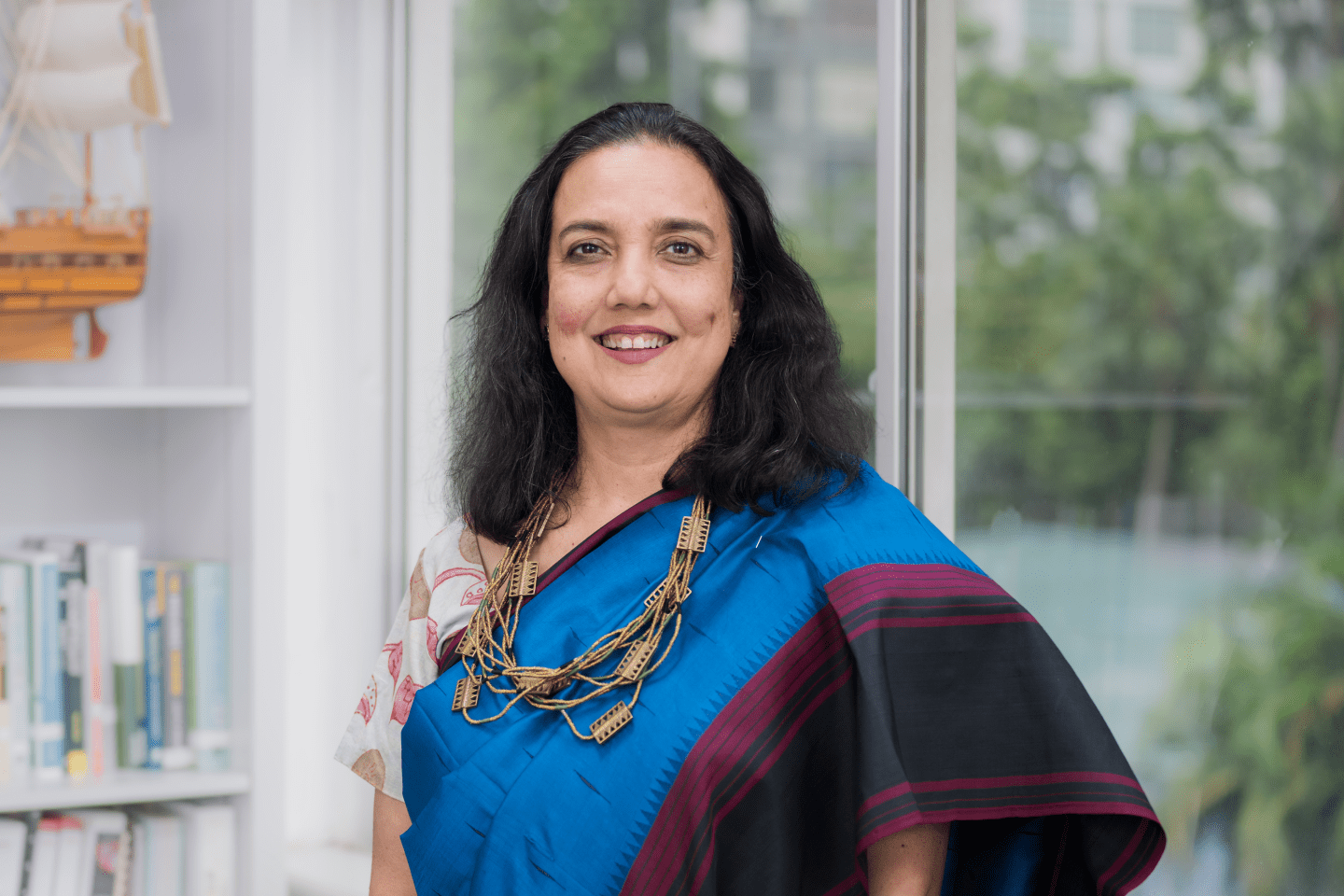
Naina Subberwal Batra is CEO of AVPN, a network of social investors in Asia. 

Naina Subberwal Batra, CEO of AVPN.

The United Nations faces a deepening liquidity crisis. Secretary-General António Guterres has warned of an “imminent financial collapse” as the international body confronts $1.6 billion in unpaid dues and billions more in peacekeeping arrears. The UN isn’t about to shut down, but its capacity to operate and coordinate global actions is going to erode.

As the United Nations inevitably trims its support for sustainable development, Asia is going to have to find a replacement source of capital. The answer will have to come from those with money: the region’s wealthy, and its corporations.

Asia’s wealthy families and billionaires can no longer afford to give in isolation. For too long, they have preferred direct, standalone donations that maximize control, but limit impact. Corporate philanthropy has built efficient networks that move capital quickly; family-led giving, on the other hand, is often guided by cultural norms, community affiliations, or business interests, with decisions made in silos rather than shared frameworks.

These traditions have value, but they are limited in tackling complex, system-wide challenges. Fragmented generosity does not close structural financing gaps or drive systemic change. To meet Asia’s urgent development needs, wealthy families and their businesses must pool resources, co-invest in scalable solutions, and build partnerships that deliver measurable, long-term impact for the region.

In parts of Asia, UN-supported programs support health, education, gender equality, climate resilience and disaster response. The UN’s decline may be gradual, but the downstream effects will be immediate. A funding pause will interrupt program delivery, weaken local partners, and fracture coordination mechanisms, like immunization task forces and disaster response networks, used by governments.

It’s not just the UN: Everyone is tightening their belts. Official development assistance may have fallen by as much as 17% last year, according to the Organization for Economic Cooperation and Development. Any pullback in funding threatens to stall progress in Asia, which still faces a $2.5 trillion annual funding gap for the UN’s Sustainable Development Goals.

Asia has the money. The Milken Institute noted that the region’s philanthropy expanded significantly over the past three decades. Wealthy Asians are adopting more formal and strategic models, rather than ad hoc giving.

Almost three quarters of family offices based in Asia-Pacific now engage in philanthropy, the highest rate globally, according to a 2024 report from investor services group IQ-EQ. Just a few years earlier, a 2020 survey showed that only about half of Asia-based family foundations had formally integrated philanthropy into their strategies. This is progress, but much of the region’s giving remains fragmented, dominated by standalone grants rather than an integrated, outcome-focused approach that moves the need’s on Asia’s toughest challenges.

If Asi is to offset the steady erosion of the UN’s role, its private capital cannot stay fragmented. Asia’s problem is not the lack of money, but the absence of structures that align private giving.

Family offices, foundations, governments, and companies need to stop acting alone and start pooling their capital to tackle larger problems. Instead of funding small projects in isolation, they should bring their funds together around shared priorities, such as strengthening health systems or building economic resilience, so that financial risks is spread across multiple partners, not borne by a single donor or investor. Fragmented efforts are not enough to close the gaps in financing social and environmental problems.

One practical way forward is blended finance, where philanthropic and public capital absorb the early, higher‑risk stages of a project, reshaping the risk‑return profile so commercial investors, normally wary of such investments, can come in at scale. This is not a theoretical solution: More than 1,100 blended-finance transactions totaling $213 billion show that well-designed catalytic structures can unlock private capital.

The next step is to deploy these capital to high-impact projects across Asia.

We need mechanisms that align priorities, consolidate resources while reinforce, rather than overlap, the roles of governments or multilateral institutions.

New models are already emerging. The Climate Finance Innovation Lab, launched in parntership with Bank Negara Malaysia, pools public and private capital to fund Malaysia’s net-zero transition, including infrastructure for the ASEAN power grid. By aligning private capital with public institutions around shared climate priorities, it demonstrates how coordinated structures can unlock projects that no single funder could access alone.

There are also trusted spaces where funders and governments can align priorities. Collaborative platforms such as the AVPN Global Conference can mobilize funders, support co-creation and drive coordinated capital deployment, while respecting UN core budgets and government responsibilities.

As global public institutions come under pressure, our collective response will determine whether progress is preserved or undone.

Billionaires, family offices and corporations need to step up. They need to commit capital to SDG-focused funds, take up first-loss positions in blended finance vehicles, and partner with governments and public institutions to narrow Asia’s funding gap.

How Asia responds to the UN’s liquidity crisis will test whether its billionaires are prepared to take a leadership role in the region’s futures. Asia has enough resources, and the mechanisms to put them to use. What’s missing is the resolve to meet that challenge.

Join us at the Fortune Workplace Innovation Summit May 19–20, 2026, in Atlanta. The next era of workplace innovation is here—and the old playbook is being rewritten. At this exclusive, high-energy event, the world’s most innovative leaders will convene to explore how AI, humanity, and strategy converge to redefine, again, the future of work. Register now.
About the Author
By Naina Subberwal Batra
See full bioRight Arrow Button Icon

Latest in Commentary

Finance
Lorem ipsum dolor sit amet, consectetur adipiscing elit, sed do eiusmod tempor incididunt ut labore et dolore magna aliqua. Ut enim ad minim veniam
By Fortune Editors
October 20, 2025
Finance
Lorem ipsum dolor sit amet, consectetur adipiscing elit, sed do eiusmod tempor incididunt ut labore et dolore magna aliqua. Ut enim ad minim veniam
By Fortune Editors
October 20, 2025
Finance
Lorem ipsum dolor sit amet, consectetur adipiscing elit, sed do eiusmod tempor incididunt ut labore et dolore magna aliqua. Ut enim ad minim veniam
By Fortune Editors
October 20, 2025
Finance
Lorem ipsum dolor sit amet, consectetur adipiscing elit, sed do eiusmod tempor incididunt ut labore et dolore magna aliqua. Ut enim ad minim veniam
By Fortune Editors
October 20, 2025
Finance
Lorem ipsum dolor sit amet, consectetur adipiscing elit, sed do eiusmod tempor incididunt ut labore et dolore magna aliqua. Ut enim ad minim veniam
By Fortune Editors
October 20, 2025
Finance
Lorem ipsum dolor sit amet, consectetur adipiscing elit, sed do eiusmod tempor incididunt ut labore et dolore magna aliqua. Ut enim ad minim veniam
By Fortune Editors
October 20, 2025

Most Popular

Finance
Lorem ipsum dolor sit amet, consectetur adipiscing elit, sed do eiusmod tempor incididunt ut labore et dolore magna aliqua. Ut enim ad minim veniam
By Fortune Editors
October 20, 2025
Finance
Lorem ipsum dolor sit amet, consectetur adipiscing elit, sed do eiusmod tempor incididunt ut labore et dolore magna aliqua. Ut enim ad minim veniam
By Fortune Editors
October 20, 2025
Finance
Lorem ipsum dolor sit amet, consectetur adipiscing elit, sed do eiusmod tempor incididunt ut labore et dolore magna aliqua. Ut enim ad minim veniam
By Fortune Editors
October 20, 2025
Finance
Lorem ipsum dolor sit amet, consectetur adipiscing elit, sed do eiusmod tempor incididunt ut labore et dolore magna aliqua. Ut enim ad minim veniam
By Fortune Editors
October 20, 2025
Finance
Lorem ipsum dolor sit amet, consectetur adipiscing elit, sed do eiusmod tempor incididunt ut labore et dolore magna aliqua. Ut enim ad minim veniam
By Fortune Editors
October 20, 2025
Finance
Lorem ipsum dolor sit amet, consectetur adipiscing elit, sed do eiusmod tempor incididunt ut labore et dolore magna aliqua. Ut enim ad minim veniam
By Fortune Editors
October 20, 2025
Fortune Secondary Logo
Rankings
  • 100 Best Companies
  • Fortune 500
  • Global 500
  • Fortune 500 Europe
  • Most Powerful Women
  • Future 50
  • World’s Most Admired Companies
  • See All Rankings
Sections
  • Finance
  • Fortune Crypto
  • Features
  • Leadership
  • Health
  • Commentary
  • Success
  • Retail
  • Mpw
  • Tech
  • Lifestyle
  • CEO Initiative
  • Asia
  • Politics
  • Conferences
  • Europe
  • Newsletters
  • Personal Finance
  • Environment
  • Magazine
  • Education
Customer Support
  • Frequently Asked Questions
  • Customer Service Portal
  • Privacy Policy
  • Terms Of Use
  • Single Issues For Purchase
  • International Print
Commercial Services
  • Advertising
  • Fortune Brand Studio
  • Fortune Analytics
  • Fortune Conferences
  • Business Development
  • Group Subscriptions
About Us
  • About Us
  • Editorial Calendar
  • Press Center
  • Work At Fortune
  • Diversity And Inclusion
  • Terms And Conditions
  • Site Map
  • About Us
  • Editorial Calendar
  • Press Center
  • Work At Fortune
  • Diversity And Inclusion
  • Terms And Conditions
  • Site Map
  • Facebook icon
  • Twitter icon
  • LinkedIn icon
  • Instagram icon
  • Pinterest icon

Latest in Commentary

LI
CommentaryLinkedIn
AI adoption isn’t the hard part, it’s building employee agency
By Teuila Hanson and Mohak ShroffApril 3, 2026
21 hours ago
I helped build Uber and Discord and now my tools help fuel billion-dollar unicorns. But Silicon Valley is losing the AI race to itself
CommentarySilicon Valley
I helped build Uber and Discord and now my tools help fuel billion-dollar unicorns. But Silicon Valley is losing the AI race to itself
By Sumeet VaidyaApril 3, 2026
21 hours ago
messi
CommentaryFlorida
Apollo and FC Barcelona just proved legacy markets are losing their grip on business
By Mike SimasApril 2, 2026
2 days ago
kroenke
CommentarySoccer
Why American billionaires are abandoning Wall Street for English soccer clubs
By Andrés MartinezApril 2, 2026
2 days ago
wyle
CommentaryTV
What HBO’s ‘The Pitt’ gets right—and wrong—about treating alcohol use disorder
By Jonathan Hunt-GlassmanApril 2, 2026
2 days ago
nic
CommentaryInsider trading
Prediction markets caught insider traders in real time. Congress wants to shut them down anyway
By Nic PuckrinApril 2, 2026
2 days ago

Most Popular

Google CEO Sundar Pichai says we’re just a decade away from a new normal of extraterrestrial data centers
Innovation
Google CEO Sundar Pichai says we’re just a decade away from a new normal of extraterrestrial data centers
By Fortune EditorsApril 3, 2026
1 day ago
Gen Z fled San Francisco for Texas and Florida. Now they’re turning ‘welcomer cities’ into the next big tech towns
Real Estate
Gen Z fled San Francisco for Texas and Florida. Now they’re turning ‘welcomer cities’ into the next big tech towns
By Fortune EditorsApril 2, 2026
2 days ago
The Walmart billionaires next door: Quiet backlash is brewing against the heirs who remade the retailer’s hometown
Magazine
The Walmart billionaires next door: Quiet backlash is brewing against the heirs who remade the retailer’s hometown
By Fortune EditorsApril 3, 2026
1 day ago
Major 4-day workweek study suggests that when we work 5 days we spend one doing basically nothing
Success
Major 4-day workweek study suggests that when we work 5 days we spend one doing basically nothing
By Fortune EditorsApril 2, 2026
2 days ago
Current price of oil as of April 3, 2026
Personal Finance
Current price of oil as of April 3, 2026
By Fortune EditorsApril 3, 2026
22 hours ago
Current price of silver as of Friday, April 3, 2026
Personal Finance
Current price of silver as of Friday, April 3, 2026
By Fortune EditorsApril 3, 2026
22 hours ago

© 2026 Fortune Media IP Limited. All Rights Reserved. Use of this site constitutes acceptance of our Terms of Use and Privacy Policy | CA Notice at Collection and Privacy Notice | Do Not Sell/Share My Personal Information
FORTUNE is a trademark of Fortune Media IP Limited, registered in the U.S. and other countries. FORTUNE may receive compensation for some links to products and services on this website. Offers may be subject to change without notice.