• Home
  • Latest
  • Fortune 500
  • Finance
  • Tech
  • Leadership
  • Lifestyle
  • Rankings
  • Multimedia
CommentaryOil

Hung up on Hormuz: the old-world order of oil was just shattered by the closing of Iran’s key global chokepoint

By
Siddharth Misra
Siddharth Misra
Down Arrow Button Icon
By
Siddharth Misra
Siddharth Misra
Down Arrow Button Icon
March 6, 2026, 4:30 AM ET
hormuz
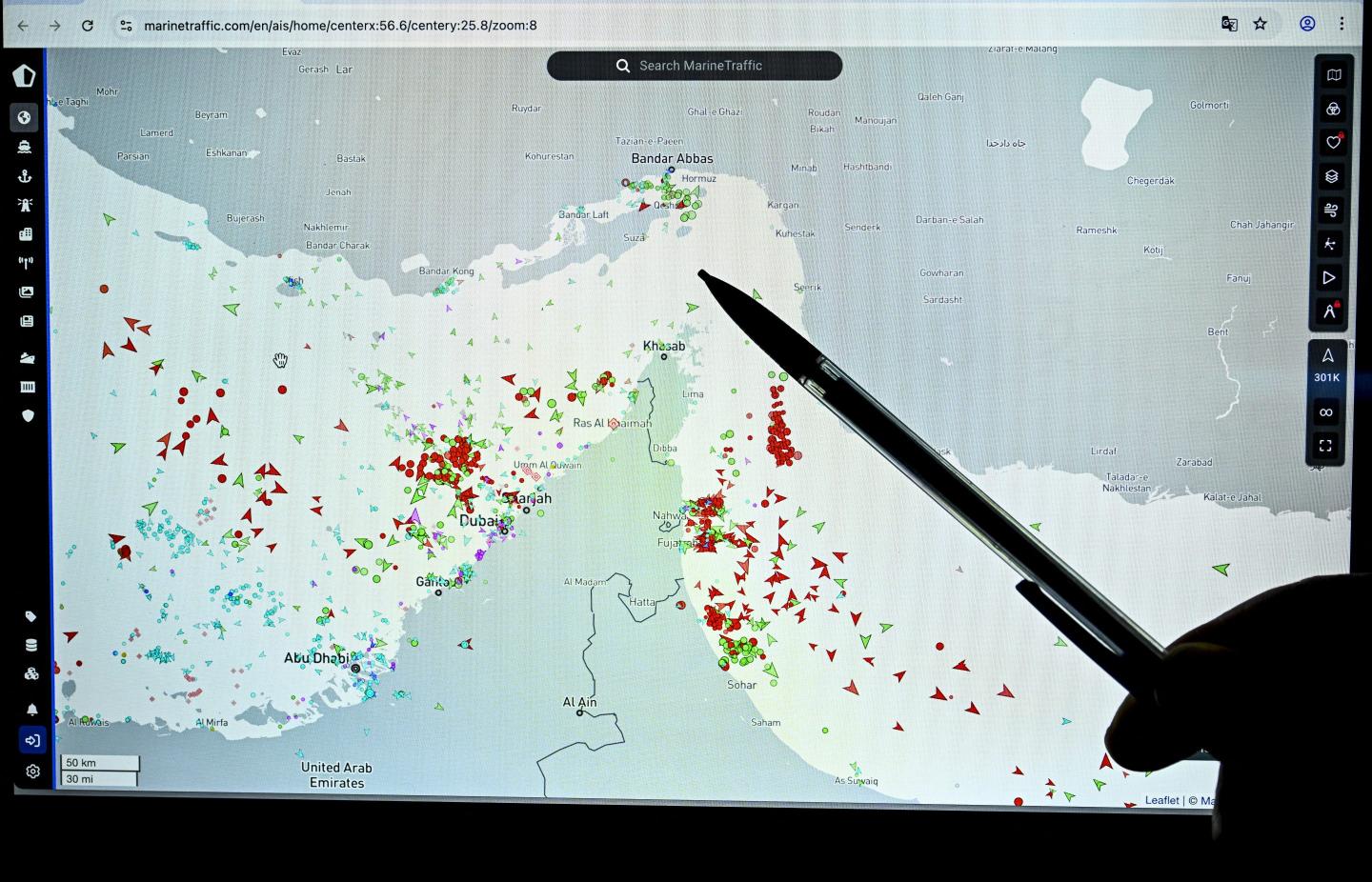
A person points at a page on the Marine traffic website that shows commercial boats traffic on the edge of the Strait of Hormuz near the Iranian coast, in Paris on March 4, 2026. JULIEN DE ROSA / AFP via Getty Images

For every CEO, investor, and policymaker reading the headlines today, the math is becoming terrifyingly simple: when oil tests the $90-per-barrel point, the global economy begins to fracture.

Recommended Video

We have long been taught that energy security is a matter of geography, defined by who owns the land, who controls the straits, and who signs the treaties. Now the Strait of Hormuz, a key chokepoint for the global oil trade, has been shut by Iran’s Revolutionary Guard following the U.S. and Israeli airstrikes that began on February 28. Tanker traffic has ground to a near halt, 20% of global supply has been paralyzed, and the old-world energy order has been shaken.

We are discovering a new reality. The real crisis isn’t a lack of resources; it is a failure to harness and move them. 

The global energy market is struggling under the weight of geopolitical warfare, insurance fears, physics and geology realities, and the lack of pipeline and waterway infrastructure to redirect supplies. Here’s a breakdown of the problems and a second part of this analysis will explain the long-term solutions.

The Threat Triplet: Decoding the $90 Battleground

The $90 threshold is the absolute psychological and technical battleground for the global economy. Below this mark, the market views any kind of chaos as a temporary logistics delay. Above it, we are pricing in the permanent destruction of supply.

The current petroleum-supply paralysis is driven by a “threat triplet” that conventional diplomacy cannot solve. For import-reliant centers like India, the EU, and East Asia, this is an asymmetric shock that threatens to trigger massive inflation and kill any hope for interest rate cuts.

  1. The Insurance Freeze: Spiking war-risk premiums have made it economically impossible for tankers to enter conflict zones. This blockade is enforced by the “additional premium” system, and insurers issue a seven-day notice of cancellation, reinstating coverage only for a massive fee, often reaching 1% of the ship’s total value for a single transit or a seven-day call. For a $120 million Very Large Crude Carrier (VLCC), a single voyage now costs over $1 million in insurance alone, turning profitable journeys into guaranteed financial losses that can bankrupt an operator.
  1. Kinetic & Electronic Risk: Modern asymmetrical warfare has evolved beyond simple physical strikes. While one-way attack drones and sea mines turn narrow chokepoints into no-go zones, the real danger lies in electronic warfare. There has been widespread GNSS spoofing and AIS manipulation, where tankers are digitally hijacked and tricked into displaying false coordinates that lead them into restricted territorial waters for seizure. This fusion of physical and cyber-physical threats makes unescorted civilian transit a technical impossibility.
  1. The Logistics Whiplash: The closure of the Strait of Hormuz, coupled with the mass rerouting of vessels around the Cape of Good Hope, has forced tankers forced into 4,000-mile detours, adding weeks to every journey and depleting global vessel capacity. This is not just a delay; it is a functional reduction of the world’s tanker fleet, driving freight costs to record highs and stranding millions of barrels without a viable path to market.

2. The Silent Killer of the Petroleum Reserves Under Our Feet

The most dangerous misconception in the current crisis is that we can simply “shut in” wells and wait for peace. In petroleum engineering, there is no such thing as a simple off switch that can be flipped back on whenever we desire. When production stops abruptly due to downstream bottlenecks, the delicate equilibrium of rock physics and fluid flow is shattered. The “silent killer” of global energy security isn’t just the skirmish or the war; it is the irreversible physical decay that happens the moment hydrocarbon production stops.

In mature fields, sudden shut-ins cause water coning, where bottom water rushes upward to replace the oil in the reservoir. This leads to irreversible damage to the subsurface rocks and fluids: as the returning water floods the pore space, it causes capillary trapping, snapping off oil droplets and stranding them in the smallest pores of the rock, forever. This oil is not just paused; it is physically locked away from ever being produced through the wellbore. Even when the conflict ends, that production capacity may be gone forever, permanently reducing global supply and raising the long-term floor price of energy.

3. Midstream Heart Attacks and the Technological Bypass  

The global midstream network is a living system built for steady-state flow, and the Hormuz chokepoint is its primary valve. When this valve slams shut, the entire network suffers a mechanical heart attack. Stagnant oil in a blocked pipeline is a ticking clock. Without constant motion, heavy components in the crude begin to cool, triggering the rapid precipitation of paraffin waxes and the formation of methane hydrates. These are not merely temporary blockages; they are the blood clots of the energy world that can turn a multi-billion dollar pipeline into a useless metal straw.

Furthermore, the sudden cessation of flow in the pipeline triggers transient pressure surges, known as water-hammer effects, which propagate as high-velocity shockwaves through the fluid column. These surges occur because the kinetic energy of the moving mass of oil must be instantly dissipated, resulting in extreme pressure spikes that can exceed the structural design limits of the steel. This often leads to catastrophic fatigue failure or the violent rupture of joints, gaskets, and valves across hundreds of miles of interconnected midstream infrastructure.

The Breaking Point: Why the Old-World Order is Hung up on Hormuz

To bypass the Hormuz blockade, the industry must pivot to underutilized overland routes, such as Saudi Arabia’s East-West (Petroline) or the UAE’s Habshan-Fujairah line. However, these assets are not infinitely elastic relief valves. Forcing these aging systems to operate at 120% or 150% of their rated nameplate capacity introduces extreme hoop stress and accelerated internal erosion. This operational overreach risks catastrophic mechanical failure, where the combined effects of high-velocity turbulence and vibrational fatigue can trigger a systemic rupture. Such a failure would turn a strategic bypass into a secondary environmental and economic disaster, proving that the old-world order of oil was just shattered by the closing of Iran’s key global chokepoint.

When these physical bypasses fail, the economic impact is deeply unequal, punishing import-reliant nations across the globe. From the industrial hubs of Germany and South Korea to the emerging markets of India and Southeast Asia, the suffering follows a brutal feedback loop: skyrocketing energy costs trigger domestic inflation, which forces central banks to keep interest rates high, strangling industrial manufacturing and devaluing local currencies. This isn’t just a market fluctuation; it is a direct threat to the standard of living for billions who are now at risk of energy poverty and economic stagnation. As the geography of the Middle East becomes a permanent bottleneck, it is clear that being “Hung up on Hormuz” is the terminal failure of a resource model that has an over-reliance on territory over technology.

This is the first in a two-part series. The second edition will focus on solutions to the problems raised above.

The views and opinions expressed in this article are those of the author and do not necessarily reflect the official policy or position of Texas A&M University, nor do they necessarily reflect the opinions and beliefs of Fortune.

Join us at the Fortune Workplace Innovation Summit May 19–20, 2026, in Atlanta. The next era of workplace innovation is here—and the old playbook is being rewritten. At this exclusive, high-energy event, the world’s most innovative leaders will convene to explore how AI, humanity, and strategy converge to redefine, again, the future of work. Register now.
About the Author
By Siddharth Misra
See full bioRight Arrow Button Icon

Latest in Commentary

Finance
Lorem ipsum dolor sit amet, consectetur adipiscing elit, sed do eiusmod tempor incididunt ut labore et dolore magna aliqua. Ut enim ad minim veniam
By Fortune Editors
October 20, 2025
Finance
Lorem ipsum dolor sit amet, consectetur adipiscing elit, sed do eiusmod tempor incididunt ut labore et dolore magna aliqua. Ut enim ad minim veniam
By Fortune Editors
October 20, 2025
Finance
Lorem ipsum dolor sit amet, consectetur adipiscing elit, sed do eiusmod tempor incididunt ut labore et dolore magna aliqua. Ut enim ad minim veniam
By Fortune Editors
October 20, 2025
Finance
Lorem ipsum dolor sit amet, consectetur adipiscing elit, sed do eiusmod tempor incididunt ut labore et dolore magna aliqua. Ut enim ad minim veniam
By Fortune Editors
October 20, 2025
Finance
Lorem ipsum dolor sit amet, consectetur adipiscing elit, sed do eiusmod tempor incididunt ut labore et dolore magna aliqua. Ut enim ad minim veniam
By Fortune Editors
October 20, 2025
Finance
Lorem ipsum dolor sit amet, consectetur adipiscing elit, sed do eiusmod tempor incididunt ut labore et dolore magna aliqua. Ut enim ad minim veniam
By Fortune Editors
October 20, 2025

Most Popular

Finance
Lorem ipsum dolor sit amet, consectetur adipiscing elit, sed do eiusmod tempor incididunt ut labore et dolore magna aliqua. Ut enim ad minim veniam
By Fortune Editors
October 20, 2025
Finance
Lorem ipsum dolor sit amet, consectetur adipiscing elit, sed do eiusmod tempor incididunt ut labore et dolore magna aliqua. Ut enim ad minim veniam
By Fortune Editors
October 20, 2025
Finance
Lorem ipsum dolor sit amet, consectetur adipiscing elit, sed do eiusmod tempor incididunt ut labore et dolore magna aliqua. Ut enim ad minim veniam
By Fortune Editors
October 20, 2025
Finance
Lorem ipsum dolor sit amet, consectetur adipiscing elit, sed do eiusmod tempor incididunt ut labore et dolore magna aliqua. Ut enim ad minim veniam
By Fortune Editors
October 20, 2025
Finance
Lorem ipsum dolor sit amet, consectetur adipiscing elit, sed do eiusmod tempor incididunt ut labore et dolore magna aliqua. Ut enim ad minim veniam
By Fortune Editors
October 20, 2025
Finance
Lorem ipsum dolor sit amet, consectetur adipiscing elit, sed do eiusmod tempor incididunt ut labore et dolore magna aliqua. Ut enim ad minim veniam
By Fortune Editors
October 20, 2025
Fortune Secondary Logo
Rankings
  • 100 Best Companies
  • Fortune 500
  • Global 500
  • Fortune 500 Europe
  • Most Powerful Women
  • World's Most Admired Companies
  • See All Rankings
  • Lists Calendar
Sections
  • Finance
  • Fortune Crypto
  • Features
  • Leadership
  • Health
  • Commentary
  • Success
  • Retail
  • Mpw
  • Tech
  • Lifestyle
  • CEO Initiative
  • Asia
  • Politics
  • Conferences
  • Europe
  • Newsletters
  • Personal Finance
  • Environment
  • Magazine
  • Education
Customer Support
  • Frequently Asked Questions
  • Customer Service Portal
  • Privacy Policy
  • Terms Of Use
  • Single Issues For Purchase
  • International Print
Commercial Services
  • Advertising
  • Fortune Brand Studio
  • Fortune Analytics
  • Fortune Conferences
  • Business Development
  • Group Subscriptions
About Us
  • About Us
  • Press Center
  • Work At Fortune
  • Terms And Conditions
  • Site Map
  • About Us
  • Press Center
  • Work At Fortune
  • Terms And Conditions
  • Site Map
  • Facebook icon
  • Twitter icon
  • LinkedIn icon
  • Instagram icon
  • Pinterest icon

Dr. Sid Misra is a Professor at Texas A&M University and the CTO of AlterNature LLC. He specializes in physics-informed deep learning and sensing technologies for the exploration, development, and production of energy and earth resources. Dr. Misra has authored two books and spearheaded the development of nine patented technologies. He has an undergraduate degree in electrical engineering from the Indian Institute of Technology, Bombay, and a Ph.D. in petroleum and geosystems engineering from The University of Texas at Austin. 


Latest in Commentary

250
Commentary250 Years of Innovation
For 250 years, America didn’t just invent the future—it built it. That connection is breaking. Here’s how to restore it
By Eric Kutcher, Shubham Singhal, Olivia White and Scott BlackburnMay 13, 2026
17 hours ago
zach
CommentaryApps
I spent 8 years building Google Sheets. Now I think apps are on their way out
By Zach LloydMay 13, 2026
17 hours ago
frazier
Commentaryaging
Your grandma should be using AI. really
By Kevin FrazierMay 13, 2026
18 hours ago
jeffrey
CommentaryPsychology
Imposter syndrome used to be a lie. AI made it true
By Jeffrey Sanchez-BurksMay 13, 2026
18 hours ago
turner
CommentaryMedia
Ted Turner built the original infinite scroll. The attention economy is running on his playbook 
By Nick LichtenbergMay 12, 2026
1 day ago
klein
CommentarySoftware
SAP CEO: the AI race is being fought in the wrong place 
By Christian KleinMay 12, 2026
2 days ago

Most Popular

The Bezos family just donated $100 million to help achieve one of Mayor Zohran Mamdani’s top campaign promises
Politics
The Bezos family just donated $100 million to help achieve one of Mayor Zohran Mamdani’s top campaign promises
By Jake AngeloMay 12, 2026
1 day ago
Nearly 50,000 Lake Tahoe residents have to find a new power source after their energy source looks to redirect lines to data centers
Travel & Leisure
Nearly 50,000 Lake Tahoe residents have to find a new power source after their energy source looks to redirect lines to data centers
By Catherina GioinoMay 12, 2026
2 days ago
Despite having a $165 million net worth, Scarlett Johansson says work-life balance doesn’t exist—and the first step to success is admitting that
Success
Despite having a $165 million net worth, Scarlett Johansson says work-life balance doesn’t exist—and the first step to success is admitting that
By Preston ForeMay 13, 2026
15 hours ago
It’s not just Canadian tourists snubbing U.S. cities. Business leaders are cancelling more trips to America as geopolitical tensions continue
North America
It’s not just Canadian tourists snubbing U.S. cities. Business leaders are cancelling more trips to America as geopolitical tensions continue
By Sasha RogelbergMay 12, 2026
1 day ago
Anthropic’s Daniela Amodei says entrepreneurs should go on vacation to road test potential cofounders—if they’re a drain, they’re ‘the wrong choice’
Success
Anthropic’s Daniela Amodei says entrepreneurs should go on vacation to road test potential cofounders—if they’re a drain, they’re ‘the wrong choice’
By Emma BurleighMay 12, 2026
2 days ago
U.S. hotels are calling the World Cup a 'non-event' and 80% warn bookings are falling short of expectations, report finds
North America
U.S. hotels are calling the World Cup a 'non-event' and 80% warn bookings are falling short of expectations, report finds
By Sasha RogelbergMay 12, 2026
2 days ago

© 2026 Fortune Media IP Limited. All Rights Reserved. Use of this site constitutes acceptance of our Terms of Use and Privacy Policy | CA Notice at Collection and Privacy Notice | Do Not Sell/Share My Personal Information
FORTUNE is a trademark of Fortune Media IP Limited, registered in the U.S. and other countries. FORTUNE may receive compensation for some links to products and services on this website. Offers may be subject to change without notice.