
• Home
  • Latest
  • Fortune 500
  • Finance
  • Tech
  • Leadership
  • Lifestyle
  • Rankings
  • Multimedia

Trendingnow

1

Erin Brockovich, the activist who defeated a utility giant and inspired a Julia Roberts film, is pushing data centers to be more transparent

2

Social Security unraveling: 7,100 workers sacked, performance metrics retired, disability claims falling

3

The Iran conflict has disrupted oil supply. Gulf states are now looking to multi-billion-dollar investments in renewables 

1

Erin Brockovich, the activist who defeated a utility giant and inspired a Julia Roberts film, is pushing data centers to be more transparent

2

Social Security unraveling: 7,100 workers sacked, performance metrics retired, disability claims falling

3

The Iran conflict has disrupted oil supply. Gulf states are now looking to multi-billion-dollar investments in renewables 
AsiaTariffs
Asia

Trump warns countries they could face something ‘far worse’ if they try to renegotiate trade deals. What options do they have?

Nicholas Gordon
By
Nicholas Gordon
Nicholas Gordon
Asia Editor
Down Arrow Button Icon
Nicholas Gordon
By
Nicholas Gordon
Nicholas Gordon
Asia Editor
Down Arrow Button Icon
February 25, 2026, 9:37 AM ET
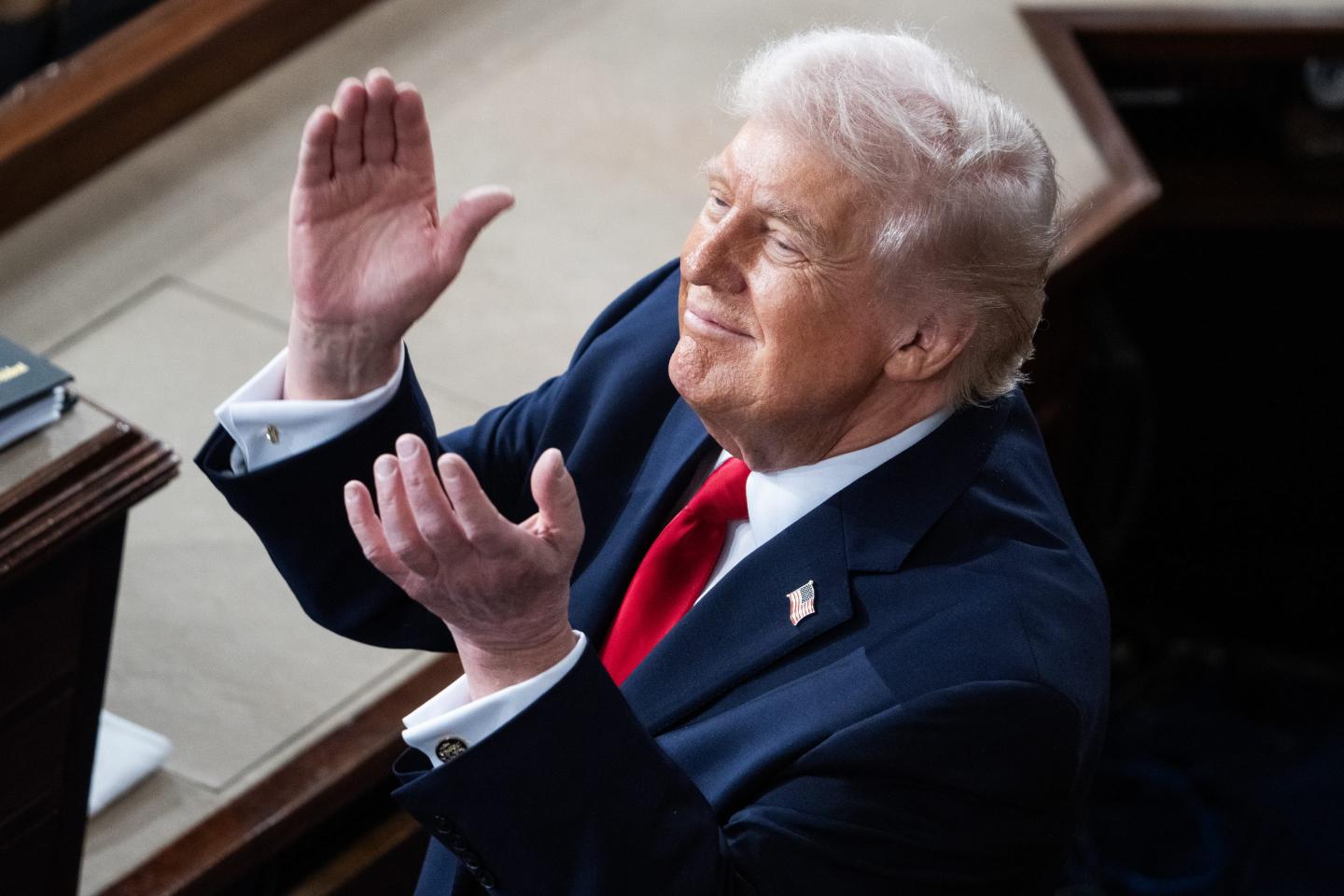
President Donald Trump applauds a guest during his State of the Union address in the House Chamber of the U.S. Capitol, Feb. 24, 2026.
President Donald Trump applauds a guest during his State of the Union address in the House Chamber of the U.S. Capitol, Feb. 24, 2026. Tom Williams—CQ–Roll Call Inc./Getty Images

U.S. President Donald Trump warned trading partners not to use the Supreme Court’s recent decision invalidating his emergency tariffs as a reason to renegotiate trade agreements, insisting he could impose “far worse” terms using other legal powers.

Recommended Video

Several governments have reached deals with the Trump administration that cut U.S. tariffs in exchange for investment commitments and lower barriers for U.S. imports. Yet Friday’s Supreme Court ruling wiped out tariffs imposed under the International Emergency Economic Powers Act (IEEPA), removing the main incentive for several of those agreements. Trump’s new universal tariff of 10%, imposed under a different process, complicates things further.

At his State of the Union address on Feb. 24, Trump called the court’s decision “disappointing” and “unfortunate,” but claimed that “almost all countries and corporations want to keep the deal that they already made,” adding that the “legal power that I as president have to make a deal could be far worse for them.”

Trump’s remarks underscore the dilemma now facing U.S. trade partners, some of whom unveiled agreements just a few weeks ago. (Indonesia, with particularly unlucky timing, unveiled its agreement on Feb. 19, the day before the court’s ruling.) Governments spent months hammering out accords with Washington, sometimes making politically unpopular concessions and promises to get a deal over the finish line. 

Countries could try to suspend or renegotiate their trade deals, but that risks provoking higher tariffs from an angry White House. Or they can keep the agreements in place—even if that means their goods will get higher tariffs than other countries—and yet still be at risk of new tariffs from Trump anyway.

“It is highly likely that trade deals currently under negotiation will be put on ice,” says Eswar Prasad, a professor of international trade policy at Cornell University. “Presumably, no U.S. trading partner would want to make concessions that carry both economic and domestic political costs without any clarity about whether the deals will stick or be overridden by a new tariff regime.”

Some governments may choose to keep what gains they’ve already won from Washington. “Countries that received specific carve‑outs on important sectors, especially for autos, auto parts, trucks, and truck parts—like Japan, South Korea, the EU, and possibly the U.K.—will probably not be keen to invalidate their existing deals, because they see them as a key deliverable that matters,” Deborah Elms, head of trade policy at the Hinrich Foundation, points out. 

But even if governments do not publicly renounce these agreements, they can quietly slow their implementation on conditions like transshipment and deregulation. “None of these deals are actually in force,” Elms notes. “They only come into force after both parties certify that they are in force. That could be some period of time away.”

For now, most countries are adopting a wait‑and‑see approach to U.S. trade policy. India has postponed trade talks to “study the implications” of the Supreme Court ruling. Japan and South Korea, which already have agreements in place, say they are monitoring developments, while Indonesia stressed that its deal has yet to be ratified.

Beijing said it would conduct a “full assessment” of the decision and urged Washington to remove what it called “unilateral” tariffs. Trump is scheduled to visit China from March 31 to April 2.

“China will almost certainly toughen its stance in forthcoming trade negotiations with the U.S., as Trump’s tariff weapon has now been weakened and blunted,” Prasad says. “Beijing is no doubt strategizing about how to use this ruling to its advantage while not overplaying its hand.

A tariff ‘patchwork’

Even after the Supreme Court’s ruling, Trump retains significant authority to impose tariffs under other statutes. On Tuesday, a universal 10% tariff under Section 122 of the 1974 Trade Act took effect; this provision allows the president to impose duties without congressional approval for up to 150 days to address balance‑of‑payments problems. Trump has already signaled that he plans to raise that rate to 15%, the legal maximum.

“We foresee ever higher complexity in terms of U.S. trade policy,” William Bratton, head of cash equity research, APAC, at BNP Paribas, wrote in a Monday note. “It is likely that the IEEPA tariffs will be replaced by an increasing patchwork of various tariffs targeted at specific countries and product groups.”

Elms is particularly concerned about two tools: Section 232 tariffs, which allow the president to tax imports deemed vital for national security, and Section 301 tariffs, which permit tariffs in response to unfair trade practices. These authorities provide alternative, if slower, pathways for the administration to impose new taxes on U.S. imports.

The Trump administration has applied a broad definition of “national security,” covering products ranging from steel and aluminum to critical minerals. “I imagine the Trump administration will, in the next 150 days, roll out more Section 232s,” Elms says.

U.S. officials are considering new national security tariffs on goods like large-scale batteries, industrial chemicals, and telecoms equipment, among other products, the Wall Street Journal reported on Monday, citing unnamed sources.

Section 301 tariffs could prove even more problematic. Currently, only China and Brazil are subject to Section 301 investigations, yet U.S. Trade Representative Jamieson Greer said Friday that he expects to launch several more investigations targeting a wide range of different practices.

Elms suggests that the United States could argue that a country refusing to comply with a trade agreement—even one originally sparked by tariffs later deemed illegal—is engaging in “unfair” trade practices, exposing it to Section 301 duties. “Where the catch-22 comes in is, if you are not implementing the agreement that you signed with the U.S., to the full and complete satisfaction of the U.S., you are therefore out of compliance, and you are practicing unfair trade,” she warns. 

“This is not a crew that is terribly fussed about hypocrisy,” she says.

About the Author
Nicholas Gordon
By Nicholas GordonAsia Editor
LinkedIn iconTwitter icon

Nicholas Gordon is an Asia editor based in Hong Kong, where he helps to drive Fortune’s coverage of Asian business and economics news.

See full bioRight Arrow Button Icon

Latest in Asia

Finance
Lorem ipsum dolor sit amet, consectetur adipiscing elit, sed do eiusmod tempor incididunt ut labore et dolore magna aliqua. Ut enim ad minim veniam
By Fortune Editors
October 20, 2025
Finance
Lorem ipsum dolor sit amet, consectetur adipiscing elit, sed do eiusmod tempor incididunt ut labore et dolore magna aliqua. Ut enim ad minim veniam
By Fortune Editors
October 20, 2025
Finance
Lorem ipsum dolor sit amet, consectetur adipiscing elit, sed do eiusmod tempor incididunt ut labore et dolore magna aliqua. Ut enim ad minim veniam
By Fortune Editors
October 20, 2025
Finance
Lorem ipsum dolor sit amet, consectetur adipiscing elit, sed do eiusmod tempor incididunt ut labore et dolore magna aliqua. Ut enim ad minim veniam
By Fortune Editors
October 20, 2025
Finance
Lorem ipsum dolor sit amet, consectetur adipiscing elit, sed do eiusmod tempor incididunt ut labore et dolore magna aliqua. Ut enim ad minim veniam
By Fortune Editors
October 20, 2025
Finance
Lorem ipsum dolor sit amet, consectetur adipiscing elit, sed do eiusmod tempor incididunt ut labore et dolore magna aliqua. Ut enim ad minim veniam
By Fortune Editors
October 20, 2025

Most Popular

Finance
Lorem ipsum dolor sit amet, consectetur adipiscing elit, sed do eiusmod tempor incididunt ut labore et dolore magna aliqua. Ut enim ad minim veniam
By Fortune Editors
October 20, 2025
Finance
Lorem ipsum dolor sit amet, consectetur adipiscing elit, sed do eiusmod tempor incididunt ut labore et dolore magna aliqua. Ut enim ad minim veniam
By Fortune Editors
October 20, 2025
Finance
Lorem ipsum dolor sit amet, consectetur adipiscing elit, sed do eiusmod tempor incididunt ut labore et dolore magna aliqua. Ut enim ad minim veniam
By Fortune Editors
October 20, 2025
Finance
Lorem ipsum dolor sit amet, consectetur adipiscing elit, sed do eiusmod tempor incididunt ut labore et dolore magna aliqua. Ut enim ad minim veniam
By Fortune Editors
October 20, 2025
Finance
Lorem ipsum dolor sit amet, consectetur adipiscing elit, sed do eiusmod tempor incididunt ut labore et dolore magna aliqua. Ut enim ad minim veniam
By Fortune Editors
October 20, 2025
Finance
Lorem ipsum dolor sit amet, consectetur adipiscing elit, sed do eiusmod tempor incididunt ut labore et dolore magna aliqua. Ut enim ad minim veniam
By Fortune Editors
October 20, 2025
Fortune Secondary Logo
Rankings
  • 100 Best Companies
  • Fortune 500
  • Global 500
  • Fortune 500 Europe
  • Most Powerful Women
  • World's Most Admired Companies
  • See All Rankings
  • Lists Calendar
Sections
  • Finance
  • Fortune Crypto
  • Features
  • Leadership
  • Health
  • Commentary
  • Success
  • Retail
  • Mpw
  • Tech
  • Lifestyle
  • CEO Initiative
  • Asia
  • Politics
  • Conferences
  • Europe
  • Newsletters
  • Personal Finance
  • Environment
  • Magazine
  • Education
Customer Support
  • Frequently Asked Questions
  • Customer Service Portal
  • Privacy Policy
  • Terms Of Use
  • Single Issues For Purchase
  • International Print
Commercial Services
  • Advertising
  • Fortune Brand Studio
  • Fortune Analytics
  • Fortune Conferences
  • Business Development
  • Group Subscriptions
About Us
  • About Us
  • Press Center
  • Work At Fortune
  • Terms And Conditions
  • Site Map
  • About Us
  • Press Center
  • Work At Fortune
  • Terms And Conditions
  • Site Map
  • Facebook icon
  • Twitter icon
  • LinkedIn icon
  • Instagram icon
  • Pinterest icon

Latest in Asia

Why Amy Lee, the niece of Singapore’s first prime minister, helped launch a crypto-friendly bank
BankingCryptocurrency
Why Amy Lee, the niece of Singapore’s first prime minister, helped launch a crypto-friendly bank
By Angelica AngJune 1, 2026
1 day ago
Los Angeles' Pacific Palisades neighborhood pictured after the January 2025 wildfires.
Economywildfires
Last year was a ‘quiet’ one for wildfires. Catastrophic blazes in Canada, South Korea and LA still made it the costliest fire year in history
By Tristan BoveJune 1, 2026
2 days ago
Malaysia bans children under 16 from using social media
AsiaSocial Media
Malaysia bans children under 16 from using social media
By The Associated Press and Eileen NgJune 1, 2026
2 days ago
Wall Street may have solved a nagging mystery in global oil markets as doomsday scenarios have yet to arrive
EnergyOil
Wall Street may have solved a nagging mystery in global oil markets as doomsday scenarios have yet to arrive
By Jason MaMay 31, 2026
2 days ago
Hegseth seeks to convince allies U.S. should stay quiet on Taiwan
AsiaChina
Hegseth seeks to convince allies U.S. should stay quiet on Taiwan
By Josh Xiao, Philip J. Heijmans and BloombergMay 31, 2026
3 days ago
c
EconomyChina
Chinese factory activity flattens as analysts wonder about true damage from Iran War
By The Associated PressMay 31, 2026
3 days ago

Most Popular

Erin Brockovich, the activist who defeated a utility giant and inspired a Julia Roberts film, is pushing data centers to be more transparent
Environment
Erin Brockovich, the activist who defeated a utility giant and inspired a Julia Roberts film, is pushing data centers to be more transparent
By Marco Quiroz-GutierrezJune 1, 2026
2 days ago
Social Security unraveling: 7,100 workers sacked, performance metrics retired, disability claims falling
North America
Social Security unraveling: 7,100 workers sacked, performance metrics retired, disability claims falling
By Katie Savin, Callie Freitag, Matthew Borus and The ConversationJune 2, 2026
17 hours ago
The Iran conflict has disrupted oil supply. Gulf states are now looking to multi-billion-dollar investments in renewables 
Energy
The Iran conflict has disrupted oil supply. Gulf states are now looking to multi-billion-dollar investments in renewables 
By Melissa HancockJune 1, 2026
2 days ago
'Where we are today is frightening': a Pulitzer-winning historian sees a doomsday scenario involving China and the national debt
Banking
'Where we are today is frightening': a Pulitzer-winning historian sees a doomsday scenario involving China and the national debt
By Nick LichtenbergJune 2, 2026
21 hours ago
Cognizant CEO is swimming against the tide on AI: he's hiring over 20,000 graduates this year and says AI tokenmaxxing is a 'vanity metric'
Conferences
Cognizant CEO is swimming against the tide on AI: he's hiring over 20,000 graduates this year and says AI tokenmaxxing is a 'vanity metric'
By Preston ForeJune 1, 2026
1 day ago
Trump tells Netanyahu, 'You're f—ing crazy' and Wall Street sees it as a sign he’s losing patience with the war and wants it done
Investing
Trump tells Netanyahu, 'You're f—ing crazy' and Wall Street sees it as a sign he’s losing patience with the war and wants it done
By Jim EdwardsJune 2, 2026
21 hours ago

© 2026 Fortune Media IP Limited. All Rights Reserved. Use of this site constitutes acceptance of our Terms of Use and Privacy Policy | CA Notice at Collection and Privacy Notice | Do Not Sell/Share My Personal Information
FORTUNE is a trademark of Fortune Media IP Limited, registered in the U.S. and other countries. FORTUNE may receive compensation for some links to products and services on this website. Offers may be subject to change without notice.