At Hewlett Packard Enterprise (HPE), the finance function is becoming a proving ground for enterprise AI.
The finance organization at HPE (No. 143 on the Fortune 500) used to revolve around a weekly ritual: a 90-minute Monday operational performance review fueled by more than 100 PowerPoint pages and hundreds of hours of manual preparation across the business.
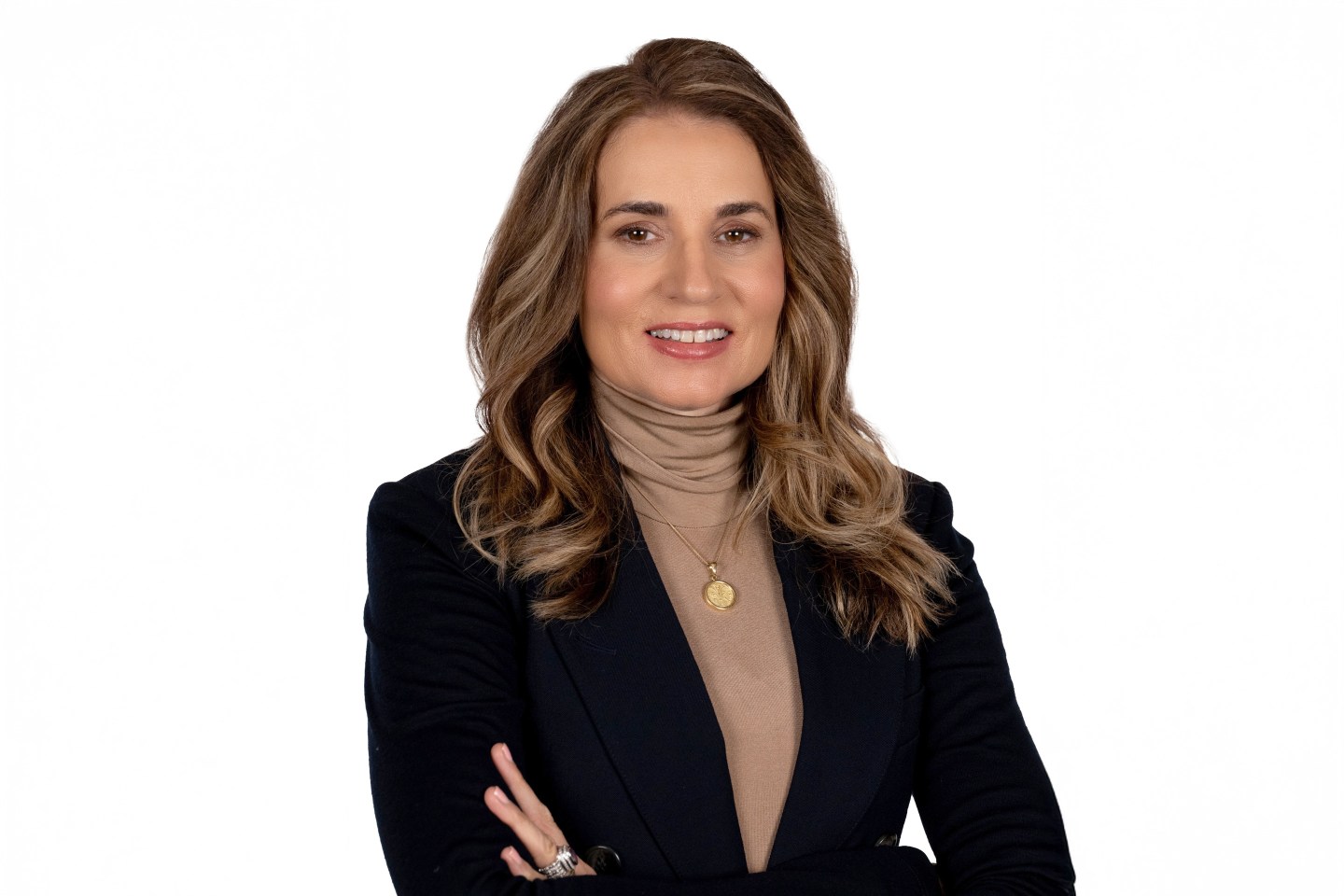
That call was the “heartbeat of the company,” and finance was the “back engine” orchestrating every data point, Marie Myers, EVP and CFO of HPE, told Fortune.
But the effort required to assemble the deck left little room to shift the conversation from what happened to what the company should do next. Solving this is one of the examples of what prompted Myers and her team to embark on a finance transformation in 2025.
Partnering with Deloitte, the team codeveloped CFO Insights, an AI-powered solution built on Deloitte’s Zora AI platform and running on HPE’s Private Cloud AI infrastructure. Inside HPE, the system has a more personal name: “Alfred,” a nod to Batman’s trusted butler. For Myers, Alfred is more than a tool; it’s a platform to rethink how finance operates and how a CFO leads.
CFO Insights has cut HPE’s financial reporting cycle time by about 40% and processing costs by at least 25%, while driving more focused discussions around operational performance. It gives leaders faster access to data, self-service natural-language queries, and the agility to make insight-driven decisions, according to Myers.
Myers said the first move wasn’t to switch on AI, but to redesign the work. Myers and Gustav van der Westhuizen, COO for finance and strategy, began by centralizing preparation for the Monday call within a single FP&A organization. Instead of each business unit scrambling over the weekend to pull reports, a unified team now owns the workflow and data inputs. That centralization created a clean foundation for Alfred—and a group equipped to drive change management.
From there, the team focused on eliminating work, not just automating it.
Van der Westhuizen estimates Alfred has removed about 90% of the manual effort that once went into preparing the weekly review. Rather than hunting for shipment data, reconciling revenue, and formatting slides, finance now relies on agents that pull, reconcile, and analyze data automatically. The output is not a static deck but live insights that direct leaders’ attention to where action is most needed.
Under the hood, Alfred blends generative and agentic AI. Myers describes generative AI as the backbone: a consolidated data fabric combining supply chain, financial, and operational data into a single view of performance. Building that backbone meant wrestling with accuracy, or what she calls “determinism.”
“One of the challenges when you’re building a platform like Alfred, and you’re really focused on finance, is the quality and the accuracy of the data,” Myers said.
Working with partners such as Nvidia, HPE’s finance team tuned the system to deliver consistent numerical outputs—a nonnegotiable requirement when AI becomes a source of truth for financial reporting.
On top of that backbone sit AI agents—“mini personas,” as van der Westhuizen puts it—designed around the roles of human analysts. One agent might mirror a revenue analyst, another a backlog expert, each executing recurring queries and handoffs that people once managed manually. Instead of calculating shipment conversion rates for the Monday call, for instance, the relevant agent now runs those calculations in seconds and presents results in a standard format. The work is familiar, but the speed and scale are entirely different.
As the preparation for the meeting got shorter, the team repurposed the time saved for more forward-looking discussions.
How HPE is reskilling
Yet the most ambitious part of HPE’s experiment may be human, not technical.
“I’d say the bigger lesson that Gustav and I are tackling inside the organization is just the management of change,” Myers said. “Because even though you have all these AI capabilities, you actually have to have a human in the loop.”
Myers and van der Westhuizen have spent more than a year continuing to work on reskilling a finance team of over 3,000 people, teaching them not only how to use AI but how to build their own agents. It hasn’t been easy. “It’s been easier in some parts of the organization than others, but the management of change should not be underestimated,” Myers said.
The goal is to turn skepticism into literacy and agency. When employees can design agents that take over repetitive tasks, they become, in Myers’s phrase, “masters of their own destiny” rather than victims of automation.
To make that shift stick, Myers insists on top-down leadership and clear expectations. “Gustav wrote a white paper outlining specific goals for his leaders,” she said.
Myers has articulated a vision for AI in HPE finance and is holding leaders accountable for defined AI-related metrics and outcomes. Experimentation is encouraged—and gamified. Challenges and rewards programs recognize AI and automation ideas, while Myers sends a Monday blog-style email to the entire finance organization, spotlighting standout projects and people. Public recognition, she notes, helps normalize new behaviors.
The impact is already changing the CFO’s day-to-day job. Myers jokes that she used to call her head of FP&A, Stanley Palmer, constantly. “Now, with Alfred, I don’t need to ask him questions 11 times a day; I don’t bug him as often,” she said. She can query Alfred directly for many of the answers she needs. This frees Palmer up to focus on more strategic work.
Looking ahead to 2026, she sees Alfred not just as a productivity engine but as a path to a broader mandate: positioning the CFO as the steward of AI across the enterprise, using a finance-led transformation to open doors for agentic AI in forecasting, investor relations, and beyond.