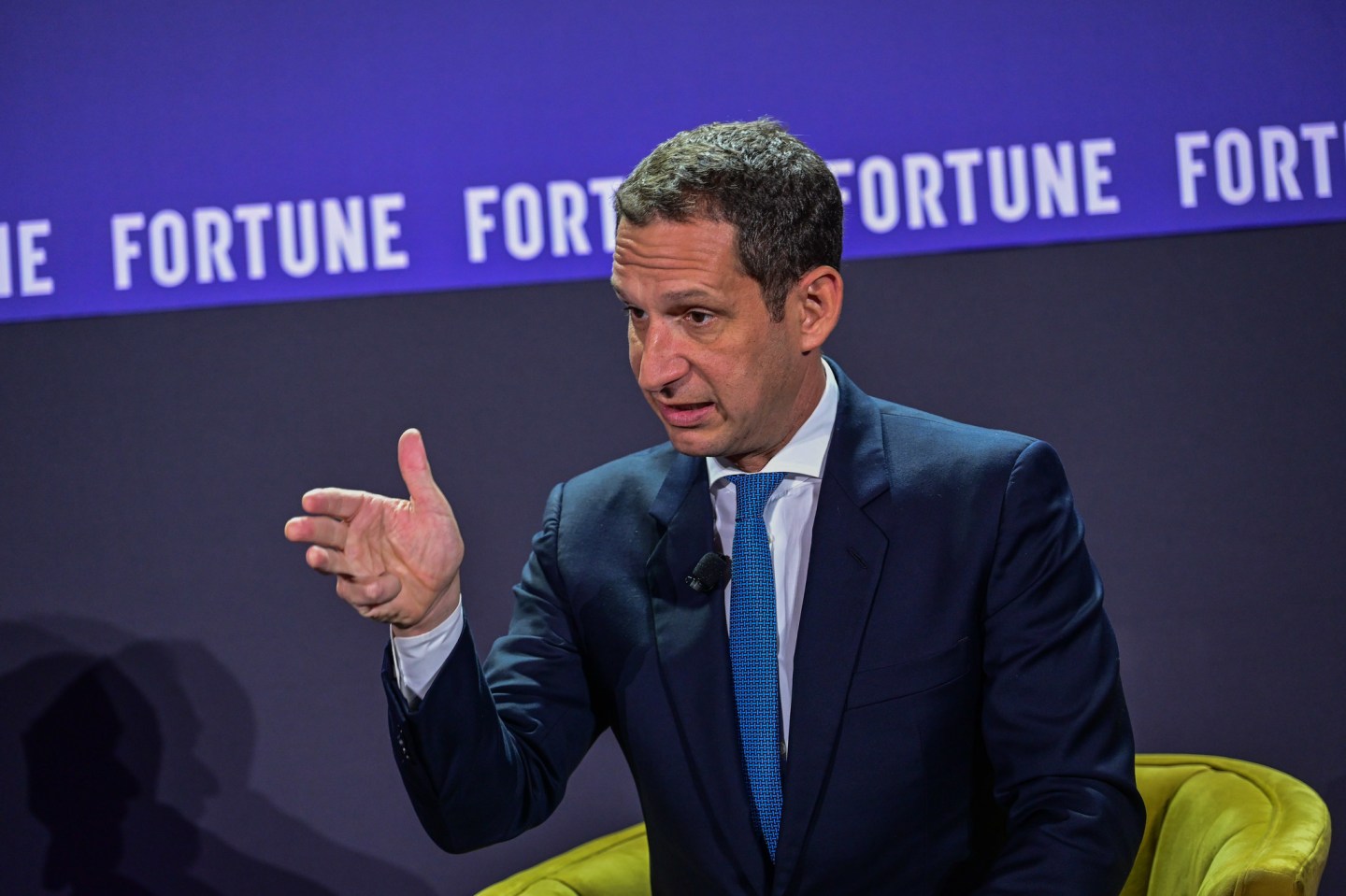
Nearly one year into his tenure, San Francisco Mayor Daniel Lurie is offering a candid diagnosis of the city’s recent struggles: The municipal government became an adversary to the very economic engine it relied upon. Speaking at the Fortune Brainstorm AI conference in early December, Lurie admitted the city’s political class previously operated under the assumption businesses would tolerate endless hurdles.
“We took our business community for granted,” Lurie told Fortune Editorial Director Andrew Nusca. “We said ‘We can just keep punishing you… and you’re going to stay.’ Well that didn’t happen. People fled.” (As of 2024, San Francisco had lost people every year since 2020, with 2025 census data not available yet, but projected to have stabilized in the past year. Total net population loss is between 30,000 to 55,000, against a wider population of around 834,000.)
“The elected class in San Francisco took people for granted,” Lurie said, from its artists to its restaurants to its entrepreneurs. “We’re not going to do that again.”
Lurie, who noted City Hall historically functioned as “kind-of an opponent” to small businesses due to so much bureaucracy and red tape, is now attempting to reverse that dynamic by positioning the government as a partner. However, while the mayor was eager to modernize the city’s archaic infrastructure with Silicon Valley-style innovation, he explicitly rejected the tech industry’s famous mantra of “move fast and break things.”
“I don’t think we should be breaking things … in government,” Lurie cautioned. While acknowledging the city needs to adopt “tools that are well regarded,” he emphasized the implementation must always happen with safety and regulations in mind.
Safety first, innovation second
This cautious but forward-looking approach is most visible in Lurie’s handling of public safety, which he identifies as his absolute priority.
“Nothing else matters if you can’t keep people safe,” he said. To that end, the city has deployed new technologies, including drones as first responders and license plate readers, to track criminal activity without engaging in dangerous high-speed chases.
The strategy appears to be yielding results. Lurie reported crime is down 30% citywide and 40% in the Financial District and Union Square. Furthermore, he noted the city is currently seeing its lowest homicide rate since the 1950s.
“We are an incredibly safe American city,” Lurie said, while noting there are still major issues to tackle, principally a “behavioral health crisis on our streets.”
The battle against ‘red tape’
A significant portion of Lurie’s “partner, not opponent” strategy involves dismantling the city’s notorious bureaucracy. He highlighted the absurdity of San Francisco’s governance structure, pointing out the city maintains 150 commissions—almost triple the number in Los Angeles, despite LA having ten times the population.
To streamline operations, the administration has launched “Permit SF,” a digitization initiative aimed at replacing paper forms with a unified digital system. The goal is for business owners to fill out a single form that is routed to all necessary departments, rather than visiting separate windows for fire, planning, and health approvals.
Return to office: attraction over mandates
Regarding the revitalization of downtown, Lurie said he’s taking a soft-power approach, including with regard to return to office.
“My job as the mayor of San Francisco is not to tell people to be in the office five days a week,” he said. “It’s to create the condition so people want to be in the office.”
He argued that by ensuring clean streets and reliable public transit, the city can naturally attract workers back, citing the seven-day-a-week office culture of major AI firms like Anthropic and OpenAI as evidence of the city’s returning energy, alluding to how “996” culture has spread across Silicon Valley.
Defining the narrative
Ultimately, Lurie said he believes the city’s greatest challenge has been psychological—specifically, the “sentiment” of its own citizens.
“It seems like the biggest nut to crack was San Franciscans’ opinion of themselves … you’ve got to love yourself before anyone else is going to love you,” he said.
He said his overarching goal for his remaining three years in office is to restore San Francisco’s status as a “world-class city that is the envy of the world,” ensuring it is no longer defined by outside critics, but by its own residents.
“This is the greatest city in the world when we’re at our best,” Lurie said. “And I think people are starting to see that again.”