• Home
  • Latest
  • Fortune 500
  • Finance
  • Tech
  • Leadership
  • Lifestyle
  • Rankings
  • Multimedia

Trendingnow

1

Bolt CEO says he let go of his entire HR team for creating problems that didn’t exist: ‘Those problems disappeared when I let them go’ 

2

Despite a $500 million net worth, Shaq just finished his fourth degree. He warns graduates: 'Your character will take you further than your resume'

3

Meet a 21-year-old community college student who's going to China as the first American woman welder in the trades Olympics

1

Bolt CEO says he let go of his entire HR team for creating problems that didn’t exist: ‘Those problems disappeared when I let them go’ 

2

Despite a $500 million net worth, Shaq just finished his fourth degree. He warns graduates: 'Your character will take you further than your resume'

3

Meet a 21-year-old community college student who's going to China as the first American woman welder in the trades Olympics
C-SuiteNvidia

Before running the world’s most valuable company, Jensen Huang was a 9-year-old janitor in Kentucky

By
Eva Roytburg
Eva Roytburg
Fellow, News
Down Arrow Button Icon
By
Eva Roytburg
Eva Roytburg
Fellow, News
Down Arrow Button Icon
December 5, 2025, 4:45 AM ET
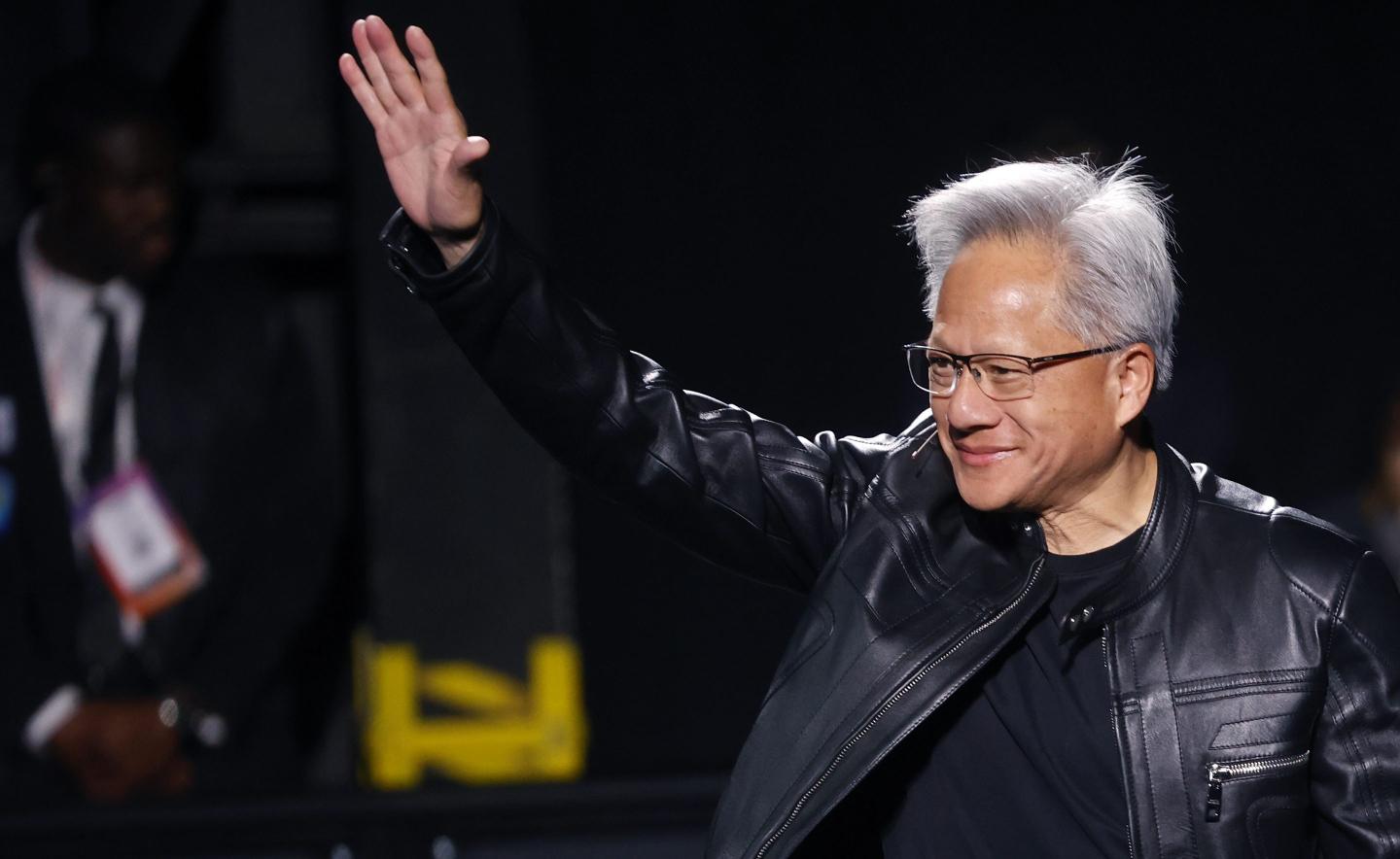
Co-founder and chief executive officer of Nvidia Corp., Jensen Huang attends the 9th edition of the VivaTech trade show at the Parc des Expositions de la Porte de Versailles on June 11, 2025, in Paris.
Cofounder and CEO of Nvidia Jensen Huang attends the VivaTech trade show, June 11, 2025, in Paris. Chesnot/Getty Images

The CEO of the world’s most valuable company didn’t learn about America through elite universities or tech incubators. His education started in a rural Kentucky boarding school where the students smoked, carried knives, and the youngest student on campus, at 9 years old, was assigned to clean the toilets.

Recommended Video

That student was Jensen Huang.

In a recent podcast appearance with Joe Rogan, the Nvidia CEO traced that improbable starting point back to his parents, who had sent him and his brother to the United States in the mid-1970s with almost nothing. The family had been living in Bangkok during one of Thailand’s periodic coups, and his parents decided it was no longer safe to keep the children there. They contacted an uncle they had never visited in Tacoma, Wash., and asked him to find a school in America that would accept two foreign boys with almost no savings.

He found one: Oneida Baptist Institute in Clay County, Ky., one of the poorest counties in the country then and now. The dorms had no closet doors, no locks, and a population of kids who smoked constantly—Huang said he also tried smoking for a week, at age 9—and settled disputes with knives. Huang’s roommate was a 17-year-old wrapped in tape from a recent fight; the “toughest kid in school,” he said. Every student had a job. His brother was sent to the tobacco fields the school ran to fund itself—“kind of like a penitentiary”—while Huang became the janitor, cleaning the bathrooms for a hundred teenage boys (“I just wished they would be a bit more careful” in the bathroom, he joked.)

That indefatigable cheerfulness, even when describing scenes that sound brutal to almost anyone else, ran through the entire interview. 

Huang said most of his memories from that period were good, and remembers the time he told his parents his amazement after eating at a restaurant: “Mom and Dad, we went to the most amazing restaurant today. This whole place is lit up. It’s like the future. And the food comes in a box, and the food is incredible. The hamburger is incredible.”

“It was McDonald’s,” Huang said laughing. 

Indeed, these memories were relayed to his parents later on; the boys were navigating all of this alone. International phone calls were too expensive, so his parents bought them a cheap tape deck. Once a month, they recorded an audio letter describing their lives in coal country and mailed it back to Bangkok. Their parents taped over the same cassette and mailed it back.

Two years later, Huang’s parents finally made it to America, with just suitcases and only a bit of money. His mother worked as a maid. His father, a trained engineer, looked for work by circling openings in the newspaper classifieds and calling whoever picked up. He eventually found a job at a consulting engineering firm designing factories and refineries.

“They left everything behind,” Huang said. “They started over in their late thirties.”

He still carries one memory from those early years that, he said, “breaks my heart.” Not long after his parents arrived in the U.S., the family was living in a rented, furnished apartment when he and his brother accidentally broke a flimsy particleboard coffee table. 

“I just still remember the look on my mom’s face,” he said. “They didn’t have any money, and she didn’t know how she was going to pay it back.”

For Huang, moments like that define the stakes his parents accepted when they came to the U.S. “with almost no money.”

“My parents are incredible,” he said. “It’s hard not to love this country. It’s hard not to be romantic about this country.”

Jensen Huang’s humble beginnings inspired Nvidia principles

That way of seeing America—as a place where people will give you a chance if you’re willing to take one—is how Huang explains Nvidia’s early, unlikely bets. 

Huang came up with the idea for Nvidia while sitting in a booth at a Denny’s, where he had worked first as a dishwasher and then a busboy. He wanted to build a chip that could power 3D graphics on a personal computer, and it was at that Denny’s booth that he met two friends to sketch out what would become the company.

Long before the company became synonymous with the AI boom, Huang kept steering it toward ideas that few people understood and even fewer believed in. CUDA was one of them. When Nvidia introduced it in 2006, the cost of the chip roughly doubled, revenue did not move, and the company’s valuation fell from about $12 billion to between $2 billion and $3 billion.

“When I launched CUDA, the audience was complete silence,” he said. “Nobody wanted it. Nobody asked for it. Nobody understood it.”

CUDA is the software layer that turns the graphics chips into general purpose compute engines, enabling them to power large neural networks. Now, of course, nearly every major AI model today runs on hardware that depends on CUDA. 

The same thing happened when he introduced Nvidia’s first AI supercomputer, the DGX-1. The launch drew “complete silence,” he said, and there were no purchase orders. The only person who reached out was none other than Tesla CEO Elon Musk, who told him he had “a nonprofit AI lab” that needed a system like this.

Huang assumed that meant the deal was impossible.

“All the blood drained out of my face,” he told Rogan. “A nonprofit is not buying a $300,000 computer.”

But Musk, the world’s richest man, insisted. So Huang boxed up one of the first units, loaded it into his car, and drove it to San Francisco himself.

In 2016, he walked into a small upstairs room filled with researchers— Berkeley robotics pioneer Pieter Abbeel, OpenAI cofounder Ilya Sutskever, and others—working in a cramped little office. That room turned out to be OpenAI, long before it became the most discussed AI organization in the world. Huang left the DGX-1 with them and drove home.

Looking back, even as the CEO of a $4.5 trillion company who now draws crowds and autograph-seekers wherever he goes, he doesn’t describe any of this as foresight or heroism. To him, it’s simply a continuation of the risks his parents took when they sent two boys across the world with almost nothing.

“We really believed it, and so if you believe in that future, and you don’t do anything about it, you’re going to regret it for your life,” Huang said.

Subscribe to Fortune Gulf Brief. Every Tuesday, this new newsletter will deliver clear-eyed, authoritative intelligence on the deals, decisions, policies, and power shifts shaping one of the world’s most consequential regions, written for the people who need to act on it. Sign up here.
About the Author
By Eva RoytburgFellow, News
Instagram iconLinkedIn icon

Eva covers macroeconomics, market-moving news, and the forces shaping the global economy.

See full bioRight Arrow Button Icon

Latest in C-Suite

Finance
Lorem ipsum dolor sit amet, consectetur adipiscing elit, sed do eiusmod tempor incididunt ut labore et dolore magna aliqua. Ut enim ad minim veniam
By Fortune Editors
October 20, 2025
Finance
Lorem ipsum dolor sit amet, consectetur adipiscing elit, sed do eiusmod tempor incididunt ut labore et dolore magna aliqua. Ut enim ad minim veniam
By Fortune Editors
October 20, 2025
Finance
Lorem ipsum dolor sit amet, consectetur adipiscing elit, sed do eiusmod tempor incididunt ut labore et dolore magna aliqua. Ut enim ad minim veniam
By Fortune Editors
October 20, 2025
Finance
Lorem ipsum dolor sit amet, consectetur adipiscing elit, sed do eiusmod tempor incididunt ut labore et dolore magna aliqua. Ut enim ad minim veniam
By Fortune Editors
October 20, 2025
Finance
Lorem ipsum dolor sit amet, consectetur adipiscing elit, sed do eiusmod tempor incididunt ut labore et dolore magna aliqua. Ut enim ad minim veniam
By Fortune Editors
October 20, 2025
Finance
Lorem ipsum dolor sit amet, consectetur adipiscing elit, sed do eiusmod tempor incididunt ut labore et dolore magna aliqua. Ut enim ad minim veniam
By Fortune Editors
October 20, 2025

Most Popular

Finance
Lorem ipsum dolor sit amet, consectetur adipiscing elit, sed do eiusmod tempor incididunt ut labore et dolore magna aliqua. Ut enim ad minim veniam
By Fortune Editors
October 20, 2025
Finance
Lorem ipsum dolor sit amet, consectetur adipiscing elit, sed do eiusmod tempor incididunt ut labore et dolore magna aliqua. Ut enim ad minim veniam
By Fortune Editors
October 20, 2025
Finance
Lorem ipsum dolor sit amet, consectetur adipiscing elit, sed do eiusmod tempor incididunt ut labore et dolore magna aliqua. Ut enim ad minim veniam
By Fortune Editors
October 20, 2025
Finance
Lorem ipsum dolor sit amet, consectetur adipiscing elit, sed do eiusmod tempor incididunt ut labore et dolore magna aliqua. Ut enim ad minim veniam
By Fortune Editors
October 20, 2025
Finance
Lorem ipsum dolor sit amet, consectetur adipiscing elit, sed do eiusmod tempor incididunt ut labore et dolore magna aliqua. Ut enim ad minim veniam
By Fortune Editors
October 20, 2025
Finance
Lorem ipsum dolor sit amet, consectetur adipiscing elit, sed do eiusmod tempor incididunt ut labore et dolore magna aliqua. Ut enim ad minim veniam
By Fortune Editors
October 20, 2025
Fortune Secondary Logo
Rankings
  • 100 Best Companies
  • Fortune 500
  • Global 500
  • Fortune 500 Europe
  • Most Powerful Women
  • World's Most Admired Companies
  • See All Rankings
  • Lists Calendar
Sections
  • Finance
  • Fortune Crypto
  • Features
  • Leadership
  • Health
  • Commentary
  • Success
  • Retail
  • Mpw
  • Tech
  • Lifestyle
  • CEO Initiative
  • Asia
  • Politics
  • Conferences
  • Europe
  • Newsletters
  • Personal Finance
  • Environment
  • Magazine
  • Education
Customer Support
  • Frequently Asked Questions
  • Customer Service Portal
  • Privacy Policy
  • Terms Of Use
  • Single Issues For Purchase
  • International Print
Commercial Services
  • Advertising
  • Fortune Brand Studio
  • Fortune Analytics
  • Fortune Conferences
  • Business Development
  • Group Subscriptions
About Us
  • About Us
  • Press Center
  • Work At Fortune
  • Terms And Conditions
  • Site Map
  • About Us
  • Press Center
  • Work At Fortune
  • Terms And Conditions
  • Site Map
  • Facebook icon
  • Twitter icon
  • LinkedIn icon
  • Instagram icon
  • Pinterest icon

Latest in C-Suite

Ex-Facebook exec Sheryl Sandberg tells Gen Z the 10-year career plan is dead thanks to AI:  ‘Don’t script your career when the future is uncertain’
Successcareer
Ex-Facebook exec Sheryl Sandberg tells Gen Z the 10-year career plan is dead thanks to AI:  ‘Don’t script your career when the future is uncertain’
By Orianna Rosa RoyleMay 21, 2026
10 hours ago
Microsoft lost its way in the AI race. Can Copilot get it back on course?
MagazineMicrosoft
Microsoft lost its way in the AI race. Can Copilot get it back on course?
By Jeremy KahnMay 21, 2026
10 hours ago
Arvind Jain, Founder and CEO, Glean
SuccessWorkplace Innovation Summit
While other tech CEOs warn of mass job losses, Glean’s chief says AI will never replace a single worker
By Emma BurleighMay 20, 2026
23 hours ago
How 8,000 robots are changing work inside logistics giant DHL Supply Chain
NewslettersCIO Intelligence
How 8,000 robots are changing work inside logistics giant DHL Supply Chain
By John KellMay 20, 2026
1 day ago
ThredUp’s CEO has a warning for five-day companies: You’re going to lose the talent war
Future of WorkWorkplace Innovation Summit
ThredUp’s CEO has a warning for five-day companies: You’re going to lose the talent war
By Catherina GioinoMay 20, 2026
1 day ago
Bolt CEO Ryan Breslow
Workplace CultureWorkplace Innovation Summit
Bolt CEO says he let go of his entire HR team for creating problems that didn’t exist: ‘Those problems disappeared when I let them go’ 
By Preston ForeMay 19, 2026
2 days ago

Most Popular

Bolt CEO says he let go of his entire HR team for creating problems that didn’t exist: ‘Those problems disappeared when I let them go’ 
Workplace Culture
Bolt CEO says he let go of his entire HR team for creating problems that didn’t exist: ‘Those problems disappeared when I let them go’ 
By Preston ForeMay 19, 2026
2 days ago
Despite a $500 million net worth, Shaq just finished his fourth degree. He warns graduates: 'Your character will take you further than your resume'
Success
Despite a $500 million net worth, Shaq just finished his fourth degree. He warns graduates: 'Your character will take you further than your resume'
By Preston ForeMay 20, 2026
1 day ago
Meet a 21-year-old community college student who's going to China as the first American woman welder in the trades Olympics
Future of Work
Meet a 21-year-old community college student who's going to China as the first American woman welder in the trades Olympics
By Mike Householder and The Associated PressMay 17, 2026
4 days ago
Pay transparency is exposing a bigger problem: Most companies can't explain why they pay what they pay
Workplace Culture
Pay transparency is exposing a bigger problem: Most companies can't explain why they pay what they pay
By Sydney LakeMay 20, 2026
21 hours ago
Dr. Bernice King on why companies that walked back DEI were never truly committed: 'If you retreat that quick…that reveals who you really are'
Workplace Culture
Dr. Bernice King on why companies that walked back DEI were never truly committed: 'If you retreat that quick…that reveals who you really are'
By Preston ForeMay 19, 2026
2 days ago
A 'proudly autistic' workplace expert says putting neurodivergent employees in a typical office is like dropping a polar bear in Austin, Texas
Conferences
A 'proudly autistic' workplace expert says putting neurodivergent employees in a typical office is like dropping a polar bear in Austin, Texas
By Tristan BoveMay 20, 2026
21 hours ago

© 2026 Fortune Media IP Limited. All Rights Reserved. Use of this site constitutes acceptance of our Terms of Use and Privacy Policy | CA Notice at Collection and Privacy Notice | Do Not Sell/Share My Personal Information
FORTUNE is a trademark of Fortune Media IP Limited, registered in the U.S. and other countries. FORTUNE may receive compensation for some links to products and services on this website. Offers may be subject to change without notice.