• Home
  • News
  • Fortune 500
  • Tech
  • Finance
  • Leadership
  • Lifestyle
  • Rankings
  • Multimedia
InnovationBrainstorm Design
Asia

Should form always follow function? Architect Ole Scheeren isn’t sure: ‘We think of buildings as living organisms’

By
Christina Pantin
Christina Pantin
Down Arrow Button Icon
By
Christina Pantin
Christina Pantin
Down Arrow Button Icon
December 4, 2025, 1:31 AM ET
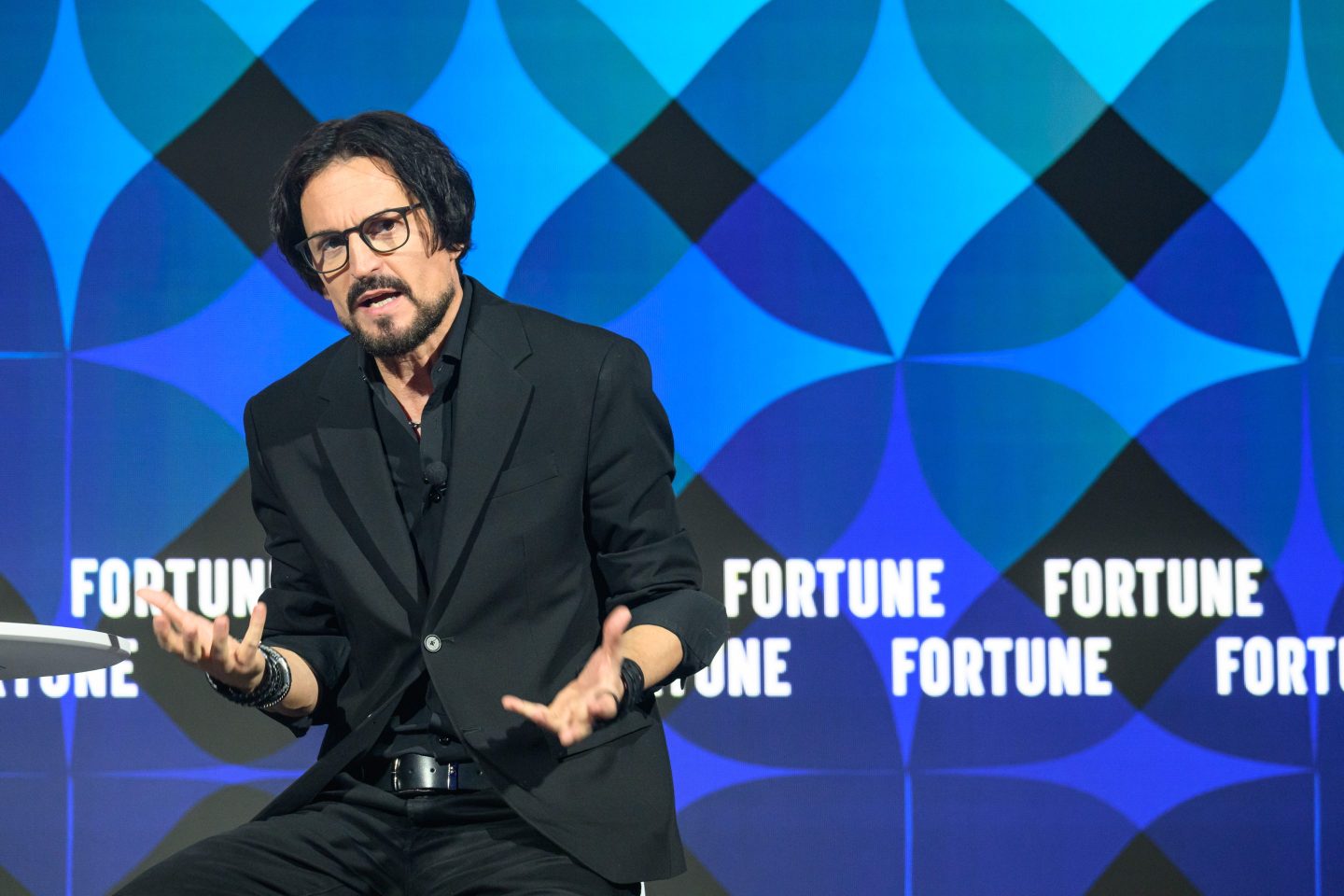
Ole Scheeren, principal of Büro Ole Scheeren, speaking at Fortune Brainstorm Design in Macau on Dec. 2, 2025.
Ole Scheeren, principal of Büro Ole Scheeren, speaking at Fortune Brainstorm Design in Macau on Dec. 2, 2025.Fortune

U.S. architect Louis Sullivan, known as the father of the skyscraper, coined the phrase “form ever follows function” in his 1896 essay, “The Tall Office Building Artistically Considered”. His argument was that a building’s form—how it looks—derives from how people use it.

Recommended Video

Two centuries later, that guiding principle of modern architecture is getting turned on its head–or at least placed on its side.

“When form follows function architecture is limited to utilitarian problem solving. It offers no more than is asked of it,” architect Ole Scheeren said during the Fortune Brainstorm Design conference in Macau on Tuesday.

“Architecture needs to go beyond the plan, program and diagram,” he added. “We think of buildings as living organisms…Narrative stories anticipate the buildings that we design, but the buildings write their own stories when they come to life.”

Scheeren arrived in China more than three decades ago, bunking with construction workers and absorbing all he could about local architecture. Then, in 2008, he completed what became one of his most iconic designs: the angular, looped shape of the Beijing headquarters of CCTV, China’s national broadcaster, dubbed “big pants” by locals.

Now the principal of architecture firm Buro Ole Scheeren, the architect has embarked on a trademark, contrary approach to designing buildings, melding form with fiction, referring to the stories of the people who inhabit and use the facilities, and remaking the maxim which dictates that building’s exterior should match what’s done in the building’s interior.

In Bangkok, Scheeren sought to connect the 300 meter-high Mahanakhon tower with bustling city life. Opened in 2016, the pixelated façade was carved into terraces, culminating in a rooftop with a 360 degree open space and where visitors can stand on a single sheet of glass to take in the panoramic view.

Chinese Big Tech startups have also embraced Scheeren’s groundbreaking designs. The architect built Tencent’s Shenzhen headquarters in the form of a vortex, a swirling four-tower complex intended to symbolize the company’s growth.

For telecommunications company ZTE, the architect focused on the premise of “work is no longer just work”, integrating nature into the building.

A fan of movies, Scheeren sees similarities with the experience of film watching and his approach to buildings. “A film takes you on a journey…architecture has the potential to do the same,” he told the Fortune conference.

Artificial intelligence

Architecture and design firms are starting to explore the use of generative AI, using it to quickly generate ideas or refine concepts based on feedback. On Tuesday, Scheeren said that he’s already using AI in his work. Yet he warned of some of the dangers that come from relying too much on the technology.

“When form follows artificial intelligence, we are overwhelmed by the endless possibilities that apparently we never even thought of, and by all the things that AI can do for us,” he said, wondering “at which point do we start to surrender judgment and decision-making.”

Later, he noted that some tasks needed to remain manual and analog, even in a more digitized world. By virtue of the fact that buildings exist in the real world, tasks can’t be fully offloaded to AI.

“I do believe…the judgment of what is really meaningful in a particular situation is something that will not be easily delivered by machines,” he said.

About the Author
By Christina Pantin
See full bioRight Arrow Button Icon

Latest in Innovation

satellite
AIData centers
Google’s plan to put data centers in the sky faces thousands of (little) problems: space junk
By Mojtaba Akhavan-TaftiDecember 3, 2025
10 hours ago
Isaacman
PoliticsNASA
Billionaire spacewalker pleads his case to lead NASA, again, in Senate hearing
By Marcia Dunn and The Associated PressDecember 3, 2025
11 hours ago
Workplace CultureBrainstorm Design
Designer Kevin Bethune: Bringing ‘disparate disciplines around the table’ is how leaders can ‘problem solve the future’
By Fortune EditorsDecember 3, 2025
13 hours ago
InnovationBrainstorm Design
Video games can teach designers deeper lessons than ‘high score streaks’ and gamification
By Angelica AngDecember 3, 2025
24 hours ago
Amar Subramanya
AIApple
Meet Amar Subramanya, the 46-year-old Google and Microsoft veteran who will now steer Apple’s supremely important AI strategy
By Dave SmithDecember 2, 2025
2 days ago
Elizabeth Kelly
CommentaryNon-Profit
At Anthropic, we believe that AI can increase nonprofit capacity. And we’ve worked with over 100 organizations so far on getting it right
By Elizabeth KellyDecember 2, 2025
2 days ago

Most Popular

placeholder alt text
North America
Jeff Bezos and Lauren Sánchez Bezos commit $102.5 million to organizations combating homelessness across the U.S.: ‘This is just the beginning’
By Sydney LakeDecember 2, 2025
2 days ago
placeholder alt text
Economy
Ford workers told their CEO 'none of the young people want to work here.' So Jim Farley took a page out of the founder's playbook
By Sasha RogelbergNovember 28, 2025
5 days ago
placeholder alt text
North America
Anonymous $50 million donation helps cover the next 50 years of tuition for medical lab science students at University of Washington
By The Associated PressDecember 2, 2025
2 days ago
placeholder alt text
C-Suite
MacKenzie Scott's $19 billion donations have turned philanthropy on its head—why her style of giving actually works
By Sydney LakeDecember 2, 2025
2 days ago
placeholder alt text
Innovation
Google CEO Sundar Pichai says we’re just a decade away from a new normal of extraterrestrial data centers
By Sasha RogelbergDecember 1, 2025
3 days ago
placeholder alt text
Economy
Scott Bessent calls the Giving Pledge well-intentioned but ‘very amorphous,’ growing from ‘a panic among the billionaire class’
By Nick LichtenbergDecember 3, 2025
12 hours ago
Rankings
  • 100 Best Companies
  • Fortune 500
  • Global 500
  • Fortune 500 Europe
  • Most Powerful Women
  • Future 50
  • World’s Most Admired Companies
  • See All Rankings
Sections
  • Finance
  • Leadership
  • Success
  • Tech
  • Asia
  • Europe
  • Environment
  • Fortune Crypto
  • Health
  • Retail
  • Lifestyle
  • Politics
  • Newsletters
  • Magazine
  • Features
  • Commentary
  • Mpw
  • CEO Initiative
  • Conferences
  • Personal Finance
  • Education
Customer Support
  • Frequently Asked Questions
  • Customer Service Portal
  • Privacy Policy
  • Terms Of Use
  • Single Issues For Purchase
  • International Print
Commercial Services
  • Advertising
  • Fortune Brand Studio
  • Fortune Analytics
  • Fortune Conferences
  • Business Development
About Us
  • About Us
  • Editorial Calendar
  • Press Center
  • Work At Fortune
  • Diversity And Inclusion
  • Terms And Conditions
  • Site Map

© 2025 Fortune Media IP Limited. All Rights Reserved. Use of this site constitutes acceptance of our Terms of Use and Privacy Policy | CA Notice at Collection and Privacy Notice | Do Not Sell/Share My Personal Information
FORTUNE is a trademark of Fortune Media IP Limited, registered in the U.S. and other countries. FORTUNE may receive compensation for some links to products and services on this website. Offers may be subject to change without notice.