• Home
  • Latest
  • Fortune 500
  • Finance
  • Tech
  • Leadership
  • Lifestyle
  • Rankings
  • Multimedia

Trendingnow

1

Mark Cuban says he has the solution to growing income inequality, and it's to reward every employee—from CEO to janitor—with company stock

2

‘I want to die broke’: Billionaire philanthropist Denny Sanford dies after giving away $4 billion

3

'Dr. Doom' Nouriel Roubini says we're headed for universal basic income or 'some form of socialism' as AI revolutionizes work—He calls that optimistic

1

Mark Cuban says he has the solution to growing income inequality, and it's to reward every employee—from CEO to janitor—with company stock

2

‘I want to die broke’: Billionaire philanthropist Denny Sanford dies after giving away $4 billion

3

'Dr. Doom' Nouriel Roubini says we're headed for universal basic income or 'some form of socialism' as AI revolutionizes work—He calls that optimistic
SuccessMusic

The Deadhead who became a $38 billion CEO: What HubSpot cofounder Brian Halligan learned from Jerry Garcia and passed on to his MIT students

By
Eva Roytburg
Eva Roytburg
Fellow, News
Down Arrow Button Icon
By
Eva Roytburg
Eva Roytburg
Fellow, News
Down Arrow Button Icon
November 25, 2025, 8:02 AM ET
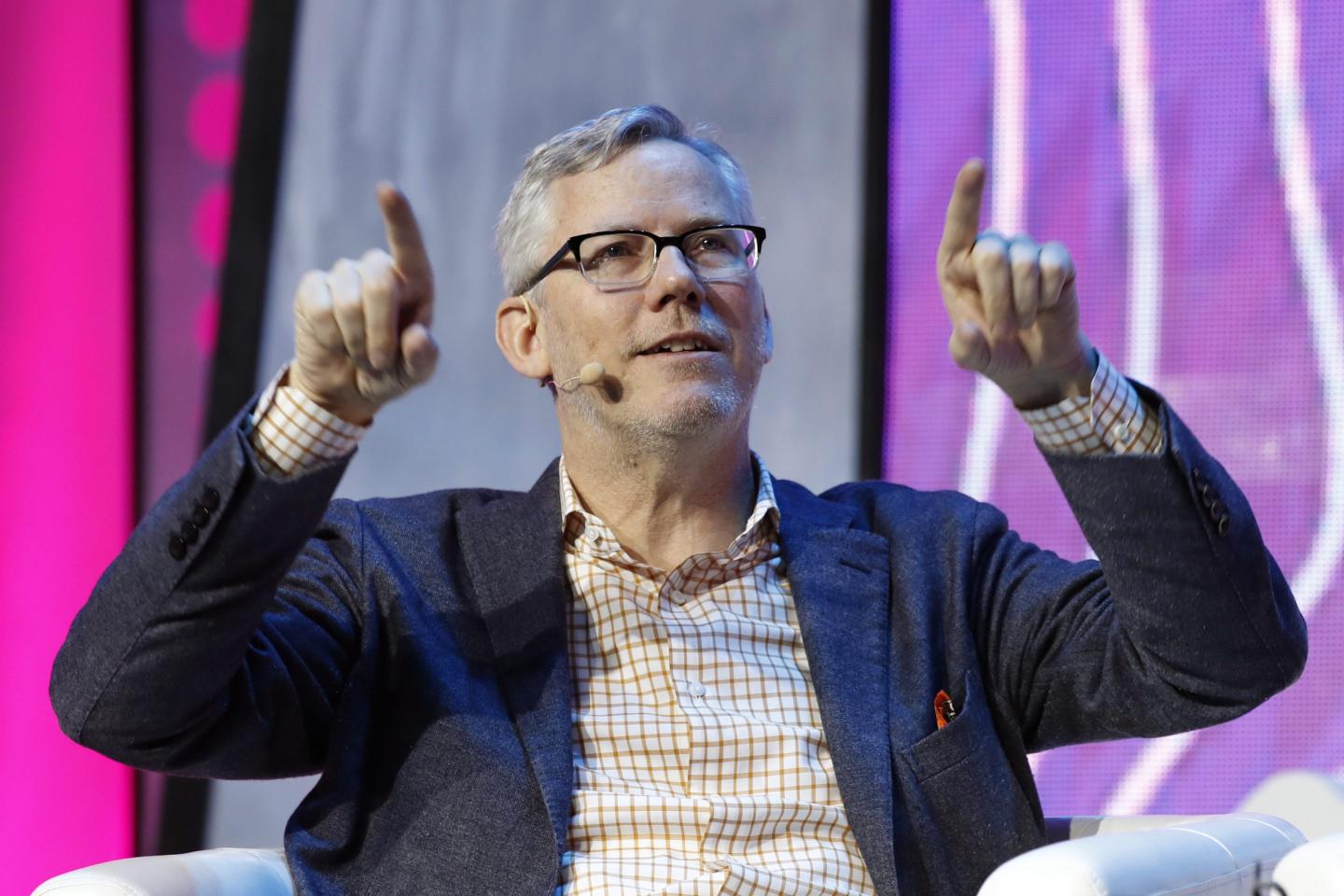
Brian Halligan, chief executive officer and co-founder of Hubspot Inc., speaks during the Silicon Slopes Tech Summit in Salt Lake City, Utah, U.S., on Friday, Jan. 31, 2020.
Former Hubspot CEO Brian Halligan.
Add Fortune on Google for similar content.

On one hot June day in 1985, a 17-year-old Brian Halligan walked out to a Cape Cod road, scrawled “Saratoga Springs” on a piece of wood, and stuck out his thumb. 

Recommended Video

He and Eric Olson, a fellow high-school student and his partner in a painting company, had decided to follow a certain band on tour. Their car, a battered Subaru Brat with a broken starter, wasn’t exactly road-trip-proof. So they thumbed rides from the eastern tip of Massachusetts to the Adirondack foothills, camped for a couple of nights near the venue, took in the tunes, and then hitchhiked home.

Halligan didn’t know it yet, but that first show would turn him from a curious listener into a full-blown superfan of the Grateful Dead. And throughout his professional life—he became a cofounder and CEO of HubSpot, which at its peak valuation in late 2024 had a market capitalization of about $38 billion; a partner at Sequoia Capital working with hot AI startups; and a senior lecturer at MIT—he has carried the Dead’s ethos with him. 

On Tuesday, he’s releasing a new edition of his book, Marketing Lessons From the Grateful Dead. The book folds together his dual life, Deadhead kid hitchhiking to a concert and the scale-up CEO advising founders burning through growth curves never before seen in tech. 

At first glance, it might seem like a bizarre pairing. But Halligan believes the Dead behaved like great founders long before Silicon Valley formalized the playbook. Traditional business school frameworks? “A lot of this is bullsh–t,” Halligan said. 

He should know. In three years, Halligan and his cofounder, Dharmesh Shah, scaled HubSpot, a software platform for marketing, from revenues of $250,000 to $15 million—during the 2008 financial crisis. And he said he was inspired by the Dead’s experimentation, user feedback, and unconventional strategies while building. 

Take, for example, the band’s taping culture. Rather than crack down on fans recording shows, as other artists at the time did, the Dead created designated “taper sections,” allowing people to tape multiple nights, pick the best performance, and trade copies on campuses. 

“That’s how they spread the music,” Halligan said. “Not radio. Not PR. It was the customers doing the work.” 

He calls it an early version of “freemium” business models, which is what helped propel HubSpot to success early on as they promoted their free SEO and Twitter tracker for companies.

Or take the Dead’s mail-order ticketing system—“disintermediation before Amazon,” as he puts it. To get the best seats, fans mailed in handwritten index cards and postal money orders, in envelopes elaborately decorated with flowers, buses, and mushrooms. Scalpers were cut out entirely.

Fans with the most creativity—not the most money—ended up closest to the stage, Halligan recalled.

Dead concerts were also broadly built around participation: Fans showed up in homemade tie-dyes, face paint, wings, capes, mushroom hats, anything that signaled they were part of the scene rather than just spectators. Parking lots functioned as marketplaces, jam sessions, costume parades, and social networks all at once. 

“Everyone was part of the show,” Halligan said, noting that this ethos came from the band’s early days at Ken Kesey’s Acid Tests, where the expectation was that every attendee contributed to the experience.

Halligan sees a direct parallel to founders, like former Amazon CEO and founder Jeff Bezos, who are “obsessed with their customers” today. Rather than being focused on going to market, and thus choosing slick, revenue-maximizing shortcuts, founders who are deeply interested in their consumers will choose the long, difficult, user-first path. 

That sort of humility should also come through your hiring, Halligan advised; your team should be full of people who challenge and frustrate you with their differences, rather than carbon copies of yourself. The Dead’s makeup—players of bluegrass, blues, avant-garde jazz, and country—was what Halligan calls “spiky,” not smooth. It’s the same advice he gives founders today: Build teams around people who don’t resemble one another.

“The most tempting thing is to hire people just like you,” he said. “But innovation comes from spiky teams, not uniform ones.”

Jerry Garcia as the ultimate CEO

Halligan is not your average music fan. He started out that way: “I kind of liked this stuff,” the CEO remembered of Olson, his friend, blasting tapes from a boombox on job sites.

But by the time Halligan went off to college at the University of Vermont, he was fully immersed. This was Dead country, with cover bands constantly playing and Phish, founded by another UVM Deadhead out of the college town of Burlington, coming up through the local scene.

Halligan estimates he saw the Grateful Dead around 40 times while lead Jerry Garcia was alive, and hundreds more shows from various post-Garcia lineups after that. 

“I don’t know the number … a lot,” he said.

That teenage obsession never quite went away. Today, Halligan owns Wolf, Jerry Garcia’s famous custom guitar, despite not really knowing how to play the instrument. He bought it at an auction in 2018 and is very clear about how he sees his role: “I’m not really the owner, I’m the steward,” he said. 

He lets serious players use it; John Mayer has played it onstage with Dead & Co.

“I don’t think [Garcia] would have wanted it sitting in my apartment or in a museum,” he noted.

Halligan thinks a lot about Garcia; he’s “ran into” his family several times at different events, he said. He sees Garcia, in particular, as having the personality of the perfect “founder.” 

Halligan thinks CEOs too often model themselves on the loudest personalities in tech. Garcia, he argues, was the opposite of a front-man CEO: quiet, craft-driven, allergic to theatrics.

“He wore the same black T-shirt. He didn’t care about being a rock star,” Halligan said. “He cared about the music.”

Those traits form the backbone of the framework Halligan now uses to evaluate young, eager founders, which he calls FLOCK: first-principles, lovable, obsessed, courageous, knowledgeable. By his own measure, Garcia scores “a 10 on all of those.”

Garcia ignored industry convention and built his own systems (first-principles), attracted fiercely loyal followers (lovable), practiced obsessively (“he’d take his guitar into the bathroom”), took huge creative risks like the multimillion-dollar Wall of Sound (courageous), and surrounded himself with wildly different, deeply talented musicians (knowledgeable).

And the cherry on top, for Halligan: The Dead started in Palo Alto, playing pizza joints a few blocks from Stanford.

“They grew out of this beat generation—the psychedelic generation—and they were the original San Francisco, Silicon Valley startup that went through generations and exists today,” Halligan said.

The Fortune 500 Innovation Forum will convene Fortune 500 executives, U.S. policy officials, top founders, and thought leaders to help define what’s next for the American economy, Nov. 16-17 in Detroit. Apply here.
About the Author
By Eva RoytburgFellow, News
Instagram iconLinkedIn icon

Eva covers macroeconomics, market-moving news, and the forces shaping the global economy.

See full bioRight Arrow Button Icon
Add Fortune on Google for similar content.

Latest in Success

Finance
Lorem ipsum dolor sit amet, consectetur adipiscing elit, sed do eiusmod tempor incididunt ut labore et dolore magna aliqua. Ut enim ad minim veniam
By Fortune Editors
October 20, 2025
Finance
Lorem ipsum dolor sit amet, consectetur adipiscing elit, sed do eiusmod tempor incididunt ut labore et dolore magna aliqua. Ut enim ad minim veniam
By Fortune Editors
October 20, 2025
Finance
Lorem ipsum dolor sit amet, consectetur adipiscing elit, sed do eiusmod tempor incididunt ut labore et dolore magna aliqua. Ut enim ad minim veniam
By Fortune Editors
October 20, 2025
Finance
Lorem ipsum dolor sit amet, consectetur adipiscing elit, sed do eiusmod tempor incididunt ut labore et dolore magna aliqua. Ut enim ad minim veniam
By Fortune Editors
October 20, 2025
Finance
Lorem ipsum dolor sit amet, consectetur adipiscing elit, sed do eiusmod tempor incididunt ut labore et dolore magna aliqua. Ut enim ad minim veniam
By Fortune Editors
October 20, 2025
Finance
Lorem ipsum dolor sit amet, consectetur adipiscing elit, sed do eiusmod tempor incididunt ut labore et dolore magna aliqua. Ut enim ad minim veniam
By Fortune Editors
October 20, 2025

Most Popular

Finance
Lorem ipsum dolor sit amet, consectetur adipiscing elit, sed do eiusmod tempor incididunt ut labore et dolore magna aliqua. Ut enim ad minim veniam
By Fortune Editors
October 20, 2025
Finance
Lorem ipsum dolor sit amet, consectetur adipiscing elit, sed do eiusmod tempor incididunt ut labore et dolore magna aliqua. Ut enim ad minim veniam
By Fortune Editors
October 20, 2025
Finance
Lorem ipsum dolor sit amet, consectetur adipiscing elit, sed do eiusmod tempor incididunt ut labore et dolore magna aliqua. Ut enim ad minim veniam
By Fortune Editors
October 20, 2025
Finance
Lorem ipsum dolor sit amet, consectetur adipiscing elit, sed do eiusmod tempor incididunt ut labore et dolore magna aliqua. Ut enim ad minim veniam
By Fortune Editors
October 20, 2025
Finance
Lorem ipsum dolor sit amet, consectetur adipiscing elit, sed do eiusmod tempor incididunt ut labore et dolore magna aliqua. Ut enim ad minim veniam
By Fortune Editors
October 20, 2025
Finance
Lorem ipsum dolor sit amet, consectetur adipiscing elit, sed do eiusmod tempor incididunt ut labore et dolore magna aliqua. Ut enim ad minim veniam
By Fortune Editors
October 20, 2025
Fortune Secondary Logo
Rankings
  • 100 Best Companies
  • Fortune 500
  • Global 500
  • Fortune 500 Europe
  • Most Powerful Women
  • World's Most Admired Companies
  • See All Rankings
  • Lists Calendar
Sections
  • Finance
  • Fortune Crypto
  • Features
  • Leadership
  • Health
  • Commentary
  • Success
  • Retail
  • Mpw
  • Tech
  • Lifestyle
  • CEO Initiative
  • Asia
  • Politics
  • Conferences
  • Europe
  • Newsletters
  • Personal Finance
  • Environment
  • Magazine
  • Education
Customer Support
  • Frequently Asked Questions
  • Customer Service Portal
  • Privacy Policy
  • Terms Of Use
  • Single Issues For Purchase
  • International Print
Commercial Services
  • Advertising
  • Fortune Brand Studio
  • Fortune Analytics
  • Fortune Conferences
  • Business Development
  • Group Subscriptions
About Us
  • About Us
  • Press Center
  • Work At Fortune
  • Terms And Conditions
  • Site Map
  • About Us
  • Press Center
  • Work At Fortune
  • Terms And Conditions
  • Site Map
  • Facebook icon
  • Twitter icon
  • LinkedIn icon
  • Instagram icon
  • TikTok icon
  • YouTube icon

Latest in Success

cpk
SuccessBook Excerpt
The California Pizza Kitchen story: how two lawyers quit the courtroom to reinvent restaurants
By Rick RosenfieldJuly 21, 2026
2 hours ago
ford
Commentary250 Years of Innovation
Alliance for America’s Skilled Trades: Skilled trades shaped America’s past. Here’s how they can build America’s future
By Jim Farley, Linda Hubbard, Bayo Ogunlesi and Ruth PoratJuly 21, 2026
4 hours ago
$5 billion tech CEO says unemployed Gen Z should be out 3 days a week building their network: ‘Sometimes those jobs you want, they’re never published’
SuccessCareers
$5 billion tech CEO says unemployed Gen Z should be out 3 days a week building their network: ‘Sometimes those jobs you want, they’re never published’
By Orianna Rosa RoyleJuly 21, 2026
7 hours ago
Three women chop their way into the record books at Lumberjack World Championships
North AmericaWisconsin
Three women chop their way into the record books at Lumberjack World Championships
By The Associated Press and Ellen SchmidtJuly 20, 2026
16 hours ago
LaLiga president says tech is already making the fan experience better, and it could solve football’s money problem too
AISports
LaLiga president says tech is already making the fan experience better, and it could solve football’s money problem too
By Catherina GioinoJuly 20, 2026
17 hours ago
Mark Cuban, in front of a purple background, has his mouth open and is looking to his left.
Successcompensation
Mark Cuban says he has the solution to growing income inequality, and it’s to reward every employee—from CEO to janitor—with company stock
By Sasha RogelbergJuly 20, 2026
20 hours ago

Most Popular

Mark Cuban says he has the solution to growing income inequality, and it's to reward every employee—from CEO to janitor—with company stock
Success
Mark Cuban says he has the solution to growing income inequality, and it's to reward every employee—from CEO to janitor—with company stock
By Sasha RogelbergJuly 20, 2026
20 hours ago
‘I want to die broke’: Billionaire philanthropist Denny Sanford dies after giving away $4 billion
Success
‘I want to die broke’: Billionaire philanthropist Denny Sanford dies after giving away $4 billion
By Sydney LakeJuly 20, 2026
1 day ago
'Dr. Doom' Nouriel Roubini says we're headed for universal basic income or 'some form of socialism' as AI revolutionizes work—He calls that optimistic
AI
'Dr. Doom' Nouriel Roubini says we're headed for universal basic income or 'some form of socialism' as AI revolutionizes work—He calls that optimistic
By Jason MaJuly 18, 2026
3 days ago
Current price of silver as of Monday, July 20, 2026
Personal Finance
Current price of silver as of Monday, July 20, 2026
By Joseph HostetlerJuly 20, 2026
1 day ago
It’s not just Taco Bell lettuce and possible glass in Pillsbury rolls: Food and drink recall events reached a 6-year year-over-year high
Retail
It’s not just Taco Bell lettuce and possible glass in Pillsbury rolls: Food and drink recall events reached a 6-year year-over-year high
By Sasha RogelbergJuly 20, 2026
1 day ago
Current price of oil as of July 20, 2026
Personal Finance
Current price of oil as of July 20, 2026
By Joseph HostetlerJuly 20, 2026
1 day ago

© 2026 Fortune Media IP Limited. All Rights Reserved. Use of this site constitutes acceptance of our Terms of Use and Privacy Policy | CA Notice at Collection and Privacy Notice | Do Not Sell/Share My Personal Information
FORTUNE is a trademark of Fortune Media IP Limited, registered in the U.S. and other countries. FORTUNE may receive compensation for some links to products and services on this website. Offers may be subject to change without notice.