• Home
  • Latest
  • Fortune 500
  • Finance
  • Tech
  • Leadership
  • Lifestyle
  • Rankings
  • Multimedia
Future of WorkSocial Media

I helped build the architecture of addiction for social media and I see warning labels coming. That’s just a start

By
Kenneth Schlenker
Kenneth Schlenker
Down Arrow Button Icon
By
Kenneth Schlenker
Kenneth Schlenker
Down Arrow Button Icon
November 19, 2025, 9:10 AM ET
Kenneth Schlenker is the founder and CEO of Opal
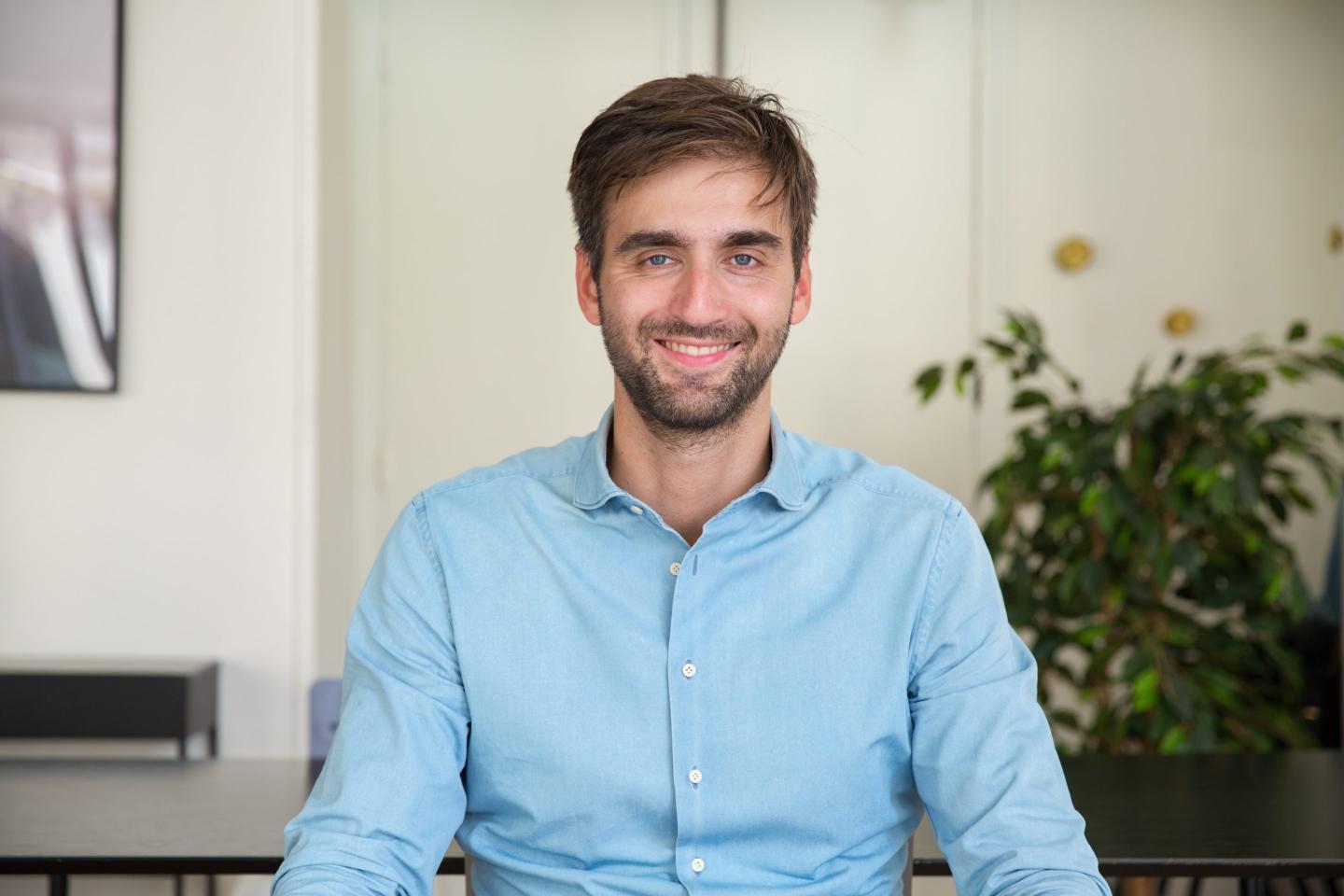
Kenneth Schlenker, the founder and CEO of Opal.courtesy of Opal

We don’t need to fear AI taking our jobs. We need to fear it taking our attention. Social media hooked us. AI is perfecting the addiction. But a movement to reclaim our focus is gaining ground.

Recommended Video

I spent my early 20s at Google learning how to hack human attention. I analyzed data to understand exactly how to get people to click, scroll, and stay hooked to YouTube or Google Search. I was good at it. The work was fascinating, using behavioral science and machine learning to predict and influence what billions of people would do next.

What I didn’t realize then was that I was helping build the architecture of addiction that now defines modern life.

Last month, a billboard went up on Canal Street in NYC: “Scrolling Kills.” It kills our attention. Our time. The moments with our children, our ideas, our lives.

Within hours, it was everywhere, not because of clever marketing, but because it named what millions feel every day. Over one hundred million people have downloaded focus apps in the past year alone because they recognize this reality: hours vanishing into algorithmic black holes, every notification pulling them further from what actually matters.

Here’s what Washington is missing: parents are now putting screen time limits on their own phones, not their teenagers’. Adults can’t model behavior they can’t control themselves. Productivity has flatlined despite unprecedented technology because we spend half our workday fighting for focus. Willpower doesn’t work against systems that were engineered, tested, and perfected to be irresistible.

This is the context missing from every congressional hearing on social media. The problem isn’t misinformation or mental health in isolation. It’s that we’ve allowed private companies to exploit behavioral psychology against the public. Silicon Valley spent the last decade optimizing for engagement. The rest of us lost something we can’t get back.

Warning labels are a start. But they’re an admission that what’s happening to us is dangerous enough to require one.

The Real Cost of Doomscrolling

In June 2024, U.S. Surgeon General Dr. Vivek Murthy called for warning labels on social media, backed by 42 state attorneys general. Around the same time, Jonathan Haidt’s “The Anxious Generation” was climbing bestseller lists with the same message: the mental health crisis among young people rose in lockstep with smartphones. Dr. Murthy was direct: we have the evidence. Now we need action.

But Gen Z isn’t the only generation affected. Adults are losing just as much time, and the productivity cost is staggering. Research shows the average worker burns two hours daily on non-work screen time during work hours. Add context switching, where every interruption takes 15 minutes to recover from, and The Economist estimates the annual U.S. productivity loss exceeds $1 trillion. France calculates it at 2.9% of their entire GDP.

We fantasize about four-day work weeks. We can’t even protect five-day ones.

The mechanics are familiar: every scroll triggers dopamine, every notification promises validation. Stanford’s Dr. Anna Lembke writes in Dopamine Nation that we’re trapped in engineered pleasure loops designed to leave us perpetually unsatisfied, always reaching for the next hit. The platforms built this deliberately.

Then AI arrived, and the system became unbeatable. We’re scrolling through an internet where AI now generates more content than humans do. Our brains weren’t built to filter this. Harvard Medical School researchers have documented how this rewires our neural pathways, increasing anxiety, shrinking attention spans, and destroying our capacity for deep work.

The average American now spends 5 hours and 30 minutes per day on their phone, nearly a third of waking hours. Most get their first smartphone at age 12. By 40, you’ve spent seven full years staring at a screen. And usage is still increasing.

Why Warning Labels Matter

On October 13, 2025, California became the second state to require mental health warning labels on social media platforms. Starting January 1, 2027, platforms must display warnings that social media “can have a profound risk of harm to the mental health and well-being of children and adolescents.”

This matters because California is Silicon Valley’s home. When Big Tech’s backyard demands accountability, the tide has turned. It also validates Dr. Murthy’s call for tobacco-style warnings backed by 42 state attorneys general. Warning labels work, they worked for tobacco and alcohol by shifting cultural norms and creating legal liability that forces real change.

But warning labels are necessary, not sufficient.

What We Need Now

For lawmakers: Don’t stop at warning labels. Roll out California’s model nationwide. Require transparency about algorithmic manipulation. Fund independent research. Hold platforms liable for design patterns that systematically undermine users’ ability to control their own time and attention.

For platforms: The next generation of users is opting out. Data from focus apps like Opal shows seventy percent of users are students who’ve done the math on what infinite scroll costs them. They’re not waiting for regulation. The window to redesign these systems voluntarily is closing. Change the product, not just the PR.

For parents, educators, and employers: Stop waiting for policy. Tools exist now. Screen time awareness is becoming as fundamental as nutrition. Create environments that protect attention and reward focus.

For individuals: Your attention is your most valuable asset. Protect it like you’d protect your health.

The Movement Is Already Here

In 2008, working at Google, I wrote the first business plan for a focus app to counter this problem. I knew even then that what we were building wasn’t designed for human wellbeing. It took 11 years to build it, years of watching the greatest technological minds spend their days figuring out how to make you click one more ad.

Social media platforms profit from addiction. Their business model depends on it. That’s why individual willpower fails and why we need systemic change. We need to realign technology with human well-being, not quarterly earnings.

The distraction economy is stealing our mental health, our productivity, and our ability to be present for what matters. Warning labels are just the beginning. We’ll look back at this moment the same way we look back at tobacco ads proclaiming “More Doctors Smoke Camels.”

Your attention is yours. Take it back.

The opinions expressed in Fortune.com commentary pieces are solely the views of their authors and do not necessarily reflect the opinions and beliefs of Fortune.

At the Fortune Workplace Innovation Summit, Fortune 500 leaders will convene to explore the defining questions shaping the workforce of the future—delivering bold ideas, powerful connections, and actionable insights for building resilient organizations for the decade ahead. Join Fortune May 19–20 in Atlanta. Register now.
About the Author
By Kenneth Schlenker
See full bioRight Arrow Button Icon

Latest in Future of Work

Finance
Lorem ipsum dolor sit amet, consectetur adipiscing elit, sed do eiusmod tempor incididunt ut labore et dolore magna aliqua. Ut enim ad minim veniam
By Fortune Editors
October 20, 2025
Finance
Lorem ipsum dolor sit amet, consectetur adipiscing elit, sed do eiusmod tempor incididunt ut labore et dolore magna aliqua. Ut enim ad minim veniam
By Fortune Editors
October 20, 2025
Finance
Lorem ipsum dolor sit amet, consectetur adipiscing elit, sed do eiusmod tempor incididunt ut labore et dolore magna aliqua. Ut enim ad minim veniam
By Fortune Editors
October 20, 2025
Finance
Lorem ipsum dolor sit amet, consectetur adipiscing elit, sed do eiusmod tempor incididunt ut labore et dolore magna aliqua. Ut enim ad minim veniam
By Fortune Editors
October 20, 2025
Finance
Lorem ipsum dolor sit amet, consectetur adipiscing elit, sed do eiusmod tempor incididunt ut labore et dolore magna aliqua. Ut enim ad minim veniam
By Fortune Editors
October 20, 2025
Finance
Lorem ipsum dolor sit amet, consectetur adipiscing elit, sed do eiusmod tempor incididunt ut labore et dolore magna aliqua. Ut enim ad minim veniam
By Fortune Editors
October 20, 2025

Most Popular

Finance
Lorem ipsum dolor sit amet, consectetur adipiscing elit, sed do eiusmod tempor incididunt ut labore et dolore magna aliqua. Ut enim ad minim veniam
By Fortune Editors
October 20, 2025
Finance
Lorem ipsum dolor sit amet, consectetur adipiscing elit, sed do eiusmod tempor incididunt ut labore et dolore magna aliqua. Ut enim ad minim veniam
By Fortune Editors
October 20, 2025
Finance
Lorem ipsum dolor sit amet, consectetur adipiscing elit, sed do eiusmod tempor incididunt ut labore et dolore magna aliqua. Ut enim ad minim veniam
By Fortune Editors
October 20, 2025
Finance
Lorem ipsum dolor sit amet, consectetur adipiscing elit, sed do eiusmod tempor incididunt ut labore et dolore magna aliqua. Ut enim ad minim veniam
By Fortune Editors
October 20, 2025
Finance
Lorem ipsum dolor sit amet, consectetur adipiscing elit, sed do eiusmod tempor incididunt ut labore et dolore magna aliqua. Ut enim ad minim veniam
By Fortune Editors
October 20, 2025
Finance
Lorem ipsum dolor sit amet, consectetur adipiscing elit, sed do eiusmod tempor incididunt ut labore et dolore magna aliqua. Ut enim ad minim veniam
By Fortune Editors
October 20, 2025
Fortune Secondary Logo
Rankings
  • 100 Best Companies
  • Fortune 500
  • Global 500
  • Fortune 500 Europe
  • Most Powerful Women
  • World's Most Admired Companies
  • See All Rankings
  • Lists Calendar
Sections
  • Finance
  • Fortune Crypto
  • Features
  • Leadership
  • Health
  • Commentary
  • Success
  • Retail
  • Mpw
  • Tech
  • Lifestyle
  • CEO Initiative
  • Asia
  • Politics
  • Conferences
  • Europe
  • Newsletters
  • Personal Finance
  • Environment
  • Magazine
  • Education
Customer Support
  • Frequently Asked Questions
  • Customer Service Portal
  • Privacy Policy
  • Terms Of Use
  • Single Issues For Purchase
  • International Print
Commercial Services
  • Advertising
  • Fortune Brand Studio
  • Fortune Analytics
  • Fortune Conferences
  • Business Development
  • Group Subscriptions
About Us
  • About Us
  • Press Center
  • Work At Fortune
  • Terms And Conditions
  • Site Map
  • About Us
  • Press Center
  • Work At Fortune
  • Terms And Conditions
  • Site Map
  • Facebook icon
  • Twitter icon
  • LinkedIn icon
  • Instagram icon
  • Pinterest icon

Latest in Future of Work

Young trade worker learning on job
SuccessHiring
Forget Big Tech: Small businesses will hire nearly 1 million grads in 2026—and some of the hottest roles are gloriously AI-proof
By Emma BurleighMay 1, 2026
17 hours ago
Andrew McAfee
SuccessCareers
MIT AI expert warns automating Gen Z entry-level jobs could backfire—and cost companies their future workforce
By Preston ForeMay 1, 2026
17 hours ago
valerie
CommentaryLayoffs
Tesla’s former HR chief: the AI layoff panic Is built on a false premise—here’s what most workers need to know
By Valerie Capers WorkmanMay 1, 2026
20 hours ago
AI
AIdisruption
Meet the Americans dismissing AI hype and using it with ingenuity: ‘The efficiencies gained out of it have been tremendous’
By Cathy Bussewitz and The Associated PressMay 1, 2026
20 hours ago
Hitting the ‘GenAI wall’: Where generative AI stops working, and what it means for your talent strategy
AILeadership
Hitting the ‘GenAI wall’: Where generative AI stops working, and what it means for your talent strategy
By François Candelon and Iavor BojinovMay 1, 2026
24 hours ago
Derek Kilmer
CommentaryEconomics
The U.S. economy is booming — just not where 50 million Americans live
By Derek KilmerMay 1, 2026
1 day ago

Most Popular

Scott Bessent on financial literacy: 'it drives me crazy' to see young men in blue-collar construction jobs playing the lottery
Personal Finance
Scott Bessent on financial literacy: 'it drives me crazy' to see young men in blue-collar construction jobs playing the lottery
By Fatima Hussein and The Associated PressMay 1, 2026
20 hours ago
China dominates the world's lithium supply. The U.S. just found 328 years' worth in its own backyard
North America
China dominates the world's lithium supply. The U.S. just found 328 years' worth in its own backyard
By Jake AngeloApril 30, 2026
2 days ago
The U.S. economy is booming — just not where 50 million Americans live
Commentary
The U.S. economy is booming — just not where 50 million Americans live
By Derek KilmerMay 1, 2026
1 day ago
Apple cofounder Ronald Wayne—whose stake would be worth up to $400 billion had he not sold it in 1976—says that at 91, he has no regrets
Success
Apple cofounder Ronald Wayne—whose stake would be worth up to $400 billion had he not sold it in 1976—says that at 91, he has no regrets
By Preston ForeApril 27, 2026
5 days ago
Current price of oil as of May 1, 2026
Personal Finance
Current price of oil as of May 1, 2026
By Joseph HostetlerMay 1, 2026
20 hours ago
A Chick-fil-A worker got fired and then showed up behind the register to allegedly refund himself over $80,000 in mac and cheese
Law
A Chick-fil-A worker got fired and then showed up behind the register to allegedly refund himself over $80,000 in mac and cheese
By Catherina GioinoMay 1, 2026
15 hours ago

© 2026 Fortune Media IP Limited. All Rights Reserved. Use of this site constitutes acceptance of our Terms of Use and Privacy Policy | CA Notice at Collection and Privacy Notice | Do Not Sell/Share My Personal Information
FORTUNE is a trademark of Fortune Media IP Limited, registered in the U.S. and other countries. FORTUNE may receive compensation for some links to products and services on this website. Offers may be subject to change without notice.