• Home
  • Latest
  • Fortune 500
  • Finance
  • Tech
  • Leadership
  • Lifestyle
  • Rankings
  • Multimedia
CommentaryEducation

Abraham Lincoln set off an education revolution in 1862 with the Land Grant Act. We need the same thing today for AI

By
Mark Hagerott
Mark Hagerott
,
Patrick T. Harker
Patrick T. Harker
, and
Ramayya Krishnan
Ramayya Krishnan
Down Arrow Button Icon
By
Mark Hagerott
Mark Hagerott
,
Patrick T. Harker
Patrick T. Harker
, and
Ramayya Krishnan
Ramayya Krishnan
Down Arrow Button Icon
November 5, 2025, 9:10 AM ET
Abraham Lincoln
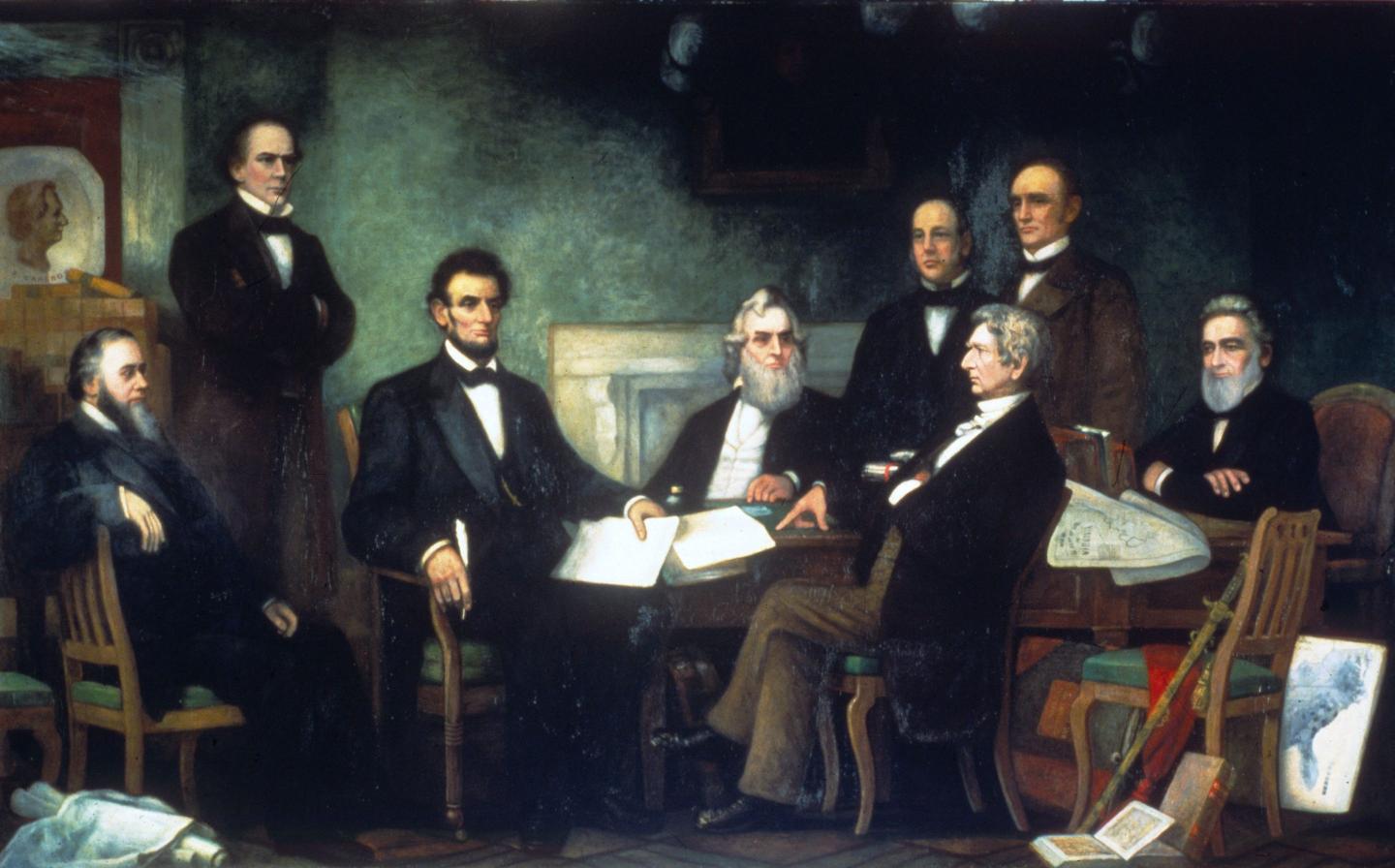
We need an Abraham Lincoln-like approach to AI.MPI/Getty Images

In 1862, in the midst of the Civil War, President Abraham Lincoln signed the Morrill Act and set off an education revolution. The Act established land-grant colleges across the country, democratizing higher education and equipping generations of Americans with the skills to meet the challenges of industrialization. That bold move helped transform the United States into the world’s economic powerhouse.

Recommended Video

Today, we face a technological revolution of similar magnitude: Artificial Intelligence. Will we meet this challenge with the same boldness Lincoln displayed in 1862? To do so, we propose passing a Digital-AI Land Grant Act: a federal initiative that builds a nationwide system of universities and colleges equipped to educate and train every region for the age of AI.

Just as the steam engine and electricity once altered work and society, AI will demand new skills, new institutions, and a renewed commitment to broad-based opportunity. We’ve started to take steps to address this, with President Donald J. Trump signing an Executive Order, establishing a White House Task Force on AI Education and a Presidential AI Challenge. 

But piecemeal efforts are not enough. A fragmented, state-by-state approach will leave too many communities behind. If America is to lead in the global AI race, and do so in a way that strengthens rather than fractures our democracy, we need a national strategy of scale and urgency.

Why a Digital-AI Land Grant Act is Necessary

The last great technological revolution, the rise of information and communications technologies, delivered immense wealth but also deepened inequality. Prosperity clustered in a few metro regions, while rural, industrial, and minority communities often fell further behind. We cannot afford to repeat that mistake with AI.

Without decisive action, AI will accelerate wealth concentration, intensify geographic divides, and widen mistrust in institutions. A national Digital-AI Land Grant system can counteract these imbalances.

Done well, a national Digital-AI Land Grant system would expand access to education by connecting research universities with regional and community colleges; grow the regional AI ecosystems by building on the National Science Foundation-led regional engines initiative to develop playbooks; train the workforce of the future—from civilian and military cybersecurity specialists to advanced manufacturing technicians—to meet surging demand; and reinvigorate public trust through lighthouse projects that will enable kids, families, and seniors to experience the benefits of trustworthy AI. 

Five Pillars of the Digital-AI Land Grant System

Here’s how a Digital-AI Land Grant would work:

  1. Hybrid Campuses: Blend online flexibility with in-person mentorship and lab work that promotes learning by doing.  Develop adaptive curricula that impart critical thinking and creativity with AI tools and technology to spur entrepreneurship and meet the needs of the labor market. 
  2. Accelerated Faculty Pathways: Streamline hiring and promotion to bring in urgently needed expertise from academia, government, and industry.
  3. Innovative Funding Mechanisms: Replace reliance on state budgets and student tuition by drawing from a “digital dividend” generated by technology and social media companies.
  4. Modified Federal Tax Incentives: Mobilize private capital by rewarding philanthropic support for Digital-AI Land Grant institutions.
  5. Tech-University Partnerships: Incentivize collaboration between leading technology firms and their AI data centers, top-tier universities, and underserved regional institutions to increase access and opportunity to diversify the talent pool.

Funding the Future

When Lincoln signed the Morrill Act, land sales financed a new higher-education system. Today, the equivalent “land” is cyberspace. The internet, built on taxpayer-funded research, has generated extraordinary wealth for technology and social media companies. It is only fair that a portion of this wealth, a digital dividend, be reinvested to prepare the workforce for the AI age. An education tax on companies that profit from cyberspace, much like taxes on gambling or alcohol, would provide the resources needed for this generational project.

A Call to Action

The United States cannot navigate the Age of AI by leaving education to the market or to a patchwork of state programs. Just as the land-grant system fueled the Industrial Revolution, a new Digital-AI Land Grant system can equip America to thrive in the AI era. This is not just about competitiveness, it is about ensuring that every American, in every community, has the knowledge and opportunity to succeed in a world shared with intelligent machines.

Lincoln understood that even in the darkest days of civil war, the nation had to invest in its future. Today, in the face of unprecedented technological change, we must do the same. A Digital-AI Land Grant Act is the bold step required to secure our economic vitality, our democratic resilience, and our shared prosperity for generations to come.

The opinions expressed in Fortune.com commentary pieces are solely the views of their authors and do not necessarily reflect the opinions and beliefs of Fortune.

Join us at the Fortune Workplace Innovation Summit May 19–20, 2026, in Atlanta. The next era of workplace innovation is here—and the old playbook is being rewritten. At this exclusive, high-energy event, the world’s most innovative leaders will convene to explore how AI, humanity, and strategy converge to redefine, again, the future of work. Register now.
About the Authors
By Mark Hagerott
See full bioRight Arrow Button Icon
By Patrick T. Harker
See full bioRight Arrow Button Icon
By Ramayya Krishnan
See full bioRight Arrow Button Icon

Latest in Commentary

Finance
Lorem ipsum dolor sit amet, consectetur adipiscing elit, sed do eiusmod tempor incididunt ut labore et dolore magna aliqua. Ut enim ad minim veniam
By Fortune Editors
October 20, 2025
Finance
Lorem ipsum dolor sit amet, consectetur adipiscing elit, sed do eiusmod tempor incididunt ut labore et dolore magna aliqua. Ut enim ad minim veniam
By Fortune Editors
October 20, 2025
Finance
Lorem ipsum dolor sit amet, consectetur adipiscing elit, sed do eiusmod tempor incididunt ut labore et dolore magna aliqua. Ut enim ad minim veniam
By Fortune Editors
October 20, 2025
Finance
Lorem ipsum dolor sit amet, consectetur adipiscing elit, sed do eiusmod tempor incididunt ut labore et dolore magna aliqua. Ut enim ad minim veniam
By Fortune Editors
October 20, 2025
Finance
Lorem ipsum dolor sit amet, consectetur adipiscing elit, sed do eiusmod tempor incididunt ut labore et dolore magna aliqua. Ut enim ad minim veniam
By Fortune Editors
October 20, 2025
Finance
Lorem ipsum dolor sit amet, consectetur adipiscing elit, sed do eiusmod tempor incididunt ut labore et dolore magna aliqua. Ut enim ad minim veniam
By Fortune Editors
October 20, 2025

Most Popular

Finance
Lorem ipsum dolor sit amet, consectetur adipiscing elit, sed do eiusmod tempor incididunt ut labore et dolore magna aliqua. Ut enim ad minim veniam
By Fortune Editors
October 20, 2025
Finance
Lorem ipsum dolor sit amet, consectetur adipiscing elit, sed do eiusmod tempor incididunt ut labore et dolore magna aliqua. Ut enim ad minim veniam
By Fortune Editors
October 20, 2025
Finance
Lorem ipsum dolor sit amet, consectetur adipiscing elit, sed do eiusmod tempor incididunt ut labore et dolore magna aliqua. Ut enim ad minim veniam
By Fortune Editors
October 20, 2025
Finance
Lorem ipsum dolor sit amet, consectetur adipiscing elit, sed do eiusmod tempor incididunt ut labore et dolore magna aliqua. Ut enim ad minim veniam
By Fortune Editors
October 20, 2025
Finance
Lorem ipsum dolor sit amet, consectetur adipiscing elit, sed do eiusmod tempor incididunt ut labore et dolore magna aliqua. Ut enim ad minim veniam
By Fortune Editors
October 20, 2025
Finance
Lorem ipsum dolor sit amet, consectetur adipiscing elit, sed do eiusmod tempor incididunt ut labore et dolore magna aliqua. Ut enim ad minim veniam
By Fortune Editors
October 20, 2025
Fortune Secondary Logo
Rankings
  • 100 Best Companies
  • Fortune 500
  • Global 500
  • Fortune 500 Europe
  • Most Powerful Women
  • Future 50
  • World’s Most Admired Companies
  • See All Rankings
Sections
  • Finance
  • Fortune Crypto
  • Features
  • Leadership
  • Health
  • Commentary
  • Success
  • Retail
  • Mpw
  • Tech
  • Lifestyle
  • CEO Initiative
  • Asia
  • Politics
  • Conferences
  • Europe
  • Newsletters
  • Personal Finance
  • Environment
  • Magazine
  • Education
Customer Support
  • Frequently Asked Questions
  • Customer Service Portal
  • Privacy Policy
  • Terms Of Use
  • Single Issues For Purchase
  • International Print
Commercial Services
  • Advertising
  • Fortune Brand Studio
  • Fortune Analytics
  • Fortune Conferences
  • Business Development
  • Group Subscriptions
About Us
  • About Us
  • Editorial Calendar
  • Press Center
  • Work At Fortune
  • Diversity And Inclusion
  • Terms And Conditions
  • Site Map
  • About Us
  • Editorial Calendar
  • Press Center
  • Work At Fortune
  • Diversity And Inclusion
  • Terms And Conditions
  • Site Map
  • Facebook icon
  • Twitter icon
  • LinkedIn icon
  • Instagram icon
  • Pinterest icon
Mark Hagerott is a Senior Scholar at the Northern Plains Ethics Institute at North Dakota State University, served as Chancellor of the North Dakota University System, is a 30-year Navy veteran, and was the former Deputy Director and Distinguished Professor of Cyber Security at the U.S. Naval Academy. Patrick T. Harker is the Rowan Distinguished Professor at the Wharton School of the University of Pennsylvania. He previously served as President and Chief Executive Officer of the Federal Reserve Bank of Philadelphia and as President of the University of Delaware. Ramayya Krishnan is the W. W. Cooper and Ruth F. Cooper Professor at Carnegie Mellon University, where he is a noted scholar of data science, technology, and public policy. He is director of the AI Measurement Science and Engineering Center. He was a member of the National AI Advisory Committee where he co-chaired the AI Futures Working Group. He previously served as Dean of the Heinz College of Information Systems and Public Policy.

Latest in Commentary

benioff
CommentarySalesforce
AI’s next act: how Salesforce is turning efficiency gains into revenue
By Keith Ferrazzi and Wendy SmithApril 18, 2026
5 hours ago
trump
CommentaryWhite House
Trump has already endorsed the Monroe Doctrine. Now he needs to endorse the Truman Doctrine
By Robert HormatsApril 18, 2026
7 hours ago
trump
CommentaryManufacturing
Tariffs alone won’t save American manufacturing — here’s what actually will
By Johan "Kip" EidebergApril 18, 2026
8 hours ago
hormuz
CommentaryIran
With Hormuz under strain, a trade corridor built for resilience faces a real-world test
By Angela Chitkara and Samantha SuttonApril 17, 2026
1 day ago
broker
CommentarySoftware
The 3 forces quietly dismantling the business model that made enterprise software fabulously profitable
By Michael Jacobides and Stefano PuntoniApril 17, 2026
1 day ago
welti
CommentaryIran
Switzerland’s former ambassador to Iran: here’s how to end this war — and why Pakistan isn’t enough
By Philippe WeltiApril 17, 2026
1 day ago

Most Popular

Pope Leo warned the world is in ‘big trouble’ if Elon Musk becomes the first trillionaire
Success
Pope Leo warned the world is in ‘big trouble’ if Elon Musk becomes the first trillionaire
By Preston ForeApril 17, 2026
1 day ago
'We should absolutely be concerned about non-college-educated men today': higher rents, living at home, falling out of the labor market
Economy
'We should absolutely be concerned about non-college-educated men today': higher rents, living at home, falling out of the labor market
By Catherina GioinoApril 18, 2026
9 hours ago
The power has swung back to employers—and workers are paying for it in benefits, flexibility, and leverage
Workplace Culture
The power has swung back to employers—and workers are paying for it in benefits, flexibility, and leverage
By Marco Quiroz-GutierrezApril 17, 2026
24 hours ago
Older millennials are starting to act like boomers in the housing market—and pulling away from the pack
Real Estate
Older millennials are starting to act like boomers in the housing market—and pulling away from the pack
By Nick LichtenbergApril 17, 2026
1 day ago
Iran has reopened the Strait of Hormuz—but experts say it now holds a card that works ‘almost like a nuclear deterrent’
Energy
Iran has reopened the Strait of Hormuz—but experts say it now holds a card that works ‘almost like a nuclear deterrent’
By Eva RoytburgApril 17, 2026
24 hours ago
Jeff Bezos pledged $10 billion for climate change. With the 2030 clock ticking, his wife, Lauren Sánchez Bezos, is leading the charge to spend it
Environment
Jeff Bezos pledged $10 billion for climate change. With the 2030 clock ticking, his wife, Lauren Sánchez Bezos, is leading the charge to spend it
By Sydney LakeApril 15, 2026
3 days ago

© 2026 Fortune Media IP Limited. All Rights Reserved. Use of this site constitutes acceptance of our Terms of Use and Privacy Policy | CA Notice at Collection and Privacy Notice | Do Not Sell/Share My Personal Information
FORTUNE is a trademark of Fortune Media IP Limited, registered in the U.S. and other countries. FORTUNE may receive compensation for some links to products and services on this website. Offers may be subject to change without notice.