• Home
  • Latest
  • Fortune 500
  • Finance
  • Tech
  • Leadership
  • Lifestyle
  • Rankings
  • Multimedia
EuropeEuropean Commission
Europe

Can Europe find the political energy to become competitive again?

By
Jessica Jurkschat
Jessica Jurkschat
Down Arrow Button Icon
By
Jessica Jurkschat
Jessica Jurkschat
Down Arrow Button Icon
October 22, 2025, 6:06 AM ET
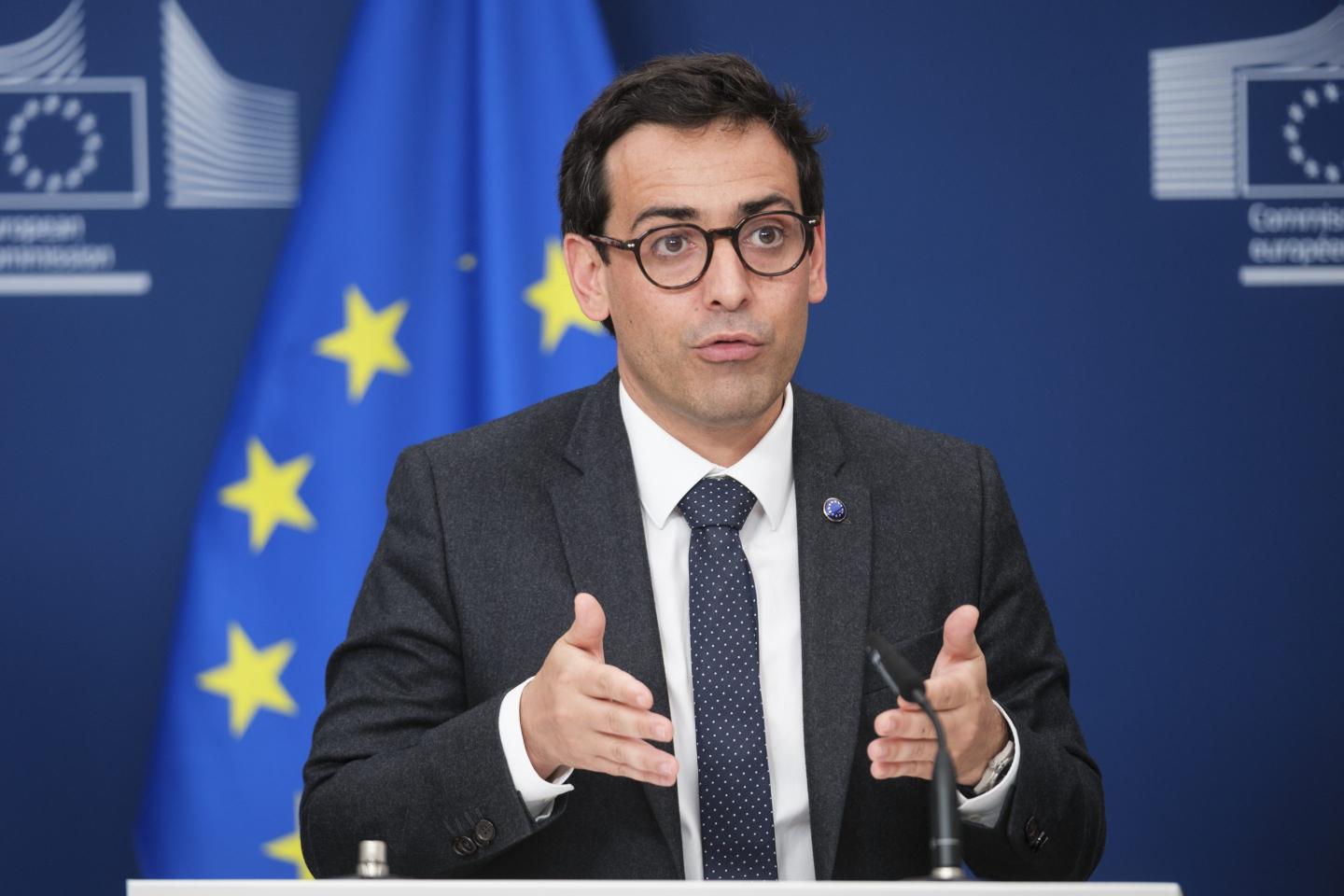
Stéphane Séjourné, Executive Vice-President for Prosperity and Industrial Strategy of the European Commission
Stéphane Séjourné, Executive Vice-President for Prosperity and Industrial Strategy of the European CommissionThierry Monasse/Getty Images

When former European Central Bank President Mario Draghi unveiled his landmark report into the continent’s competitiveness, he wasn’t just suggesting a new set of regulatory and investment reforms. He was also urging the EU’s political leaders to work together and implement a more coordinated industrial policy, or risk falling even further behind China and the United States.

The EU’s goals are clear: to lead a policy of reindustrialization, remain an open continent trading globally, and decarbonize the economy—all of which will lead to new industries that can compete globally.

One year later, the question remains: does Europe have the political energy to follow through on these recommendations?

In an interview with Fortune, Stéphane Séjourné, Executive Vice-President for Prosperity and Industrial Strategy of the European Commission, credits the Draghi report for igniting a spark throughout the Commission.

“There has been a real change of mindset,” explains Séjourné, who is positive the EU has what it takes to turn around. “Europe must return to global competition. And it will. There’s now a real momentum of political and social acceptance to build a stronger internal market and regain competitiveness.”

Consensus, however, is not the same as execution, and the EU must tackle its weaknesses: simplification of its policies, more investment and support for faster innovation. Above all, Europe’s ability to turn technical reform into reality depends on the willingness of its 27 members to act as one unit—the new agenda calls for removing national barriers and regulatory differences sector by sector.

The need to reform

The EU’s new competitive strategy was born of crisis. “There were two major economic shocks that shaped this new way of thinking,” Séjourné explains.

The first was COVID, which showed some member states’ dependence on raw materials from outside the EU. “If international supply chains were interrupted, entire areas of our economy could collapse,” he says.

“Europe must return to global competition. And it will. There’s now a real momentum of political and social acceptance to build a stronger internal market and regain competitiveness.”

Stéphane Séjourné, Executive Vice-President for Prosperity and Industrial Strategy of the European Commission

The second was the war in Ukraine: “Except for a few countries like France, which had a nuclear mix, much of Europe was vulnerable because of our dependence on Russian gas, which suddenly stopped.”

But Séjourné says that despite this dependence, the EU quickly adapted. “We’ve since moved fast: in less than two years, we reduced dependence on gas for electricity generation from over 50% to under 10%—a record pace,” Séjourné argues. “Now there’s a shared realization across Europe that we must not repeat those same mistakes. We can’t allow ourselves to become dependent again.”

The double shock of the 2020s sparked the “sovereignty agenda,” a strategic priority to bolster the EU’s competitiveness and regain control of its economy. The agenda focuses on critical raw materials, and a careful balance between trade protection and openness.

For example, Séjourné sees decarbonizing heavy industries as both a step towards climate goals and an economic plan for Europe that will create new jobs, more investment, and power in every sense of the word.

“Our decarbonization strategy will help steelmakers, chemical plants and vapor-crackers that produce key molecules modernize their production systems to be more competitive worldwide,” he says.

In practice, this could take the form of direct funding for early-stage, low-carbon technologies or long-term funding mechanisms to incentivize investment. To produce more low-carbon steel, for instance, Europe would need the infrastructure to produce and transport more ‘green hydrogen’ from renewable energy.

It’s a bold choice for Europe, especially when compared to the United States, where policy still relies heavily on domestic oil and gas production. Séjourné explains that Europe simply doesn’t produce enough oil or gas, and therefore, reducing strategic independence is an objective in itself.

But he remains confident. “We spend €450 billion each year importing oil and gas, which can be invested in Europe’s competitiveness instead,” Séjourné says. “It’s a medium to long-term bet, but one we’re convinced we’ll win.”

Regulation: A double-edged sword

Despite its ambitions, Europe’s voluminous red tape often delays progress.

Take the EU’s single market, which is meant to ensure ‘four freedoms’: free movement of goods, services, capital and persons within its borders. In reality, companies still face legal, fiscal and regulatory barriers when they move or trade across the EU’s 27 nations.

The European Commission’s latest answer is the so-called ‘28th Regime’, which it believes will “make it possible for innovative companies to benefit from a single, harmonized set of EU-wide rules wherever they invest and operate in the Single Market, instead of facing 27 distinct legal regimes.” Séjourné calls it “the most important project for Europe’s economy.”

“Our ambition is to offer companies one single European framework—one legal representative, one accountant, one company status throughout Europe,” he says. “That will make it much easier to trade, invest, and expand beyond borders.”

Even as it reforms, Europe retains a less glamorous and perhaps counterintuitive competitive edge: regulatory predictability.

“In the U.S., everything can change after an election,” Séjourné notes. “In Europe, we may move slower at first, but once the system is in place, it’s stable. Investors know what to expect five or 10 years ahead. Predictability and reliability are crucial.”

That reliability, he argues, is Europe’s secret weapon against American speed and Chinese scale. It allows long-term capital to commit, so long as the political will remains to sustain the framework.

Stability can also be a political narrative. In a decade defined by shocks—pandemics, conflicts, trade wars—Europe’s promise of consistency matters. But to make it a source of strength rather than stagnation, the EU must prove it can adapt at the same time.

Séjourné’s broader vision could be called ‘necessary integration.’ Decarbonization demands new grids and supply chains, which require cross-border financing and institutional trust. Each link depends on the last, and on leaders willing to spend their political capital to make it happen.

“In the U.S., everything can change after an election. In Europe, we may move slower at first, but once the system is in place, it’s stable. Investors know what to expect five or 10 years ahead. Predictability and reliability are crucial.”

Stéphane Séjourné

“The Commission’s role is to give coherence to this mix by building cross-border infrastructure—grids that allow electricity to flow freely between countries according to production and demand.” Séjourné explains. “Price differences still exist between member states, but we’re working to stabilize electricity prices across Europe.”

European business leaders echo the urgency. At a June meeting between the European Commission and 60 corporate leaders, including SAP’s Christian Klein and IKEA’s Jesper Brodin, and brokered by the World Economic Forum, the message was similar: Europe’s competitiveness now depends on speed of execution, not new rhetoric.

Europe believes it has the spark. The second Von der Leyen Commission, which took office just under a year ago, is steaming ahead with its ambitious policy roadmap . But the EU’s system of shared sovereignty demands constant attention, with every reform painstakingly negotiated and every directive translated into 27 languages.

Still, Séjourné remains optimistic. “Europe is not just a beautiful idea; it’s a powerful and stable economic space,” he says. “And that’s what we want to preserve.”

Interview and additional reporting by Peter Vanham.

Europe lags the U.S. and China in key growth sectors due to costly energy and stalled market reforms. This article series explores how technology, regulation, and innovation can revive its competitiveness.
 
About the Author
By Jessica Jurkschat
See full bioRight Arrow Button Icon

Latest in Europe

Finance
Lorem ipsum dolor sit amet, consectetur adipiscing elit, sed do eiusmod tempor incididunt ut labore et dolore magna aliqua. Ut enim ad minim veniam
By Fortune Editors
October 20, 2025
Finance
Lorem ipsum dolor sit amet, consectetur adipiscing elit, sed do eiusmod tempor incididunt ut labore et dolore magna aliqua. Ut enim ad minim veniam
By Fortune Editors
October 20, 2025
Finance
Lorem ipsum dolor sit amet, consectetur adipiscing elit, sed do eiusmod tempor incididunt ut labore et dolore magna aliqua. Ut enim ad minim veniam
By Fortune Editors
October 20, 2025
Finance
Lorem ipsum dolor sit amet, consectetur adipiscing elit, sed do eiusmod tempor incididunt ut labore et dolore magna aliqua. Ut enim ad minim veniam
By Fortune Editors
October 20, 2025
Finance
Lorem ipsum dolor sit amet, consectetur adipiscing elit, sed do eiusmod tempor incididunt ut labore et dolore magna aliqua. Ut enim ad minim veniam
By Fortune Editors
October 20, 2025
Finance
Lorem ipsum dolor sit amet, consectetur adipiscing elit, sed do eiusmod tempor incididunt ut labore et dolore magna aliqua. Ut enim ad minim veniam
By Fortune Editors
October 20, 2025

Most Popular

Finance
Lorem ipsum dolor sit amet, consectetur adipiscing elit, sed do eiusmod tempor incididunt ut labore et dolore magna aliqua. Ut enim ad minim veniam
By Fortune Editors
October 20, 2025
Finance
Lorem ipsum dolor sit amet, consectetur adipiscing elit, sed do eiusmod tempor incididunt ut labore et dolore magna aliqua. Ut enim ad minim veniam
By Fortune Editors
October 20, 2025
Finance
Lorem ipsum dolor sit amet, consectetur adipiscing elit, sed do eiusmod tempor incididunt ut labore et dolore magna aliqua. Ut enim ad minim veniam
By Fortune Editors
October 20, 2025
Finance
Lorem ipsum dolor sit amet, consectetur adipiscing elit, sed do eiusmod tempor incididunt ut labore et dolore magna aliqua. Ut enim ad minim veniam
By Fortune Editors
October 20, 2025
Finance
Lorem ipsum dolor sit amet, consectetur adipiscing elit, sed do eiusmod tempor incididunt ut labore et dolore magna aliqua. Ut enim ad minim veniam
By Fortune Editors
October 20, 2025
Finance
Lorem ipsum dolor sit amet, consectetur adipiscing elit, sed do eiusmod tempor incididunt ut labore et dolore magna aliqua. Ut enim ad minim veniam
By Fortune Editors
October 20, 2025
Fortune Secondary Logo
Rankings
  • 100 Best Companies
  • Fortune 500
  • Global 500
  • Fortune 500 Europe
  • Most Powerful Women
  • World's Most Admired Companies
  • See All Rankings
  • Lists Calendar
Sections
  • Finance
  • Fortune Crypto
  • Features
  • Leadership
  • Health
  • Commentary
  • Success
  • Retail
  • Mpw
  • Tech
  • Lifestyle
  • CEO Initiative
  • Asia
  • Politics
  • Conferences
  • Europe
  • Newsletters
  • Personal Finance
  • Environment
  • Magazine
  • Education
Customer Support
  • Frequently Asked Questions
  • Customer Service Portal
  • Privacy Policy
  • Terms Of Use
  • Single Issues For Purchase
  • International Print
Commercial Services
  • Advertising
  • Fortune Brand Studio
  • Fortune Analytics
  • Fortune Conferences
  • Business Development
  • Group Subscriptions
About Us
  • About Us
  • Press Center
  • Work At Fortune
  • Terms And Conditions
  • Site Map
  • About Us
  • Press Center
  • Work At Fortune
  • Terms And Conditions
  • Site Map
  • Facebook icon
  • Twitter icon
  • LinkedIn icon
  • Instagram icon
  • Pinterest icon

Latest in Europe

yamal
EuropeSports
Teenage soccer sensation Lamine Yamal hobnobs with Olivia Rodrigo, wins championship, waves Palestinian flag
By Nick LichtenbergMay 12, 2026
3 hours ago
starmer
PoliticsUnited Kingdom
Keir Starmer’s deputies are starting to quit. Some are urging him to ‘do the right thing for the country’
By Brian Melley, Pan Pylas and The Associated PressMay 12, 2026
3 hours ago
The Fed is ‘meaningfully deviating’ from one of the most basic rules for fighting inflation, BofA warns
EconomyMarkets
The Fed is ‘meaningfully deviating’ from one of the most basic rules for fighting inflation, BofA warns
By Jim EdwardsMay 12, 2026
13 hours ago
Evacuations begin for hantavirus-hit cruise ship, with American passengers to be quarantined in Nebraska. ‘This is not another COVID’
HealthHealth
Evacuations begin for hantavirus-hit cruise ship, with American passengers to be quarantined in Nebraska. ‘This is not another COVID’
By Iain Sullivan, Suman Naishadham and The Associated PressMay 10, 2026
2 days ago
UK moves warship to Middle East for potential Hormuz mission
PoliticsMilitary
UK moves warship to Middle East for potential Hormuz mission
By Ellen Milligan and BloombergMay 9, 2026
3 days ago
Trump sees ‘beginning of the end’ in Russia’s war on Ukraine as both sides agrees to his request for a 3-day ceasefire
EuropeRussia
Trump sees ‘beginning of the end’ in Russia’s war on Ukraine as both sides agrees to his request for a 3-day ceasefire
By Darlene Superville and The Associated PressMay 9, 2026
3 days ago

Most Popular

Forget U.S. debt, China's total borrowing is in 'a league of its own'—much worse and deteriorating faster, analyst says
Economy
Forget U.S. debt, China's total borrowing is in 'a league of its own'—much worse and deteriorating faster, analyst says
By Jason MaMay 11, 2026
1 day ago
Microsoft’s CFO admits she joined the tech giant without even knowing her salary—and then missed her first day of work
Success
Microsoft’s CFO admits she joined the tech giant without even knowing her salary—and then missed her first day of work
By Preston ForeMay 11, 2026
1 day ago
U.S. hotels are calling the World Cup a 'non-event' and 80% warn bookings are falling short of expectations, report finds
North America
U.S. hotels are calling the World Cup a 'non-event' and 80% warn bookings are falling short of expectations, report finds
By Sasha RogelbergMay 12, 2026
16 hours ago
OpenAI CEO Sam Altman says Gen Z and millennials are using ChatGPT like a 'life advisor'—but college students might be one step ahead
Tech
OpenAI CEO Sam Altman says Gen Z and millennials are using ChatGPT like a 'life advisor'—but college students might be one step ahead
By Sydney LakeMay 10, 2026
2 days ago
Trump Mobile quietly rewrote its fine print to say the gold Trump phone may never be made, a year after taking $100 deposits
North America
Trump Mobile quietly rewrote its fine print to say the gold Trump phone may never be made, a year after taking $100 deposits
By Marco Quiroz-GutierrezMay 11, 2026
1 day ago
AI isn't paying off in the way companies think. Layoffs driven by automation are failing to generate returns, study finds
Future of Work
AI isn't paying off in the way companies think. Layoffs driven by automation are failing to generate returns, study finds
By Jake AngeloMay 11, 2026
1 day ago

© 2026 Fortune Media IP Limited. All Rights Reserved. Use of this site constitutes acceptance of our Terms of Use and Privacy Policy | CA Notice at Collection and Privacy Notice | Do Not Sell/Share My Personal Information
FORTUNE is a trademark of Fortune Media IP Limited, registered in the U.S. and other countries. FORTUNE may receive compensation for some links to products and services on this website. Offers may be subject to change without notice.