• Home
  • Latest
  • Fortune 500
  • Finance
  • Tech
  • Leadership
  • Lifestyle
  • Rankings
  • Multimedia
CommentaryManufacturing

The real problem gripping rural America and the jobs of the future

By
Chris Kibarian
Chris Kibarian
Down Arrow Button Icon
By
Chris Kibarian
Chris Kibarian
Down Arrow Button Icon
August 21, 2025, 9:00 AM ET
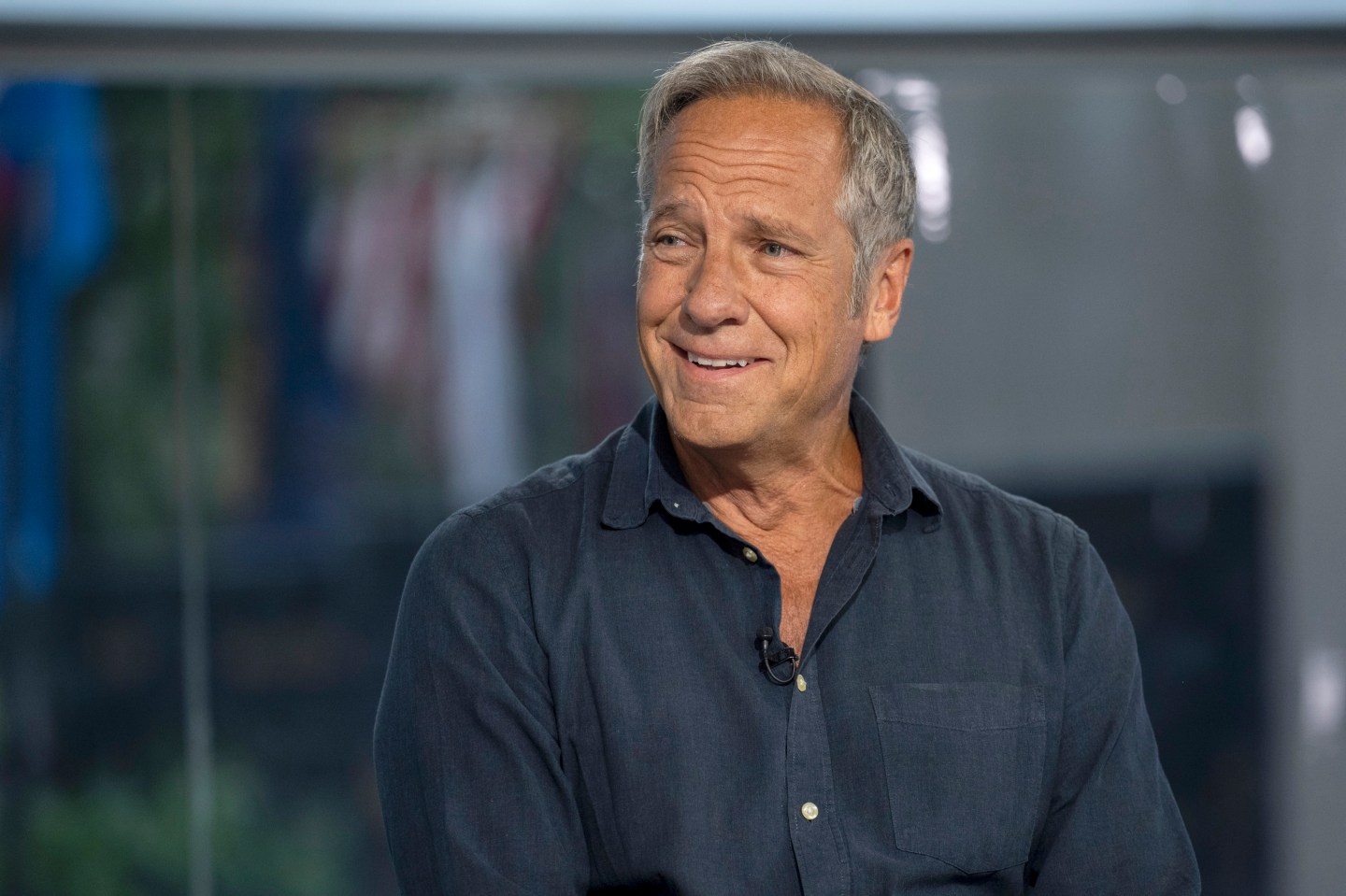
Mike Rowe
Mike Rowe.Nathan Congleton/NBC via Getty Images

America’s AI future won’t be stopped by China, energy shortages, or a lack of investment. It will be stopped by a lack of workers.

Recommended Video

That reality hit hard at the Energy & Innovation Summit in Pittsburgh last month, hosted by Senator Dave McCormick, Carnegie Mellon President Farnam Jahanian, and a remarkable roster of business executives, industry leaders, and federal cabinet secretaries. Pennsylvania sits at the center of this future—with the Marcellus Shale, leading universities, and advanced manufacturing hubs powering some of the nation’s most ambitious energy projects.

While headlines celebrated $90 billion in new private investment for energy and data infrastructure, they missed the bigger story: the federal government is finally cutting the red tape holding back $1 trillion in stalled projects—but we don’t have enough workers to build them.

The story extends far beyond Pittsburgh. Across rural counties from Appalachia to the Midwest, new data centers, logistics hubs, and energy projects are breaking ground—only to run into the same roadblock: too few workers to get the job done. The U.S. faces a projected shortfall of 6 million workers over the next decade. Lightcast data shows there are currently 1 million job openings in construction, manufacturing, transportation and warehousing. Even worse, 24 million people in today’s labor force are over 60 and nearing retirement, with significant portions of these industries aging rapidly, creating a dangerously thin talent pipeline just as demand surges.

The shortages are twofold. In rural regions, unfilled roles in construction, health care, transportation, and warehousing make up nearly one in four postings, threatening to stall the very projects driving America’s growth. At the same time, the AI economy is opening new doors: more than 15% of IT and computer science postings are remote, proving that millions of high-value digital jobs can be done from anywhere. Together, these realities point to a future where America’s workforce must be both locally rooted and digitally connected.

Mike Rowe, founder of the mikeroweWORKS Foundation, told me:

“The future of AI demands that we reinvigorate the skilled trades – immediately – and close America’s skills gap. If we can’t build it, wire it, and maintain it, we can’t have it.”

He also reminded the audience in Pennsylvania:

“We took shop class out of high school and convinced a whole generation they needed a four-year degree to succeed no matter the cost. That was a big mistake. Welding, plumbing, and electrical work aren’t just viable—they’re vital. And the shortages in those fields are acute.”

Returning to year-2000 participation rates could add millions of workers—but Lightcast analysis projects that by 2033, the number of young people entering the workforce will drop by 2 million. Raising participation in rural counties alone could add hundreds of thousands of new workers, directly strengthening the talent base for energy, infrastructure, and advanced manufacturing.

So, who will build America’s AI future?

The blueprint: America talent strategy

If we’re serious about closing this gap, we need more than good intentions—we need a system that runs on hard, current, and shared data. The August 12th announcement of the America Talent Strategy offers a five-pillar framework to align industry, education, and workforce systems for the AI era.

At the heart of that system is a dynamic, shared skills language—a living dataset that reflects what employers actually need, week by week, across industries and regions. Without it, businesses can’t clearly signal demand, educators can’t adapt fast enough, and workers can’t see the path forward. For rural communities, this skills language is even more critical: it not only makes middle-skill jobs visible but also connects workers to remote and hybrid careers, allowing them to contribute to the AI economy without leaving their hometowns.

This isn’t theory. Lightcast created the universal standard for skills. In Texas, a statewide job-matching platform built on this common skills language now connects residents directly to in-demand careers, actively bridging the gap in middle-skill jobs, which make up 56% of employment while only 45% of the labor force is trained to fill them. In Prince George’s County, our real-time labor market data helped increase job placements by more than 70 percent. These examples show what happens when the “skills market” becomes visible: people and programs move faster, and results follow.

That’s the difference between a plan on paper and a workforce that’s ready for what’s next. Dynamic, proven skills data makes the Talent Strategy’s pillars—i. industry alignment, ii. worker mobility, iii. integrated systems, iv. accountability, and v. innovation—work in the real world.

Hidden gems: community college and trade schools

The infrastructure is there—Lightcast data shows that over 1,300 U.S. institutions offer skilled trade programs capable of training a minimum of one million new entrants over the next five years. Many of these community colleges are rural anchors, often the largest local employers themselves, and they are positioned to train the next generation of AI-enabled workers if they receive the funding and recognition they deserve. Apprenticeships can help fill the gap, and the federal government is finally cutting the red tape holding them back.

Countries like Germany have proven that skilled tradespeople can be exceptionally trained, well-paid, and highly respected. With the right execution of the Talent Strategy—powered by real-time skills intelligence—we can do the same here, faster.

Rowe adds a reminder:

“A renaissance in the skilled trades requires an underlying appreciation for the work itself. We have to show kids that a skilled tradesperson is no less valued than a graduate from the Ivy League. More so, even.”

Workers wanted: honor the work and the worker

The mikeroweWORKS Foundation has long advocated for honoring blue-collar work. Together with Lightcast, they are calling for a Presidential Workforce Medal of Honor to celebrate those unlocking the power of America’s workers.

That work may involve more robotics, software, and AI-enabled tools—but all the money, energy, and chips in the world can’t make America great without the Great American Worker: AI-enabled, robot-powered, and ready to swing a hammer. Increasingly, those workers are just as likely to be rural welders, electricians, or coders logging in from small towns as they are urban professionals.

As Rowe puts it:

“Technology alone didn’t build America—skilled tradespeople did. The future is in their hands, right where it’s always been.”

Without bold action on workforce development, the $90 billion investment risks stalling. But if we give workers the data, training, and recognition they deserve, we can fill millions of unfilled jobs and prevent workforce shortages from paralyzing America’s future.

The opinions expressed in Fortune.com commentary pieces are solely the views of their authors and do not necessarily reflect the opinions and beliefs of Fortune.
Join us at the Fortune Workplace Innovation Summit May 19–20, 2026, in Atlanta. The next era of workplace innovation is here—and the old playbook is being rewritten. At this exclusive, high-energy event, the world’s most innovative leaders will convene to explore how AI, humanity, and strategy converge to redefine, again, the future of work. Register now.
About the Author
By Chris Kibarian
See full bioRight Arrow Button Icon

Latest in Commentary

Finance
Lorem ipsum dolor sit amet, consectetur adipiscing elit, sed do eiusmod tempor incididunt ut labore et dolore magna aliqua. Ut enim ad minim veniam
By Fortune Editors
October 20, 2025
Finance
Lorem ipsum dolor sit amet, consectetur adipiscing elit, sed do eiusmod tempor incididunt ut labore et dolore magna aliqua. Ut enim ad minim veniam
By Fortune Editors
October 20, 2025
Finance
Lorem ipsum dolor sit amet, consectetur adipiscing elit, sed do eiusmod tempor incididunt ut labore et dolore magna aliqua. Ut enim ad minim veniam
By Fortune Editors
October 20, 2025
Finance
Lorem ipsum dolor sit amet, consectetur adipiscing elit, sed do eiusmod tempor incididunt ut labore et dolore magna aliqua. Ut enim ad minim veniam
By Fortune Editors
October 20, 2025
Finance
Lorem ipsum dolor sit amet, consectetur adipiscing elit, sed do eiusmod tempor incididunt ut labore et dolore magna aliqua. Ut enim ad minim veniam
By Fortune Editors
October 20, 2025
Finance
Lorem ipsum dolor sit amet, consectetur adipiscing elit, sed do eiusmod tempor incididunt ut labore et dolore magna aliqua. Ut enim ad minim veniam
By Fortune Editors
October 20, 2025

Most Popular

Finance
Lorem ipsum dolor sit amet, consectetur adipiscing elit, sed do eiusmod tempor incididunt ut labore et dolore magna aliqua. Ut enim ad minim veniam
By Fortune Editors
October 20, 2025
Finance
Lorem ipsum dolor sit amet, consectetur adipiscing elit, sed do eiusmod tempor incididunt ut labore et dolore magna aliqua. Ut enim ad minim veniam
By Fortune Editors
October 20, 2025
Finance
Lorem ipsum dolor sit amet, consectetur adipiscing elit, sed do eiusmod tempor incididunt ut labore et dolore magna aliqua. Ut enim ad minim veniam
By Fortune Editors
October 20, 2025
Finance
Lorem ipsum dolor sit amet, consectetur adipiscing elit, sed do eiusmod tempor incididunt ut labore et dolore magna aliqua. Ut enim ad minim veniam
By Fortune Editors
October 20, 2025
Finance
Lorem ipsum dolor sit amet, consectetur adipiscing elit, sed do eiusmod tempor incididunt ut labore et dolore magna aliqua. Ut enim ad minim veniam
By Fortune Editors
October 20, 2025
Finance
Lorem ipsum dolor sit amet, consectetur adipiscing elit, sed do eiusmod tempor incididunt ut labore et dolore magna aliqua. Ut enim ad minim veniam
By Fortune Editors
October 20, 2025
Rankings
  • 100 Best Companies
  • Fortune 500
  • Global 500
  • Fortune 500 Europe
  • Most Powerful Women
  • Future 50
  • World’s Most Admired Companies
  • See All Rankings
Sections
  • Finance
  • Leadership
  • Success
  • Tech
  • Asia
  • Europe
  • Environment
  • Fortune Crypto
  • Health
  • Retail
  • Lifestyle
  • Politics
  • Newsletters
  • Magazine
  • Features
  • Commentary
  • Mpw
  • CEO Initiative
  • Conferences
  • Personal Finance
  • Education
Customer Support
  • Frequently Asked Questions
  • Customer Service Portal
  • Privacy Policy
  • Terms Of Use
  • Single Issues For Purchase
  • International Print
Commercial Services
  • Advertising
  • Fortune Brand Studio
  • Fortune Analytics
  • Fortune Conferences
  • Business Development
About Us
  • About Us
  • Editorial Calendar
  • Press Center
  • Work At Fortune
  • Diversity And Inclusion
  • Terms And Conditions
  • Site Map
Chris Kibarian is CEO of Lightcast, a KKR Impact Fund portfolio company. He previously led and advised a range of private equity/venture-backed data, software and services companies, served as CEO of Randstad Digital Ventures and was a senior executive at Thomson Reuters, among other roles. Mike Rowe, best known as the creator and host of Discovery Channel’s "Dirty Jobs," is an Emmy award-winning TV host, producer, narrator, podcaster, spokesman, bestselling author, and recording artist. An advocate for the skilled trades, he is CEO of the mikeroweWORKS Foundation.

© 2025 Fortune Media IP Limited. All Rights Reserved. Use of this site constitutes acceptance of our Terms of Use and Privacy Policy | CA Notice at Collection and Privacy Notice | Do Not Sell/Share My Personal Information
FORTUNE is a trademark of Fortune Media IP Limited, registered in the U.S. and other countries. FORTUNE may receive compensation for some links to products and services on this website. Offers may be subject to change without notice.


Most Popular

placeholder alt text
Future of Work
Meet a 55-year-old automotive technician in Arkansas who didn’t care if his kids went to college: ‘There are options’
By Muskaan ArshadDecember 21, 2025
1 day ago
placeholder alt text
Success
Multimillionaire musician Will.i.am says work-life balance is for people 'working on someone else’s dream'—he grinds from 5-to-9 after his 9-to-5
By Orianna Rosa RoyleDecember 21, 2025
22 hours ago
placeholder alt text
Future of Work
A Walmart employee nearly doubled her pay after entering its pipeline for skilled tradespeople. 'I was able to move out of my parents' house'
By Anne D'Innocenzio and The Associated PressDecember 20, 2025
2 days ago
placeholder alt text
Economy
Even if the Supreme Court rules Trump's global tariffs are illegal, refunds are unlikely because that would be 'very complicated,' Hassett says
By Jason MaDecember 21, 2025
15 hours ago
placeholder alt text
Success
The scientist who helped create AI says it’s only ‘a matter of time’ before every single job is wiped out—even safer trade jobs like plumbing
By Orianna Rosa RoyleDecember 19, 2025
3 days ago
placeholder alt text
Future of Work
'They'll lose their humanity': Dartmouth professor says he's surprised just how scared his Gen Z students are of AI
By Nick LichtenbergDecember 20, 2025
2 days ago

Latest in Commentary

Chris Nicholas
CommentaryLeadership
I’m the Sam’s Club CEO and I’ve got an AI leadership reality check: let purpose, not promise, guide investment
By Chris NicholasDecember 22, 2025
27 minutes ago
Geoff Green
Commentarymortgages
Your mortgage likely cost $11,500 to originate—and reams of paperwork. How Salesforce Agentforce is helping improve the process
By Geoff GreenDecember 22, 2025
1 hour ago
sustainability
CommentarySustainability
2025: the year sustainability didn’t die 
By Andrew WinstonDecember 21, 2025
1 day ago
Thomas “Tom” McInerney is President, CEO and a Director of Genworth Financial
CommentaryCaregiving
I’m a CEO who’s spent nearly 40 years talking to presidents, lawmakers and leaders about our long-term care crisis. They knew this moment was coming
By Thomas McInerneyDecember 19, 2025
3 days ago
Kristin Olson
Commentaryinvesting advice
I lead Goldman Sachs’ alternatives for wealth globally. Around the world, investors want to know more 
By Kristin OlsonDecember 19, 2025
3 days ago
unemployed
CommentaryLayoffs
The AI efficiency illusion: why cutting 1.1 million jobs will stifle, not scale, your strategy
By Katica RoyDecember 18, 2025
4 days ago