
• Home
  • Latest
  • Fortune 500
  • Finance
  • Tech
  • Leadership
  • Lifestyle
  • Rankings
  • Multimedia

Trendingnow

1

Current price of oil as of June 15, 2026

2

Current price of silver as of Monday, June 15, 2026

3

Meet Gwynne Shotwell, the engineer-turned-COO who runs SpaceX in platform heels and is now worth over $2 billion

1

Current price of oil as of June 15, 2026

2

Current price of silver as of Monday, June 15, 2026

3

Meet Gwynne Shotwell, the engineer-turned-COO who runs SpaceX in platform heels and is now worth over $2 billion
CommentaryFederal Reserve

Monetary policy is not about interest rates, it’s about the money supply

By
Steve H. Hanke
Steve H. Hanke
and
John Greenwood
John Greenwood
Down Arrow Button Icon
By
Steve H. Hanke
Steve H. Hanke
and
John Greenwood
John Greenwood
Down Arrow Button Icon
August 21, 2025, 8:00 AM ET
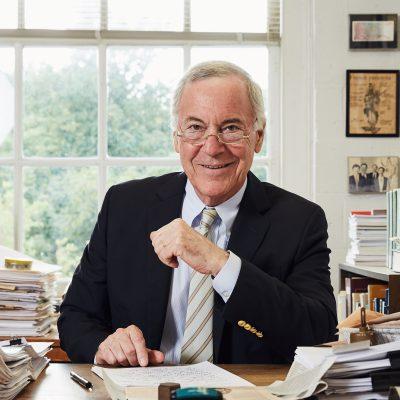
Steve Hanke is a professor of applied economics at the Johns Hopkins University. His most recent book, co-authored with Matt Sekerke, is Making Money Work: How to Rewrite the Rules of Our Financial System, Wiley 2025. John Greenwood is a fellow at the Johns Hopkins Institute for Applied Economics, Global Health, and the Study of Business Enterprise.
Donald Trump and Jerome Powell
The central bank is under pressure to get policy right.Chip Somodevilla/Getty Images
Add Fortune on Google for similar content.

The ongoing feud between President Trump and Fed Chairman Jerome Powell centers on interest rates. This tells us more about the near-universal view of what constitutes monetary policy than it does about Trump or Powell. While Trump and Powell might quibble over the proper level for the Fed funds rate, they both think monetary policy is all about interest rates.

Recommended Video

Trump and Powell aren’t alone. Today, central bankers organize monetary policy around the overnight interest rate set on reserves supplied by central banks. Indeed, nearly every central bank these days describes its stance on monetary policy in terms of its policy rate. It’s not surprising, therefore, that most bankers, market analysts, economists, and financial journalists also embrace the view that monetary policy is all about central banks’ policy rates. That’s why markets wait with bated breath before each central bank policy rate decision.

Why the obsession over interest rates? One reason hinges on the fact that for over the past 30 years or so, macroeconomic models are neo-Keynesian extensions of dynamic stochastic general equilibrium (DSGE) models. These put interest rates front and center. Armed with these models, economists and central bankers believe that monetary policy has its impact on the economy via changes in central banks’ policy rates.

But that’s not what monetarists, who embrace the quantity theory of money, tell us. Unlike the neo-Keynesian macroeconomic models that exclude money, the quantity theory of money states that national income or nominal GDP is primarily determined by the movements of broad money, not by changes in interest rates.

As it turns out, the data talk loudly and support the quantity theory of money. They do not support the neo-Keynesian models which are centered on changes in interest rates. Indeed, the correlations between changes in policy rates and changes in real and nominal economic activity are considerably worse than those between rates of change in the quantity of money and nominal GDP. Three recent major episodes support this conclusion.

The case of Japan

First, let’s consider the case of Japan between 1996 and 2019. Throughout this period, the Bank of Japan’s (BOJ) overnight policy rate lingered at negligible levels, averaging 0.125%. As a result, most economists concluded that monetary policy in Japan was very “easy”. But monetarists, who focused on Japan’s anemic broad money (M2) growth of only 2.8% per year, concluded that monetary policy was “tight”. Which camp was right?

Japan’s inflation averaged a de minimis 0.2% per year in the 1996-2019 period. It is clear that the monetarists were correct. By focusing on the BOJ’s overnight policy rate and by ignoring the money supply, most mainstream economists completely misdiagnosed the tenor of Japan’s monetary policy.

The U.S. between 2010 and 2019

Second, let’s consider the U.S. between 2010 and 2019. During most of this decade, the Fed funds rate was held down at 0.25%. In addition, the Fed engaged in three episodes of quantitative easing (QE). Many concluded that this amounted to very “easy” monetary conditions. They warned that inflation would result. In fact, broad money growth (M2) remained low and stable at 5.8% per year. In consequence, inflation also remained low, averaging just 1.8% per year between 2010 and 2019. As was the case with Japan, interest rates turned out to be a highly misleading indicator of the stance of monetary policy. The growth in the money supply was a much better guide to economic activity and inflation than the course of the Fed funds rate.

The case of the pandemic

Third, let’s once again consider the U.S.

This time, we will examine the COVID pandemic period (2020-2024). Initially, interest rates were reduced to 0.25%, where they stayed between March 2020 and March 2022. In addition, the Fed conducted large-scale QE purchases. Because this policy mix had not caused inflation in the 2010-2019 period, the consensus of Keynesian economists expected the same results as before. By ignoring money growth, they predicted in 2020 and early 2021 that inflation would remain low. Indeed, some Keynesians predicted outright deflation. The deflationists argued that lockdowns were resulting in “weak aggregate supply,” that slow income growth was producing “weak aggregate demand,” and that unemployment, which reached 14.8% in April 2020, would remain elevated.

By contrast, monetary economists focused on the explosion of broad money (M2) growth, which averaged 17.3% per year between March 2020 and March 2022. In consequence, they predicted, as early as April 2020, that there would be a substantial inflation.

As it turned out, the monetarists were right once again. From spring 2021, inflation surged, with the U.S. CPI peaking at 9.1% in June 2022, and averaging 7.0% year-on-year between April 2021 and December 2022.

Why are the monetarists consistently correct?

In each of the major cases we present, the quantity theory of money generated the correct forecast, while the Keynesian theories, which are based on interest rates, resulted in misleading signals. Why?

The reason why central bank policy rates are a misguided mechanism for steering and forecasting the course of the economy is because interest rates are, in large part, symptoms of past money growth, not necessarily drivers of future money growth. Changes in the quantity of money, on the other hand, directly fuel spending, and therefore correctly signal the direction of spending and inflation.

When the quantity of money is increased substantially and for a sustained period, one of the first effects is that interest rates fall. But after six to nine months, business and consumer spending accelerate, and the demand for credit starts to increase. As a result, interest rates are pushed up. If the acceleration of money growth continues, inflation follows – typically after a year or so – and interest rates rise even further.

So, the first effect of faster money growth is lower interest rates, but this is only a temporary effect. The second and more permanent effect is higher interest rates. This is what happened in the U.S. during the 2020-2024 period.

Conversely, the first and temporary effect of slower money growth is higher interest rates. The second and more permanent effect is lower interest rates. This is what occurred in Japan between the mid-1990s and 2019.

By ignoring the quantity theory of money and employing neo-Keynesian macroeconomic models, central bankers are often wrong-footed. They think that by managing policy rates, they are controlling monetary policy when in reality, they are just reacting to changes in the quantity of money that occurred in a prior period.

For example, the Fed refused to raise rates in 2020 or 2021, asserting that inflation was “transitory”. The Fed only reluctantly started to raise rates in mid-2022. But the excess money creation the Fed had engineered in 2020-2021 generated inflation that peaked at 9.1% per year and forced the Fed to raise rates to 5.5%. If the Fed had refrained from letting the money supply surge in 2020-2021, the steep rate hikes would not have been needed, as evidenced by the experience of China and Switzerland, countries that did not allow excess money growth to occur during the COVID pandemic.

Monetary policy’s Holy Grail is money, not interest rates.

The opinions expressed in Fortune.com commentary pieces are solely the views of their authors and do not necessarily reflect the opinions and beliefs of Fortune.
About the Authors
Steve H. Hanke
By Steve H. Hanke
Twitter icon
See full bioRight Arrow Button Icon
By John Greenwood
See full bioRight Arrow Button Icon
Add Fortune on Google for similar content.

Latest in Commentary

Finance
Lorem ipsum dolor sit amet, consectetur adipiscing elit, sed do eiusmod tempor incididunt ut labore et dolore magna aliqua. Ut enim ad minim veniam
By Fortune Editors
October 20, 2025
Finance
Lorem ipsum dolor sit amet, consectetur adipiscing elit, sed do eiusmod tempor incididunt ut labore et dolore magna aliqua. Ut enim ad minim veniam
By Fortune Editors
October 20, 2025
Finance
Lorem ipsum dolor sit amet, consectetur adipiscing elit, sed do eiusmod tempor incididunt ut labore et dolore magna aliqua. Ut enim ad minim veniam
By Fortune Editors
October 20, 2025
Finance
Lorem ipsum dolor sit amet, consectetur adipiscing elit, sed do eiusmod tempor incididunt ut labore et dolore magna aliqua. Ut enim ad minim veniam
By Fortune Editors
October 20, 2025
Finance
Lorem ipsum dolor sit amet, consectetur adipiscing elit, sed do eiusmod tempor incididunt ut labore et dolore magna aliqua. Ut enim ad minim veniam
By Fortune Editors
October 20, 2025
Finance
Lorem ipsum dolor sit amet, consectetur adipiscing elit, sed do eiusmod tempor incididunt ut labore et dolore magna aliqua. Ut enim ad minim veniam
By Fortune Editors
October 20, 2025

Most Popular

Finance
Lorem ipsum dolor sit amet, consectetur adipiscing elit, sed do eiusmod tempor incididunt ut labore et dolore magna aliqua. Ut enim ad minim veniam
By Fortune Editors
October 20, 2025
Finance
Lorem ipsum dolor sit amet, consectetur adipiscing elit, sed do eiusmod tempor incididunt ut labore et dolore magna aliqua. Ut enim ad minim veniam
By Fortune Editors
October 20, 2025
Finance
Lorem ipsum dolor sit amet, consectetur adipiscing elit, sed do eiusmod tempor incididunt ut labore et dolore magna aliqua. Ut enim ad minim veniam
By Fortune Editors
October 20, 2025
Finance
Lorem ipsum dolor sit amet, consectetur adipiscing elit, sed do eiusmod tempor incididunt ut labore et dolore magna aliqua. Ut enim ad minim veniam
By Fortune Editors
October 20, 2025
Finance
Lorem ipsum dolor sit amet, consectetur adipiscing elit, sed do eiusmod tempor incididunt ut labore et dolore magna aliqua. Ut enim ad minim veniam
By Fortune Editors
October 20, 2025
Finance
Lorem ipsum dolor sit amet, consectetur adipiscing elit, sed do eiusmod tempor incididunt ut labore et dolore magna aliqua. Ut enim ad minim veniam
By Fortune Editors
October 20, 2025
Fortune Secondary Logo
Rankings
  • 100 Best Companies
  • Fortune 500
  • Global 500
  • Fortune 500 Europe
  • Most Powerful Women
  • World's Most Admired Companies
  • See All Rankings
  • Lists Calendar
Sections
  • Finance
  • Fortune Crypto
  • Features
  • Leadership
  • Health
  • Commentary
  • Success
  • Retail
  • Mpw
  • Tech
  • Lifestyle
  • CEO Initiative
  • Asia
  • Politics
  • Conferences
  • Europe
  • Newsletters
  • Personal Finance
  • Environment
  • Magazine
  • Education
Customer Support
  • Frequently Asked Questions
  • Customer Service Portal
  • Privacy Policy
  • Terms Of Use
  • Single Issues For Purchase
  • International Print
Commercial Services
  • Advertising
  • Fortune Brand Studio
  • Fortune Analytics
  • Fortune Conferences
  • Business Development
  • Group Subscriptions
About Us
  • About Us
  • Press Center
  • Work At Fortune
  • Terms And Conditions
  • Site Map
  • About Us
  • Press Center
  • Work At Fortune
  • Terms And Conditions
  • Site Map
  • Facebook icon
  • Twitter icon
  • LinkedIn icon
  • Instagram icon
  • Pinterest icon

Latest in Commentary

cj
CommentaryIBM
IBM’s $17 million DOJ settlement makes the case for civility
By Carolynn JohnsonJune 16, 2026
3 hours ago
Vietnam has bold plans for its economic future. It will need U.S. tech, capital, and speed to make them happen
CommentaryVietnam
Vietnam has bold plans for its economic future. It will need U.S. tech, capital, and speed to make them happen
By Brian McFeeters and Vu Tu ThanhJune 14, 2026
2 days ago
ivan
CommentaryMidwest
The Sun Belt boom is over. Midwest real-estate investors say ‘I told you so’
By Ivan BarrattJune 14, 2026
2 days ago
t
CommentaryTariffs
A quartz countertop tariff could double your kitchen renovation cost — and kill 13 jobs for every one it creates
By Steve SwedbergJune 14, 2026
2 days ago
nexstar
CommentaryAntitrust
Nexstar CEO: big tech swallowed local newspapers. Local TV could be next
By Perry A. SookJune 14, 2026
2 days ago
ravi
CommentaryWeather and forecasting
I spent 8 years flood-proofing a city. Capital markets are running out of time to take El Niño seriously
By Ravi S. BhallaJune 13, 2026
3 days ago

Most Popular

Current price of oil as of June 15, 2026
Personal Finance
Current price of oil as of June 15, 2026
By Joseph HostetlerJune 15, 2026
1 day ago
Current price of silver as of Monday, June 15, 2026
Personal Finance
Current price of silver as of Monday, June 15, 2026
By Joseph HostetlerJune 15, 2026
1 day ago
Meet Gwynne Shotwell, the engineer-turned-COO who runs SpaceX in platform heels and is now worth over $2 billion
Startups & Venture
Meet Gwynne Shotwell, the engineer-turned-COO who runs SpaceX in platform heels and is now worth over $2 billion
By Eva RoytburgJune 15, 2026
1 day ago
Hundreds of Stanford students walked out of their grad ceremony to protest Google CEO’s commencement speech. It wasn’t all about AI
Big Tech
Hundreds of Stanford students walked out of their grad ceremony to protest Google CEO’s commencement speech. It wasn’t all about AI
By Tristan BoveJune 15, 2026
22 hours ago
Boomers actually do hold most of the wealth and power. So why do they call it 'whiny' to point that out?
Economy
Boomers actually do hold most of the wealth and power. So why do they call it 'whiny' to point that out?
By Nick LichtenbergJune 14, 2026
2 days ago
Team USA star Ricardo Pepi grew up in a trailer in El Paso—and his parents pawned their car title to fuel his soccer dream. Now, he’s in the World Cup
Success
Team USA star Ricardo Pepi grew up in a trailer in El Paso—and his parents pawned their car title to fuel his soccer dream. Now, he’s in the World Cup
By Preston ForeJune 15, 2026
23 hours ago

© 2026 Fortune Media IP Limited. All Rights Reserved. Use of this site constitutes acceptance of our Terms of Use and Privacy Policy | CA Notice at Collection and Privacy Notice | Do Not Sell/Share My Personal Information
FORTUNE is a trademark of Fortune Media IP Limited, registered in the U.S. and other countries. FORTUNE may receive compensation for some links to products and services on this website. Offers may be subject to change without notice.