• Home
  • Latest
  • Fortune 500
  • Finance
  • Tech
  • Leadership
  • Lifestyle
  • Rankings
  • Multimedia
Commentary

Trump’s tariffs put American growth and prosperity at risk—and raise the likelihood of a recession

By
Gustavo Flores-Macias
Down Arrow Button Icon
By
Gustavo Flores-Macias
Down Arrow Button Icon
April 3, 2025, 11:50 AM ET
Gustavo Flores-Macías is a professor of government and public policy at Cornell University.
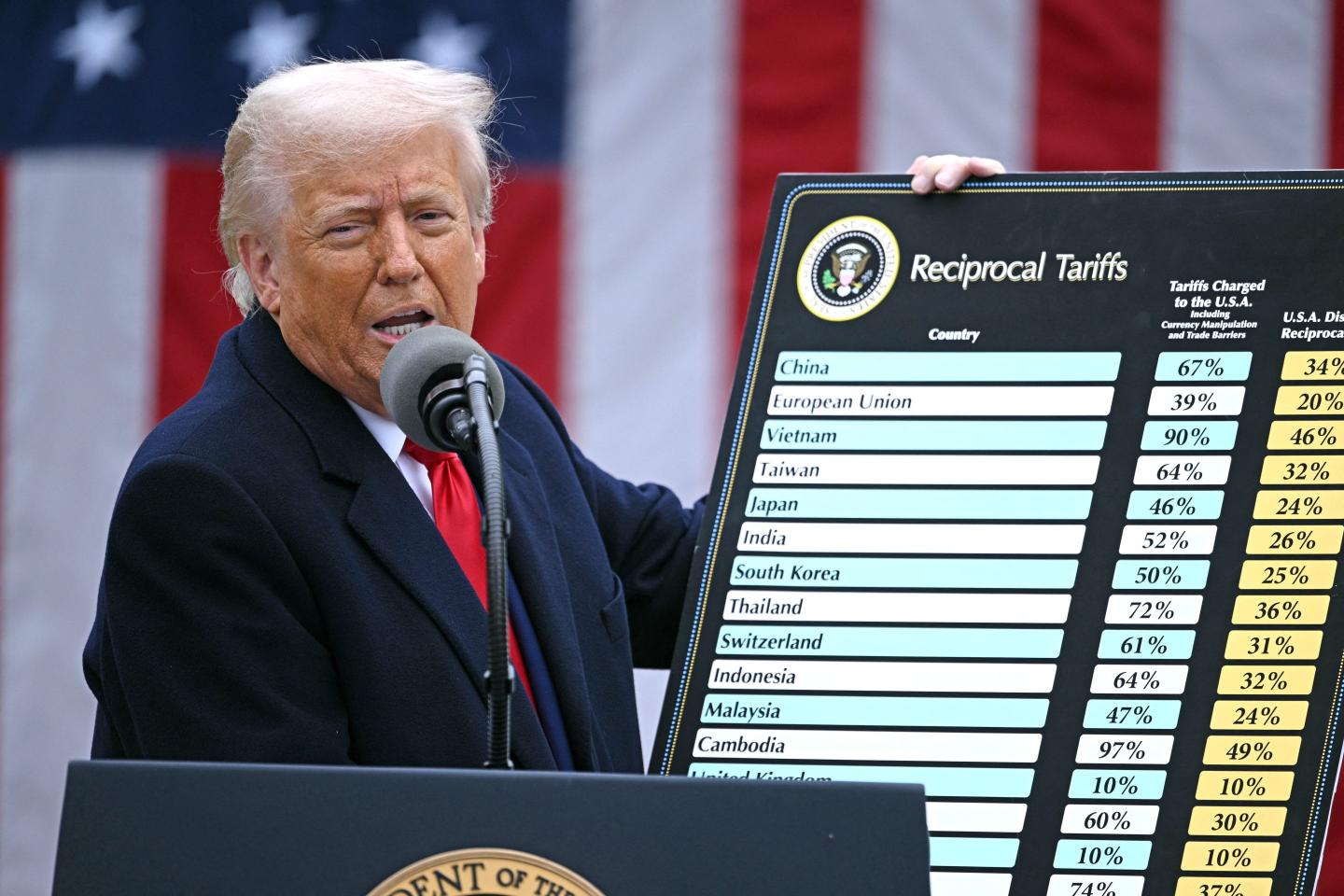
President Donald Trump delivering remarks on reciprocal tariffs yesterday, which he dubbed "Liberation Day."
President Donald Trump delivering remarks on reciprocal tariffs yesterday, which he dubbed "Liberation Day."BRENDAN SMIALOWSKI/AFP via Getty Images

President Trump’s sweeping new tariffs, announced yesterday, signal not just their embrace as a negotiating tactic, but a dramatic reordering of the global economy—one that could reshape entire industries and redefine how the country competes, trades, and grows.

As the United States drifts further toward protectionism, with growing bipartisan support for tariffs and industrial policy, it is worth remembering a cautionary tale from 20th-century development economics. Two regions—Latin America and East Asia—faced similar postwar challenges, yet took starkly different paths. One embraced tariffs and import substitution; the other, global markets and export discipline. The outcome was a decades-long divergence in growth and prosperity. Today, the U.S. risks forgetting which path led to dynamism and which to meager growth.

In the aftermath of World War II, Latin American nations, aiming to reduce dependence on foreign goods, adopted a model known as import-substitution industrialization (ISI). Under ISI, governments imposed steep tariffs, quotas, and currency controls to shield domestic industries from foreign competition. The goal was economic independence and the nurturing of homegrown industries. For a brief period, the strategy appeared to work: Factories opened, urban employment expanded, and GDP grew.

But the initial gains masked long-term weaknesses. Shielded from competition, many industries became inefficient and technologically stagnant. Government protection encouraged higher prices and discouraged innovation and productivity gains. Rather than fostering competitiveness, ISI created complacency. Over time, trade deficits widened, inflation soared, and foreign debt ballooned. By the 1980s, Latin America entered what is now known as the “lost decade,” marked by economic crisis, stagnation, and painful structural adjustment to return to the path of economic liberalization.

East Asia chose a different route. Countries like Japan, South Korea, Taiwan, and later China embraced export-oriented industrialization. While governments still played a central role in economic planning, the focus was not on sheltering firms but on preparing them to compete globally. This embrace of economic liberalization—coupled with targeted state support—unlocked rapid industrial growth, expanded access to global markets, and catalyzed the transition from low-wage manufacturing to high-tech, high-value industries.

This strategy brought with it the discipline of international markets. Companies had to produce high-quality goods at globally competitive prices or exit the market. Governments invested in education, infrastructure, and technology to support this transition. Over time, East Asian countries climbed the value chain—from textiles to electronics to high-end manufacturing. Their economies expanded, poverty receded, and innovation flourished.

The contrast could not be starker. From 1960 to 2000, East Asia’s per capita GDP grew at about three times the rate of Latin America’s. South Korea, once poorer than Bolivia, surpassed many European nations in income and technological sophistication. Meanwhile, Latin America became a case study in how protectionism can lead to economic sclerosis.

Why should Americans care? Because some of the same arguments used to justify Latin America’s ISI are now being recycled in Washington. The impulse to reshore manufacturing and impose broad tariffs echoes the rhetoric of self-sufficiency and industrial revival. These policies may serve legitimate goals, such as national security, employment creation, or supply chain resilience. But as currently implemented they risk producing the very stagnation they are meant to avert.

Consider recent U.S. tariff policy, including the 10% across-the-board tariffs and higher reciprocal ones on China and the EU—among others—announced by President Trump yesterday. While aimed at protecting domestic industries from unfair foreign competition, many tariffs function as blanket shields rather than surgical tools. They raise input costs for American firms, provoke retaliatory measures, and often fail to spur significant domestic investment. The lesson from Latin America is that artificially shielding industries brings about a short-term mirage of prosperity that only postpones the inevitable reckoning with global competitiveness.

East Asia, by contrast, used state power not to insulate firms indefinitely, but to push them into global arenas. Export requirements and international benchmarking were key features of their success. These governments bet on their industries not by sheltering them from failure, but by giving them the tools to succeed.

The United States, with its vast internal market and innovation ecosystem, is not Latin America. But it is not immune to the dangers of creeping economic nationalism. Tariffs can be politically seductive and temporarily popular. Yet, by taking away incentives for productivity, innovation, and global engagement, they can calcify industries, undermine competitiveness, and erode long-term growth.

Tariffs may succeed in bringing some jobs back to U.S. soil, but they are hardly a panacea. Many of the jobs lost in American manufacturing over the past several decades were not outsourced—they were automated. Robots and software, not just foreign competition, have reshaped the industrial workforce. Without a strategy that confronts the realities of technological change—through workforce development, reskilling, and incentives for innovation—tariff-driven policies risk reviving industries in form but not in substance. Some jobs may return, but not in the numbers or types that matter most for middle-class revival.

As policymakers navigate a turbulent geopolitical environment and respond to rising economic insecurity, the temptation to turn inward will grow. But history offers clear lessons. Tariffs may feel like action, but they are a detour from development.

Latin America learned this the hard way. East Asia offers a blueprint for how to harness markets, discipline, and state capacity to drive transformation. The United States must choose wisely. The stakes are too high to get it wrong.

The opinions expressed in Fortune.com commentary pieces are solely the views of their authors and do not necessarily reflect the opinions and beliefs of Fortune.

Read more:

  • Trump is knowingly steering the economy off the cliff with tariffs
  • Tariffs won’t make America great again: Export-Import Bank’s former chairman and president
  • Trump’s tariffs are flawed and contradictory—and the ‘Mar-a-Lago accord’ is suited for the trash bin
  • Trump’s tariffs program is based on flawed assumptions about the trade deficit
Join us at the Fortune Workplace Innovation Summit May 19–20, 2026, in Atlanta. The next era of workplace innovation is here—and the old playbook is being rewritten. At this exclusive, high-energy event, the world’s most innovative leaders will convene to explore how AI, humanity, and strategy converge to redefine, again, the future of work. Register now.
About the Author
By Gustavo Flores-Macias
See full bioRight Arrow Button Icon

Latest in Commentary

Finance
Lorem ipsum dolor sit amet, consectetur adipiscing elit, sed do eiusmod tempor incididunt ut labore et dolore magna aliqua. Ut enim ad minim veniam
By Fortune Editors
October 20, 2025
Finance
Lorem ipsum dolor sit amet, consectetur adipiscing elit, sed do eiusmod tempor incididunt ut labore et dolore magna aliqua. Ut enim ad minim veniam
By Fortune Editors
October 20, 2025
Finance
Lorem ipsum dolor sit amet, consectetur adipiscing elit, sed do eiusmod tempor incididunt ut labore et dolore magna aliqua. Ut enim ad minim veniam
By Fortune Editors
October 20, 2025
Finance
Lorem ipsum dolor sit amet, consectetur adipiscing elit, sed do eiusmod tempor incididunt ut labore et dolore magna aliqua. Ut enim ad minim veniam
By Fortune Editors
October 20, 2025
Finance
Lorem ipsum dolor sit amet, consectetur adipiscing elit, sed do eiusmod tempor incididunt ut labore et dolore magna aliqua. Ut enim ad minim veniam
By Fortune Editors
October 20, 2025
Finance
Lorem ipsum dolor sit amet, consectetur adipiscing elit, sed do eiusmod tempor incididunt ut labore et dolore magna aliqua. Ut enim ad minim veniam
By Fortune Editors
October 20, 2025

Most Popular

Finance
Lorem ipsum dolor sit amet, consectetur adipiscing elit, sed do eiusmod tempor incididunt ut labore et dolore magna aliqua. Ut enim ad minim veniam
By Fortune Editors
October 20, 2025
Finance
Lorem ipsum dolor sit amet, consectetur adipiscing elit, sed do eiusmod tempor incididunt ut labore et dolore magna aliqua. Ut enim ad minim veniam
By Fortune Editors
October 20, 2025
Finance
Lorem ipsum dolor sit amet, consectetur adipiscing elit, sed do eiusmod tempor incididunt ut labore et dolore magna aliqua. Ut enim ad minim veniam
By Fortune Editors
October 20, 2025
Finance
Lorem ipsum dolor sit amet, consectetur adipiscing elit, sed do eiusmod tempor incididunt ut labore et dolore magna aliqua. Ut enim ad minim veniam
By Fortune Editors
October 20, 2025
Finance
Lorem ipsum dolor sit amet, consectetur adipiscing elit, sed do eiusmod tempor incididunt ut labore et dolore magna aliqua. Ut enim ad minim veniam
By Fortune Editors
October 20, 2025
Finance
Lorem ipsum dolor sit amet, consectetur adipiscing elit, sed do eiusmod tempor incididunt ut labore et dolore magna aliqua. Ut enim ad minim veniam
By Fortune Editors
October 20, 2025
Fortune Secondary Logo
Rankings
  • 100 Best Companies
  • Fortune 500
  • Global 500
  • Fortune 500 Europe
  • Most Powerful Women
  • World's Most Admired Companies
  • See All Rankings
  • Lists Calendar
Sections
  • Finance
  • Fortune Crypto
  • Features
  • Leadership
  • Health
  • Commentary
  • Success
  • Retail
  • Mpw
  • Tech
  • Lifestyle
  • CEO Initiative
  • Asia
  • Politics
  • Conferences
  • Europe
  • Newsletters
  • Personal Finance
  • Environment
  • Magazine
  • Education
Customer Support
  • Frequently Asked Questions
  • Customer Service Portal
  • Privacy Policy
  • Terms Of Use
  • Single Issues For Purchase
  • International Print
Commercial Services
  • Advertising
  • Fortune Brand Studio
  • Fortune Analytics
  • Fortune Conferences
  • Business Development
  • Group Subscriptions
About Us
  • About Us
  • Press Center
  • Work At Fortune
  • Terms And Conditions
  • Site Map
  • About Us
  • Press Center
  • Work At Fortune
  • Terms And Conditions
  • Site Map
  • Facebook icon
  • Twitter icon
  • LinkedIn icon
  • Instagram icon
  • Pinterest icon

Latest in Commentary

hollywood
CommentaryMarketing
I spent 20 years learning to navigate an industry. Then I built a campaign for the man who’s dismantling it
By Matti YahavApril 29, 2026
15 hours ago
aging
HealthLongevity
We’re the CEOs of Peloton and the Hospital for Special Surgery. Living longer isn’t enough, we need to live better, too
By Bryan T. Kelly and Peter SternApril 29, 2026
16 hours ago
gen z
Commentarydisruption
AI won’t kill your job — it will kill the path to your first one
By Jeffrey Sonnenfeld, Stephen Henriques, Johan Griesel, Andrew Alam-Nist and Peter YuApril 29, 2026
16 hours ago
greer
CommentaryTariffs
No, tariffs are not strengthening the economy
By Alex DuranteApril 29, 2026
17 hours ago
AI is changing who gets to be an expert. Are your colleagues ready to become ‘directors of intelligence’?
AIProductivity
AI is changing who gets to be an expert. Are your colleagues ready to become ‘directors of intelligence’?
By Bruce BroussardApril 29, 2026
19 hours ago
gen z
CommentaryEducation
Gen Z has the wrong idea about college. Your career doesn’t start after you graduate 
By Ashley BigdaApril 29, 2026
19 hours ago

Most Popular

Apple cofounder Ronald Wayne—whose stake would be worth up to $400 billion had he not sold it in 1976—says that at 91, he has no regrets
Success
Apple cofounder Ronald Wayne—whose stake would be worth up to $400 billion had he not sold it in 1976—says that at 91, he has no regrets
By Preston ForeApril 27, 2026
3 days ago
‘Take the money and run’: Johns Hopkins economist Steve Hanke on why the UAE quit OPEC
Energy
‘Take the money and run’: Johns Hopkins economist Steve Hanke on why the UAE quit OPEC
By Shawn TullyApril 29, 2026
21 hours ago
‘The cost of compute is far beyond the costs of the employees’: Nvidia executive says right now AI is more expensive than paying human workers
AI
‘The cost of compute is far beyond the costs of the employees’: Nvidia executive says right now AI is more expensive than paying human workers
By Sasha RogelbergApril 28, 2026
2 days ago
Jamie Dimon gets candid about national debt: ‘There will be a bond crisis, and then we’ll have to deal with it’
Economy
Jamie Dimon gets candid about national debt: ‘There will be a bond crisis, and then we’ll have to deal with it’
By Eleanor PringleApril 29, 2026
18 hours ago
‘They left me no choice’: Powell isn’t going anywhere—blocking Trump from another Fed appointee
Banking
‘They left me no choice’: Powell isn’t going anywhere—blocking Trump from another Fed appointee
By Eva RoytburgApril 29, 2026
9 hours ago
More than two-thirds of U.S. schools say they’re unable to afford the cost of student free lunch—and MAHA’s dietary guidelines may make it worse
Economy
More than two-thirds of U.S. schools say they’re unable to afford the cost of student free lunch—and MAHA’s dietary guidelines may make it worse
By Sasha RogelbergApril 29, 2026
19 hours ago

© 2026 Fortune Media IP Limited. All Rights Reserved. Use of this site constitutes acceptance of our Terms of Use and Privacy Policy | CA Notice at Collection and Privacy Notice | Do Not Sell/Share My Personal Information
FORTUNE is a trademark of Fortune Media IP Limited, registered in the U.S. and other countries. FORTUNE may receive compensation for some links to products and services on this website. Offers may be subject to change without notice.