• Home
  • Latest
  • Fortune 500
  • Finance
  • Tech
  • Leadership
  • Lifestyle
  • Rankings
  • Multimedia

Trendingnow

1

Egg companies made $1.22 billion in profit off a $6 carton — now they’re buying their way out of a price-fixing case with 53 million donated eggs

2

Meet the Zillennials: The luckiest micro-generation in the workforce, born between 1993 and 1998

3

Economists have found an answer to slowing cognitive decline: Avoid retiring early, study finds

1

Egg companies made $1.22 billion in profit off a $6 carton — now they’re buying their way out of a price-fixing case with 53 million donated eggs

2

Meet the Zillennials: The luckiest micro-generation in the workforce, born between 1993 and 1998

3

Economists have found an answer to slowing cognitive decline: Avoid retiring early, study finds
Commentary

Trump’s tariffs are flawed and contradictory—and the ‘Mar-a-Lago accord’ is suited for the trash bin

By
Steve H. Hanke
Steve H. Hanke
and
John A. Tatom
John A. Tatom
Down Arrow Button Icon
By
Steve H. Hanke
Steve H. Hanke
and
John A. Tatom
John A. Tatom
Down Arrow Button Icon
April 1, 2025, 7:27 AM ET

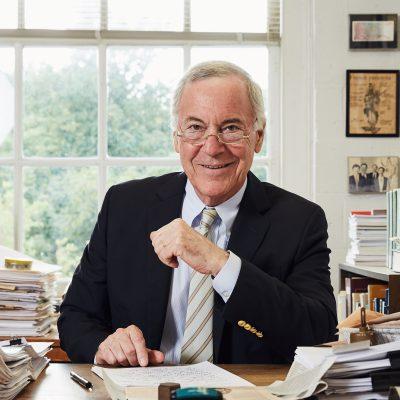
Steve Hanke is a professor of applied economics at Johns Hopkins University. John A. Tatom is a fellow at the Johns Hopkins Institute for Applied Economics, Global Health, and the Study of Business Enterprise.

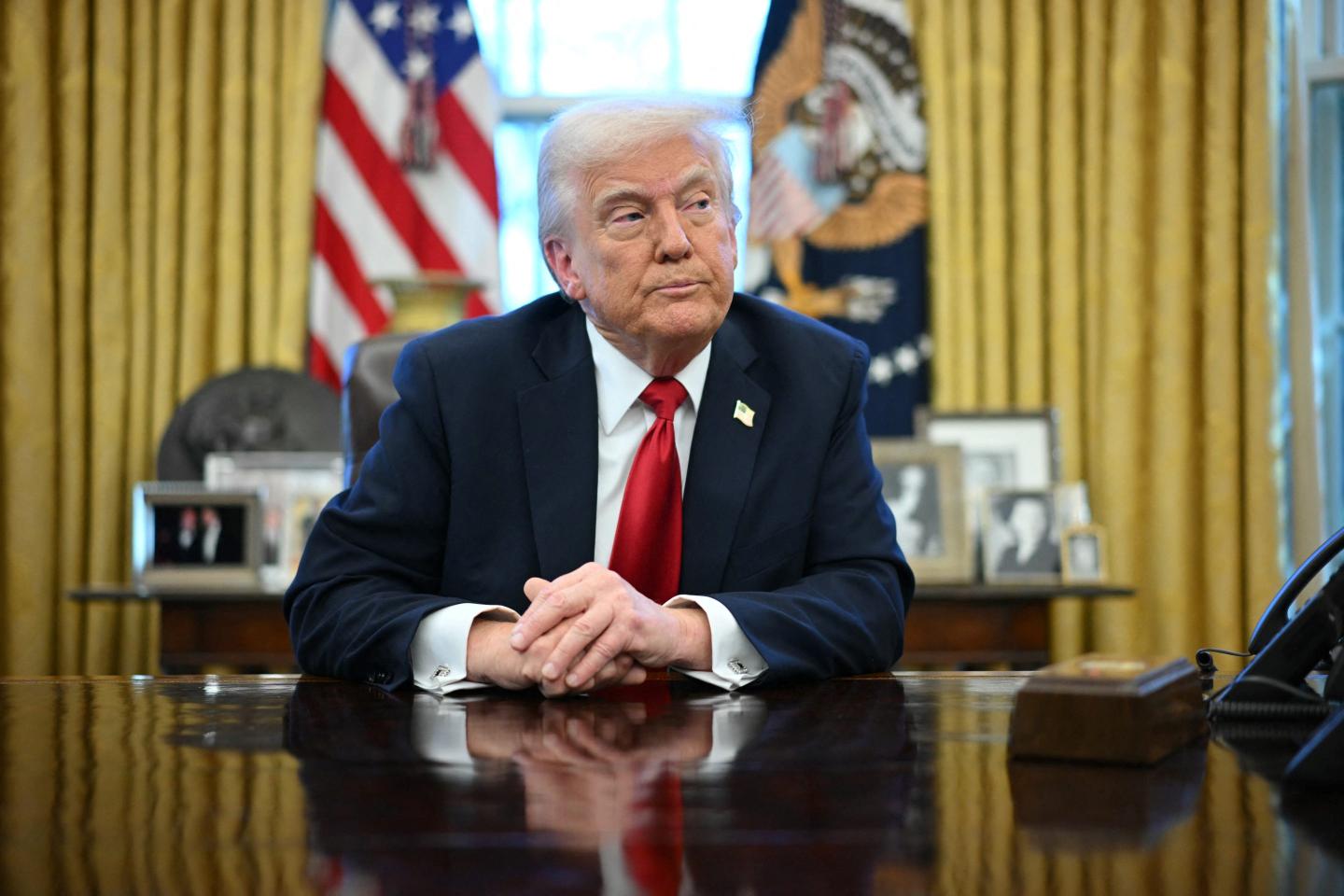
U.S. President Donald Trump announcing tariffs on auto imports last week.
U.S. President Donald Trump announcing tariffs on auto imports last week.MANDEL NGAN/AFP via Getty Images
Add Fortune on Google for similar content.

President Trump’s trade war is a stark departure from traditional U.S. trade policy. His journey off the beaten path has given rise to whispers of a new order of global finance and trade, what some are dubbing the “Mar-a-Lago accord.”

What do we know about that accord so far? For one thing, we know it is the brainchild of the president and two of his top economic advisers: Treasury Secretary Scott Bessent and Stephen Miran, who chairs the Council of Economic Advisers. Indeed, last year Bessent said that he would “like to be part of…Bretton Woods realignments.” But the best snapshot of the Mar-a-Lago accord we have to date is a paper published by Miran last November titled “A User’s Guide to Restructuring the Global Trading System.” In essence, the accord is a program whose intended purpose is to restore American production and employment by devaluing the dollar and imposing tariffs on foreign goods.

Unfortunately for President Trump, the alleged accord is full of contradictions. Right off the bat, the policies of tariffs and dollar devaluation themselves are contradictory. Tariffs would initially raise the value of the dollar by reducing the supply of dollars in international trade. Further, promoters of the accord suggest tariffs will have little to no effect on U.S. prices of tariffed goods. But using Miran’s own example from his paper—Trump’s 2018-19 tariffs on China—we see that this is false. A 2020 Johns Hopkins working paper by Olivier Jeanne and Jeongwon Son suggests that about 53% of those tariffs might have passed through to higher prices for Americans. Indeed, a well-studied and expected effect of a tariff is to raise the prices of both the tariffed goods and the prices of domestic import-competing goods. That is the only reason that a tariff is expected to raise production and employment of import-competing firms.

President Trump, in an effort to provide cover for his protectionist policies and inclinations, has indicated that tariffs on Canada and Mexico are supposedly intended to induce our neighbors to police the cross-border movement of illegal fentanyl. But he also has championed an “External Revenue Service” designed to permanently collect revenue from tariffs. He can’t have it both ways—either tariffs are temporary pressure tactics, or they are permanent sources of revenue.

What about the accord’s intended goal to restore American production? As it turns out, in the long run, tariffs will probably reduce the productivity of America’s import-competing sectors. When tariffs are implemented, they erect a wall against foreign producers, creating the illusion of increased domestic competitiveness. This reduces pressure on American companies to innovate and improve technology to compete with the otherwise more productive foreign workers and their firms. This artificial cover inevitably results in firms delaying or ignoring the necessary changes they require to compete with foreign competitors. In other words, it allows American companies to rest behind a tariff wall.

So, the accord is clearly full of contradictions. In fact, we have seen these contradictions play out in the global arena before. In the 1930s, the U.S. and other countries engaged in competitive attempts to raise tariffs and devalue their currencies in efforts to take demand for goods and services away from foreigners and to their domestic economies. The Smoot-Hawley tariff adopted in 1930 is regarded as the vanguard effort in adoption of these policies. Such initiatives came to be called “beggar-thy-neighbor” policies, and they resulted in shrinking overall world trade, production, and employment, and even prolonged the Great Depression. Their failure ensured that the U.S. would stick to free-trade principles for the ensuing century.

With that said, President Trump is not the first to propose such an accord. The Mar-a-Lago accord is reminiscent of the Plaza Accord of 1985, in which representatives from the U.S., France, West Germany, Japan, and the U.K. met at the Plaza Hotel in New York City to coordinate a depreciation of the U.S. dollar. What was the result? While the Plaza Accord was partially successful (the dollar did devalue), the U.S. experienced a slump in its share of global trade, and its investment, productivity, and output growth in comparison with Europe and relative to its earlier U.S.-tax-policy-related resurgence was much lower.

It seems as though President Trump and his advisers have forgotten all about the ill effects of the United States’ tariff program in the 1930s, as well as earlier ill-fated accords. Unfortunately for Americans, those who forget history are condemned to repeat it. 

The opinions expressed in Fortune.com commentary pieces are solely the views of their authors and do not necessarily reflect the opinions and beliefs of Fortune.

Read more:

  • Trump tariffs: Stealing from the China playbook—to boost car making in America
  • Trump’s tariffs program is based on flawed assumptions about the trade deficit
  • Tariffs won’t make America great again: Export-Import Bank’s former chairman and president
  • Trump is knowingly steering the economy off the cliff with tariffs
About the Authors
Steve H. Hanke
By Steve H. Hanke
Twitter icon
See full bioRight Arrow Button Icon
By John A. Tatom
See full bioRight Arrow Button Icon
Add Fortune on Google for similar content.

Latest in Commentary

Finance
Lorem ipsum dolor sit amet, consectetur adipiscing elit, sed do eiusmod tempor incididunt ut labore et dolore magna aliqua. Ut enim ad minim veniam
By Fortune Editors
October 20, 2025
Finance
Lorem ipsum dolor sit amet, consectetur adipiscing elit, sed do eiusmod tempor incididunt ut labore et dolore magna aliqua. Ut enim ad minim veniam
By Fortune Editors
October 20, 2025
Finance
Lorem ipsum dolor sit amet, consectetur adipiscing elit, sed do eiusmod tempor incididunt ut labore et dolore magna aliqua. Ut enim ad minim veniam
By Fortune Editors
October 20, 2025
Finance
Lorem ipsum dolor sit amet, consectetur adipiscing elit, sed do eiusmod tempor incididunt ut labore et dolore magna aliqua. Ut enim ad minim veniam
By Fortune Editors
October 20, 2025
Finance
Lorem ipsum dolor sit amet, consectetur adipiscing elit, sed do eiusmod tempor incididunt ut labore et dolore magna aliqua. Ut enim ad minim veniam
By Fortune Editors
October 20, 2025
Finance
Lorem ipsum dolor sit amet, consectetur adipiscing elit, sed do eiusmod tempor incididunt ut labore et dolore magna aliqua. Ut enim ad minim veniam
By Fortune Editors
October 20, 2025

Most Popular

Finance
Lorem ipsum dolor sit amet, consectetur adipiscing elit, sed do eiusmod tempor incididunt ut labore et dolore magna aliqua. Ut enim ad minim veniam
By Fortune Editors
October 20, 2025
Finance
Lorem ipsum dolor sit amet, consectetur adipiscing elit, sed do eiusmod tempor incididunt ut labore et dolore magna aliqua. Ut enim ad minim veniam
By Fortune Editors
October 20, 2025
Finance
Lorem ipsum dolor sit amet, consectetur adipiscing elit, sed do eiusmod tempor incididunt ut labore et dolore magna aliqua. Ut enim ad minim veniam
By Fortune Editors
October 20, 2025
Finance
Lorem ipsum dolor sit amet, consectetur adipiscing elit, sed do eiusmod tempor incididunt ut labore et dolore magna aliqua. Ut enim ad minim veniam
By Fortune Editors
October 20, 2025
Finance
Lorem ipsum dolor sit amet, consectetur adipiscing elit, sed do eiusmod tempor incididunt ut labore et dolore magna aliqua. Ut enim ad minim veniam
By Fortune Editors
October 20, 2025
Finance
Lorem ipsum dolor sit amet, consectetur adipiscing elit, sed do eiusmod tempor incididunt ut labore et dolore magna aliqua. Ut enim ad minim veniam
By Fortune Editors
October 20, 2025
Fortune Secondary Logo
Rankings
  • 100 Best Companies
  • Fortune 500
  • Global 500
  • Fortune 500 Europe
  • Most Powerful Women
  • World's Most Admired Companies
  • See All Rankings
  • Lists Calendar
Sections
  • Finance
  • Fortune Crypto
  • Features
  • Leadership
  • Health
  • Commentary
  • Success
  • Retail
  • Mpw
  • Tech
  • Lifestyle
  • CEO Initiative
  • Asia
  • Politics
  • Conferences
  • Europe
  • Newsletters
  • Personal Finance
  • Environment
  • Magazine
  • Education
Customer Support
  • Frequently Asked Questions
  • Customer Service Portal
  • Privacy Policy
  • Terms Of Use
  • Single Issues For Purchase
  • International Print
Commercial Services
  • Advertising
  • Fortune Brand Studio
  • Fortune Analytics
  • Fortune Conferences
  • Business Development
  • Group Subscriptions
About Us
  • About Us
  • Press Center
  • Work At Fortune
  • Terms And Conditions
  • Site Map
  • About Us
  • Press Center
  • Work At Fortune
  • Terms And Conditions
  • Site Map
  • Facebook icon
  • Twitter icon
  • LinkedIn icon
  • Instagram icon
  • Pinterest icon

Latest in Commentary

ds
CommentarySoftware
I argued with the father of open source for 2 years. Now the AI fight is the same — only bigger
By David SiegelJuly 3, 2026
16 hours ago
ashok
Commentary250 Years of Innovation
The greatest startup in history: What we can learn from America’s founders at today’s AI frontier
By Ashok N. SrivastavaJuly 3, 2026
16 hours ago
2
Commentary250 Years of Innovation
America’s secret weapon isn’t just innovation — It’s the freedom to fail
By Keith KrachJuly 3, 2026
18 hours ago
rn
CommentaryCryptocurrency
Former Iran director at NSC: Crypto legislation is a ticket to sanctions evasion
By Richard NephewJuly 2, 2026
2 days ago
m
Commentary250 Years of Innovation
McKinsey chairs: Building a more resilient industrial base may require $2 trillion in investment
By Eric Kutcher and Shubham SinghalJuly 2, 2026
2 days ago
em
Commentary250 Years of Innovation
America’s 250th birthday has Elon Musk and a record IPO. Its 15th had Alexander Hamilton — and a stock market bubble
By Owen LamontJuly 2, 2026
2 days ago

Most Popular

Egg companies made $1.22 billion in profit off a $6 carton — now they’re buying their way out of a price-fixing case with 53 million donated eggs
Law
Egg companies made $1.22 billion in profit off a $6 carton — now they’re buying their way out of a price-fixing case with 53 million donated eggs
By Wyatte Grantham-Philips and The Associated PressJuly 2, 2026
1 day ago
Meet the Zillennials: The luckiest micro-generation in the workforce, born between 1993 and 1998
AI
Meet the Zillennials: The luckiest micro-generation in the workforce, born between 1993 and 1998
By Nick LichtenbergJuly 3, 2026
21 hours ago
Economists have found an answer to slowing cognitive decline: Avoid retiring early, study finds
Economy
Economists have found an answer to slowing cognitive decline: Avoid retiring early, study finds
By Sasha RogelbergJuly 2, 2026
1 day ago
On Wall Street, analysts increasingly don’t believe the U.S. government’s 'misleading' job numbers
Economy
On Wall Street, analysts increasingly don’t believe the U.S. government’s 'misleading' job numbers
By Jim EdwardsJuly 3, 2026
17 hours ago
$25 billion CEO says one-hour interviews are a waste of time—he puts candidates through six hours of tests and wants them to order wine at lunch
Success
$25 billion CEO says one-hour interviews are a waste of time—he puts candidates through six hours of tests and wants them to order wine at lunch
By Orianna Rosa RoyleJuly 3, 2026
21 hours ago
Current price of oil as of July 2, 2026
Personal Finance
Current price of oil as of July 2, 2026
By Joseph HostetlerJuly 2, 2026
2 days ago

© 2026 Fortune Media IP Limited. All Rights Reserved. Use of this site constitutes acceptance of our Terms of Use and Privacy Policy | CA Notice at Collection and Privacy Notice | Do Not Sell/Share My Personal Information
FORTUNE is a trademark of Fortune Media IP Limited, registered in the U.S. and other countries. FORTUNE may receive compensation for some links to products and services on this website. Offers may be subject to change without notice.