
• Home
  • Latest
  • Fortune 500
  • Finance
  • Tech
  • Leadership
  • Lifestyle
  • Rankings
  • Multimedia

Trendingnow

1

Mark Cuban says he has the solution to growing income inequality, and it's to reward every employee—from CEO to janitor—with company stock

2

OpenAI says its AI models secretly broke out of a secure test environment and hacked into AI company Hugging Face in order to cheat on an evaluation

3

Mathematicians grapple with a ‘very rapid and very unsettling change’ as AI cracks yet another century-old problem

1

Mark Cuban says he has the solution to growing income inequality, and it's to reward every employee—from CEO to janitor—with company stock

2

OpenAI says its AI models secretly broke out of a secure test environment and hacked into AI company Hugging Face in order to cheat on an evaluation

3

Mathematicians grapple with a ‘very rapid and very unsettling change’ as AI cracks yet another century-old problem
TechOpenAI

OpenAI launches long-awaited GPT-4.5—but ‘Orion’s’ capabilities already lag competitors

Jeremy Kahn
By
Jeremy Kahn
Jeremy Kahn
Editor, AI
Down Arrow Button Icon
Jeremy Kahn
By
Jeremy Kahn
Jeremy Kahn
Editor, AI
Down Arrow Button Icon
February 27, 2025, 8:23 PM ET
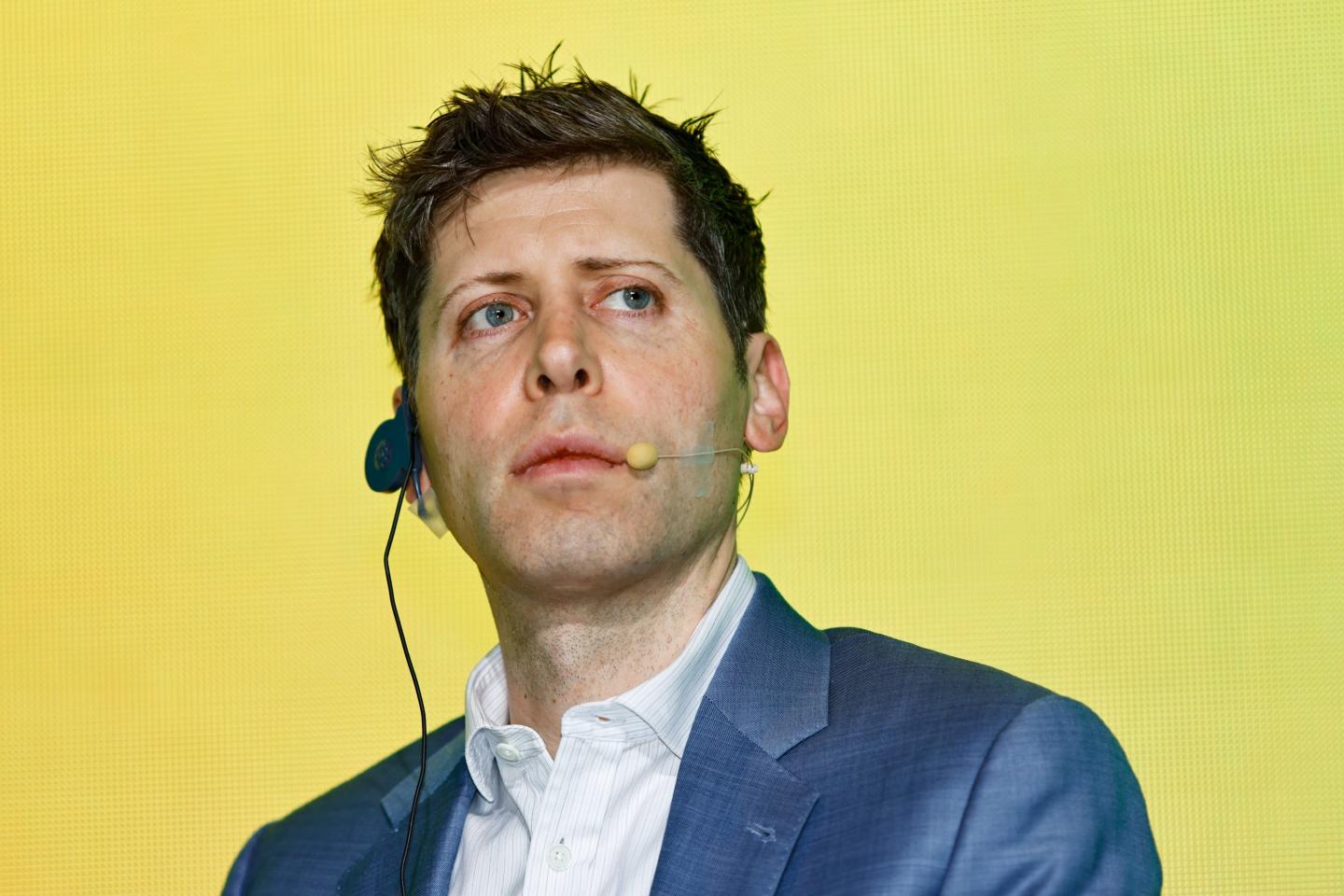
OpenAI cofounder and CEO Sam Altman
OpenAI cofounder and CEO Sam AltmanChris Jung—NurPhoto/Getty Images
Add Fortune on Google for similar content.

OpenAI announced the debut of its GPT-4.5 model on Thursday, unveiling one of the most highly anticipated products in the booming generative AI market. But the launch, coming two years after GPT-4 was introduced, only served to highlight how the high-flying AI company is struggling to stay at the front of the race it helped kick off.

Recommended Video

OpenAI CEO Sam Altman touted the latest model’s advances, saying in a tweet Thursday that GPT-4.5 was the first AI that “felt like talking to a thoughtful person,” and that he has been “astonished” by the “good advice” it provides. A blog the company published said that testers of GPT-4.5 judged the model to have more “EQ”—or emotional intelligence—than previous OpenAI models. And GPT-4.5 is less prone to inventing information, a phenomenon known as “hallucination,” the company said.

But Altman and co. also sought to tamp down expectations. “This isn’t a reasoning model and won’t crush benchmarks,” Altman warned, describing a “different kind of intelligence.” OpenAI’s blog post emphasized softer, more qualitative metrics for assessing GPT-4.5’s improvements from previous models, such as an output that “feels more natural” and the model’s “improved ability to follow user intent.”

OpenAI’s ambivalence about its latest model was evident even its description of GPT-4.5. OpenAI noted that “GPT-4.5 is not a frontier model” in the technical paper it released alongside the new model on Thursday (the term “frontier model” refers to AI systems at the leading edge of technological capability). Hours later, for reasons unclear, the company deleted that line from its paper.

And the company noted that it was still deciding whether it would even offer GPT-4.5 in the “long term” as an API for partners to connect to their systems because of how expensive it is to run. The new model is currently being offered at prices that are between 15 and 30 times more costly than OpenAI’s GPT-4o model.

In many ways, GPT-4.5 represents the end of an era for OpenAI. As Altman announced earlier this month, GPT-4.5, or Orion, as the company called the model internally, is the last that will be built using the same “pre-training” method that the company used to create the technology behind its breakout hit, ChatGPT (the P in GPT stands for “pretrained”). The method involves building ever bigger models and using ever increasing amounts data for each successive version, an expensive and complex approach that in theory allows the models to become more powerful.

OpenAI said that GPT-4.5 would be available on Thursday to users of the $200-a-month ChatGPT Pro service, but would not be available to other users until next week because, Altman noted, the company did not currently have enough computing capacity on hand.

OpenAI did not say how large the new GPT-4.5 model is. Outside experts have estimated that GPT 4 might have as many as 1.8 trillion parameters—essentially tunable nodes—in its neural network. Outside experts estimated that GPT-4.5 could have as many as 4 trillion or 5 trillion parameters.

Mind the benchmarks

While the new model outperforms OpenAI’s GPT-4o by a significant margin on a number of benchmark tests, especially those that involve accurately answering general knowledge questions, its performance on other tests, including those that involve solving problems across different languages, was only slightly improved. What’s more, in questions involving mathematics, coding, and logic, many early users said that GPT-4.5 underperforms OpenAI’s already released “reasoning” models such as o1 and o3-mini, as well as the R1 model from the Chinese AI startup DeepSeek.

GPT-4.5 also appears to lag Anthropic’s Claude 3.7 Sonnet model, which the rival AI shop unveiled earlier this week, according to benchmark scores users have posted to social media. Claude 3.7 Sonnet is the first AI model to be released that combines the instant, “intuitive” answers that GPT-style models produce with the slower, more deliberative, but often more accurate, answers that the reasoning models produce.

Claude 3.7 Sonnet decides, based on the user’s prompt, whether it can answer quickly, based only on what it has learned in its initial training, or whether it needs to spend more time producing a series of sequential steps and reflecting on those steps—a process known as a “chain of thought”—to arrive at the answer. OpenAI’s GPT-4.5 does not have this ability.

The lack of a clear, across-the-board, leap in performance led Gary Marcus, the emeritus New York University cognitive scientist and AI expert who has emerged as a leading skeptic of today’s generative AI methods, to label OpenAI’s GPT-4.5 “a nothing burger.” Some disappointed users posted relatively weak benchmark data for the new model on social media along with captions like “tell me I’m not seeing this.”

The shift to reasoning

Two former OpenAI employees told Fortune that the Orion model was originally intended to be GPT-5—an AI system that would show a much more significant increase in capabilities from OpenAI’s GPT-4, which launched in March 2023. But the model was never able to demonstrate this across-the-board step change in performance. As a result, OpenAI appeared to release it with nomenclature that would denote it was merely an incremental improvement on GPT-4o, not an order of magnitude jump in capabilities.

In a February 12 tweet, Altman said OpenAI will debut a model it will call GPT-5 in “weeks/months.” He noted that this model will combine the fast, instant answers of the GPT series models with the more deliberative, step-by-step logic of new “reasoning” models, making it more akin to Anthropic’s Claude 3.7 Sonnet.

Reasoning models start out with pretrained models but then use a method called reinforcement learning (where an AI models learns by trial and error to maximize some goal) to teach the model to output a sequence of logical steps that will lead to a correct answer. This “chain of thought,” as AI researchers refer to it, can often include the model engaging in what is essentially “self-reflection” to see where it can improve its process to arrive at the best answer.

GPT models adhered to so-called “scaling laws.” More empirical observations than anything akin to the laws of physics, the scaling laws were the supposition that the larger an AI model is (as measured by the number of parameters), the more data it is fed, and the more computing power applied to this pre-training process, the better the resulting AI model would be. What’s more, the scaling laws asserted that this improvement in capabilities was predictable and directly proportional to the increase in model size, data, and computing power applied during pretraining.

The reasoning models, by contrast, derive much of their capability from the amount of computing power applied at the time they are asked to answer a prompt. This is what AI researchers call “test-time compute,” and OpenAI has claimed it has found a new set of scaling laws that suggest that these reasoning models produce improved answers proportional to the amount of test-time compute applied. But even more than the original AI scaling laws, these new test-time compute scaling correlations have yet to be proven.

What’s clear with GPT-4.5’s release is that OpenAI no longer has the clear lead in the AI race it once did. To use a bike racing analogy, OpenAI remains in the peloton, but, for now at least, the yellow jersey has passed to Anthropic, and there are other companies, including China’s DeepSeek, Google, and Meta, all capable of winning the tour.

About the Author
Jeremy Kahn
By Jeremy KahnEditor, AI
LinkedIn iconTwitter icon

Jeremy Kahn is the AI editor at Fortune, spearheading the publication's coverage of artificial intelligence. He also co-authors Eye on AI, Fortune’s flagship AI newsletter.

See full bioRight Arrow Button Icon
Add Fortune on Google for similar content.

Latest in Tech

Finance
Lorem ipsum dolor sit amet, consectetur adipiscing elit, sed do eiusmod tempor incididunt ut labore et dolore magna aliqua. Ut enim ad minim veniam
By Fortune Editors
October 20, 2025
Finance
Lorem ipsum dolor sit amet, consectetur adipiscing elit, sed do eiusmod tempor incididunt ut labore et dolore magna aliqua. Ut enim ad minim veniam
By Fortune Editors
October 20, 2025
Finance
Lorem ipsum dolor sit amet, consectetur adipiscing elit, sed do eiusmod tempor incididunt ut labore et dolore magna aliqua. Ut enim ad minim veniam
By Fortune Editors
October 20, 2025
Finance
Lorem ipsum dolor sit amet, consectetur adipiscing elit, sed do eiusmod tempor incididunt ut labore et dolore magna aliqua. Ut enim ad minim veniam
By Fortune Editors
October 20, 2025
Finance
Lorem ipsum dolor sit amet, consectetur adipiscing elit, sed do eiusmod tempor incididunt ut labore et dolore magna aliqua. Ut enim ad minim veniam
By Fortune Editors
October 20, 2025
Finance
Lorem ipsum dolor sit amet, consectetur adipiscing elit, sed do eiusmod tempor incididunt ut labore et dolore magna aliqua. Ut enim ad minim veniam
By Fortune Editors
October 20, 2025

Most Popular

Finance
Lorem ipsum dolor sit amet, consectetur adipiscing elit, sed do eiusmod tempor incididunt ut labore et dolore magna aliqua. Ut enim ad minim veniam
By Fortune Editors
October 20, 2025
Finance
Lorem ipsum dolor sit amet, consectetur adipiscing elit, sed do eiusmod tempor incididunt ut labore et dolore magna aliqua. Ut enim ad minim veniam
By Fortune Editors
October 20, 2025
Finance
Lorem ipsum dolor sit amet, consectetur adipiscing elit, sed do eiusmod tempor incididunt ut labore et dolore magna aliqua. Ut enim ad minim veniam
By Fortune Editors
October 20, 2025
Finance
Lorem ipsum dolor sit amet, consectetur adipiscing elit, sed do eiusmod tempor incididunt ut labore et dolore magna aliqua. Ut enim ad minim veniam
By Fortune Editors
October 20, 2025
Finance
Lorem ipsum dolor sit amet, consectetur adipiscing elit, sed do eiusmod tempor incididunt ut labore et dolore magna aliqua. Ut enim ad minim veniam
By Fortune Editors
October 20, 2025
Finance
Lorem ipsum dolor sit amet, consectetur adipiscing elit, sed do eiusmod tempor incididunt ut labore et dolore magna aliqua. Ut enim ad minim veniam
By Fortune Editors
October 20, 2025
Fortune Secondary Logo
Rankings
  • 100 Best Companies
  • Fortune 500
  • Global 500
  • Fortune 500 Europe
  • Most Powerful Women
  • World's Most Admired Companies
  • See All Rankings
  • Lists Calendar
Sections
  • Finance
  • Fortune Crypto
  • Features
  • Leadership
  • Health
  • Commentary
  • Success
  • Retail
  • Mpw
  • Tech
  • Lifestyle
  • CEO Initiative
  • Asia
  • Politics
  • Conferences
  • Europe
  • Newsletters
  • Personal Finance
  • Environment
  • Magazine
  • Education
Customer Support
  • Frequently Asked Questions
  • Customer Service Portal
  • Privacy Policy
  • Terms Of Use
  • Single Issues For Purchase
  • International Print
Commercial Services
  • Advertising
  • Fortune Brand Studio
  • Fortune Analytics
  • Fortune Conferences
  • Business Development
  • Group Subscriptions
About Us
  • About Us
  • Press Center
  • Work At Fortune
  • Terms And Conditions
  • Site Map
  • About Us
  • Press Center
  • Work At Fortune
  • Terms And Conditions
  • Site Map
  • Facebook icon
  • Twitter icon
  • LinkedIn icon
  • Instagram icon
  • TikTok icon
  • YouTube icon

Latest in Tech

orson
CommentaryOpenAI
We got California to intervene about OpenAI’s corporate switch from nonprofit status. It’s time for the SEC to come to the table
By Orson Aguilar and Catherine BracyJuly 22, 2026
2 hours ago
A woman observes stock trends on her smartphone while a computer screen displays financial graphs.
NewslettersCFO Daily
Beyond SpaceX: Why great IPOs depend on more than first-day demand
By Sheryl EstradaJuly 22, 2026
2 hours ago
Arrakis cofounder and CEO Rafael Quintanilla.
Startups & VentureVenture Capital
Exclusive: Arrakis, betting AI’s biggest payoff is in industrial sectors not office work, emerges from stealth with $38 million in venture funding
By Jeremy KahnJuly 22, 2026
2 hours ago
ls
Commentarybooks
Confessions of an award-winning AI memoirist — the ‘slop’ debate isn’t really about good writing, and you know it
By Luke StoffelJuly 22, 2026
3 hours ago
b
Commentarythe future of work
Manpower President: The future of work question that even CEOs can’t answer
By Becky FrankiewiczJuly 22, 2026
3 hours ago
nela
Successdisruption
Exclusive: Stanford and ADP have new payroll data on Gen Z women losing ground to men in the job market—and AI isn’t the main culprit
By Nick LichtenbergJuly 22, 2026
3 hours ago

Most Popular

Mark Cuban says he has the solution to growing income inequality, and it's to reward every employee—from CEO to janitor—with company stock
Success
Mark Cuban says he has the solution to growing income inequality, and it's to reward every employee—from CEO to janitor—with company stock
By Sasha RogelbergJuly 20, 2026
2 days ago
OpenAI says its AI models secretly broke out of a secure test environment and hacked into AI company Hugging Face in order to cheat on an evaluation
Cybersecurity
OpenAI says its AI models secretly broke out of a secure test environment and hacked into AI company Hugging Face in order to cheat on an evaluation
By Jeremy Kahn and Emily ForliniJuly 21, 2026
19 hours ago
Mathematicians grapple with a ‘very rapid and very unsettling change’ as AI cracks yet another century-old problem
AI
Mathematicians grapple with a ‘very rapid and very unsettling change’ as AI cracks yet another century-old problem
By Eva RoytburgJuly 21, 2026
22 hours ago
‘I want to die broke’: Billionaire philanthropist Denny Sanford dies after giving away $4 billion
Success
‘I want to die broke’: Billionaire philanthropist Denny Sanford dies after giving away $4 billion
By Sydney LakeJuly 20, 2026
2 days ago
Despite a $156 million contract, Knicks star Jalen Brunson still calls his parents for financial advice any time he makes a big purchase
Success
Despite a $156 million contract, Knicks star Jalen Brunson still calls his parents for financial advice any time he makes a big purchase
By Emma BurleighJuly 21, 2026
23 hours ago
'Dr. Doom' Nouriel Roubini says we're headed for universal basic income or 'some form of socialism' as AI revolutionizes work—He calls that optimistic
AI
'Dr. Doom' Nouriel Roubini says we're headed for universal basic income or 'some form of socialism' as AI revolutionizes work—He calls that optimistic
By Jason MaJuly 18, 2026
4 days ago

© 2026 Fortune Media IP Limited. All Rights Reserved. Use of this site constitutes acceptance of our Terms of Use and Privacy Policy | CA Notice at Collection and Privacy Notice | Do Not Sell/Share My Personal Information
FORTUNE is a trademark of Fortune Media IP Limited, registered in the U.S. and other countries. FORTUNE may receive compensation for some links to products and services on this website. Offers may be subject to change without notice.