Despite the momentum of recent years, the fact remains that the energy transition is only in its infancy. Roughly halfway through what has been called climate’s decisive decade, and in the face of rising global uncertainties, it is time for a pragmatic reality check to understand where are we really, and what it will take to get the rest of the job done.
By our count, only about 10% of the low-emissions technologies needed by 2050 to meet global climate commitments are in place. Achieving the rest of the transition requires confronting the reality that the energy transition is at its core a colossal transformation of the physical world.
Today’s energy system is vast and complex, encompassing around 60,000 power plants, oil and gas pipelines that extend a distance equivalent to the moon and back—twice, over a billion vehicles, and the annual production of billions of tonnes of essential materials like steel and cement. All of this comes together to effectively deliver the needs of modern society, albeit while contributing to 85% of global carbon dioxide (CO2) emissions and in a highly inefficient fashion—about two-thirds of energy is wasted.
The world therefore needs a blueprint for physically transforming this complex colossus on the basis of which effective policies, incentives, and investments can be made. We have done just that—and identified 25 physical challenges related to the performance of low-emissions technologies and what it will take to deploy them.
The good news? Meaningful progress has been achieved on 13 challenges, such as enhancing the range of passenger battery EVs and the effectiveness of heat pumps in cold conditions. For these, making progress means continuing the momentum and removing constraints to their deployment. However, 12 challenges are particularly demanding—and 40 to 60% of the CO2 emissions of the energy system cannot be abated unless they are tackled.
Two of the “demanding dozen” are in the power system, the epicenter of the energy transition. First, solar and wind are highly effective power generators, but as their share in the electricity generation mix rises, the system will need to cope with periods without enough sunshine or wind. This requires more and new forms of storage, more interconnections between grids, backup generation, and flexibility on the demand side. But all of these solutions have execution challenges and some have hardly been deployed. Second, while rich countries can tack wind and solar on top of existing generation capacity, emerging systems lack this foundational capacity—and this is also where access to electricity needs to grow the most.
Mobility has two demanding challenges: Battery weight limits the payload that long-haul, heavy-duty electric trucks can carry and their range. And nearly all ships and airplanes still run on fossil fuels.
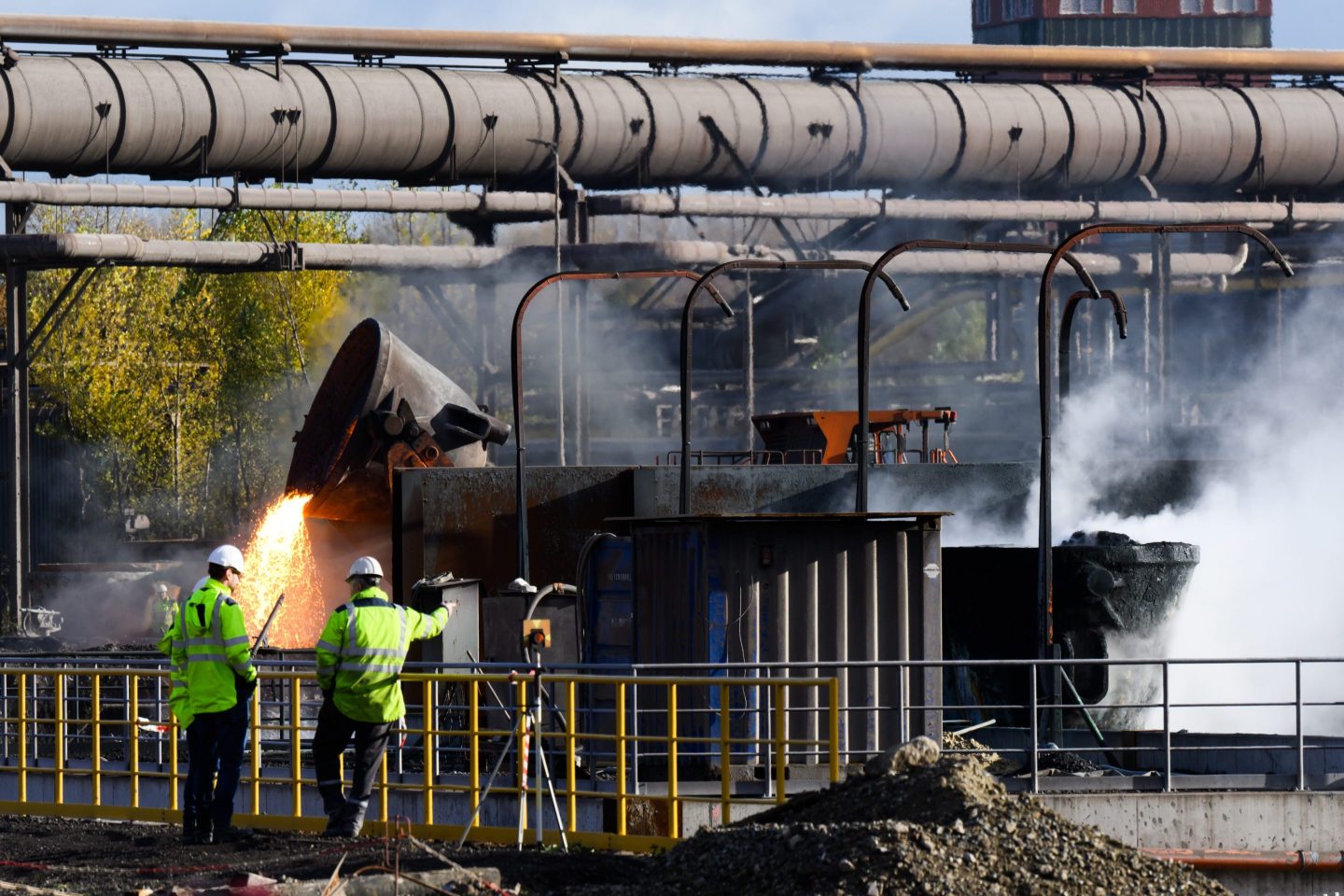
Four challenges relate to producing the “big four” industrial materials—steel, cement, plastics, and ammonia. Their production process requires fossil fuels to generate high-temperature heat, and often uses them as an input. These are industrial areas where there is almost no low-emissions primary production yet.
Two challenges stem from hydrogen. Despite being described as the “Swiss army knife” of the transition, hydrogen is voluminous, flammable, leaky, and needs a lot of energy to convert back and forth into useable forms, often making it less energy-efficient than other options. And there is a huge scaling challenge: Multiplying electrolyzer capacity by a factor of thousands and extending the length of hydrogen pipelines.
The final two challenges involve eliminating residual carbon dioxide through capturing point-source carbon and direct carbon removal, both of which are energy-intensive and technically challenging.
For business leaders and policymakers, tackling the “demanding dozen” will hinge on addressing three main difficulties: substantial technological performance gaps, nascent progress thus far, and therefore scant track record of execution (both of which also contribute to their high costs), and deep interlinkages between the demanding dozen themselves, which means that none of these challenges can be solved in isolation.
Making progress on these technologies will, of course, take collaboration. It will also take reimagining the very art of the possible. To overcome these inherent difficulties, it will be essential to push the technological frontier. But the system will also need to be redesigned to change how technologies mesh together and the ways energy itself is used. Examples include creating flexible demand for power in vehicles, buildings, and industry to manage periods when renewable energy is not available or replacing cement and plastics with different materials in some uses.
Reducing emissions is critical to ensure the world meets the goals enshrined in the Paris Agreement, but it is a monumental task. The only way to give the goal of net zero a real chance is to understand the physical challenges—what we call the “hard stuff”—and use that knowledge to execute well.
More must-read commentary published by Fortune:
- Shell’s Pyrrhic victory may well set the stage for more corporate climate accountability
- Americans paid $100B since 2008 to access their own money. I am petitioning the Fed to end this racket
- British fintech founder who moved to U.S.: U.K. tech’s problem isn’t taxes—it’s ambition
- The next wave of AI won’t be driven by LLMs. Here’s what investors should focus on instead
The opinions expressed in Fortune.com commentary pieces are solely the views of their authors and do not necessarily reflect the opinions and beliefs of Fortune.











