• Home
  • Latest
  • Fortune 500
  • Finance
  • Tech
  • Leadership
  • Lifestyle
  • Rankings
  • Multimedia
Finance

Car buyers are switching to discount models as average price breaks $47,000—and it’s not just the cash-poor

By
Tom Krisher
Tom Krisher
and
The Associated Press
Down Arrow Button Icon
By
Tom Krisher
Tom Krisher
and
The Associated Press
Down Arrow Button Icon
October 22, 2024, 5:23 AM ET
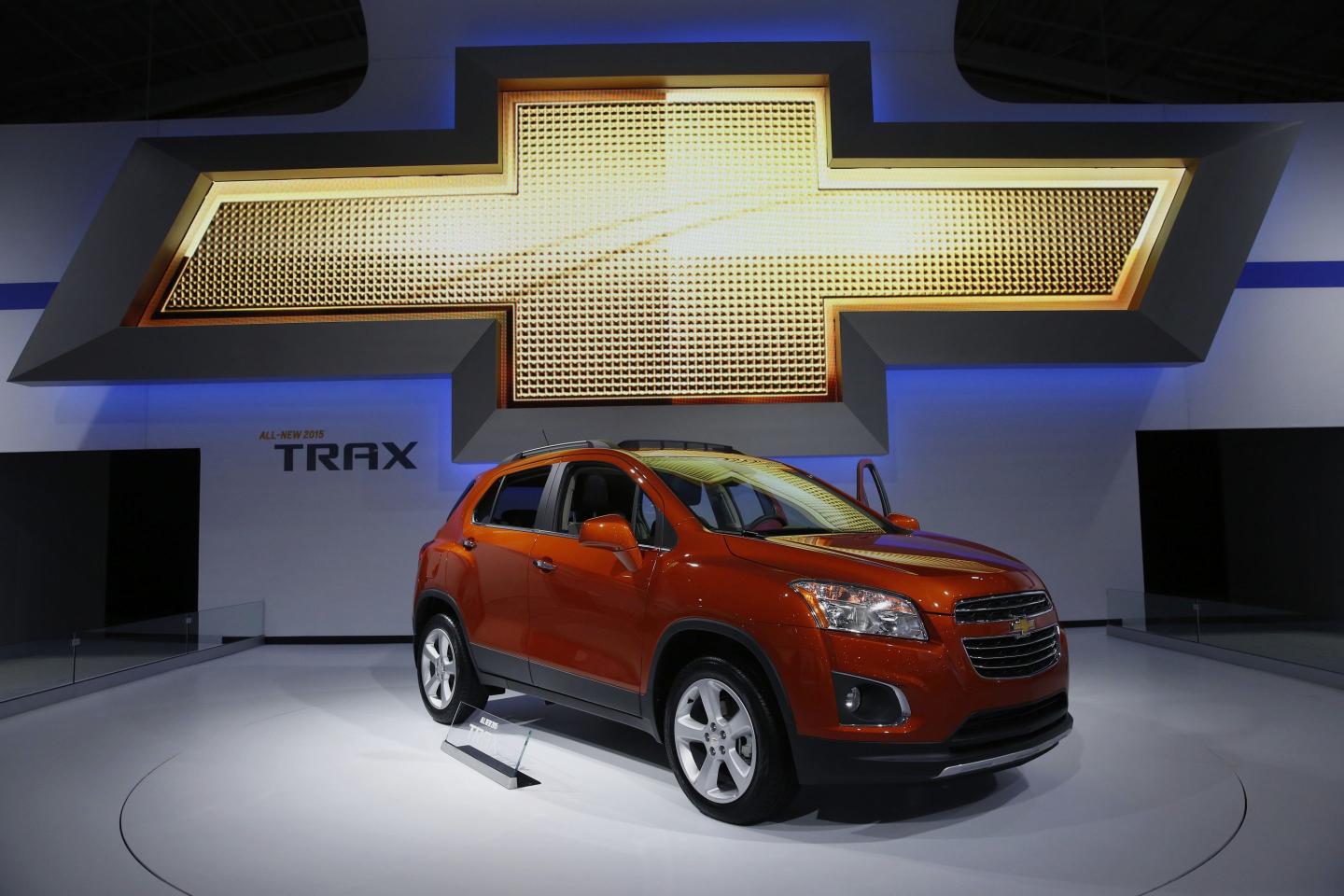
A Chevrolet 2015 Trax compact SUV
A Chevrolet 2015 Trax compact SUVJin Lee/Bloomberg via Getty Images

Had she wanted to, Michelle Chumley could have afforded a pricey new SUV loaded with options. But when it came time to replace her Chevrolet Blazer SUV, for which she’d paid about $40,000 three years ago, Chumley chose something smaller. And less costly.

Recommended Video

With her purchase of a Chevrolet Trax compact SUV in June, Chumley joined a rising number of buyers who have made vehicles in the below-average $20,000-to-$30,000 range the fastest-growing segment of the nation’s new-auto market.

“I just don’t need that big vehicle and to be paying all of that gas money,” said Chumley, a 56-year-old nurse who lives outside Oxford, Ohio, near Cincinnati.

Across the industry, auto analysts say, an “affordability shift” is taking root. The trend is being led by people who feel they can no longer afford a new vehicle that would cost them roughly today’s average selling price of more than $47,000 — a jump of more than 20% from the pre-pandemic average.

To buy a new car at that price, an average buyer would have to spend $737 a month, if financed at today’s average loan rate of 7.1%, for just under six years before the vehicle would be paid off, according to Edmunds.com, an auto research and pricing site. For many, that is financially out of reach.

Yet there are other buyers who, like Chumley, could manage the financial burden but have decided it just isn’t worth the cost. And the trend is forcing America’s automakers to reassess their sales and production strategies. With buyers confronting inflated prices and still-high loan rates, sales of new U.S. autos rose only 1% through September over the same period last year. If the trend toward lower-priced vehicles proves a lasting one, more generous discounts could lead to lower average auto prices and slowing industry profits.

“Consumers are becoming more prudent as they face economic uncertainty, still-high interest rates and vehicle prices that remain elevated,” said Kevin Roberts, director of market intelligence at CarGurus, an automotive shopping site. “This year, all of the growth is happening in what we would consider the more affordable price buckets.”

Under pressure to unload their more expensive models, automakers have been lowering the sales prices on many such vehicles, largely by offering steeper discounts. In the past year, the average incentive per auto has nearly doubled, to $1,812, according to Edmunds. General Motors has said it expects its average selling price to drop 1.5% in the second half of the year.

Through September, Roberts has calculated, new-vehicle sales to individual buyers, excluding sales to rental companies and other commercial fleets, are up 7%. Of that growth, 43% came in the $20,000-to-$30,000 price range — the largest share for that price category in at least four years. (For used vehicles, the shift is even more pronounced: 59% sales growth in the $15,000-to-$20,000 price range over that period.)

Sales of compact and subcompact cars and SUVs from mainstream auto brands are growing faster than in any year since 2018, according to data from Cox Automotive.

The sales gains for affordable vehicles is, in some ways, a return to a pattern that existed before the pandemic. As recently as 2018, compact and subcompact vehicles — typically among the most popular moderately priced vehicles — had accounted for nearly 35% of the nation’s new vehicle sales.

The proportion started to fall in 2020, when the pandemic caused a global shortage of computer chips that forced automakers to slow production and allocate scarce semiconductors to more expensive trucks and large SUVs. As buyers increasingly embraced those higher-priced vehicles, the companies posted robust earnings growth.

In the meantime, they deemed profit margins for lower-prices cars too meager to justify significant production of them. By 2022, the market share of compact and subcompact vehicles had dropped below 30%.

This year, that share has rebounded to nearly 34% and rising. Sales of compact sedans were up 16.7% through September from 12 months earlier. By contrast, CarGurus said, big pickups rose just under 6%. Sales of large SUVs are barely up at all — less than 1%.

Ford’s F-Series truck remains the top-selling vehicle in the United States this year, as it has been for nearly a half-century, followed by the Chevrolet Silverado. But Stellantis’ Ram pickup, typically No. 3, dropped to sixth place, outpaced by several less expensive small SUVs: the Toyota RAV4, the Honda CR-V and the Tesla Model Y (with a $7,500 U.S. tax credit).

The move in buyer sentiment toward affordability came fast this year, catching many automakers off guard, with too-few vehicles available in lower price ranges. One reason for the shift, analysts say, is that many buyers who are willing to plunk down nearly $50,000 for a new vehicle had already done so in the past few years. People who are less able — or less willing — to spend that much had in many cases held on to their existing vehicles for years. The time had come for them to replace them. And most of them seem disinclined to spend more than they have to.

With loan rates still high and average auto insurance prices up a whopping 38% in the past two years, “the public just wants to be a little more frugal about it,” said Keith McCluskey, CEO of the dealership where Chumley bought her Trax.

Roberts of CarGurus noted that even many higher-income buyers are choosing smaller, lower-priced vehicles, in some cases because of uncertainties over the economy and the impending presidential election.

The shift has left some automakers overstocked with too many pricier trucks and SUVs. Some, like Stellantis, which makes Chrysler, Jeep and Ram vehicles, have warned that the shift will eat into their profitability this year.

At General Motors’ Chevrolet brand, executives had foreseen the shift away from “uber expensive” vehicles and were prepared with the redesigned Trax, which came out in the spring of 2023, noted Mike MacPhee, director of Chevrolet sales operations.

Trax sales in the U.S. so far this year are up 130%, making it the nation’s top-selling subcompact SUV.

“We’re basically doubling our (Trax) sales volume from last year,” MacPhee said.

How long the preference for lower-priced vehicles may last is unclear. Charlie Chesbrough, chief economist for Cox Automotive, notes that the succession of expected interest rates cuts by the Federal Rates should eventually lead to lower auto loan rates, thereby making larger vehicles more affordable.

“The trends will probably start to change if these interest rates start coming down,” Chesbrough predicted. “We’ll see consumers start moving into these larger vehicles.”

Join us at the Fortune Workplace Innovation Summit May 19–20, 2026, in Atlanta. The next era of workplace innovation is here—and the old playbook is being rewritten. At this exclusive, high-energy event, the world’s most innovative leaders will convene to explore how AI, humanity, and strategy converge to redefine, again, the future of work. Register now.
About the Authors
By Tom Krisher
See full bioRight Arrow Button Icon
By The Associated Press
See full bioRight Arrow Button Icon

Latest in Finance

Finance
Lorem ipsum dolor sit amet, consectetur adipiscing elit, sed do eiusmod tempor incididunt ut labore et dolore magna aliqua. Ut enim ad minim veniam
By Fortune Editors
October 20, 2025
Finance
Lorem ipsum dolor sit amet, consectetur adipiscing elit, sed do eiusmod tempor incididunt ut labore et dolore magna aliqua. Ut enim ad minim veniam
By Fortune Editors
October 20, 2025
Finance
Lorem ipsum dolor sit amet, consectetur adipiscing elit, sed do eiusmod tempor incididunt ut labore et dolore magna aliqua. Ut enim ad minim veniam
By Fortune Editors
October 20, 2025
Finance
Lorem ipsum dolor sit amet, consectetur adipiscing elit, sed do eiusmod tempor incididunt ut labore et dolore magna aliqua. Ut enim ad minim veniam
By Fortune Editors
October 20, 2025
Finance
Lorem ipsum dolor sit amet, consectetur adipiscing elit, sed do eiusmod tempor incididunt ut labore et dolore magna aliqua. Ut enim ad minim veniam
By Fortune Editors
October 20, 2025
Finance
Lorem ipsum dolor sit amet, consectetur adipiscing elit, sed do eiusmod tempor incididunt ut labore et dolore magna aliqua. Ut enim ad minim veniam
By Fortune Editors
October 20, 2025

Most Popular

Finance
Lorem ipsum dolor sit amet, consectetur adipiscing elit, sed do eiusmod tempor incididunt ut labore et dolore magna aliqua. Ut enim ad minim veniam
By Fortune Editors
October 20, 2025
Finance
Lorem ipsum dolor sit amet, consectetur adipiscing elit, sed do eiusmod tempor incididunt ut labore et dolore magna aliqua. Ut enim ad minim veniam
By Fortune Editors
October 20, 2025
Finance
Lorem ipsum dolor sit amet, consectetur adipiscing elit, sed do eiusmod tempor incididunt ut labore et dolore magna aliqua. Ut enim ad minim veniam
By Fortune Editors
October 20, 2025
Finance
Lorem ipsum dolor sit amet, consectetur adipiscing elit, sed do eiusmod tempor incididunt ut labore et dolore magna aliqua. Ut enim ad minim veniam
By Fortune Editors
October 20, 2025
Finance
Lorem ipsum dolor sit amet, consectetur adipiscing elit, sed do eiusmod tempor incididunt ut labore et dolore magna aliqua. Ut enim ad minim veniam
By Fortune Editors
October 20, 2025
Finance
Lorem ipsum dolor sit amet, consectetur adipiscing elit, sed do eiusmod tempor incididunt ut labore et dolore magna aliqua. Ut enim ad minim veniam
By Fortune Editors
October 20, 2025
Fortune Secondary Logo
Rankings
  • 100 Best Companies
  • Fortune 500
  • Global 500
  • Fortune 500 Europe
  • Most Powerful Women
  • World's Most Admired Companies
  • See All Rankings
  • Lists Calendar
Sections
  • Finance
  • Fortune Crypto
  • Features
  • Leadership
  • Health
  • Commentary
  • Success
  • Retail
  • Mpw
  • Tech
  • Lifestyle
  • CEO Initiative
  • Asia
  • Politics
  • Conferences
  • Europe
  • Newsletters
  • Personal Finance
  • Environment
  • Magazine
  • Education
Customer Support
  • Frequently Asked Questions
  • Customer Service Portal
  • Privacy Policy
  • Terms Of Use
  • Single Issues For Purchase
  • International Print
Commercial Services
  • Advertising
  • Fortune Brand Studio
  • Fortune Analytics
  • Fortune Conferences
  • Business Development
  • Group Subscriptions
About Us
  • About Us
  • Press Center
  • Work At Fortune
  • Terms And Conditions
  • Site Map
  • About Us
  • Press Center
  • Work At Fortune
  • Terms And Conditions
  • Site Map
  • Facebook icon
  • Twitter icon
  • LinkedIn icon
  • Instagram icon
  • Pinterest icon

Latest in Finance

High earners are feeling the pain of wealth creep—and it’s leading to a new trade-off in their spending
Personal FinancePersonal Finance Evergreen
High earners are feeling the pain of wealth creep—and it’s leading to a new trade-off in their spending
By Catherina GioinoApril 30, 2026
43 seconds ago
TOPSHOT - Alphabet Inc. and Google CEO Sundar Pichai speaks during the inauguration of a Google Artificial Intelligence (AI) hub in Paris on February 15, 2024. (Photo by ALAIN JOCARD / AFP via Getty Images)
AIGoogle
Half of Google’s and Amazon’s ‘blowout AI profits’ came from a stake in Anthropic—not from their actual business
By Eva RoytburgApril 30, 2026
8 minutes ago
Premium card perks are ‘designed to create a win-win-win for everyone’ but customers are paying with heavy annual fees and data
Personal FinancePersonal Finance Evergreen
Premium card perks are ‘designed to create a win-win-win for everyone’ but customers are paying with heavy annual fees and data
By Catherina GioinoApril 30, 2026
11 minutes ago
Bill Perkins, founder of Skylar Capital
SuccessWealth
Multimillionaire hedge fund manager Bill Perkins says money should ‘drive your fulfillment while you’re alive’—so he’s spending it all before he dies
By Emma BurleighApril 30, 2026
30 minutes ago
trump
Economynational debt
‘The national debt is now larger than the economy’: Watchdog marks 100% of GDP milestone for $39 trillion burden
By Nick LichtenbergApril 30, 2026
1 hour ago
Elon Musk arrives at the courthouse during his trial against OpenAI
CryptoElon Musk
Elon Musk likes Bitcoin—but he just told a jury most crypto coins are scams
By Jack KubinecApril 30, 2026
2 hours ago

Most Popular

Apple cofounder Ronald Wayne—whose stake would be worth up to $400 billion had he not sold it in 1976—says that at 91, he has no regrets
Success
Apple cofounder Ronald Wayne—whose stake would be worth up to $400 billion had he not sold it in 1976—says that at 91, he has no regrets
By Preston ForeApril 27, 2026
3 days ago
‘They left me no choice’: Powell isn’t going anywhere—blocking Trump from another Fed appointee
Banking
‘They left me no choice’: Powell isn’t going anywhere—blocking Trump from another Fed appointee
By Eva RoytburgApril 29, 2026
22 hours ago
Jamie Dimon gets candid about national debt: ‘There will be a bond crisis, and then we’ll have to deal with it’
Economy
Jamie Dimon gets candid about national debt: ‘There will be a bond crisis, and then we’ll have to deal with it’
By Eleanor PringleApril 29, 2026
1 day ago
‘The cost of compute is far beyond the costs of the employees’: Nvidia executive says right now AI is more expensive than paying human workers
AI
‘The cost of compute is far beyond the costs of the employees’: Nvidia executive says right now AI is more expensive than paying human workers
By Sasha RogelbergApril 28, 2026
2 days ago
Google Cloud revenue is now 18% of Alphabet's business. Is this the beginning of the end of Google's search identity?
Big Tech
Google Cloud revenue is now 18% of Alphabet's business. Is this the beginning of the end of Google's search identity?
By Alexei OreskovicApril 29, 2026
15 hours ago
‘Take the money and run’: Johns Hopkins economist Steve Hanke on why the UAE quit OPEC
Energy
‘Take the money and run’: Johns Hopkins economist Steve Hanke on why the UAE quit OPEC
By Shawn TullyApril 29, 2026
1 day ago

© 2026 Fortune Media IP Limited. All Rights Reserved. Use of this site constitutes acceptance of our Terms of Use and Privacy Policy | CA Notice at Collection and Privacy Notice | Do Not Sell/Share My Personal Information
FORTUNE is a trademark of Fortune Media IP Limited, registered in the U.S. and other countries. FORTUNE may receive compensation for some links to products and services on this website. Offers may be subject to change without notice.