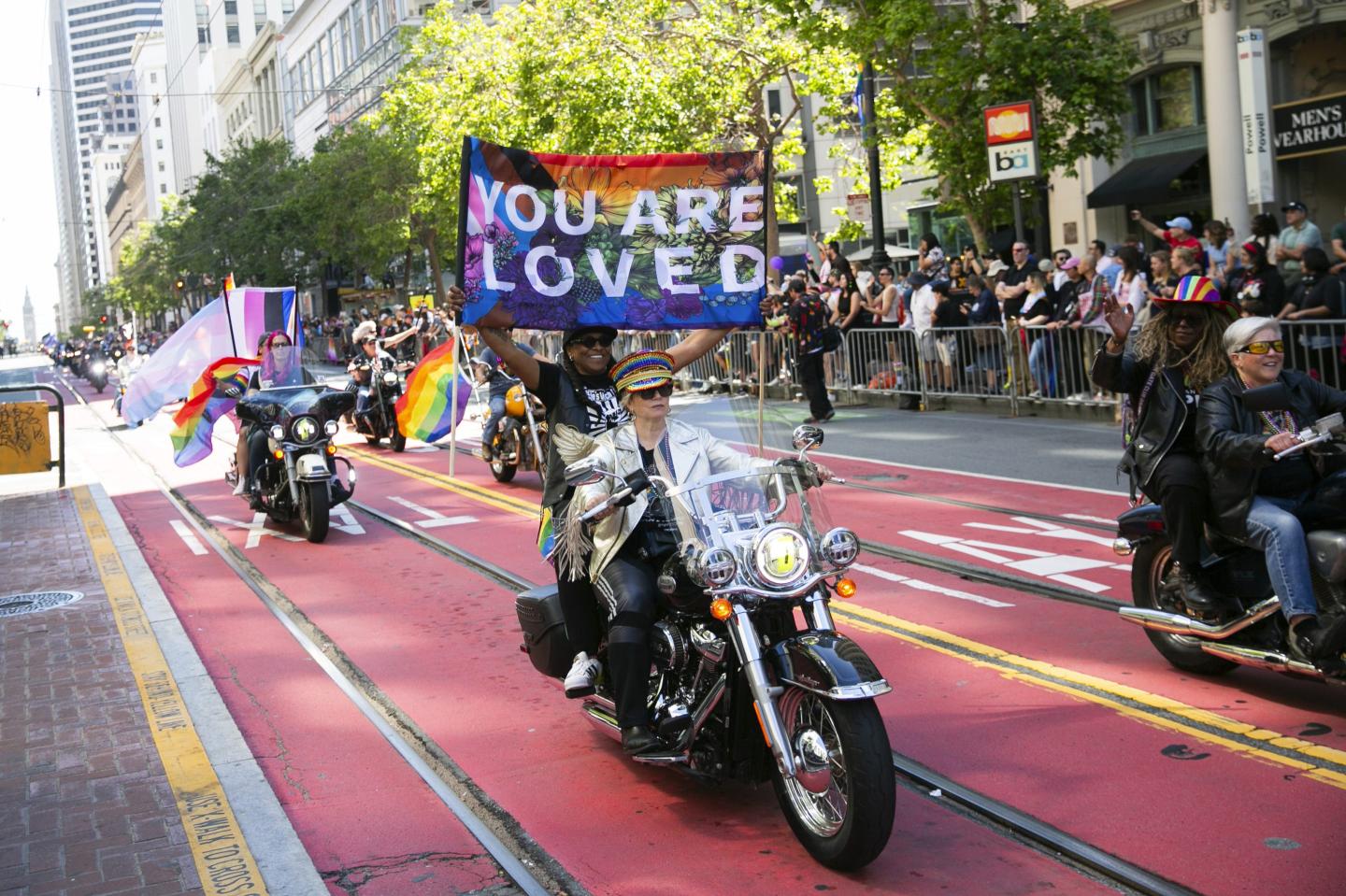
More than two decades ago, when gay men and lesbians were prohibited from serving openly in the U.S. military and no state had legalized same-sex marriages, a national LGBTQ+ rights group decided to promote change by grading corporations on their workplace policies.
The Human Rights Campaign initially focused its report card, named the Corporate Equality Index, on ensuring that gay, lesbian, bisexual, transgender and queer employees did not face discrimination in hiring and on the job. Just 13 companies received a perfect score in 2002. By last year, 545 businesses did even though the requirements have expanded.
But the scorecard itself has come under attack in recent months by conservative activists who targeted businesses as part of a broader pushback against diversity initiatives. Ford, Harley Davidson and Lowe’s are among the companies that announced they would no longer participate in the Corporate Equality Index.
Emboldened by a Supreme Court decision last year that declared race-based affirmative action programs in college admissions unconstitutional, conservative groups have won lawsuits making similar arguments about corporations. They’re now targeting workplace initiatives such as diversity programs and hiring practices that prioritize historically marginalized groups, and widening their objections to include programs focused on gender identity and sexual orientation.
“We don’t believe that people should be identified as groups and that you should right past wrongs by advantaging one group and disadvantaging another group,” said Dan Lennington, deputy counsel for the Equality Under the Law Project at the Wisconsin Institute for Law & Liberty. His firm has represented dozens of clients in challenges to diversity, equity and inclusion, or DEI, programs.
Critics lament the rollback, saying it reverses years of hard-won progress.
“Almost all LGBT community members have been bullied when they were young, and the concept of being bullied is something that hits us really hard. … It feels like you’re you’re letting the bullies win,” said David Paisley, senior research director at Community Marketing & Insights, which helps companies market to LGBTQ+ consumers.
What is the corporate equality index?
While many challenges to DEI programs have been about race, activists working to change corporate policies they deride as “woke” have made a point of demanding that companies end their participation in HRC’s Corporate Equality Index. Most of the companies that recently announced changes to their DEI approaches did.
Like LGBTQ+ rights in the U.S., the requirements corporations need to meet to receive a high score on the annual index have expanded over the years.
In 2004, the index placed more emphasis on providing comprehensive benefits to domestic partners and improving health care coverage for transgender workers. Later it added categories that gave employers points for promoting equality in the broader LGBTQ+ community.
In 2019, it specified that supplier diversity programs, which encourage companies to work with minority-owned or veteran-owned businesses, must include LGBTQ+ suppliers. By 2022, the index said employers should offer same-sex spouses and domestic partners the same benefits as other couples for in-vitro fertilization and adoption, and that employers must create gender-transition guidelines, among other changes.
What has the effect been?
Experts say the index has helped improve workplace benefits for LGBTQ+ people. The index also prompted many companies to create employee resource groups, which are voluntary, employee-led diversity and inclusion groups for people with shared backgrounds or identities, said Fabrice Houdart, a consultant on LGBTQ+ issues.
The index is also a resource for LGBTQ+ workers to consult before deciding whether to accept a job, Paisley said.
“A company that’s getting 100% versus a company getting 25% is an indication to our community about which companies are treating their employees more fairly and equitably,” he said.
Why are companies leaving the index?
Several big companies announced they would end their participation in the index amid pressure from conservative activists who have threatened boycotts and firms such as the Wisconsin Institute for Law & Liberty that have challenged DEI programs.
“We have no problem with nondiscrimination, but we’re worried about these policies going too far and harming innocent third parties who have either religious objections or they’re being excluded because they’re not LGBTQ or a certain race,” Lennington said.
Ford Motor Co. CEO Jim Farley told employees that the company stopped participating in external culture surveys, citing the wide range of beliefs held by employees and customers and the evolving legal environment. He said Ford does not use hiring quotas or tie compensation to diversity goals.
Harley-Davidson posted a statement on X about withdrawing from the index, adding that the company does not have hiring quotas or supplier diversity spending goals, and that employee resource groups would focus exclusively on professional development, networking and mentoring.
When Lowe’s announced its departure from the index, the company said it was combining resource groups into one umbrella organization. It also planned to stop sponsoring and participating in some festivals and parades to ensure that company policies are lawful and aligned with its commitment to include everyone.
Brown-Forman, the company that makes Jack Daniel’s whiskey, and beer and beverage maker Molson Coors, highlighted no longer taking part in HRC’s corporate survey in their announcements about scaling back their diversity, equity and inclusion programs.
Legal threats
Dozens of legal cases have been filed against employers for DEI initiatives, including complaints that target hiring practices, employee resource groups or mentorship programs that plaintiffs say prioritize people of certain races or sexual identities while excluding others.
Most American companies launched a review of their DEI programs last summer in the wake of the Supreme Court decision in Students for Fair Admissions vs. Harvard, said Jason Schwartz, co-chair of the labor and employment practice group at Gibson Dunn, a law firm that has helped more than 50 major corporations audit their DEI programs.
“The opponents to these efforts are winning the war of words, and they’ve got a lot of momentum in the courtroom, so I do think it’s a serious threat that needs to be responded to in a thoughtful way,” Schwartz said.
But there’s also a flip side. Companies built DEI anti-harassment programs in part to mitigate potential legal risks that come with a toxic workplace, and “abandoning these programs in fact opens them up to risk down the road if employees feel discrimination or harassment,” said Eric Bloem, vice president at the Human Rights Campaign.
Alienating a growing customer base
Companies that distance themselves from the Corporate Equality Index also risk driving away a growing customer group. A Gallup poll conducted in March found that 7.6% of adults in the U.S. identify as lesbian, gay, bisexual, transgender, queer or some other sexual orientation besides heterosexual, up from 3.5% in 2012. Among Generation Z, that number climbed sharply to 22.3%.
In a survey conducted in August, 80% of LGBTQ+ customers said they would boycott companies that are rolling back inclusion initiatives, and more than half said they would take concerns to social media or share negative reviews online, according to the Human Rights Campaign Foundation.
“I think they will lose, in the end, LGBT talent and LGBT consumers,” Houdart said. “And the parents of trans kids, which are an increasing population in the United States, they’re probably going to remember that those were companies who went out of their way to side with the bullies.”