• Home
  • Latest
  • Fortune 500
  • Finance
  • Tech
  • Leadership
  • Lifestyle
  • Rankings
  • Multimedia

Trendingnow

1

The U.S. spent $30 billion to ditch textbooks for laptops and tablets: The result is the first generation less cognitively capable than their parents

2

Current price of oil as of July 13, 2026

3

Current price of silver as of Monday, July 13, 2026

1

The U.S. spent $30 billion to ditch textbooks for laptops and tablets: The result is the first generation less cognitively capable than their parents

2

Current price of oil as of July 13, 2026

3

Current price of silver as of Monday, July 13, 2026
CommentaryPolitics

The 2024 U.S. presidential election reflects a changing America. Expect conflict ‘for the next generation,’ say top pollsters

By
Clifford Young
Clifford Young
and
Chris Jackson
Chris Jackson
Down Arrow Button Icon
By
Clifford Young
Clifford Young
and
Chris Jackson
Chris Jackson
Down Arrow Button Icon
August 19, 2024, 9:51 AM ET

Clifford Young is the president of Ipsos. Chris Jackson is senior VP at Ipsos Public Affairs.

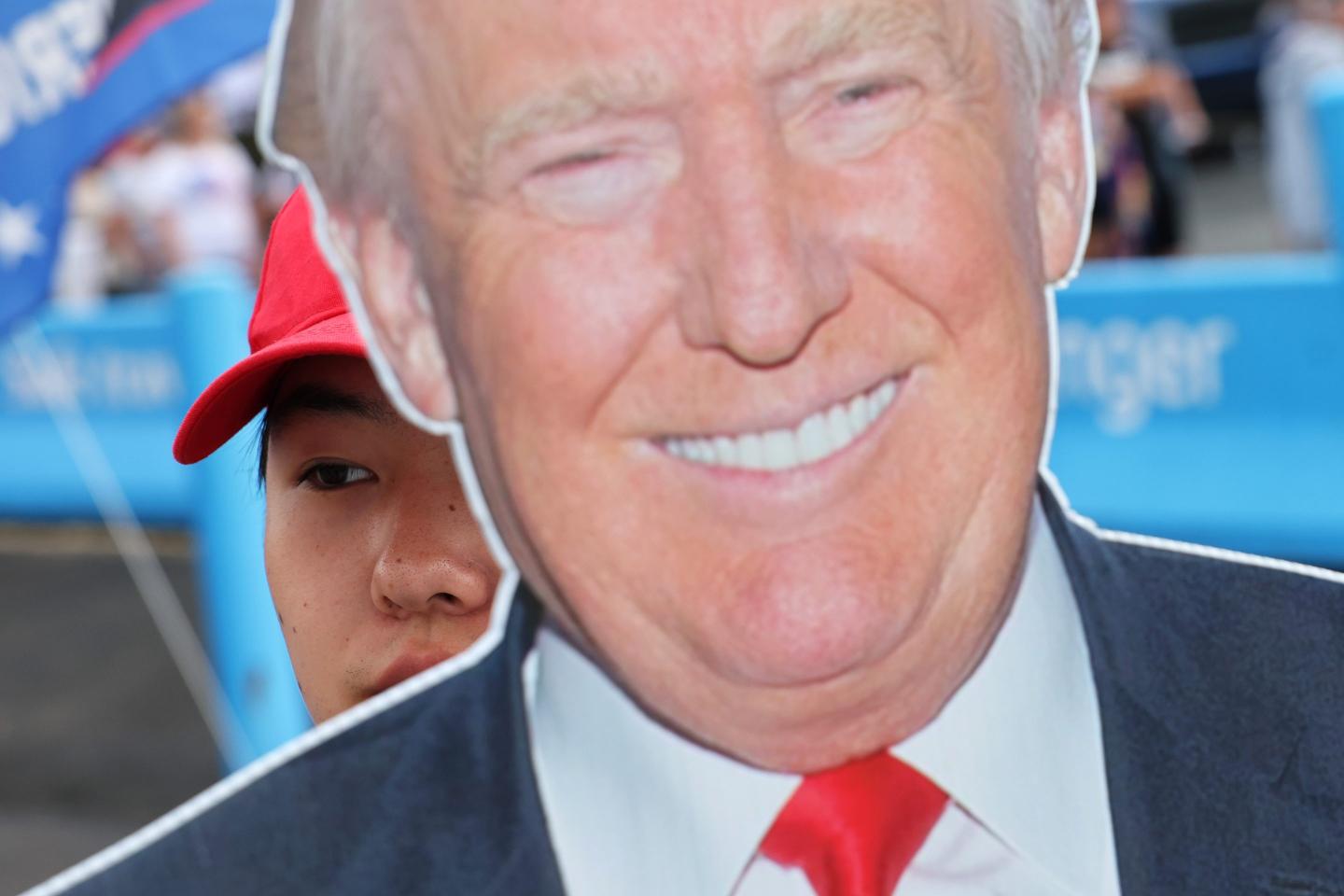
People attend a Donald Trump campaign rally in Pennsylvania on Aug. 17.
People attend a Donald Trump campaign rally in Pennsylvania on Aug. 17.Michael M. Santiago - Getty Images
Add Fortune on Google for similar content.

The last month has been nothing but unprecedented. Few predicted that Kamala Harris would be the presumptive nominee heading into Democratic convention week. We often get caught in the minutia of election season. For this very reason, let’s step back and take stock of what this election really means. 

To get the big picture, we must look deeper at the structural undercurrents shaping the race. Polarization is one of them. But there is more going on here. The polarized conversation around the culture wars represents a battle between two political groups, one in ascension and pressing to gain the reins of power and the other in decline, holding on tooth and nail. Long-term social change and the reaction to it are driving this conflict, which in turn shapes our politics.

How did we get here?

Across many social issues, such as marriage equality or women holding political office, Americans have become increasingly tolerant. For instance, half of Americans disagreed that men are better suited for politics than women in 1974. Now, 83% disagree. On the question of marriage equality, only 27% of Americans in 1996 agreed that marriages between same-sex couples should recognized by the law as valid with the same rights as straight couples. Now, 69% of Americans agree.

Generational replacement is driving this social change. Each successive wave of younger Americans is more tolerant than old Americans dying off. What makes younger Americans different from their older counterparts? The reasons are varied. In part, it results from higher levels of education over time. Each successive generation is more educated. However, a changing ethno-racial demographic profile and the democratization of information via social media and other communications technologies also drive cohort differences. Critically, change resulting from generational replacement is much stickier and more permanent than people just changing their opinions. The shifts cited above, in other words, are with us for the long term.

At the same time, there is a stalwart reaction to this social change. In many cases, it takes on the form of heightened polarization. Take abortion as an example. Today, 57% of Americans believe that abortion should be legal in all or most cases. 83% of Democrats agree but only 33% of Republicans do. Or take Trump’s legal troubles—only 20% of Democrats think the charges were politically motivated, while 83% of Republicans do. Under these conditions, consensus is difficult to come by. 

Polarization alone is not the entire story. There have always been differences across political persuasions. Instead, the cornerstone of the growing rift today is more fundamental and goes directly to how we define who is and is not an American. 

Attitudes toward nativism offer a good proxy for America’s variable meanings. Think of Trump’s slogan to “Make America Great Again,” a call that harkens back to an America that once was. In contrast, the America of Harris and the Democrats represents something much different—a more multi-cultural, diverse nation. But in 1995, Republicans and Democrats were equally nativist in their perception with 57% of Democrats agreeing that “when jobs are scarce, employers should prioritize hiring people of this country over immigrants” and 63% of Republicans agreeing to the same. This parity significantly ceases to exist by 2024 when only 37% of Democrats believe this, while 77% of Republicans think the same. Two different conceptualizations of America—one more restrictive; the other less so.

America’s collision of world views is directly a function of a special brew of social change around us—an America that is less white, more foreign-born, and more progressively minded. This juxtaposition—between “what was” and “what will be”—defines our politics today.

What does this all mean?

Our politics is at loggerheads over these two different views. Two different Americas. One is nostalgic, the other future-leaning. One is more restrictive; the other more inclusive. One America in decline; the other in ascension. Roughly speaking, Republicans and Democrats represent the two ends of this change spectrum. Hence the present political dispute.

Much of conservative politics today should be understood as a rear-guard action against these longer-term social changes. The moment is especially tense because it cuts to the core of identity. Who am I in this changing world? What does this mean? However, current trends do not favor this nostalgic view. 

We should understand that the reaction can take on many forms. We already see this in the Republican push to control the Supreme Court, congressional re-districting, and stricter voter laws—all institutional changes to stem the tide of change. Similarly, much of the backlash against DEI and ESG in the corporate world is a reaction to push for such policy changes.

The trend is undeniably towards a more diverse, multicultural, non-native-born America. But let’s not be reductionist. Parties are rational actors. As such, we should expect the Republican party to adapt in the longer term. Adjustments will be made as this new emergent America takes hold—what is conservative today, won’t be conservative tomorrow. 

While we should expect heightened uncertainty and conflict for the next generation, these social trends will work themselves out. So, in the interim, let’s buckle down and prepare for a bumpy ride.

More must-read commentary published by Fortune:

  • Markets have overestimated AI-driven productivity gains, says MIT economist
  • Brian Niccol may well be the messiah Starbucks—and Howard Schultz—have been looking for
  • ‘Godmother of AI’ says California’s well-intended AI bill will harm the U.S. ecosystem
  • The ‘Trump dump’ is back—and the stocks that he targets are crashing

The opinions expressed in Fortune.com commentary pieces are solely the views of their authors and do not necessarily reflect the opinions and beliefs of Fortune.

About the Authors
By Clifford Young
See full bioRight Arrow Button Icon
By Chris Jackson
See full bioRight Arrow Button Icon
Add Fortune on Google for similar content.

Latest in Commentary

Finance
Lorem ipsum dolor sit amet, consectetur adipiscing elit, sed do eiusmod tempor incididunt ut labore et dolore magna aliqua. Ut enim ad minim veniam
By Fortune Editors
October 20, 2025
Finance
Lorem ipsum dolor sit amet, consectetur adipiscing elit, sed do eiusmod tempor incididunt ut labore et dolore magna aliqua. Ut enim ad minim veniam
By Fortune Editors
October 20, 2025
Finance
Lorem ipsum dolor sit amet, consectetur adipiscing elit, sed do eiusmod tempor incididunt ut labore et dolore magna aliqua. Ut enim ad minim veniam
By Fortune Editors
October 20, 2025
Finance
Lorem ipsum dolor sit amet, consectetur adipiscing elit, sed do eiusmod tempor incididunt ut labore et dolore magna aliqua. Ut enim ad minim veniam
By Fortune Editors
October 20, 2025
Finance
Lorem ipsum dolor sit amet, consectetur adipiscing elit, sed do eiusmod tempor incididunt ut labore et dolore magna aliqua. Ut enim ad minim veniam
By Fortune Editors
October 20, 2025
Finance
Lorem ipsum dolor sit amet, consectetur adipiscing elit, sed do eiusmod tempor incididunt ut labore et dolore magna aliqua. Ut enim ad minim veniam
By Fortune Editors
October 20, 2025

Most Popular

Finance
Lorem ipsum dolor sit amet, consectetur adipiscing elit, sed do eiusmod tempor incididunt ut labore et dolore magna aliqua. Ut enim ad minim veniam
By Fortune Editors
October 20, 2025
Finance
Lorem ipsum dolor sit amet, consectetur adipiscing elit, sed do eiusmod tempor incididunt ut labore et dolore magna aliqua. Ut enim ad minim veniam
By Fortune Editors
October 20, 2025
Finance
Lorem ipsum dolor sit amet, consectetur adipiscing elit, sed do eiusmod tempor incididunt ut labore et dolore magna aliqua. Ut enim ad minim veniam
By Fortune Editors
October 20, 2025
Finance
Lorem ipsum dolor sit amet, consectetur adipiscing elit, sed do eiusmod tempor incididunt ut labore et dolore magna aliqua. Ut enim ad minim veniam
By Fortune Editors
October 20, 2025
Finance
Lorem ipsum dolor sit amet, consectetur adipiscing elit, sed do eiusmod tempor incididunt ut labore et dolore magna aliqua. Ut enim ad minim veniam
By Fortune Editors
October 20, 2025
Finance
Lorem ipsum dolor sit amet, consectetur adipiscing elit, sed do eiusmod tempor incididunt ut labore et dolore magna aliqua. Ut enim ad minim veniam
By Fortune Editors
October 20, 2025
Fortune Secondary Logo
Rankings
  • 100 Best Companies
  • Fortune 500
  • Global 500
  • Fortune 500 Europe
  • Most Powerful Women
  • World's Most Admired Companies
  • See All Rankings
  • Lists Calendar
Sections
  • Finance
  • Fortune Crypto
  • Features
  • Leadership
  • Health
  • Commentary
  • Success
  • Retail
  • Mpw
  • Tech
  • Lifestyle
  • CEO Initiative
  • Asia
  • Politics
  • Conferences
  • Europe
  • Newsletters
  • Personal Finance
  • Environment
  • Magazine
  • Education
Customer Support
  • Frequently Asked Questions
  • Customer Service Portal
  • Privacy Policy
  • Terms Of Use
  • Single Issues For Purchase
  • International Print
Commercial Services
  • Advertising
  • Fortune Brand Studio
  • Fortune Analytics
  • Fortune Conferences
  • Business Development
  • Group Subscriptions
About Us
  • About Us
  • Press Center
  • Work At Fortune
  • Terms And Conditions
  • Site Map
  • About Us
  • Press Center
  • Work At Fortune
  • Terms And Conditions
  • Site Map
  • Facebook icon
  • Twitter icon
  • LinkedIn icon
  • Instagram icon
  • Pinterest icon

Latest in Commentary

b
CommentaryWorld Cup
Columbia Business School professors: What the Balogun red card can teach us about AI and judgment
By Oded Netzer, Christopher Frank and Paul MagnoneJuly 13, 2026
16 hours ago
usa
Commentary250 Years of Innovation
For 250 years, work defined American identity. That era Is ending
By Keith Ferrazzi and Wendy SmithJuly 11, 2026
3 days ago
m
Commentarymedicine
America’s bone health is quietly headed for a $19 billion crisis
By Matthew T. DrakeJuly 9, 2026
5 days ago
t
CommentaryEducation
AI is about to disrupt millions of jobs. A century ago, America’s answer was to build a new high school
By Tim KnowlesJuly 8, 2026
6 days ago
amit
CommentaryVenture Capital
Physical AI’s $50 trillion opportunity requires long-term conviction, but the payoff is huge 
By Amit ChaturvedyJuly 8, 2026
6 days ago
heat
Commentaryclimate change
McKinsey Global Institute: Climate planning has prioritized floods. Heat demands equal attention
By Sylvain Johansson, Mekala Krishnan, Kanmani Chockalingam and Annabel FarrJuly 7, 2026
7 days ago

Most Popular

The U.S. spent $30 billion to ditch textbooks for laptops and tablets: The result is the first generation less cognitively capable than their parents
Innovation
The U.S. spent $30 billion to ditch textbooks for laptops and tablets: The result is the first generation less cognitively capable than their parents
By Sasha RogelbergJuly 12, 2026
2 days ago
Current price of oil as of July 13, 2026
Personal Finance
Current price of oil as of July 13, 2026
By Joseph HostetlerJuly 13, 2026
22 hours ago
Current price of silver as of Monday, July 13, 2026
Personal Finance
Current price of silver as of Monday, July 13, 2026
By Joseph HostetlerJuly 13, 2026
22 hours ago
Trump embraces Australian retirement system backed by Larry Fink
Personal Finance
Trump embraces Australian retirement system backed by Larry Fink
By Brianna Sosa and BloombergJuly 12, 2026
1 day ago
How Pete Hegseth's DEI order just put Scouting America's future at stake
North America
How Pete Hegseth's DEI order just put Scouting America's future at stake
By Seth T. Kannarr, Derek H. Alderman and The ConversationJuly 13, 2026
13 hours ago
The U.S. and Iran can't agree on fully reopening the Strait of Hormuz. The solution could be straight out of the Old Testament
Middle East
The U.S. and Iran can't agree on fully reopening the Strait of Hormuz. The solution could be straight out of the Old Testament
By Jason MaJuly 11, 2026
2 days ago

© 2026 Fortune Media IP Limited. All Rights Reserved. Use of this site constitutes acceptance of our Terms of Use and Privacy Policy | CA Notice at Collection and Privacy Notice | Do Not Sell/Share My Personal Information
FORTUNE is a trademark of Fortune Media IP Limited, registered in the U.S. and other countries. FORTUNE may receive compensation for some links to products and services on this website. Offers may be subject to change without notice.