• Home
  • Latest
  • Fortune 500
  • Finance
  • Tech
  • Leadership
  • Lifestyle
  • Rankings
  • Multimedia

Trendingnow

1

Jeff Bezos wants the bottom half of earners to pay zero income tax—he says nurses making just $75K should save $12K a year

2

Indeed chief economist says we’re entering an era of ‘great mismatch’ thanks to a generational imbalance of workers

3

Microsoft reports are exposing AI's real cost problem: Using the tech is more expensive than paying human employees

1

Jeff Bezos wants the bottom half of earners to pay zero income tax—he says nurses making just $75K should save $12K a year

2

Indeed chief economist says we’re entering an era of ‘great mismatch’ thanks to a generational imbalance of workers

3

Microsoft reports are exposing AI's real cost problem: Using the tech is more expensive than paying human employees
Environmenttrain derailment

Inaccurate heat detectors, weak tanker walls, and a decision to needlessly blow open 5 chemical cars: NTSB hearing showcases what went wrong at Ohio derailment

By
Josh Funk
Josh Funk
and
The Associated Press
Down Arrow Button Icon
By
Josh Funk
Josh Funk
and
The Associated Press
Down Arrow Button Icon
June 27, 2024, 6:43 AM ET
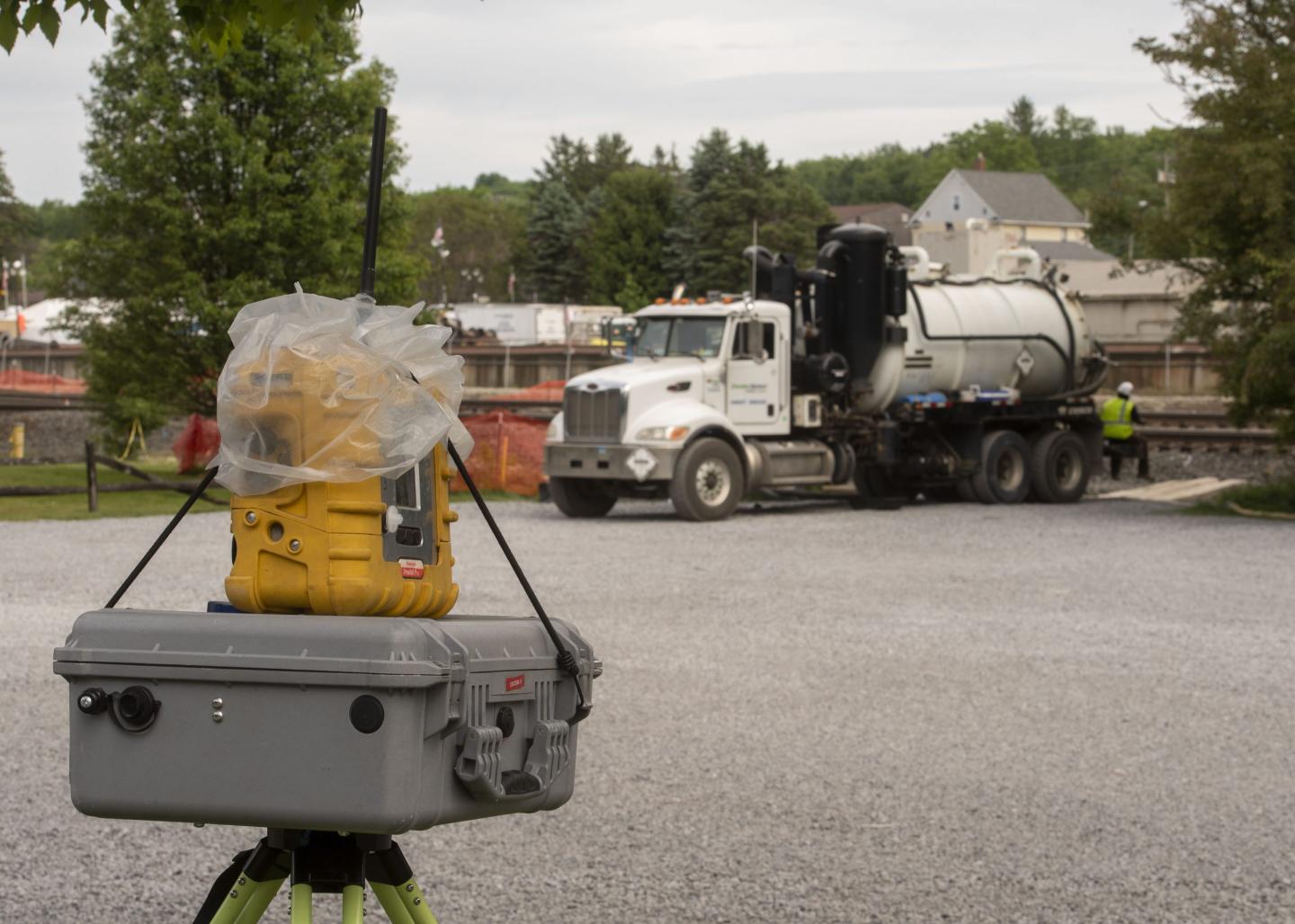
An air-monitoring system near railroad tracks in East Palestine, Ohio
NTSB derailment investigation renews concerns about detectors, tank cars and Norfolk Southern Nate Smallwood/Bloomberg via Getty Images

The National Transportation Safety Board’s daylong hearing on what caused the disastrous East Palestine train derailment near the Ohio-Pennsylvania border last year gave the community, railroads and policymakers plenty to think about.

The NTSB confirmed the crash was caused by an overheating bearing on one of the rail cars, and they detailed why officials were wrong to blow open five tank cars of vinyl chloride and burn the contents.

Here are some of the agency’s key findings from Tuesday’s hearing:

Trackside detectors

The detectors railroads use along their tracks to help spot overheating bearings, flat wheels and dangling equipment were a key focus of the NTSB investigation.

The Norfolk Southern train that derailed in East Palestine passed three so called “hot box detectors” just before the crash, but the train’s overheating bearing wasn’t caught in time even though surveillance footage showed a fire underneath the rail car as it passed through Salem, Ohio.

The detectors did notice the temperature increasing, but didn’t signal an alarm soon enough. NTSB investigators said the detector in Salem didn’t get an accurate temperature reading even though it showed the bearing was 103 degrees hotter than the outside temperature. That’s partly because it can take a while for the heat from a burning bearing to reach the outside of the axle where it can be measured.

The NTSB said more research and rules are needed on detectors because there are no federal standards for them. Major railroads developed the devices on their own without guidance on where they should be placed or when they should trigger an alarm. Industry research has shown that having hot box detectors every 15 miles is ideal, but investigators think more study is needed.

After East Palestine, the six biggest railroads promised to install hot box detectors an average of 15 miles apart and adopted a uniform standard that trains should be stopped anytime a bearing registers more than 170 degrees above the ambient temperature.

But neither one of those measures seem like they would have changed anything in this derailment. Even though the Salem and East Palestine detectors are 20 miles apart, the previous one was just 10 miles away so they already averaged 15 miles of distance between them. Norfolk Southern was already using 170 degrees as its threshold.

Troubled Tank Cars

The East Palestine derailment highlighted longstanding concerns about certain tank cars known as the DOT-111. Three of the hazardous materials cars that derailed, ruptured and caught fire that night were that model. NTSB Chairwoman Jennifer Homendy said if those cars hadn’t ruptured, there may never have been the massive dayslong fire that prompted officials to needlessly blow open five vinyl chloride tank cars and burn their contents three days after the derailment. Authorities did so because they were worried the cars would explode.

The DOT-111 tank cars are made with a steel shell less than half an inch thick that time and again has proven much more likely to rupture than newer cars made with thicker steel.

The same tank cars figured in the worst rail disaster in modern history when 47 people were killed after a crude oil train derailed in the small Canadian town of Lac Megantic in 2013. DOT-111 tank cars were also involved in a number of disastrous crude oil and ethanol derailments in the early 2000s when railroads routinely hauled entire trains of those flammable commodities.

Regulators issued a rule in 2015 that was designed to get all the DOT-111s carrying flammable liquids replaced or upgraded by 2025, but Congress delayed the deadline until 2029. The tank car owners — which are generally the chemical companies, other shippers and leasing companies rather than the railroads — have long resisted a more aggressive upgrade schedule because of the roughly $135,000 price tag of a stronger DOT-117 tank car.

About 25,000 DOT-111 tank cars are still in use, according to the Association of American Railroads. That’s a relatively small part of the North American tank car fleet of about 450,000. Many of them carry much more harmless cargo such as corn syrup.

Despite concerns the NTSB has been raising at least since 1991, current rules will still allow DOT-111 tank cars to haul some hazardous materials, such as combustible liquids like diesel, even after the 2029 deadline. They just won’t be able to be used for things classified as flammable liquids like the butyl acrylate that spilled in East Palestine.

Delayed Reforms

Rail labor groups and safety advocates hope that now that the NTSB has had its say, Congress will finally act on reforms that stalled months after East Palestine. Republican leaders said they wanted to see that agency’s final report before they considered imposing new rules.

In the Senate, proponents for the rail safety bill have continued to express optimism that the legislation could get a vote on the floor. But so far opposition from Republicans and the railroads has kept the bill from moving forward. Similar legislation has failed to gain any momentum in the Republican-controlled House.

It’s expected that Republicans will propose a much narrower rail safety that likely won’t include all the inspection standards and two-person crew requirements that are in the Senate bill now. With attention turning toward the November election, congressional leaders have little time left to complete drawn-out negotiations that significant rail safety legislation would likely require.

Crisis of Confidence

Homendy refused to bow to pressure from Norfolk Southern to declare that the railroad didn’t press to vent and burn the vinyl chloride cars because it wanted to get the trains moving again quickly. The railroad has long insisted that it was worried about safety — not its delivery schedule or bottom line — when it recommended that last resort.

Railroad safety experts said it’s true that the vent and burn strategy was the quickest way to reopen the tracks. Waiting for the fire to go out and unloading the damaged tank cars with trucks might have taken weeks.

“When you’ve got 35 or 45 trains sitting and waiting to get through one area, no way to get around it,” said Randy Fannon, who leads the Brotherhood of Locomotive Engineers and Trainmen’s safety task force and helped with the NTSB investigation.

“The railroad wants to get their main line back open as fast as possible,” he said.

The NTSB’s findings and Homendy’s critique prompted new calls for accountability. Norfolk Southern already settled with the federal government and agreed to a $600 million class action settlement with residents. State investigations in Ohio and Pennsylvania and individual lawsuits appear to be the only remaining potential consequences.

Ohio Attorney General Dave Yost said: “The NTSB findings answered some questions but raised additional questions. Our lawsuit is ongoing.”

Subscribe to Fortune Gulf Brief. Every Tuesday, this new newsletter will deliver clear-eyed, authoritative intelligence on the deals, decisions, policies, and power shifts shaping one of the world’s most consequential regions, written for the people who need to act on it. Sign up here.
About the Authors
By Josh Funk
See full bioRight Arrow Button Icon
By The Associated Press
See full bioRight Arrow Button Icon

Latest in Environment

Finance
Lorem ipsum dolor sit amet, consectetur adipiscing elit, sed do eiusmod tempor incididunt ut labore et dolore magna aliqua. Ut enim ad minim veniam
By Fortune Editors
October 20, 2025
Finance
Lorem ipsum dolor sit amet, consectetur adipiscing elit, sed do eiusmod tempor incididunt ut labore et dolore magna aliqua. Ut enim ad minim veniam
By Fortune Editors
October 20, 2025
Finance
Lorem ipsum dolor sit amet, consectetur adipiscing elit, sed do eiusmod tempor incididunt ut labore et dolore magna aliqua. Ut enim ad minim veniam
By Fortune Editors
October 20, 2025
Finance
Lorem ipsum dolor sit amet, consectetur adipiscing elit, sed do eiusmod tempor incididunt ut labore et dolore magna aliqua. Ut enim ad minim veniam
By Fortune Editors
October 20, 2025
Finance
Lorem ipsum dolor sit amet, consectetur adipiscing elit, sed do eiusmod tempor incididunt ut labore et dolore magna aliqua. Ut enim ad minim veniam
By Fortune Editors
October 20, 2025
Finance
Lorem ipsum dolor sit amet, consectetur adipiscing elit, sed do eiusmod tempor incididunt ut labore et dolore magna aliqua. Ut enim ad minim veniam
By Fortune Editors
October 20, 2025

Most Popular

Finance
Lorem ipsum dolor sit amet, consectetur adipiscing elit, sed do eiusmod tempor incididunt ut labore et dolore magna aliqua. Ut enim ad minim veniam
By Fortune Editors
October 20, 2025
Finance
Lorem ipsum dolor sit amet, consectetur adipiscing elit, sed do eiusmod tempor incididunt ut labore et dolore magna aliqua. Ut enim ad minim veniam
By Fortune Editors
October 20, 2025
Finance
Lorem ipsum dolor sit amet, consectetur adipiscing elit, sed do eiusmod tempor incididunt ut labore et dolore magna aliqua. Ut enim ad minim veniam
By Fortune Editors
October 20, 2025
Finance
Lorem ipsum dolor sit amet, consectetur adipiscing elit, sed do eiusmod tempor incididunt ut labore et dolore magna aliqua. Ut enim ad minim veniam
By Fortune Editors
October 20, 2025
Finance
Lorem ipsum dolor sit amet, consectetur adipiscing elit, sed do eiusmod tempor incididunt ut labore et dolore magna aliqua. Ut enim ad minim veniam
By Fortune Editors
October 20, 2025
Finance
Lorem ipsum dolor sit amet, consectetur adipiscing elit, sed do eiusmod tempor incididunt ut labore et dolore magna aliqua. Ut enim ad minim veniam
By Fortune Editors
October 20, 2025
Fortune Secondary Logo
Rankings
  • 100 Best Companies
  • Fortune 500
  • Global 500
  • Fortune 500 Europe
  • Most Powerful Women
  • World's Most Admired Companies
  • See All Rankings
  • Lists Calendar
Sections
  • Finance
  • Fortune Crypto
  • Features
  • Leadership
  • Health
  • Commentary
  • Success
  • Retail
  • Mpw
  • Tech
  • Lifestyle
  • CEO Initiative
  • Asia
  • Politics
  • Conferences
  • Europe
  • Newsletters
  • Personal Finance
  • Environment
  • Magazine
  • Education
Customer Support
  • Frequently Asked Questions
  • Customer Service Portal
  • Privacy Policy
  • Terms Of Use
  • Single Issues For Purchase
  • International Print
Commercial Services
  • Advertising
  • Fortune Brand Studio
  • Fortune Analytics
  • Fortune Conferences
  • Business Development
  • Group Subscriptions
About Us
  • About Us
  • Press Center
  • Work At Fortune
  • Terms And Conditions
  • Site Map
  • About Us
  • Press Center
  • Work At Fortune
  • Terms And Conditions
  • Site Map
  • Facebook icon
  • Twitter icon
  • LinkedIn icon
  • Instagram icon
  • Pinterest icon

Latest in Environment

w
Environmentclimate change
The asphalt industry has a heat problem — and cities are running out of patience
By Aya Diab, Alexa St. John and The Associated PressMay 23, 2026
4 hours ago
Kevin Warsh, chairman of the US Federal Reserve nominee for US President Donald Trump, is sworn in during a Senate Banking, Housing, and Urban Affairs Committee confirmation hearing on April 21, 2026 in Washington, DC.
EconomyKevin Warsh
‘I almost fell out of my chair’: Fed stalwart Claudia Sahm fears Kevin Warsh’s policies could undo 20 years of policy progress
By Eleanor PringleMay 23, 2026
9 hours ago
The quiet death of conscious consumerism, from Everlane and Allbirds to Beyond Meat
EnvironmentRetail
The quiet death of conscious consumerism, from Everlane and Allbirds to Beyond Meat
By Phil WahbaMay 23, 2026
9 hours ago
g
Energygas
Gavin Newsom takes rare step of telling Californians to avoid Chevron: ‘Big Oil is already making billions off Trump’s Iran War’
By Sophie Austin and The Associated PressMay 22, 2026
1 day ago
A year in the life at HP: What matters to its sustainability lead in May 2026? 
EuropeHP
A year in the life at HP: What matters to its sustainability lead in May 2026? 
By Francesca CassidyMay 22, 2026
1 day ago
trump
EnvironmentWhite House
Trump reverses grocery, air conditioning pollution regulations because they’re too woke
By Matthew Daly and The Associated PressMay 21, 2026
2 days ago

Most Popular

Jeff Bezos wants the bottom half of earners to pay zero income tax—he says nurses making just $75K should save $12K a year
Success
Jeff Bezos wants the bottom half of earners to pay zero income tax—he says nurses making just $75K should save $12K a year
By Preston ForeMay 21, 2026
2 days ago
Indeed chief economist says we’re entering an era of ‘great mismatch’ thanks to a generational imbalance of workers
Success
Indeed chief economist says we’re entering an era of ‘great mismatch’ thanks to a generational imbalance of workers
By Emma BurleighMay 22, 2026
1 day ago
Microsoft reports are exposing AI's real cost problem: Using the tech is more expensive than paying human employees
AI
Microsoft reports are exposing AI's real cost problem: Using the tech is more expensive than paying human employees
By Jake AngeloMay 22, 2026
1 day ago
Apple’s Steve Wozniak says he cofounded the tech giant after 5 rejections from HP—not to ‘make money.’ For years, his paycheck was just $50
Success
Apple’s Steve Wozniak says he cofounded the tech giant after 5 rejections from HP—not to ‘make money.’ For years, his paycheck was just $50
By Preston ForeMay 22, 2026
1 day ago
Bolt CEO says he let go of his entire HR team for creating problems that didn’t exist: ‘Those problems disappeared when I let them go’ 
Workplace Culture
Bolt CEO says he let go of his entire HR team for creating problems that didn’t exist: ‘Those problems disappeared when I let them go’ 
By Preston ForeMay 19, 2026
4 days ago
Current price of oil as of May 22, 2026
Personal Finance
Current price of oil as of May 22, 2026
By Joseph HostetlerMay 22, 2026
1 day ago

© 2026 Fortune Media IP Limited. All Rights Reserved. Use of this site constitutes acceptance of our Terms of Use and Privacy Policy | CA Notice at Collection and Privacy Notice | Do Not Sell/Share My Personal Information
FORTUNE is a trademark of Fortune Media IP Limited, registered in the U.S. and other countries. FORTUNE may receive compensation for some links to products and services on this website. Offers may be subject to change without notice.