Just as most people never forget their first kiss, I’ll never forget my first trip to an emergency room. I was twelve years old and excitedly looking forward to having what I was certain would be the summer of my life, touring and hiking national parks with other boys my age.
As it turned out, it was a miserable experience. After departing Philadelphia and being jammed for days in a station wagon with seven other kids and two adults, we arrived in the Grand Tetons, where I was overwhelmed by abdominal pain and flown to a Denver hospital for a potential appendectomy.
My parents quickly secured tickets and flew from Philadelphia to Denver to be there for the operation. I was brought into the hospital emergency room hours ahead of them, unaware of the cause of my omnipresent pain.
By the time my parents were reunited with me in the ER, my terror had morphed into red-faced humiliation. “Hey,” I said with a sheepish look on my face when they found me.
My parents turned to the doctor, who said, “Hello, Mr. and Mrs. Rosenbluth. Your son will be fine. He was just suffering from not moving his bowels for days, but it’s all good now. You’re free to take him home if you wish.”
Fast-forward to my freshman year at the University of Miami, when I was rushed off the football field with similar symptoms and taken to the emergency room at Doctors Hospital in Coral Gables, Florida. There, they found that my appendix had ruptured on the field and immediately operated, apparently saving my life. (Needless to say, my folks didn’t dare head to the airport for a repeat performance.)
These layered experiences of pain, fear, reassurance, and relief lay the groundwork for the emergency room (ER) of a hospital to become my go-to happy place as an adult. Whenever I experienced an inexplicable physical discomfort—headaches, stomach pains, mysterious backaches, dizziness, a racing heart—I could count on the ER being open 24/7 to save me from dying—or at least from worrying.
The feeling of being discharged with a nothingburger was always the best of all possible outcomes for me, even if, like most hypochondriacs, that sweet sense of relief lasted only until the next bout of anxiety. Of course, every time I use the services of a hospital ER for what turns out to be no reason, I’m costing myself—and every other healthcare consumer—unnecessary money. A lot of unnecessary money. And that’s a problem.
According to the most recent CDC statistics available, over 139.8 million Americans visit hospital emergency rooms each year. This translates to 42.7 visits for every 100 people. Of the people who are seen by an ER, only about 13 percent end up being admitted to hospitals. Not surprisingly, the ER visit rate for patients with private insurance was the lowest, while people who are on Medicaid or other state-based programs had the highest emergency room visit rate compared to other expected payment sources.
What do these numbers tell us? It’s tough to tease out how many people with health anxiety are driving up the number of ER visits, because there isn’t enough research available that reflects that number. But these statistics still reveal that a lot of people in the U.S. are going to the ER when they could be seen by a primary care doctor or an urgent care center provider instead—and that’s a real wallop to our healthcare system, both cost-wise and to the quality of care we can deliver.
One problem is that emergency rooms aren’t really set up to be “first come, first served,” so patients end up waiting longer. You might have a fever, but despite having already signed in with the triage nurse and waiting fifteen minutes, if a car accident victim comes in, you’ll be pushed down the line, and rightfully so. Wait times at urgent care clinics typically range from minutes to an hour, while patients in a busy ER can be sitting there two, three, or more than four hours, depending on who else shows up and what they’re presenting with.
There’s a domino effect that starts even sooner than that. Misuse or overuse of 911 calls for nonemergencies carries the risk of overwhelming emergency medical system services and threatens to increase ambulance wait time. This adds costs to municipal services. In addition, delayed EMS response time increases the risk to patients waiting for help.
As people stack up in the ER, wait times lengthen, contributing to overcrowding. This can negatively impact the quality of care. Prolonged wait times are directly associated with “higher risks of mortality, hospital admission, 30-day readmission, patient dissatisfaction, and costs,” according to one 2023 report in JAMA.
Another issue is cost. If you have insurance, you can typically get seen at an urgent care clinic for less than $150, which your insurance will cover if you’ve met your deductible. Your ER costs will always be much higher— maybe even six times as high—as what you would pay at an urgent care center. In fact, paying out-of-pocket for an urgent care appointment can be cheaper than your co-pay for an ER visit even if you have insurance, especially if an ambulance is involved. Plus, if too many people are trying to use the ER who shouldn’t be there, the overall cost skyrockets for everyone because of that pesky “supply and demand” truism.
The question of why so many people rush to the ER instead of waiting to see their primary care providers or going to an urgent care clinic is complex, but the underlying problem is usually a lack of access. For instance, some patients may seek out treatment in a hospital ER because they have no insurance or no primary care provider, and most emergency rooms won’t turn them away.
“People often have a logical reason for coming to the ER,” says Dr. Judd Hollander. This is true even for people who do have insurance, he added.
“Maybe they couldn’t get a doctor’s appointment in the near future and couldn’t find another way to get an evaluation,” he says. “Or maybe they couldn’t take time off work or find childcare during the day and had to see someone at night. But, let’s face it, people go to the ER a) when they have acute injuries, b) when their doctors are unavailable, or c) if they feel they need to be seen right away. Overall, I think the majority of patients who come to the ER are there because they’re uncertain about whether they do or don’t have a major problem.”
People also know they can get blood tests, imaging, or prescription medications through the ER right away, rather than having to wait for an appointment with their primary care provider or a specialist and have them order these things.
“The ER has become the big box retailer of healthcare,” Hollander says. “It’s the best one-stop healthcare shopping around.”
A recent study found that “in the United States, approximately 13% to 27% of ER visits can be addressed in ambulatory settings (including urgent care centers). Diverting these patients to the appropriate setting for care could decrease healthcare costs by $4.4 billion.” Slowing down the mad rush to emergency departments by people with low-acuity problems—or, as in my case, with health crises that are most likely in our own minds—is key if we’re going to stem the rising cost of healthcare. But how can we get more patients to get their complaints treated in more cost-effective settings, like urgent care centers?
We can learn something from Providence, Rhode Island, where an innovative, federally qualified health center facility called Providence Community Health Centers successfully executed a program to prevent avoidable ER visits. They freed up the EMS system to respond to true emergencies and life-threatening conditions by using their Mobile Health Unit to redirect nonemergency 911 callers to urgent care centers. During the twenty-six weeks of the Mobile Health Unit Diversion program under study, 8.4 out of every 10 patients who called 911 and were sent to an urgent care center were discharged home after treatment, avoiding a trip to the ER.
Easing the burden on our country’s emergency rooms could very well put us on the path to more effective, efficient patient care for everyone—including hypochondriacs. Accurate ER triage is essential if hospitals are going to devote their resources to providing top-quality care to the most critically ill patients. The most commonly used triage system in the U.S. is the Emergency Severity Index (ESI). This algorithm allows care providers to sort patients based on predicted acuity and resource needs. For instance, Level 1 patients need immediate care, Levels 2 or 3 need care within fifteen minutes, and Levels 4 or 5 require care within thirty minutes.
Currently, mis-triage (inappropriate care) happens nearly a third of the time—often when the emergency room is backed up or short-staffed. Not surprisingly, this occurs most often in poorer neighborhoods, where emergency rooms are more crowded, people are less likely to have private insurance, and many more patients crowd into the ER during nights and weekends.
Triage clinicians are often pressed for time. When that happens, they must make assignments with limited information, because there’s no time to truly get to know the patients’ histories.
Now let’s throw patients with illness anxiety disorder into the mix. When patients with medically unexplained physical symptoms (MUPS) arrive in the ER, clinicians are often stumped. This happens a lot, because MUPS patients comprise up to a third of all those seen in hospital outpatient clinics. In one landmark study of medical outpatients in North America with new complaints of common symptoms like chest pain, dizziness, and headaches, only 16 percent of the cases were found to have an organic cause.
This “somatization” of physical symptoms without any organic explanation is a manifestation of psychological distress—but feels all too real to the person experiencing it. Understandably, most physicians are trained to look for something physically wrong. Meanwhile, there’s a growing tendency in emergency medicine toward quickly ruling out the big, scary conditions such as ischemic heart disease, pulmonary embolism, and deep vein thrombosis, among others. Patients who would otherwise wait several weeks for outpatient stress tests can complete assessments in the ER within hours. But this kind of testing is extremely costly.
Unfortunately, frequent flyers through the healthcare system might go to the ER again and again to ease uncertainties about this or that pain, and because they rarely see the same providers there, they continue to get testing and referrals to specialists. One solution to this is to ensure that historical records of past ER visits are readily available whenever these cases show up, and to have senior staff confer with junior staff about how to manage patients with chronic somatization by sending them to a primary care provider.
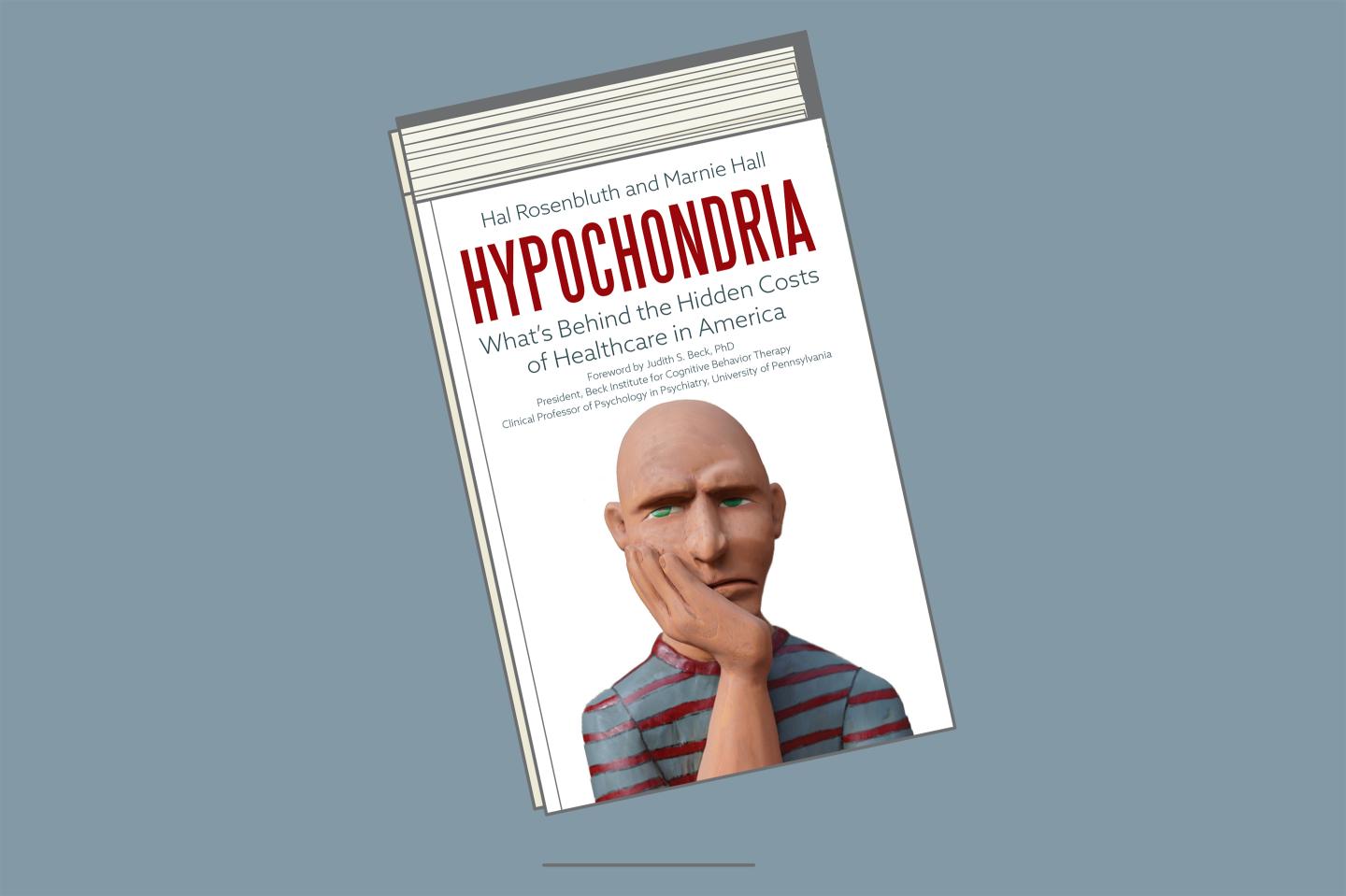
From the book Hypochondria: What’s Behind the Hidden Costs of Healthcare in America by Hal Rosenbluth and Marnie Hall. Copyright © 2024 by Hal Rosenbluth and Marnie Hall. Reprinted by permission of Rodin Books. Available June 18, 2024.