• Home
  • Latest
  • Fortune 500
  • Finance
  • Tech
  • Leadership
  • Lifestyle
  • Rankings
  • Multimedia

Trendingnow

1

Mark Cuban says he has the solution to growing income inequality, and it's to reward every employee—from CEO to janitor—with company stock

2

OpenAI says its AI models secretly broke out of a secure test environment and hacked into AI company Hugging Face in order to cheat on an evaluation

3

Mathematicians grapple with a ‘very rapid and very unsettling change’ as AI cracks yet another century-old problem

1

Mark Cuban says he has the solution to growing income inequality, and it's to reward every employee—from CEO to janitor—with company stock

2

OpenAI says its AI models secretly broke out of a secure test environment and hacked into AI company Hugging Face in order to cheat on an evaluation

3

Mathematicians grapple with a ‘very rapid and very unsettling change’ as AI cracks yet another century-old problem
FinanceReal Estate

How tiny homes went from a millennial lifestyle fad to a Hail Mary shot at solving the homeless crisis

By
Alena Botros
Alena Botros
Former staff writer
Down Arrow Button Icon
By
Alena Botros
Alena Botros
Former staff writer
Down Arrow Button Icon
January 28, 2024, 6:00 AM ET
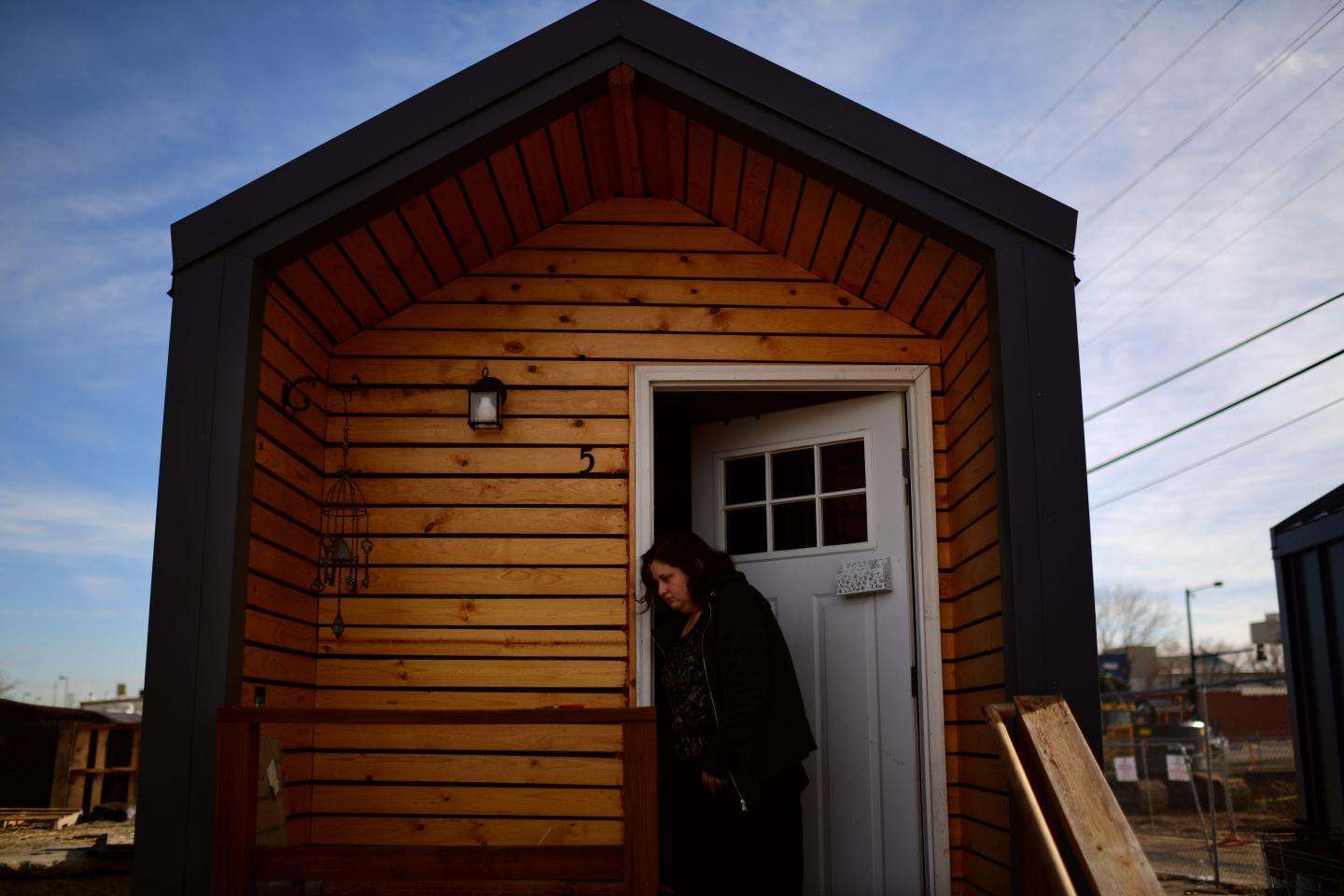
Photo of a person entering a tiny house
A tiny-home community in Denver in 2019. Hyoung Chang/MediaNews Group/The Denver Post via Getty Images
Add Fortune on Google for similar content.

The tiny home sums it all up when it comes to the American love of the single-family home. A literally diminished reality matches up to an ever-diminishing dream of the all-American style of homeownership.

The phenomenon has its roots in the early 2000s, when many millennials rebelled against the McMansion-leaning norms of late 20th-century culture. The millennial aesthetic is famously minimalist, and the tiny home was minimalism writ large—meaning very, very small. 

But over the past few years, tiny homes have morphed from a millennial lifestyle trend or life hack into a potential solution to the housing crisis. As an affordability crisis grips the nation and homelessness surges, tiny-home communities have sprouted from Wisconsin to Austin. In California, grappling with one of the worst housing crises in the nation, Gov. Gavin Newsom promised last year to deliver 1,200 tiny homes as interim housing in Los Angeles, San Diego, San Jose, and Sacramento.

Unfortunately, it seems that tiny homes are an imperfect solution to high housing costs and rising homelessness. So why, then, do politicians, nonprofits, and even do-gooder corporations love tiny homes so much? It has something to do with Americans’ persistent addiction: an obsession with single-family homes. 

When it comes to housing, America is different

America does housing differently from most other places, and nothing shows that quite like the 21st-century phenomenon of the tiny home. The caricature of a 1950s-style suburban house, in miniature, speaks to something in the American identity that equates being a homeowner with having your own space that’s separating you from others.

“In other countries,” University of Georgia professor Sonia Hirt told Fortune, “where people are not so interested in actually living with their own private lot, their homeownership rates, for example, are much higher than ours.” As dean of Georgia’s college of environmental design, Hirt has long studied America’s fascination with detached single-family homes. In other countries, she points out, the term “single-family home” doesn’t exist, and the word “family” isn’t used in building regulations.

“It’s interesting, culturally, that we will be willing to have a smaller home but not necessarily a smaller yard,” she said.

According to Kate Wagner, the architecture critic who documented America’s “McMansion Hell” in her blog of the same name, the single-family house was a “middle-class, professional-class, 19th-century kind of invention” that was essentially perfected in the United States. In the America of 100-plus years ago, corporations “could just basically make a house that [was] mass-produced, easily distributable, affordable to generally middle-class people.” When the American economy achieved liftoff in the 1920s and surged upward in the postwar baby-boom period, the emergence of the largest middle class in world history went hand in hand with the flowering of the single-family home lifestyle. “That was a huge shift,” Wagner told Fortune. 

Even now, 75 years later, there are few signs that the national addiction to single-family homes is abating. Last November’s mini-boom in residential construction was largely of the single-family variety. As Lisa Sturtevant, chief economist at multiple listing service Bright MLS, pointed out at the time, single-family starts were up more than 40% compared to a year earlier, but multifamily starts fell almost 34%. And as of a few years ago, 75% of residential land across the country was zoned for detached single-family homes, meaning it was illegal to build anything else in those areas, according to a New York Times analysis. 

Before the pandemic, America was already facing a shortage of housing, especially affordable housing, in key parts of the country, including the biggest cities with the most lucrative jobs. Since the pandemic-fueled housing boom, with both home prices and rents up substantially and mortgage rates at the highest level in decades, the single-family home has become much less accessible. Now it’s a coveted asset that’s inextricably linked with wealth in American society. Some millennials rebelled against it, in the form of tiny homes, and for them, tiny homes were affordable in comparison to the houses their parents owned. Tiny homes helped millennials save money and travel without being tied down. While the tiny home can be traced back to 1970s tiny living and nomadism culture, Wagner said, “it is such a 2010s invention…a post-recession invention.” 

“This was an era of cultural minimalism, where you saw minimalism in everything,” she said. This “post-recession aestheticism,” in Wagner’s thinking, was fueled by a cultural shift among the upper middle class, as a reevaluation of necessities, or materialism itself. Tiny homes became a form of showing how little you need—a direct rebuke to the era of McMansions, Wagner explained. 

Either way, tiny homes—though much smaller than the standard kind—aren’t necessarily that much cheaper. Whether it’s a tiny home or a McMansion, there are costs associated with a new housing development, Jeff Kruth, an assistant professor of architecture and urban design at Miami University, said. You’ll save on construction costs, but you’re still buying land, “so in terms of actual square-foot costs, you’re not actually looking at a huge difference between a tiny house and something that’s even slightly more modest,” he said, than the typical home. 

Small in size, less so in cost

In some ways, tiny homes and tiny-home communities are simply a rebranding of mobile homes and trailer parks. The only real difference is the cultural association of class, Kruth said. While the tiny-home movement is a rebuke to the early-2000s trend of inflating home sizes, it still expresses the “stand-alone house as the ideal,” he said.

Tiny homes also play into American homeownership aspirations, including a desire for privacy, said Brian Miller, a professor of sociology at Wheaton College. “On the other hand, it’s very different from the typical progression over the last few decades where American homes just keep getting bigger and bigger,” Miller said, later adding, “Tiny houses are sometimes an explicit rejection of that.” 

But they’re not necessarily for lower-income families; really they’re for people who can afford this type of lifestyle, one that allows you to do so temporarily while maybe even paying for a storage unit for your material possessions, Miller suggested. And yet, somehow tiny homes have entered into a new era—now posed as an (imperfect) solution to the housing crisis, which has manifested itself in unaffordable housing costs and a growing homeless population. Tiny homes are an individualized solution, Wagner stressed. “The reality is, we just need to build housing,” she said. But the push for tiny homes as an answer to the housing crisis is a perverse outgrowth of the inequality baked into the American economy. 

“What makes these people lesser than you? Would you live in a tiny house if you didn’t want to? I wouldn’t,” she said. “What about homeless people makes them eligible to be kind of the subjects of architectural experimentation?” 

Still, tiny homes can be useful, said Donald Whitehead Jr., the executive director of the National Coalition for the Homeless. They provide shelter and safety, even though sometimes they don’t even have a bathroom. It’s an “imperfect” solution, he said, but added, “we have such a tremendous depth deficiency when it comes to affordable housing that we have to exercise every option, even if it’s not the best.”

Nevertheless, what it says in his view is we’re a society that doesn’t see housing as a right, but a commodity. The bigger the house, the better you are—that’s why tiny homes have become an option. “People don’t value the lives that are in those tiny homes,” Whitehead said. 

About the Author
By Alena BotrosFormer staff writer
LinkedIn iconTwitter icon

Alena Botros is a former reporter at Fortune, where she primarily covered real estate.

See full bioRight Arrow Button Icon
Add Fortune on Google for similar content.

Latest in Finance

Finance
Lorem ipsum dolor sit amet, consectetur adipiscing elit, sed do eiusmod tempor incididunt ut labore et dolore magna aliqua. Ut enim ad minim veniam
By Fortune Editors
October 20, 2025
Finance
Lorem ipsum dolor sit amet, consectetur adipiscing elit, sed do eiusmod tempor incididunt ut labore et dolore magna aliqua. Ut enim ad minim veniam
By Fortune Editors
October 20, 2025
Finance
Lorem ipsum dolor sit amet, consectetur adipiscing elit, sed do eiusmod tempor incididunt ut labore et dolore magna aliqua. Ut enim ad minim veniam
By Fortune Editors
October 20, 2025
Finance
Lorem ipsum dolor sit amet, consectetur adipiscing elit, sed do eiusmod tempor incididunt ut labore et dolore magna aliqua. Ut enim ad minim veniam
By Fortune Editors
October 20, 2025
Finance
Lorem ipsum dolor sit amet, consectetur adipiscing elit, sed do eiusmod tempor incididunt ut labore et dolore magna aliqua. Ut enim ad minim veniam
By Fortune Editors
October 20, 2025
Finance
Lorem ipsum dolor sit amet, consectetur adipiscing elit, sed do eiusmod tempor incididunt ut labore et dolore magna aliqua. Ut enim ad minim veniam
By Fortune Editors
October 20, 2025

Most Popular

Finance
Lorem ipsum dolor sit amet, consectetur adipiscing elit, sed do eiusmod tempor incididunt ut labore et dolore magna aliqua. Ut enim ad minim veniam
By Fortune Editors
October 20, 2025
Finance
Lorem ipsum dolor sit amet, consectetur adipiscing elit, sed do eiusmod tempor incididunt ut labore et dolore magna aliqua. Ut enim ad minim veniam
By Fortune Editors
October 20, 2025
Finance
Lorem ipsum dolor sit amet, consectetur adipiscing elit, sed do eiusmod tempor incididunt ut labore et dolore magna aliqua. Ut enim ad minim veniam
By Fortune Editors
October 20, 2025
Finance
Lorem ipsum dolor sit amet, consectetur adipiscing elit, sed do eiusmod tempor incididunt ut labore et dolore magna aliqua. Ut enim ad minim veniam
By Fortune Editors
October 20, 2025
Finance
Lorem ipsum dolor sit amet, consectetur adipiscing elit, sed do eiusmod tempor incididunt ut labore et dolore magna aliqua. Ut enim ad minim veniam
By Fortune Editors
October 20, 2025
Finance
Lorem ipsum dolor sit amet, consectetur adipiscing elit, sed do eiusmod tempor incididunt ut labore et dolore magna aliqua. Ut enim ad minim veniam
By Fortune Editors
October 20, 2025
Fortune Secondary Logo
Rankings
  • 100 Best Companies
  • Fortune 500
  • Global 500
  • Fortune 500 Europe
  • Most Powerful Women
  • World's Most Admired Companies
  • See All Rankings
  • Lists Calendar
Sections
  • Finance
  • Fortune Crypto
  • Features
  • Leadership
  • Health
  • Commentary
  • Success
  • Retail
  • Mpw
  • Tech
  • Lifestyle
  • CEO Initiative
  • Asia
  • Politics
  • Conferences
  • Europe
  • Newsletters
  • Personal Finance
  • Environment
  • Magazine
  • Education
Customer Support
  • Frequently Asked Questions
  • Customer Service Portal
  • Privacy Policy
  • Terms Of Use
  • Single Issues For Purchase
  • International Print
Commercial Services
  • Advertising
  • Fortune Brand Studio
  • Fortune Analytics
  • Fortune Conferences
  • Business Development
  • Group Subscriptions
About Us
  • About Us
  • Press Center
  • Work At Fortune
  • Terms And Conditions
  • Site Map
  • About Us
  • Press Center
  • Work At Fortune
  • Terms And Conditions
  • Site Map
  • Facebook icon
  • Twitter icon
  • LinkedIn icon
  • Instagram icon
  • TikTok icon
  • YouTube icon

Latest in Finance

Larry Page and Sergey Brin
SuccessBillionaires
Google’s founders are snapping up Miami mansions, as billionaires flee California’s proposed tax—and the company is buying office space to accommodate
By Emma BurleighJuly 22, 2026
28 minutes ago
t
Personal FinanceWhite House
Trump said Australia’s system ‘worked out very well’ with $200,000 saved by 67 — so why didn’t he apply that model to Trump Accounts?
By Kris Iyer and The ConversationJuly 22, 2026
1 hour ago
Current price of gold as of July 22, 2026
Personal Financegold prices
Current price of gold as of July 22, 2026
By Danny BakstJuly 22, 2026
3 hours ago
t
CommentaryTariffs
Trump’s third tariff tantrum piles more dizzying distractions on top of ever-spiraling failures
By Jeffrey Sonnenfeld and Steven TianJuly 22, 2026
3 hours ago
orson
CommentaryOpenAI
We got California to intervene about OpenAI’s corporate switch from nonprofit status. It’s time for the SEC to come to the table
By Orson Aguilar and Catherine BracyJuly 22, 2026
3 hours ago
A woman observes stock trends on her smartphone while a computer screen displays financial graphs.
NewslettersCFO Daily
Beyond SpaceX: Why great IPOs depend on more than first-day demand
By Sheryl EstradaJuly 22, 2026
3 hours ago

Most Popular

Mark Cuban says he has the solution to growing income inequality, and it's to reward every employee—from CEO to janitor—with company stock
Success
Mark Cuban says he has the solution to growing income inequality, and it's to reward every employee—from CEO to janitor—with company stock
By Sasha RogelbergJuly 20, 2026
2 days ago
OpenAI says its AI models secretly broke out of a secure test environment and hacked into AI company Hugging Face in order to cheat on an evaluation
Cybersecurity
OpenAI says its AI models secretly broke out of a secure test environment and hacked into AI company Hugging Face in order to cheat on an evaluation
By Jeremy Kahn and Emily ForliniJuly 21, 2026
20 hours ago
Mathematicians grapple with a ‘very rapid and very unsettling change’ as AI cracks yet another century-old problem
AI
Mathematicians grapple with a ‘very rapid and very unsettling change’ as AI cracks yet another century-old problem
By Eva RoytburgJuly 21, 2026
24 hours ago
‘I want to die broke’: Billionaire philanthropist Denny Sanford dies after giving away $4 billion
Success
‘I want to die broke’: Billionaire philanthropist Denny Sanford dies after giving away $4 billion
By Sydney LakeJuly 20, 2026
2 days ago
Despite a $156 million contract, Knicks star Jalen Brunson still calls his parents for financial advice any time he makes a big purchase
Success
Despite a $156 million contract, Knicks star Jalen Brunson still calls his parents for financial advice any time he makes a big purchase
By Emma BurleighJuly 21, 2026
1 day ago
'Dr. Doom' Nouriel Roubini says we're headed for universal basic income or 'some form of socialism' as AI revolutionizes work—He calls that optimistic
AI
'Dr. Doom' Nouriel Roubini says we're headed for universal basic income or 'some form of socialism' as AI revolutionizes work—He calls that optimistic
By Jason MaJuly 18, 2026
4 days ago

© 2026 Fortune Media IP Limited. All Rights Reserved. Use of this site constitutes acceptance of our Terms of Use and Privacy Policy | CA Notice at Collection and Privacy Notice | Do Not Sell/Share My Personal Information
FORTUNE is a trademark of Fortune Media IP Limited, registered in the U.S. and other countries. FORTUNE may receive compensation for some links to products and services on this website. Offers may be subject to change without notice.