• Home
  • Latest
  • Fortune 500
  • Finance
  • Tech
  • Leadership
  • Lifestyle
  • Rankings
  • Multimedia
CommentaryColleges and Universities

Biden voted for the Bayh-Dole Act 44 years ago–but the administration’s plans to reinterpret it could undermine decades of world-leading U.S. innovation

By
Almesha L. Campbell
Almesha L. Campbell
Down Arrow Button Icon
By
Almesha L. Campbell
Almesha L. Campbell
Down Arrow Button Icon
January 5, 2024, 1:48 PM ET
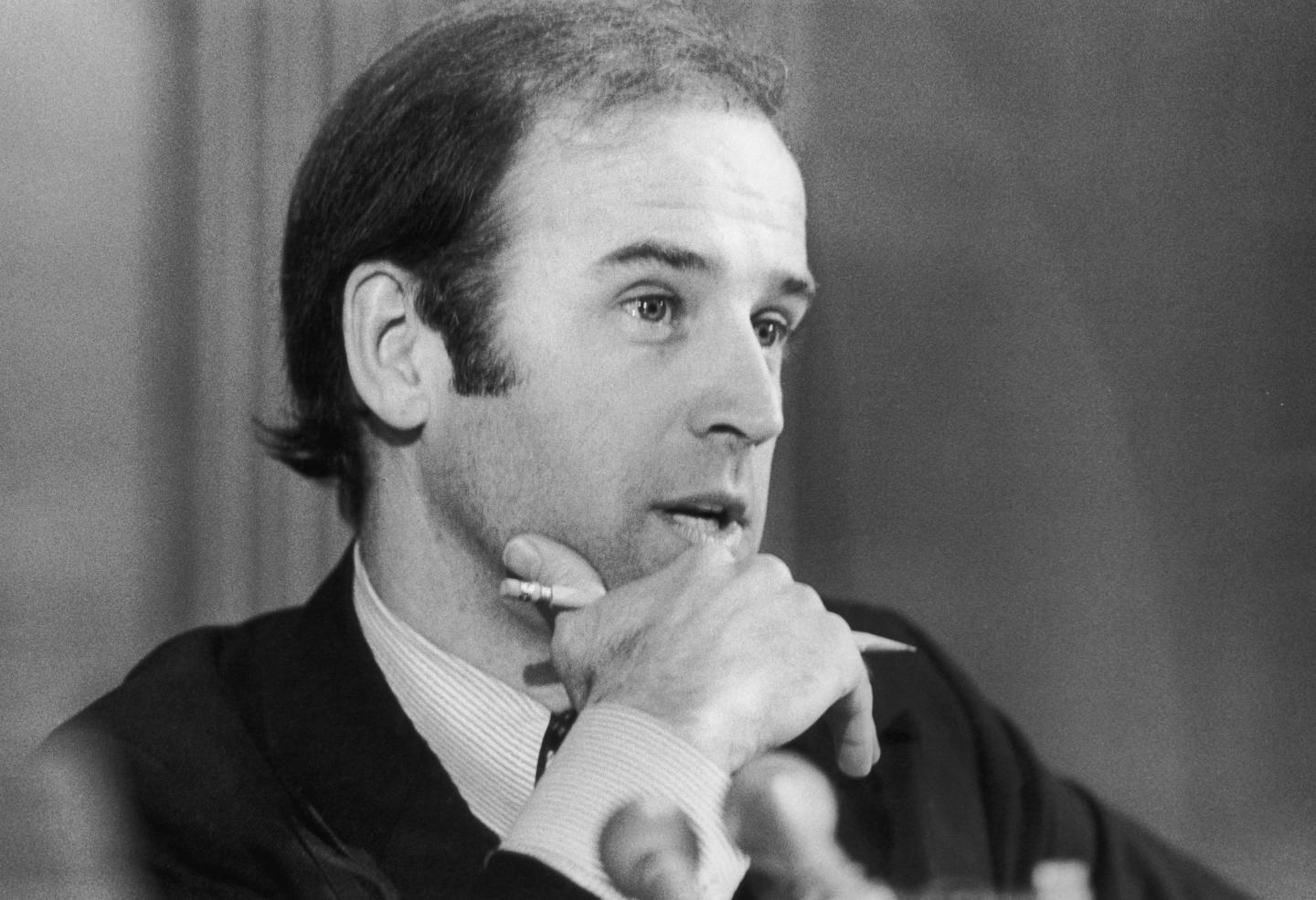
Joe Biden, the United States Senator from Delaware, circa 1980.

Historically Black Colleges and Universities (HBCUs) could soon become even bigger innovation hubs, thanks to measures advanced by Senator Raphael Warnock (D-Ga.). He recently introduced a bill to ensure that land-grant HBCUs receive fair funding, and last year, he fought to fund these institutions in the CHIPS and Science Act.

His actions could help HBCUs foster scientific innovations that become real-world products. But whether the schools will be able to take advantage of the new opportunities depends on a process known as “technology transfer,” which brings promising breakthroughs out of university labs to everyday consumers. The Google search algorithm, the nicotine patch, and the Honeycrisp apple are just a few of the myriad innovations to come out of this process.

For over 12 years I have led the tech transfer program at Jackson State University, one of the largest HBCUs in the United States. I am now also the first person from an HBCU to chair AUTM, a non-profit organization of more than 3,000 members dedicated to transforming academic discoveries into the products and services of tomorrow.

Much of the modern tech transfer process flows from a revolutionary yet little-known 1980 law called the Bayh-Dole Act. That pivotal law allows academic institutions to directly protect and commercialize discoveries arising from federally funded research on their campuses. Universities are then free to license that intellectual property to private-sector companies, which further invest funds and continue to research and develop those inventions into commercially useful products.

The effects of the Bayh-Dole law, and the technology transfer horsepower it unleashed, are staggering. Between 1996 and 2020, technology transfer resulting from Bayh-Dole contributed as much as $1.9 trillion to U.S. economic output and supported some 6.5 million jobs.

The genius of this system, now emulated around the world, is that it takes control of intellectual property away from the federal government and empowers universities. This creates a virtuous cycle, in which taxpayer funds support research that may one day be commercialized, which can lead to royalty payments to universities and re-investment in future research for the next generation of inventions.

Ensuring that HBCU faculty and students benefit from this cycle has been one of my top priorities. That’s why Jackson State leads EnRICH, a “pre-accelerator” for faculty and student innovators, and participates in programs like the Xlerator Network and the National Science Foundation Mid-South I-Corps, which encourage innovation and tech transfer in our region. This fall, the National Institutes of Health awarded Jackson State and our partners $12 million to enhance research, development, and entrepreneurship in biomedical innovation.

Such regional investments are crucial to democratizing access to the benefits of tech transfer, previously the preserve of elite institutions such as Columbia, MIT, and UC Berkeley. At Jackson State and other regional institutions, we empower innovators and entrepreneurs who have been historically overlooked. This creates a more equitable landscape and helps everyone in our region by creating new economic opportunities.

Unfortunately, the U.S. tech transfer system, which was supercharged after the passage of the Bayh-Dole Act in 1980, is now on shaky ground. Last month, after years of pressure from misguided activists, the Biden Administration announced a plan to dramatically reinterpret a provision of that vital law.

The White House has proposed that the government be allowed to “march in” and forcibly re-license patents that result from federally-funded research, with no basis in law. Under the planned scheme, the government could use this tactic to control the prices of thousands of products, including medicines.

This is a puzzling turn of events as President Biden, who voted for the original Bayh-Dole Act, has upheld decades of precedent by rejecting demands to reinterpret march-in rights at every turn, until now. We hope that during the public comment period on the proposal that runs through Feb. 6, better sense prevails. The suggested legal revision poses grave risks to tech transfer, regional innovation, and economic equity.

I am very concerned that this development could kill the golden goose that we have built for decades and undo our efforts to uplift innovators from all backgrounds. Reinterpreting Bayh-Dole as a tool for arbitrary price setting would make successful commercialization even more difficult. Private sector firms and their investors only risk their time, talent, and treasure on developing unproven technologies if they can be certain their efforts have the potential to pay off. That’s precisely the purpose of patents.

Weakening the tech transfer process would work directly against the primary purpose of Bayh-Dole, which is to bring the products of government-funded research to consumers.

Entrepreneurs of color, at HBCUs and elsewhere, are finally getting a chance to show how innovative and entrepreneurial they are. They’re founding dozens of startups in places like Mississippi. But venture capital funding is hard to find in “fly over America.”

Making this already difficult process even harder, by threatening to take away entrepreneurs’ intellectual property rights, would ensure they never even get a chance.

That would be more than a tragedy. It would be a disaster for our nation, which needs all the innovation– and economic growth–we can get.

Almesha L. Campbell, Ph.D., is the assistant vice president for research and economic development at Jackson State University, a public historically Black university in Jackson, Mississippi. She also serves as chair of AUTM, the nonprofit leader in efforts to educate, promote, and inspire professionals to support the development of academic research that changes the world and drives innovation forward.

More must-read commentary published by Fortune:

  • Economic pessimists’ bet on a 2023 recession failed. Why are they doubling down in 2024?
  • COVID-19 v. Flu: A ‘much more serious threat,’ new study into long-term risks concludes
  • Access to modern stoves could be a game-changer for Africa’s economic development–and help cut the equivalent of the carbon dioxide emitted by the world’s planes and ships
  • ‘Parroting Putin’s propaganda’: The business exodus over Ukraine was no Russian bonanza

The opinions expressed in Fortune.com commentary pieces are solely the views of their authors and do not necessarily reflect the opinions and beliefs of Fortune.

Join us at the Fortune Workplace Innovation Summit May 19–20, 2026, in Atlanta. The next era of workplace innovation is here—and the old playbook is being rewritten. At this exclusive, high-energy event, the world’s most innovative leaders will convene to explore how AI, humanity, and strategy converge to redefine, again, the future of work. Register now.
About the Author
By Almesha L. Campbell
See full bioRight Arrow Button Icon

Latest in Commentary

Finance
Lorem ipsum dolor sit amet, consectetur adipiscing elit, sed do eiusmod tempor incididunt ut labore et dolore magna aliqua. Ut enim ad minim veniam
By Fortune Editors
October 20, 2025
Finance
Lorem ipsum dolor sit amet, consectetur adipiscing elit, sed do eiusmod tempor incididunt ut labore et dolore magna aliqua. Ut enim ad minim veniam
By Fortune Editors
October 20, 2025
Finance
Lorem ipsum dolor sit amet, consectetur adipiscing elit, sed do eiusmod tempor incididunt ut labore et dolore magna aliqua. Ut enim ad minim veniam
By Fortune Editors
October 20, 2025
Finance
Lorem ipsum dolor sit amet, consectetur adipiscing elit, sed do eiusmod tempor incididunt ut labore et dolore magna aliqua. Ut enim ad minim veniam
By Fortune Editors
October 20, 2025
Finance
Lorem ipsum dolor sit amet, consectetur adipiscing elit, sed do eiusmod tempor incididunt ut labore et dolore magna aliqua. Ut enim ad minim veniam
By Fortune Editors
October 20, 2025
Finance
Lorem ipsum dolor sit amet, consectetur adipiscing elit, sed do eiusmod tempor incididunt ut labore et dolore magna aliqua. Ut enim ad minim veniam
By Fortune Editors
October 20, 2025

Most Popular

Finance
Lorem ipsum dolor sit amet, consectetur adipiscing elit, sed do eiusmod tempor incididunt ut labore et dolore magna aliqua. Ut enim ad minim veniam
By Fortune Editors
October 20, 2025
Finance
Lorem ipsum dolor sit amet, consectetur adipiscing elit, sed do eiusmod tempor incididunt ut labore et dolore magna aliqua. Ut enim ad minim veniam
By Fortune Editors
October 20, 2025
Finance
Lorem ipsum dolor sit amet, consectetur adipiscing elit, sed do eiusmod tempor incididunt ut labore et dolore magna aliqua. Ut enim ad minim veniam
By Fortune Editors
October 20, 2025
Finance
Lorem ipsum dolor sit amet, consectetur adipiscing elit, sed do eiusmod tempor incididunt ut labore et dolore magna aliqua. Ut enim ad minim veniam
By Fortune Editors
October 20, 2025
Finance
Lorem ipsum dolor sit amet, consectetur adipiscing elit, sed do eiusmod tempor incididunt ut labore et dolore magna aliqua. Ut enim ad minim veniam
By Fortune Editors
October 20, 2025
Finance
Lorem ipsum dolor sit amet, consectetur adipiscing elit, sed do eiusmod tempor incididunt ut labore et dolore magna aliqua. Ut enim ad minim veniam
By Fortune Editors
October 20, 2025
Fortune Secondary Logo
Rankings
  • 100 Best Companies
  • Fortune 500
  • Global 500
  • Fortune 500 Europe
  • Most Powerful Women
  • World's Most Admired Companies
  • See All Rankings
  • Lists Calendar
Sections
  • Finance
  • Fortune Crypto
  • Features
  • Leadership
  • Health
  • Commentary
  • Success
  • Retail
  • Mpw
  • Tech
  • Lifestyle
  • CEO Initiative
  • Asia
  • Politics
  • Conferences
  • Europe
  • Newsletters
  • Personal Finance
  • Environment
  • Magazine
  • Education
Customer Support
  • Frequently Asked Questions
  • Customer Service Portal
  • Privacy Policy
  • Terms Of Use
  • Single Issues For Purchase
  • International Print
Commercial Services
  • Advertising
  • Fortune Brand Studio
  • Fortune Analytics
  • Fortune Conferences
  • Business Development
  • Group Subscriptions
About Us
  • About Us
  • Press Center
  • Work At Fortune
  • Terms And Conditions
  • Site Map
  • About Us
  • Press Center
  • Work At Fortune
  • Terms And Conditions
  • Site Map
  • Facebook icon
  • Twitter icon
  • LinkedIn icon
  • Instagram icon
  • Pinterest icon

Latest in Commentary

francis
CommentaryFlorida
Former Miami Mayor Francis Suarez: Why I’m joining Stephen Ross and Ken Griffin in betting big on ambitious business leaders
By Francis SuarezMay 1, 2026
11 hours ago
valerie
CommentaryLayoffs
Tesla’s former HR chief: the AI layoff panic Is built on a false premise—here’s what most workers need to know
By Valerie Capers WorkmanMay 1, 2026
13 hours ago
tamas
CommentaryPolymarket
SEON CEO: Prediction markets can forecast the future. Can they survive their own manipulation problem?
By Tamas KadarMay 1, 2026
16 hours ago
sundar
Commentary250 Years of Innovation
America at 250: immigration and the making of an innovative nation
By Nasser KazeminyMay 1, 2026
17 hours ago
Derek Kilmer
CommentaryEconomics
The U.S. economy is booming — just not where 50 million Americans live
By Derek KilmerMay 1, 2026
17 hours ago
hegseth
CommentaryMilitary
America shot its arsenal empty in 2 wars. Now it needs Beijing’s permission to reload
By Steve H. Hanke and Jeffrey WengApril 30, 2026
1 day ago

Most Popular

Scott Bessent on financial literacy: 'it drives me crazy' to see young men in blue-collar construction jobs playing the lottery
Personal Finance
Scott Bessent on financial literacy: 'it drives me crazy' to see young men in blue-collar construction jobs playing the lottery
By Fatima Hussein and The Associated PressMay 1, 2026
13 hours ago
China dominates the world's lithium supply. The U.S. just found 328 years' worth in its own backyard
North America
China dominates the world's lithium supply. The U.S. just found 328 years' worth in its own backyard
By Jake AngeloApril 30, 2026
1 day ago
The U.S. economy is booming — just not where 50 million Americans live
Commentary
The U.S. economy is booming — just not where 50 million Americans live
By Derek KilmerMay 1, 2026
17 hours ago
Accenture's Julie Sweet blew up 50 years of company history. She says the hardest part is still ahead
Conferences
Accenture's Julie Sweet blew up 50 years of company history. She says the hardest part is still ahead
By Nick LichtenbergApril 29, 2026
3 days ago
Apple cofounder Ronald Wayne—whose stake would be worth up to $400 billion had he not sold it in 1976—says that at 91, he has no regrets
Success
Apple cofounder Ronald Wayne—whose stake would be worth up to $400 billion had he not sold it in 1976—says that at 91, he has no regrets
By Preston ForeApril 27, 2026
4 days ago
Exclusive: America's largest Black-owned bank launches podcast with mission to unlock hidden shame holding back generational wealth
Banking
Exclusive: America's largest Black-owned bank launches podcast with mission to unlock hidden shame holding back generational wealth
By Nick LichtenbergApril 29, 2026
2 days ago

© 2026 Fortune Media IP Limited. All Rights Reserved. Use of this site constitutes acceptance of our Terms of Use and Privacy Policy | CA Notice at Collection and Privacy Notice | Do Not Sell/Share My Personal Information
FORTUNE is a trademark of Fortune Media IP Limited, registered in the U.S. and other countries. FORTUNE may receive compensation for some links to products and services on this website. Offers may be subject to change without notice.