
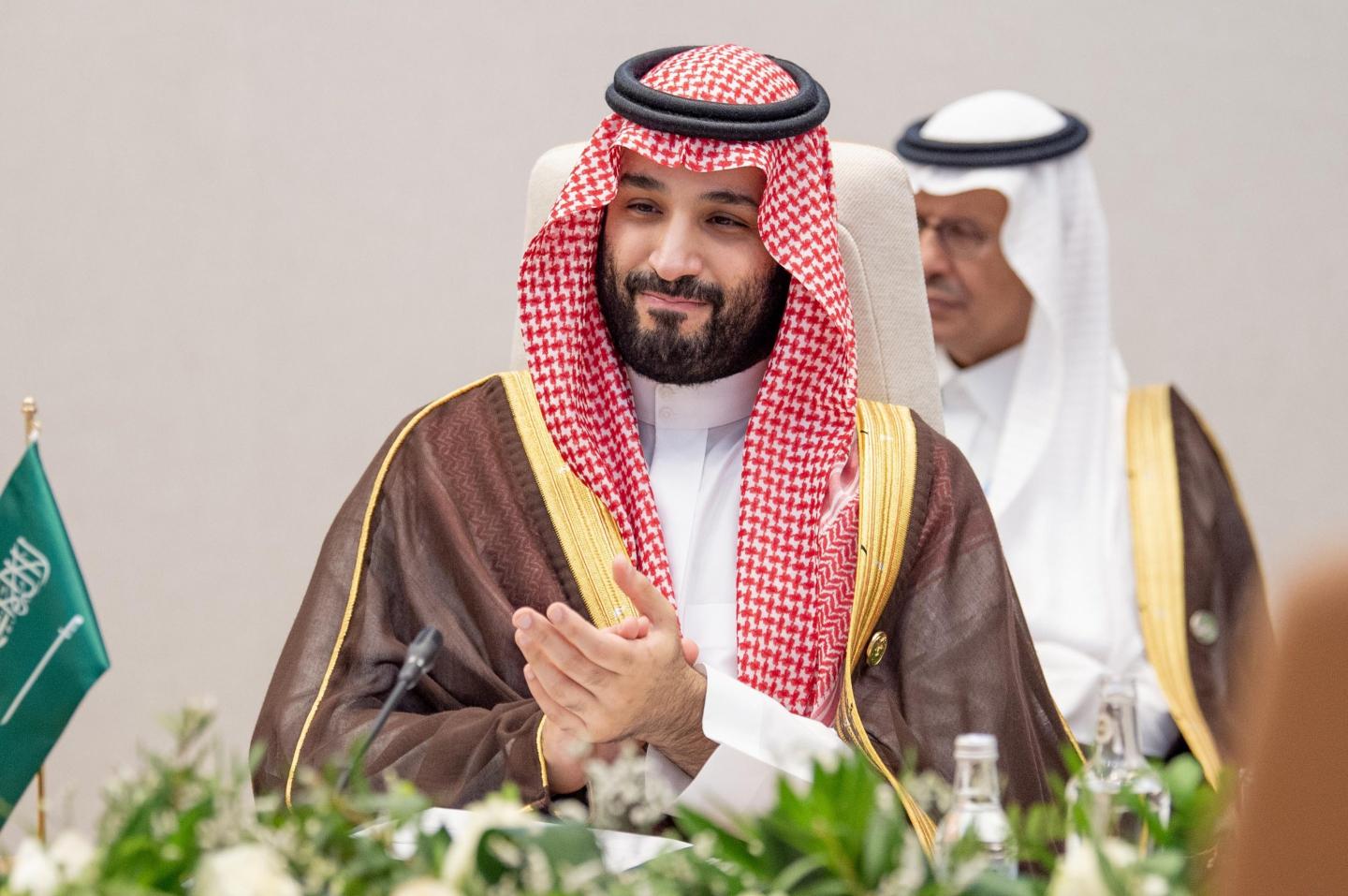
Mohammed bin Salman’s campaign to modernize Saudi Arabia and diversify its economy celebrated its latest success three weeks ago after his bid to host the FIFA World Cup in 2034 remained unopposed.
Only five years ago, Western tourists couldn’t even get a visa to travel to the Gulf monarchy. Now the crown prince, who took power in 2017, wants to follow Qatar in welcoming football fans the world over to the Persian Gulf a century after his grandfather founded the state.
But the de facto leader of last year’s fastest-growing economy has ambitious plans that reach far beyond mere football. Bin Salman, 38, aims to reshape the Arabian kingdom for the next hundred years to come—and one of his Vision 2030 plans includes the creation of its very own domestic car industry.
The ruling House of Saud will however find that buffing its image through a tourism-boosting global sports tournament is child’s play compared with constructing a self-sustaining auto industry from scratch, argue experts.
“Money is certainly an entry ticket for Saudi Arabia, but it will be extremely difficult,” says Stefan Bratzel, founder and executive director of the Center of Automotive Management in Germany. “Building cars is one of the most complex industrial endeavors, and vehicle plants alone do not suffice. Carmakers need resilient supply chains, and here, factors like political instability in the region can outweigh the advantages.”
‘One of the most promising markets today’
At a basic level, the demand is at least there.
More passenger cars were sold in Saudi Arabia last year than in other emerging economies like Mexico and South Africa, both countries with thriving local auto industries, according to the International Organization of Motor Vehicle Manufacturers (OICA).
More important, the purchasing power in Saudi Arabia is much higher, so the share of premium and luxury vehicles retailing at $80,000 and up is likely to be well above the 2% global average for annual new car sales.
“Don’t forget Saudi Arabia recently lifted the ban on women driving, which increased the total addressable market by 2 million consumers,” argues Andreas Schlosser, partner and global lead for automotive at consultancy Arthur D. Little.
Only a small fraction of them will buy cars, but Schlosser believes a young generation of Saudis yearn to finally have many of the comforts they were exposed to while being educated in the West. It’s ambitious, but the industry consultant thinks the market might even double in size to 1 million vehicles by the end of the decade from the 519,000 sold in 2022.
That may be why Marco Tronchetti Provera, the executive vice chairman of tire producer Pirelli, called it “one of the most promising markets today.”
Last month his company followed Korean carmaker Hyundai in establishing a manufacturing joint venture worth a combined $1 billion in investments among them—a “pivotal milestone” in the country’s plans, according to Saudi sovereign wealth fund PIF.
#PIF and @Pirelli signed a joint-venture agreement to build a tire manufacturing facility in Saudi Arabia. Marco Tronchetti Provera, Executive Vice Chairman of Pirelli, explains what this means for the country’s automotive industry. pic.twitter.com/CF2dbvqbsG
— Public Investment Fund (@PIF_en) October 27, 2023
How much those two corporations will actually contribute from their own coffers is unclear, and neither company responded to requests for comment. But chances are the overwhelming bulk comes straight from bin Salman’s deep, petrodollar-lined pockets.
“We provide know-how, technology, and management of the company, and PIF is supporting us financially,” Pirelli’s Tronchetti said in comments published by the Saudi wealth fund.
Out of the half million cars sold in the kingdom last year, however, precisely none were built there, data from OICA shows. Now Saudi Arabia wants to go from zero to more than 300,000 cars annually in a sector that already suffers from global overcapacity.
“It’s still not a domestic industry with real momentum behind it, assuming they can even get to that volume target,” says Justin Cox, director for global automotive production forecasting at research firm GlobalData.
Hyundai, for example, is only expected to contribute about 50,000 cars a year when production is scheduled to begin in 2026.
“Starting from a white sheet of paper, with nothing on the ground, it looks to be a massive challenge,” Cox tells Fortune.
That’s because while the auto industry was busy expanding its production footprint worldwide in recent decades, Saudi Arabia had not aspired to be a conventional economy in the Western sense with an entrepreneurial culture and developed financial markets.
What hindered Saudi Arabia’s entry into the auto industry?
Founded through military conquest rather than a national movement that might indicate a skilled middle class, the Saudi state prioritized family authority over economic diversification. Journalist Sandra Mackey notes in her 2002 book, The Saudis: Inside the Desert Kingdom, that structured employment contradicts local bedouin values.
Competing globally required innovative financing like sukuk, which provided special religious work-arounds in order to pass Islamic sharia law that forbids providing capital in exchange for interest, one of the core incentives for taking financial risk. This, alongside a lack of diversified investments, hindered Saudi Arabia’s entry into the auto industry.
The country’s economy is heavily skewed, with Saudi Aramco far surpassing other corporations. Over $2 trillion dollars of value separates Aramco as the largest joint stock corporation from the next largest, Al Rajhi Bank.
What little non–oil industry exists is located mainly around the Red Sea port of Jeddah, precisely because it has traditionally served as the main arrival point for pilgrims headed to nearby Mecca.
Crown Prince bin Salman aims to revitalize the economy, evident in Aramco’s partial privatization. However, human rights violations, exemplified by Jamal Khashoggi’s murder, cast a shadow on these reforms.
Choosing Lucid over Tesla
In the realm of automotive progress, bin Salman chose Lucid over Tesla, favoring a strategic shift over immediate financial gains. Lucid established Saudi’s first car assembly line in September, symbolizing a foray into the auto industry.
The shift toward economic diversification mirrors global trends, exemplified by Vingroup in Vietnam founding VinFast. Electric mobility disruption offers developing nations, including Saudi Arabia, a chance to enter the industry.
Bin Salman’s efforts extend beyond cars, with recent moves like adopting the Gregorian calendar, hailed as business-friendly. However, challenges persist, and as the ultracompetitive auto industry demands precision, even advanced economies struggle to retain companies when critical suppliers fold.