• Home
  • Latest
  • Fortune 500
  • Finance
  • Tech
  • Leadership
  • Lifestyle
  • Rankings
  • Multimedia
CommentaryPayments

Bolt CEO: ‘America’s FedNow service has much to learn from India’s breakthrough payments system’

By
Maju Kuruvilla
Maju Kuruvilla
Down Arrow Button Icon
By
Maju Kuruvilla
Maju Kuruvilla
Down Arrow Button Icon
September 14, 2023, 12:05 PM ET
Maju Kuruvilla is the CEO of Bolt.
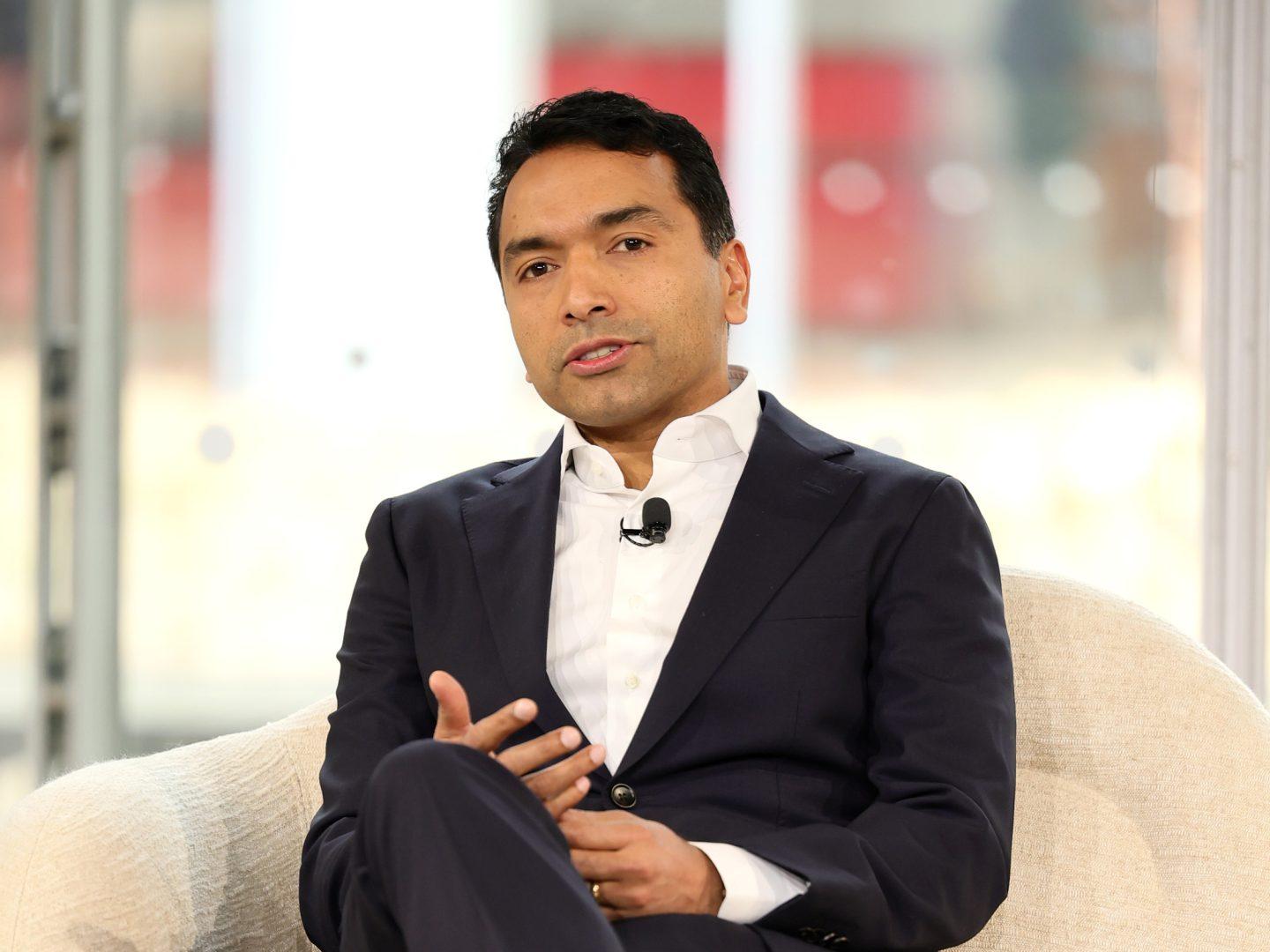
Maju Kuruvilla is the CEO of Bolt.Theo Wargo - Getty Images - BoF

This summer, the U.S. began an ambitious experiment: a real-time payments system called FedNow. Built by the Federal Reserve, FedNow is designed to accelerate transactions for the digital age, bringing to businesses and banks the fast payments that consumers enjoy through mobile services such as Zelle or Venmo. If FedNow succeeds, it could eventually serve as America’s speedy payments backbone.

Changing an entire country’s digital payments architecture is a huge undertaking. Policymakers might be tempted to look to Silicon Valley for guidance. However, they’d be better served by looking for inspiration in India, where a similar payments transformation is well underway.

In 2016, India’s central bank launched its Unified Payments Interface system (UPI). With just a scan of a QR code, UPI allows virtually anyone in India to transact with anyone else. Last year, the system facilitated almost $2 trillion in payments. What began as a modest government experiment has turned India into the world’s largest real-time payments market–all in the span of a few years.

I emigrated from India in 2001 to pursue a technology career in America. In 2018, I first witnessed UPI in action when I went back to India for my job at Amazon. A colleague offered to treat me to lunch. At the register, he reached for his phone and scanned a QR code. I asked him what he had done, and he said, “Oh, it’s UPI. The QR code handles the transaction. Simple.”

At the time, it seemed too simple. But the more I learned, the more it became clear to me that this modest lunch counter transaction was an example of a broader technological triumph. Soon, I noticed UPI QR codes everywhere–taped to my rickshaw or laminated near a storefront register. Even the less well-off in India had personal QR codes to facilitate digital acts of charity.

In just six years, UPI grew from 2 million transactions annually to 74 billion–a staggering growth rate that would make any startup envious. UPI’s success was not always a given. When it was conceived in 2009, the Indian government hoped that a new digital payment system could help the unbanked, eliminate black-market activity, and reduce money printing costs. That’s a tough task in any country, but especially in India, with its multiethnic, multilingual, billion-person population, including many without computers, internet access, and even electricity.

Indians are also famously skeptical of government, an attitude captured in the darkly comic Hindi phrase “chalta hai,” which translates roughly to, “It is what it is.” And yet, with UPI, the government upended expectations. When UPI first launched, just half of Indians had a bank account. Today, that number now stands at over 80%–a considerable public policy achievement.

Three ingredients contributed to UPI’s success. The first is simplicity. Too often in tech, we chase the flashy solution. By contrast, UPI is built atop QR codes–a technology that debuted in 1994. Anyone with a sheet of paper and a QR code can connect to UPI and receive payments–a low-tech solution that lowers the barrier to entry for everyone.

The second ingredient is interoperability. Near an Indian cash register, you’ll find a sea of logos, whether for homegrown payment services like India’s PhonePe or global systems like Google Pay. Flexibility begets scale, and by opening the system to many banking partners, the government encouraged trust and sped up adoption.

Finally, India considered the needs and conditions of its people. UPI is a mobile-based system, as befits a nation with over a billion mobile phones. The system is also free to use for consumers and most merchants–which is critical in a country where 60% of the population lives on just a few dollars a day.

I’m cautiously optimistic about FedNow achieving similar success. The U.S. contains approximately 6 million unbanked households and many more “underbanked” residents. As India’s experience demonstrates, government-facilitated payment systems can nudge millions into mainstream economic life.

Although U.S. firms are famously reticent to forgo fees, India has proved that the private sector can be brought on board. UPI’s no-fee transactions were attractive to the smallest of small businesses, like the roadside vendors that populate the country. The system also helped India’s private banks, financial institutions, and cell phone providers. To use UPI, one still needs a bank account and a cell phone–which encourages people to acquire both. For India’s private sector, UPI facilitated smooth business payments–and a dose of free marketing.

Perhaps most importantly, UPI shows that a government can get substantial things done, even with widespread public skepticism and within a boisterous democracy. U.S. policymakers have much to learn from the Indian UPI experience—that is if we can suspend our American “chalta hai” attitude long enough to try this experiment.

Maju Kuruvilla is the CEO of Bolt, a financial technology company based in the United States.

The opinions expressed in Fortune.com commentary pieces are solely the views of their authors and do not necessarily reflect the opinions and beliefs of Fortune.

Join us at the Fortune Workplace Innovation Summit May 19–20, 2026, in Atlanta. The next era of workplace innovation is here—and the old playbook is being rewritten. At this exclusive, high-energy event, the world’s most innovative leaders will convene to explore how AI, humanity, and strategy converge to redefine, again, the future of work. Register now.
About the Author
By Maju Kuruvilla
See full bioRight Arrow Button Icon

Latest in Commentary

Finance
Lorem ipsum dolor sit amet, consectetur adipiscing elit, sed do eiusmod tempor incididunt ut labore et dolore magna aliqua. Ut enim ad minim veniam
By Fortune Editors
October 20, 2025
Finance
Lorem ipsum dolor sit amet, consectetur adipiscing elit, sed do eiusmod tempor incididunt ut labore et dolore magna aliqua. Ut enim ad minim veniam
By Fortune Editors
October 20, 2025
Finance
Lorem ipsum dolor sit amet, consectetur adipiscing elit, sed do eiusmod tempor incididunt ut labore et dolore magna aliqua. Ut enim ad minim veniam
By Fortune Editors
October 20, 2025
Finance
Lorem ipsum dolor sit amet, consectetur adipiscing elit, sed do eiusmod tempor incididunt ut labore et dolore magna aliqua. Ut enim ad minim veniam
By Fortune Editors
October 20, 2025
Finance
Lorem ipsum dolor sit amet, consectetur adipiscing elit, sed do eiusmod tempor incididunt ut labore et dolore magna aliqua. Ut enim ad minim veniam
By Fortune Editors
October 20, 2025
Finance
Lorem ipsum dolor sit amet, consectetur adipiscing elit, sed do eiusmod tempor incididunt ut labore et dolore magna aliqua. Ut enim ad minim veniam
By Fortune Editors
October 20, 2025

Most Popular

Finance
Lorem ipsum dolor sit amet, consectetur adipiscing elit, sed do eiusmod tempor incididunt ut labore et dolore magna aliqua. Ut enim ad minim veniam
By Fortune Editors
October 20, 2025
Finance
Lorem ipsum dolor sit amet, consectetur adipiscing elit, sed do eiusmod tempor incididunt ut labore et dolore magna aliqua. Ut enim ad minim veniam
By Fortune Editors
October 20, 2025
Finance
Lorem ipsum dolor sit amet, consectetur adipiscing elit, sed do eiusmod tempor incididunt ut labore et dolore magna aliqua. Ut enim ad minim veniam
By Fortune Editors
October 20, 2025
Finance
Lorem ipsum dolor sit amet, consectetur adipiscing elit, sed do eiusmod tempor incididunt ut labore et dolore magna aliqua. Ut enim ad minim veniam
By Fortune Editors
October 20, 2025
Finance
Lorem ipsum dolor sit amet, consectetur adipiscing elit, sed do eiusmod tempor incididunt ut labore et dolore magna aliqua. Ut enim ad minim veniam
By Fortune Editors
October 20, 2025
Finance
Lorem ipsum dolor sit amet, consectetur adipiscing elit, sed do eiusmod tempor incididunt ut labore et dolore magna aliqua. Ut enim ad minim veniam
By Fortune Editors
October 20, 2025
Fortune Secondary Logo
Rankings
  • 100 Best Companies
  • Fortune 500
  • Global 500
  • Fortune 500 Europe
  • Most Powerful Women
  • Future 50
  • World’s Most Admired Companies
  • See All Rankings
Sections
  • Finance
  • Fortune Crypto
  • Features
  • Leadership
  • Health
  • Commentary
  • Success
  • Retail
  • Mpw
  • Tech
  • Lifestyle
  • CEO Initiative
  • Asia
  • Politics
  • Conferences
  • Europe
  • Newsletters
  • Personal Finance
  • Environment
  • Magazine
  • Education
Customer Support
  • Frequently Asked Questions
  • Customer Service Portal
  • Privacy Policy
  • Terms Of Use
  • Single Issues For Purchase
  • International Print
Commercial Services
  • Advertising
  • Fortune Brand Studio
  • Fortune Analytics
  • Fortune Conferences
  • Business Development
  • Group Subscriptions
About Us
  • About Us
  • Editorial Calendar
  • Press Center
  • Work At Fortune
  • Diversity And Inclusion
  • Terms And Conditions
  • Site Map
  • About Us
  • Editorial Calendar
  • Press Center
  • Work At Fortune
  • Diversity And Inclusion
  • Terms And Conditions
  • Site Map
  • Facebook icon
  • Twitter icon
  • LinkedIn icon
  • Instagram icon
  • Pinterest icon

Latest in Commentary

AI agents are acting like employees, but company structures still treat them like software
CommentaryOkta
AI agents are acting like employees, but company structures still treat them like software
By Dan MountstephenApril 13, 2026
6 hours ago
trump
CommentaryWhite House
The futility of Trump’s grandiose personal branding of public assets, from ballrooms and bills to ships and planes
By Jeffrey Sonnenfeld and Steven TianApril 13, 2026
10 hours ago
mueller
CommentaryEntrepreneurship
I grew up in a family of entrepreneurs. Here’s what I had to unlearn to build a $1 billion business
By Samuel MuellerApril 12, 2026
2 days ago
boomer
CommentaryLongevity
America is not ready for its own longevity crisis — and 2026 is the wake-up call
By Aimee DeCamillo and Diane TyApril 12, 2026
2 days ago
layoff
CommentaryManagement
The middle manager cuts saving you millions today will cost you everything in 2028
By Kristien TurnerApril 12, 2026
2 days ago
vicente
CommentaryLeadership
Ingersoll Rand CEO: here’s how employee ownership helped drive more than 8x enterprise value growth
By Vicente ReynalApril 11, 2026
3 days ago

Most Popular

Billionaire philanthropist MacKenzie Scott has donated again—a week after gifting millions to a college, she's just given $70 million to Meals on Wheels America
Success
Billionaire philanthropist MacKenzie Scott has donated again—a week after gifting millions to a college, she's just given $70 million to Meals on Wheels America
By Fortune EditorsApril 13, 2026
12 hours ago
'People are trying to be creative': Tariff-battered American companies are so cash-starved they are using refund claims as collateral for loans
Economy
'People are trying to be creative': Tariff-battered American companies are so cash-starved they are using refund claims as collateral for loans
By Fortune EditorsApril 12, 2026
2 days ago
'This is the last warning.' Iran threatens U.S. warships after they throw down the gauntlet for winner-take-all Strait of Hormuz
Politics
'This is the last warning.' Iran threatens U.S. warships after they throw down the gauntlet for winner-take-all Strait of Hormuz
By Fortune EditorsApril 11, 2026
2 days ago
As the U.S. Navy attempts to take control of the Strait of Hormuz today, Trump asks the Pope to shut up
Politics
As the U.S. Navy attempts to take control of the Strait of Hormuz today, Trump asks the Pope to shut up
By Fortune EditorsApril 13, 2026
17 hours ago
U.S. naval blockade on Iran will trigger a currency devaluation spiral and hyperinflation, potentially ending the war more quickly, analyst says
Economy
U.S. naval blockade on Iran will trigger a currency devaluation spiral and hyperinflation, potentially ending the war more quickly, analyst says
By Fortune EditorsApril 13, 2026
12 hours ago
Current price of oil as of April 13, 2026
Personal Finance
Current price of oil as of April 13, 2026
By Fortune EditorsApril 13, 2026
14 hours ago

© 2026 Fortune Media IP Limited. All Rights Reserved. Use of this site constitutes acceptance of our Terms of Use and Privacy Policy | CA Notice at Collection and Privacy Notice | Do Not Sell/Share My Personal Information
FORTUNE is a trademark of Fortune Media IP Limited, registered in the U.S. and other countries. FORTUNE may receive compensation for some links to products and services on this website. Offers may be subject to change without notice.